
Lessons from the President of Instacart, Who Had 20 Failed Start-ups
Business does not always work out on the first try, or even on the twentieth try

Creating something on your own sound appealing to many individuals wishing to quit the 9-to-5 rat race. You get to be your own boss; you will be launching a company that manifests your visions, and if your idea is a winner — expect a high return.
According to Innmind.com, 100 million start-ups are founded each year. Unfortunately, 90% of them fail in their very first year (Forbes). Not everyone makes it for numerous reasons, but there are lucky ones that do. To be fair, it has very little to do with luck and everything to do with the idea, vision and experience.
One of the recent start-ups that have been doing quite well is Instacart. It was founded by Apoorva Mehta in 2012 in San Francisco, California, and the funding value on the company was a whopping $4.2 billion in 2018. But what most of us don’t know is that Apoorva had 20 other start-ups that failed before the inception of Instacart. Despite the constant failure, Mehta kept going until he created a “unicorn” company. Here are the lessons he learned during his start-up journey.
Find a Problem and Solve It
If you talk to entrepreneurs, many of them will tell you the exact same thing: for the new company to succeed, you need to find a problem people are facing, and solve it. Customers will leap at the opportunity to purchase a product or service that helps them make their life problem-free.
Apoorva Mehta shared that philosophy. He tried to develop a social network catered to lawyers, called “LegalReach.” The premise was to allow a large number of legal specialists to communicate and cooperate using the platform. There was no other social platform like that, and Apoorva was hoping to solve the problem of networking for lawyers. Unfortunately, this venture did not work out.
Solve a Problem You Care About
The goal of problem-solving is crucial, but it’s also important to select something you are passionate about. In his interview with LA Times, Apoorva stated:
“After going through all these failures, releasing feature after feature, I realized it wasn’t that I couldn’t find a product that worked, I just didn’t care about the product.”
Mehta lived in San Francisco but didn’t own a car. He liked cooking, yet the groceries around him didn’t sell the ingredients or brands he preferred. The year was 2012, and the nation utilized numerous online platforms to make their lives easier. People met online, talked online, shopped online. Yet, there was no proper online grocery service. Apoorva was determined to change that.
When you are working on solving your problem, it gives you extra motivation. Apoorva spent less than a month writing the code and creating the app. The very first time he tested it, he was able to place an order and complete it successfully. And this is how Instacart was born.
Timing is Everything
According to the LA Times, the timing made all the difference for Apoorva. Another company, Webvan, went out of business trying to solve the same problem. However, it was founded in 1996 and filed for bankruptcy in 2001. Back then, we didn’t have smartphones that allowed us to do everything online. By the time of Instacart’s inception, the times have changed. It was the perfect time to launch an app allowing clients to shop for groceries without leaving their homes.
Offer Something Vastly Different
Instacart wasn’t the first company to deliver groceries — there were others. The thing is, some of those businesses focused on setting up their own facilities. Apoorva chose a completely different path by partnering up with already established companies:
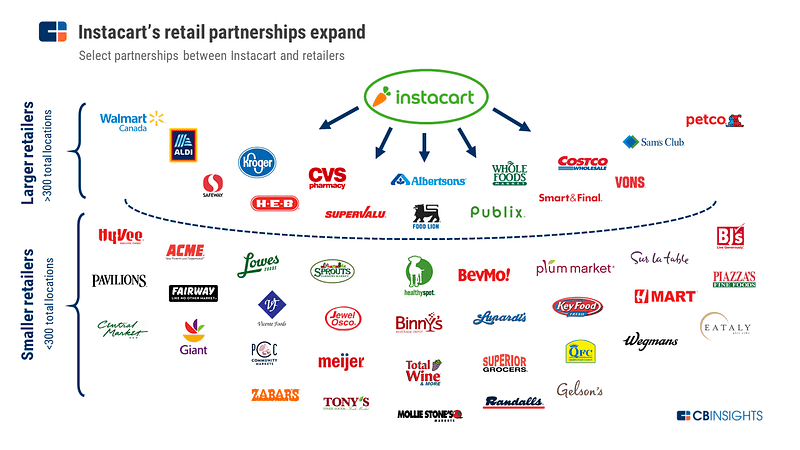
When Amazon acquired Whole Foods in 2017, it presented a threat to Instacart. What if Whole Foods becomes a potential competitor? Not to mention, Whole Foods was Instacart’s biggest partner. However, by the end of the day, this wasn’t a concern. Amazon delivers groceries exclusively from Whole Foods, while Instacart works with a large number of retailers. Since its founder created a drastically different service, Instacart continues to shine.
If You Fail — Stand Up and Try Again
Apoorva Mehta’s net worth is valued at $400 million. Instacart, being the start-up number 21, succeeded and brought him wealth and fame.
The company is doing better than ever during the 2020 pandemic. CNBC posted a video about Instacart on May 13, 2020, where they interviewed the company’s President, Nilam Ganenthiran. Here is what Nilam had to say about the recent progress:
“We are seeing a grocery adoption that should have taken five years — or what we expected to take five years — happen in the last five weeks.”
While other industries might be struggling, the grocery delivery service is booming. Customers aren’t keen to go outside during the pandemic and opt-in to have their purchases delivered to them. According to FoxBusiness.com, Instacart’s valuation is expected to increase from 12 billion to 14 billion, and investors are lining up to give the company their money.
Learning from your mistakes is essential. But if you have a chance to learn from others’ mistakes — it’s a fantastic opportunity. Many of us start a new venture, yet we need to observe others succeed and fail.
Despite having so many failed start-ups, the Instacart founder made it. So can we.
This article is for informational purposes only, and it should not be considered Financial or Legal Advice. Not all information will be accurate. Consult a financial professional before making any significant financial decisions.