
Lessons From Quitting Drinking in College
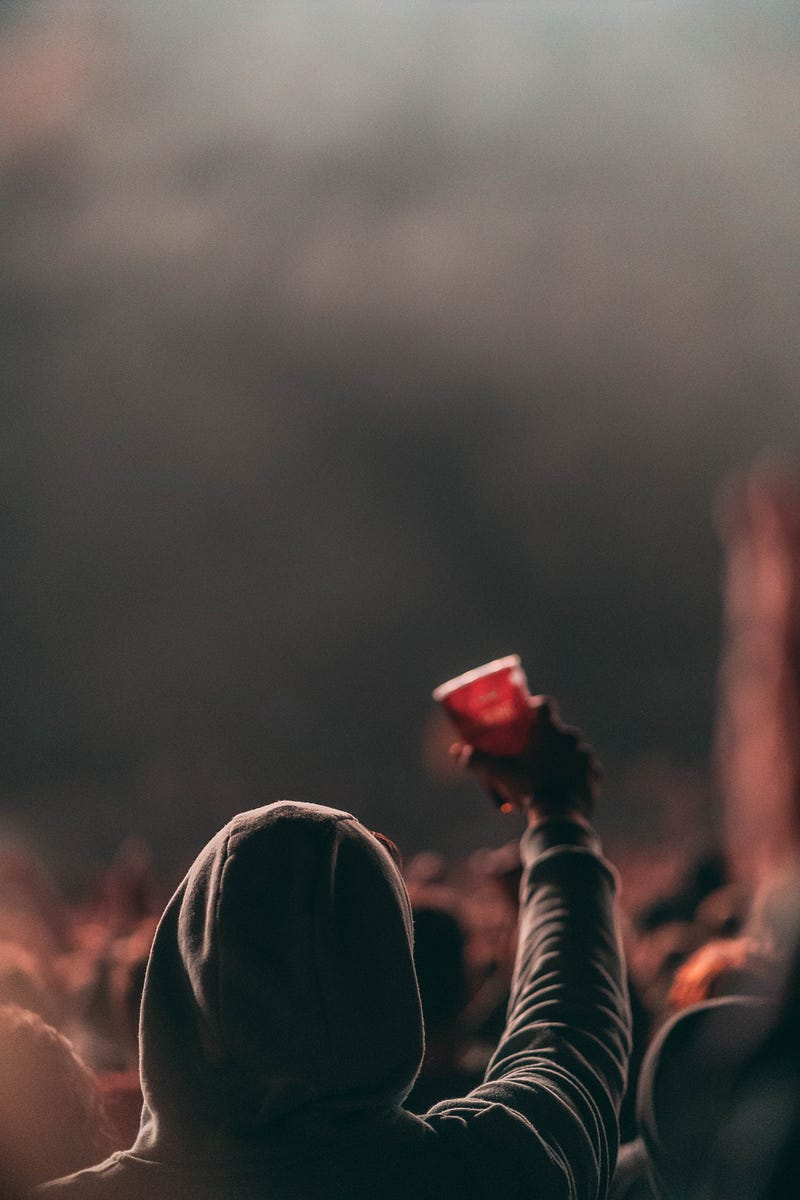
Three-quarters of the way through my junior year, my college partying “fun” was at an all-time high and so too was my depression. I also somehow had managed to get strep pretty much every month so it’s safe to say I was not doing a good job of taking care of myself. I hit rock bottom, details of which I’ll leave for another story, and decided that I had to make some changes. My two main starting points to getting healthy and happy were 1. I found myself a therapist and 2. I decided to be sober for one year.
The therapist one was obvious, I had depression I needed that support. The not-drinking one had some people confused. From the outside looking in you would not say I drank more than any of my friends or college peers, in fact, compared to many I drank considerably less. I wasn't the friend that ended up crying every time they were drunk. I wasn’t the friend that made regrettable decisions with men because they’d been drinking. I didn’t have to finish a bottle of wine once I’d started. In general, I was the friend that ended up taking care of other drunker people. I didn’t see alcohol as the problem, and I still don’t per se, but I did see that drinking was the reason I had been able to kid myself into thinking I was “handling” my depression for so long. The “fun” was a welcomed distraction from feeling the full extent of my emotions.
Many would not choose to forego alcohol in their senior year of college. It certainly had its challenges but not for the reasons you might think. I didn’t crave it nor was I ever extremely tempted to break my commitment to myself but it was hard because it created a lot of change. Change is hard whether it is good or bad. I credit that year as a catalyst for my personal growth as it taught me many lessons that became foundation blocks to creating a life I am truly content with.
1. There may be fewer invitations.
When you change not all your friends can stay with you. That’s a sad truth.
Some couldn’t understand why I didn’t want to go to bars for the third night in a row and I noticed I slowly stopped getting invited to nights out. And that makes sense, when you no longer stay to the end of parties, feature in the *drama* or hilarious messy stories, or are no longer the person passing shots around it’s easy for people to not associate you with partying. Sometimes it’s going to sting that people don’t invite you anymore, you may even worry you’re “no longer fun” but wanting to be healthy and succeeding at it is worth any invitations you may lose.
2. Relationships get left behind, and that’s a good thing.
I remember a friend asking to come to my house one evening to hang out. They arrived tequila bottle and a bag of limes in tow and sat on my couch doing shots on their own, for no apparent reason. As our conversation became more erratic and her words started to slur I remember feeling like I didn’t know what I was getting out of this experience. I never asked anyone to stop drinking around me, it wasn’t a necessary boundary for me, but I also wasn't enjoying watching someone get wasted and be unable to hold a conversation. At worst it was almost taunting-like and at best it was plain insensitive. Either way, it didn’t feel like they were in a place to be a supportive friend and I did start to distance myself from them.
It’s sad when you outgrow friends but without alcohol, the veil comes off and it becomes clear who is there to support you. Without alcohol, there are people you won't have things in common with anymore and relationships become more important than just people to party with. It is ok to let them go and move forward in your growth, not all relationships need to last forever.
3. Relationships get better.
The positive is that for every friend that doesn’t remain you will find two or three that do and that grow even stronger.
Your real friends will stay. The ones that were always going to matter will stay. And they might surprise you. I had a friend who missed our weekly, not very sober, Kenan & Kel marathons so he asked that we have a weekly lunch arrangement instead. And so we did. We found a new way to share the goings-on of our lives over a bowl of Pho rather than a bowl of something else! If people want to see you they will make that effort. It is that simple.
You also make new friends who don’t have an “old version” to compare you to, they accept you and like you as you are. Reasons for connection with people move from just fun and partying to truly supporting and bringing the best out of each other. You have deep conversations that both of you can remember. You don’t need to be drunk to tell people you love them or use dutch courage to tell a guy you like them or tell a friend they hurt my feelings. You get to build relationships with authentic vulnerability, no alcohol-induced smoke screens.
4. People are defensive and it’s not your problem.
Some people won’t like it if you aren’t drinking. Not consciously, of course, but I’ve noticed there’s often a clenching of the jaw and an uneasiness gloss across someone’s face, especially in college, when you say you don’t drink. The immediate question was often whether or not I was an alcoholic. Once I said I wasn’t that I just decided not to drink for a year most people would either try to encourage me to drink “just one” or they’d go into defense mode.
“I could never do that! Well, I would never want to, if I had to of course I could, I don’t have a problem or anything but I just wouldn’t want to.”
“Like at all? Not even one drink? I like wine too much to do that.”
Once that is someone’s response there’s likely no follow-up or reason you can give that will not make them feel defensive or judged, even if it’s just about yourself. There’s a lot of projection that gets thrown your way when you no longer want to drink. But people’s reactions to you are reflections of themselves and their judgments or misunderstanding around choosing an alcohol-free time or life. Drinking is an activity that is so intertwined into our lives that we largely associate the absence of it solely with someone being a very specific version of an alcoholic. Don’t take it personally because it is not personal.
5. Fun gains a whole new definition.
Honestly watching people drink or smoke was boring to me. I used to watch my friends play video games drunk for hours and go to parties until 3 am, 4 am, and beyond and I genuinely thought I was having the time of my life. Sober? I have zero interest in videogames, I like being in bed early and I enjoy waking up at a reasonable time. Those things were really boring to me.
The activities we choose when alcohol is involved in are not always truly fun for us. The escapism is very fun. The reactions in our brain from alcohol that let us feel rushes of endorphins instead of perhaps depression or disappointment or insecurity is what can make us associate “fun” with activities that would otherwise disinterest us.
The reward is when you no longer have alcohol to make things fun you get to discover things that truly are fun for you.
For me, something isn’t fun if I NEED alcohol to enjoy it. And if it’s not fun then why are we doing it? If it’s not fun why are we trying to force it to be fun?
6. You become happier.
Alcohol is a depressant. Plain and simple. This can be confusing because it can make us feel so confident and happy but behind the scenes, that’s not what’s happening in our body. That rush of dopamine means your supplies are empty afterward. And if you already have a brain like mine that struggles with a supply of dopamine then alcohol is essentially putting you in dopamine debt. Take the depressant away and you’re able to find ways that genuinely support your mood and won’t leave you on a hangover or comedown.
Even now, almost ten years on, I know if I had a few glasses of wine, tomorrow I will wake up with a cloud hanging over me. My mood will be a little bit lower, and it will be that little bit easier for me to go down the road of negative thinking rather than be able to maintain some perspective and manage any emotions.
7. You learn about yourself.
There was, and still is, a culture that influences our drinking choices, especially at college. It’s what you do at celebrations, at birthdays, at new years, after a bad day, after a good day, drinking is just what is normal to do.
But when you stop doing what is “normal” and start asking yourself why you want to drink you unfold a plethora of underlying influences. You find that there are a lot more reasons for drinking than you may initially think. You also find you don’t enjoy activities or people you think you do. You get to know your true self when you no longer have a mask made of wine.
I knew I drank for fun but I came to find out that I also did it because I was bored, felt insecure, was avoiding responsibility, didn’t like my body, wasn’t comfortable with the people I was with, wanted to feel less or wanted to feel more. When I stopped drinking I had to face all those reasons and that is where the therapy came in handy. But therapy was still only possible because I wasn’t masking those feelings anymore.
8. You face your real issues.
Going to parties or bars constantly and getting wasted is often a distraction.
Without the distraction, you can’t escape your real emotions, your real issues as much. When you are sad you don’t drink to be happy again. When you are stressed you don’t have a glass of wine to take the edge off. When you are lonely you don’t get drunk at a party to fill a void.
You feel it all, get to address what is going on underneath it, and find new ways of coping and processing life.
Feeling your feelings is when you really start to face your issues. When you feel lonely you have to explore that emotion. Where is that loneliness coming from? What is my attachment style? What need am I missing and how can I fulfill that need in a healthy way? It is a lot of questioning and a lot of exploring but it is worth all the work.
9. You have more time.
I truly had never considered just how much time drinking alcohol takes away from you.
I chose to still go to parties and bars with friends but I was leaving after a couple of hours because I was tired or bored or the people were starting to get messy drunk which was no longer entertaining. It meant I’d be home in bed by midnight, wake up at a reasonable hour, and be rested with no hangover.
You have more time because you can function better. Without alcohol you get better sleep, you can wake up hangover free and be ready to begin your day. You no longer need to go back to sleep or have an hour lying in bed drinking water before you can be vertical. You can wake up, walk your dog, catch up on TV, do some reading, run errands all before any of your friends are even capable to meet up for brunch.
10. You save money.
Alcohol is expensive. Even if you buy the cheap stuff or get it free at frat parties, the costs add up. If the drinks are free there’s still the drunk food on the way home, drunk shopping once you get home, taxis to a bar, the lost shoe or bag, or at worst the hospital bill from a drunken accident.
Going to the earlier pregame but not to the bar meant I didn’t spend anything on a night out. If I did go to bars, as the only non-drinker in a group bartenders and waitstaff often took pity on me and didn’t charge me for my non-alcoholic drinks. Nights out went from $50–$100+ to $15 for a taxi plus bar tips.
11. You notice other people’s unhealthy drinking, and it’s none of your business.
When I started to explore my relationship with alcohol it became impossible not to see all the ways I had used it in unhealthy ways. And much like when you get a new car you all of a sudden see them everywhere, once you see it in yourself it’s glaringly obvious in people around you who are using alcohol for the same unhealthy reasons.
The toughest part is noticing and not saying anything. It can feel like you’ve unlocked this secret in yourself that it’s possible to be happier and healthier without alcohol and you want to share with everyone that they could too. But no one wants to hear your opinion on their habits. Nor should they! Noticing behavior in others can make you feel less alone because it exposes the wider cultural issue at play and reveals just how common it is to use alcohol to cope with things. It feels less like a personal blindspot or a personal failing that you haven’t noticed the unhealthy ways you leaned on alcohol and more like a societal blindspot.
There aren’t that many people I’ve met who have a completely healthy relationship with alcohol, which may just be the people I’ve come across but is more likely an indication of what behavior our society normalizes when it comes to alcohol. To be clear I don’t think you have to be sober to have a healthy relationship with alcohol. But as I enter my thirties and see many around my age and older still getting blackout drunk, making regretful decisions, using alcohol instead of therapy, or being incapacitated for at least a day from a hangover, I can't help but think we as a society should be questioning our motivations for drinking and exploring them beyond the surface level.


