
Lessons from Misti
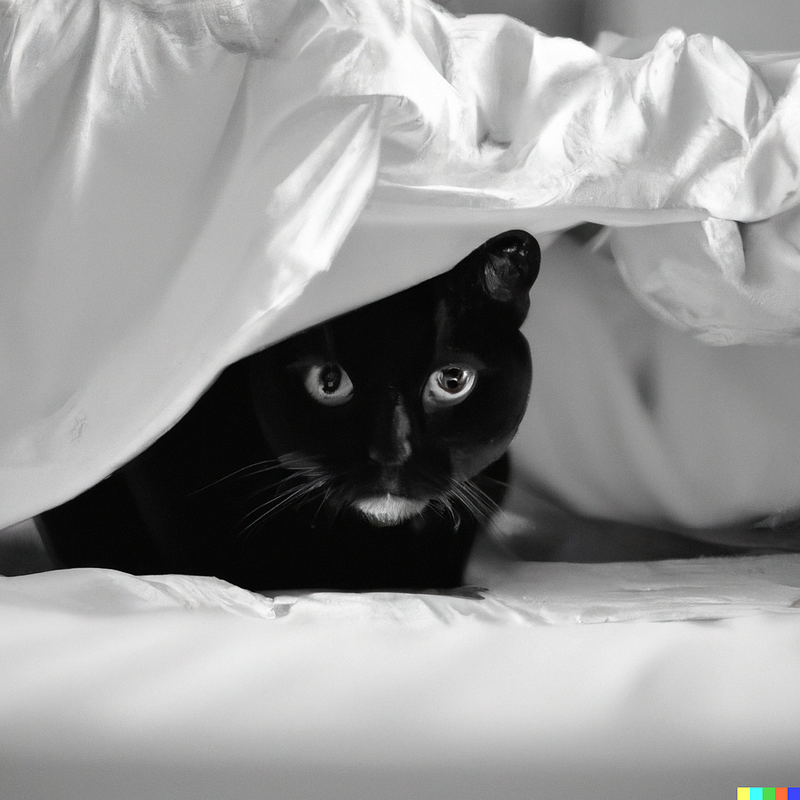
Misti.
We got Misti on a Saturday, just before my shift at work started, so I couldn’t be there when my housemates brought her home.
She was a cat, not a kitten. A pet abandoned by her family. She was two years old, but the world had disappointed her. Surely, she was cherished at some point. But then something happened, and her owners dumped her at an adoption agency. I imagined a harder cat emerging from that trauma. She needed unconditional love to meet the love I hoped she kept safe in her heart.
She was playful, docile, curious, and affectionate at the pet store. I assumed she would have these characteristics when we got her back to her new home. But that was not the case.
I tried to imagine her daily routine before she was dropped off. What was that like for her? She was in a foster home, a temporary place. But cats don’t know words like temporary or foster, do they? I saw her waking up in her temporary home where they had two other cats. I imagined her foster mom taking her everywhere, hoping to find her a third and final home. That was her routine, her job. Wake up, play with the other cats, then head out for a day of meeting smiling humans, all eager to pet her as much as her heart wanted. Entering a new home was an adjustment for Misti. It would take time for her.
Her reticence when we got her to the house made sense. She assumed she would go home with her mom after they finished at the fun but noisy pet store.
First Purr
The first time she purred for me was on the third day (we got her on Saturday), a Monday morning. I went into my friend’s closet, lay on the floor, and wriggled my arm slowly into the thicket of seersucker shirts until I found the bundle of black fur and warmth.
The instant I touched her fur on the third day, she purred.
To say it moved me is an understatement. I nearly cried, lying on the hardwood floor in my friend’s closet, with my hand caressing this beautiful cat. My heart swelled.
I try not to cry, likely a result of absorbing too many toxic masculine ideas.
Real men don’t cry.
Man up.
What are you? A little girl?
I’ve always been a sensitive person. I wrote ‘ man,’ then backspaced over those three letters. I no longer identify as a man. No, you don’t need to update my pronouns. If I was younger, maybe I might ask you to use ‘ they,’ but it’s too late now.
If non-binary had been an option for me in the 1970s, I probably would’ve embraced it. But we didn’t think that way then. Men were strong and never cried. They fixed things (or killed them). Women cried, cooked stuff, baked stuff, wore dresses, and were ( ugh) nice.
What a load of nonsense, all this insistence upon being definitive to such extreme degrees.
What do you mean you don’t identify as a man?
Snap out of it, or no woman will ever love you.
I’m meandering now.
Where was I?
Misti!
The new house cat, one I’ve been designated as a godparent to. (An honor for me.)
When she purred as I petted her, my heart swelled, and my eyes felt loaded with extra moisture to release in some dramatic, cathartic, groundbreaking, third-act paradigm-shifting Dickensian transformation.
But I’ve gotten good at swallowing my emotions. At not crying.
I fear there will be no third-act Ebenezer moment for me.
If you knew how bad it was, you’d not be sympathetic. I mean, I cry at commercials.
Commercials!
Great irony.
Those that are the most sensitive hurt their loved ones and family the most. (Are there any suicides by people who aren’t sensitive? I don’t know the answer to that. But it would seem like every suicide is probably a very sensitive individual. A soft individual stuck in this world with punishing gravity and sharp corners everywhere.)
A few days later.
Because the house is large and she likes to hide, we constrained her to the primary bathroom and walk-in closet. On the fifth day, we opened the door and grew her enclosed area to include the primary bedroom.
It was a couple of days after that before she availed herself of this new area. She found the best hiding spots. Impossible. I would check on her from time to time. I’d enter her domain, pet her, talk to her, and let her know everything would be okay. She playfully bumped my head with hers, telling me in her way, ‘Duh, I already know all of this.’
I closed her in the bedroom and made myself a cup of coffee. Once I finished the coffee, I returned to her again. For the life of me, I couldn’t find Misti. Was she on top of the tall armoires in the walk-in? I searched all three rooms: the closet, the bathroom, and the bedroom.
What the heck?
Where are you, Misti?
It was like a magic trick. This cat was an illusionist. A quantum pet that is both there and not there simultaneously. Impossible.
Is there a slit on the bottom lining of the box springs?
Nope.
I still don’t know where she got to, but she is elusive.
I lay on the carpet floor and slowly slid my arm under the bed.
When I reached the warm, black fur, the sandpaper tongue licking my fingers, and her teeth playfully closing around my fingers I knew I’d changed.
I laid there, and she taught me how to love, how I loved when I was younger, and (more importantly) why that never worked out. In my youth, I was needy, more like a dog than a cat. With Misti, I don’t seize her; I let her come to me. I let the play unfold for us organically.
I don’t fear she will bite me. I’d be surprised if she didn’t bite me at some point. But it won’t change how I feel about her. It won’t undo the things I’ve learned from her.
I like this cat.
I like Misti.
No, that’s not right. It’s not enough.
I love this cat. If you see me petting her and crying, mind your business.
Originally published at http://storiesbyshawn.com on December 25, 2023.


