
Lesson Learned From Friendship
I am odd
Dee’s mother stood at the cooker stirring ratatouille and casting aspersions at my arms. Not overtly. She said, ‘Brian bought me a new dress for Spain. It’s got short sleeves.’ Her brown eyes bore into me. ‘I hate it when you see short sleeves and two stick arms protruding.’
What she was really saying was, ‘You’ve got stick arms and I haven’t and I’m not the one in the wrong.’
Because I was so young, I nodded. My arms were my responsibility, and I had made the wrong decisions regarding them, which had resulted in sticks.
She had very brown eyes and brown permed hair and besides my arms, she suspected me because I read books.
I never entered Dee’s house via the front door. Dee and I walked around the side to the back door which opened onto the kitchen. The kitchen was as small as ours and like ours, Dee’s father had extended it and the extension housed a breakfast bar with stools which I coveted. Actually, Dee’s father paid others to extend it. My father extended ours and instead of a breakfast bar, it housed our old orange camping table.
Dee’s house was very clean because there was no clutter; even the fruit bowl contained oranges and apples instead of hair grips or used sticking plasters or a sock.
There was nothing to do in the house, except watch television; but they watched different programmes than us. As well as Benny Hill, whose shows were lewd, they watched a famous white comedian who did impressions of a black man.
I was instinctively embarrassed by the concept and the crudeness, for as well as being bookish with thin arms, I was also sensitive and a prude —evidently, some genes from a distant dour dead Scot ancestor had resurfaced in my body.
Dee and her family parroted every line of the white comedian’s rendition, and being young, I pretended to laugh and find it funny, lest they think me odd.
Pretending to laugh is exhausting. You have to push up the corners of your mouth without using your fingers and that battles gravity. Then there’s the faux heartiness of the charade.
It’s really painful too, the contortions of your face, and if you don’t work hard at it, you produce a macabre grimace and people laughing suddenly stop when they catch sight of your face and you know you are rumbled. Dee’s mother stared at me while she laughed, as if she knew I did not share the mirth, but only pretended. I always left Dee’s house with an aching mouth.
There was a dining table in the dining room where they actually ate family dinners. They didn’t sit in front of the television with their dinner on their lap; and they had proper place mats, not pages from yesterday’s newspaper. The table had a matching wood cabinet with internal lights and glass shelves. This was where the Lladro lived.
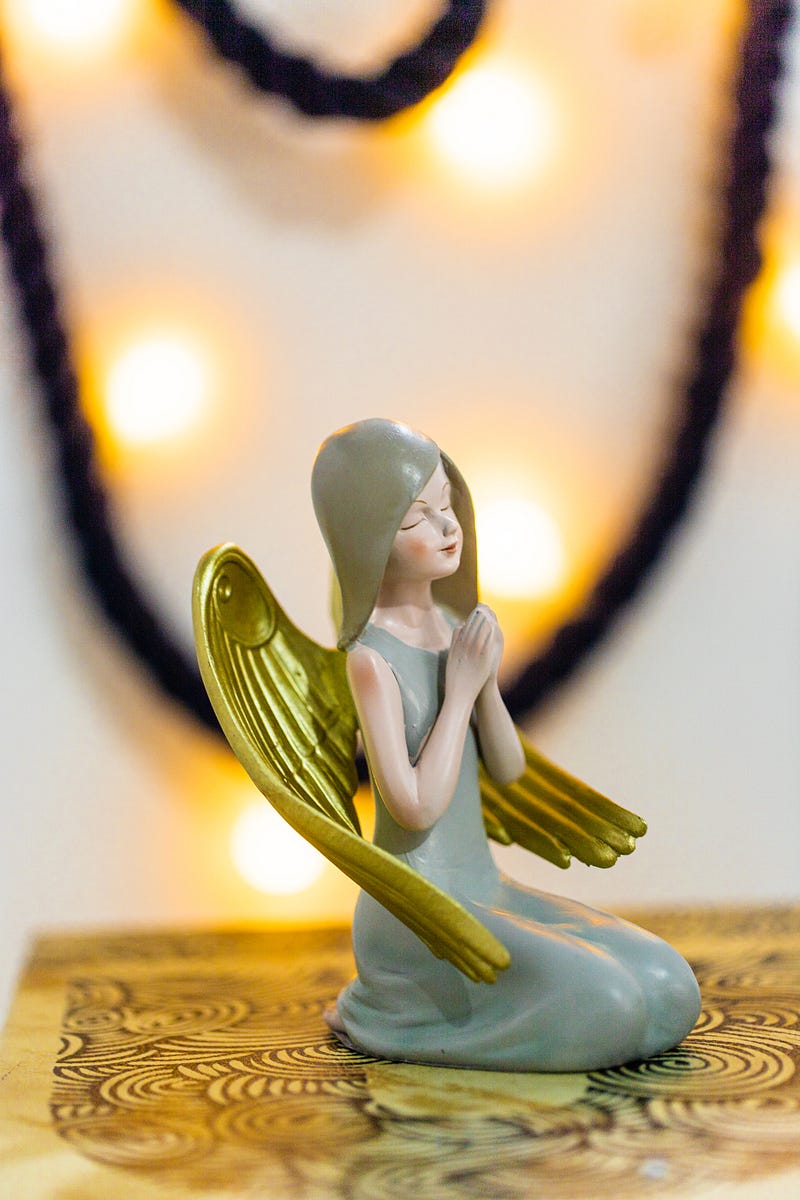
Lladro is a Spanish porcelain company famous for its figurines. Dee’s family were great ones for Spanish holidays. They went every year and returned to England with a new figurine and impressive suntans. Dee would yank up one side of her knickers and show me the brown against the white at the top of her thigh. It was like magic, seeing skin that had actually changed colour.
They treated the Lladro like icons. I was allowed to revere them through the glass door while Dee pointed out the latest acquisition in a hushed voice. The name fascinated me more than the ornaments. Two Ls at the beginning of a word; was it an affectation? Or did Spanish actually employ those two Ls, and what scope for vocabulary, for worlds unknown when letters could exist so contrary to all I knew?
The Lladro had been fired in glossy washed out blues, pinks and greys. Ladies in bonnets held baskets and posies, couples strolled hand in hand; they all had simpering, one-dimensional faces, emotions of vacant docility, no story, absolutely no conflict, except there may have been a boy looking hungry; the Lladro equivalent of Bubbles. There was nothing to ponder, nothing to wake you in the middle of the night and bother you with its deeper meaning. No Giacometti, these.
I could never understand the purpose of amassing those placid-faced men and women and girls and boys and kittens and puppies. Were they an end to themselves, like Christmas? An existential yearning for purpose, for meaning? They were as bounded and limited and restrictive as a Disney book. What could you do with a Lladro? You couldn’t take all its clothes off to inspect its privates, you couldn’t eat it, you couldn’t bounce it against the garage wall. They really were the most useless things.
We never had ornaments in our house, except for a small brass cat with arched back, fluffed up tail, and a mouth that was plainly hissing; we were very fond of that cat; my mother found him in Wales.
We never went to sunny climes for a holiday either. We camped in the UK or visited war-torn Belfast; rain drumming on canvas and the thud of petrol bombs on the side of a bus are sounds indelibly wired into my brain. We once got mouthfuls of midges when we tried to pitch our tent in Fort William, and one year we got colossal sunburn in a sand dune in Devon. Mostly we got bad-tempered with each other.
There weren’t any books in Dee’s house. We had bookcases and shelves which my father, being a carpenter, could muster with ease. So there was always room for expansion, both metaphorically through new books and literally.
My mother was into historical books and the house brimmed with Jean Plaidy and Agnes Strickland. She had a habit of reciting The Lady of Shallot and Crossing the Bar whether you wanted to hear it or not. Unlike Lladro, books were cheap, free if you got them from the library. And although you had to be respectful of books, they weren’t fragile like Lladro.
Checking for books was one of the first things I did when I entered someone’s house. My mother had told me that if there were none, I should have nothing in common with the inhabitants. When I asked why, she tapped the side of her head. ‘There’s nothing going on up top.’
Upstairs in Dee’s bedroom were two single beds for Dee and her sister and a side table with a lamp. Not one book. I wondered how they managed. Did they climb into bed, turn off the light and shut their eyes and sleep? How extraordinary, to not read in bed, to not feel your eyelids become painfully heavy and struggle to keep them open, and then finally to abandon the book and yield to blissful sleep.
Beyond the window was a small garden and a greenhouse where Dee’s father grew tomato plants. The garden was dapper with its coiffured lawn and clean path; no deflated space hopper, no green-watered paddling pool, no school shoes flung gleefully into long grass.
I wondered what Dee did when dire things happened. When there was an argument, a raising of voices, a slinging of plates against the wall, when her mother insulted her mother-in-law to her father’s face, what did she and her sister do without books?
Although Dee had little ‘going on up top,’ I liked her. There was an openness, a lack of guile, no layers, no wiles, and I instinctively felt safe with her. We sat next to each other in English and I would help her put her apostrophes in the right places.
Our friendship may have lasted had I not become more bookish and undeniably odd. Once I got a Saturday job I had money to begin my life’s dream: a library of my own. The day I bought a hard back of The Hobbit for five pounds was the day our friendship ended. She looked at me with such perplexity. The gulf between us had become a chasm, and neither of us had the arms to bridge it.