
Leonard Bernstein (midcentury American conductor) — Notable Works and Achievements
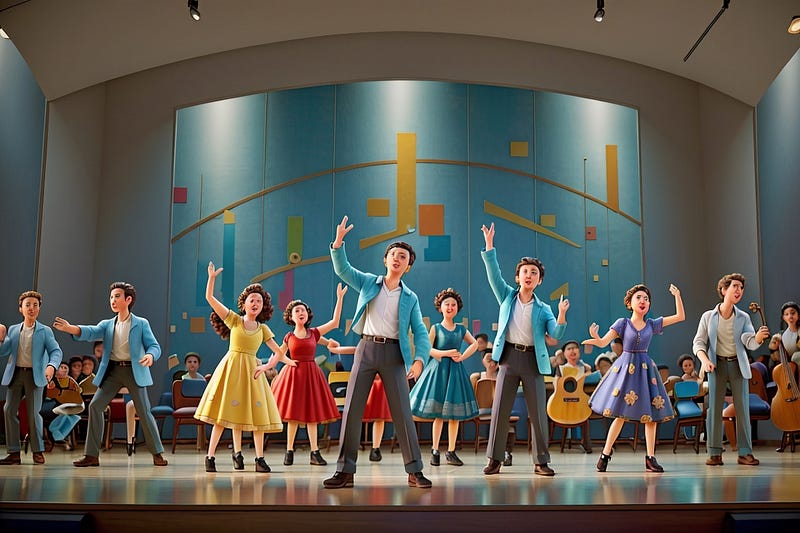
Leonard Bernstein, born on August 25, 1918, in Lawrence, Massachusetts, was the son of Ukrainian Jewish émigré parents, Samuel Bernstein and Jennie Resnick. This rich cultural and familial background played a pivotal role in shaping his early interest in music. The influences of his heritage were evident in his diverse musical style and approach throughout his career.
Bernstein’s musical journey began at a young age. His exposure to music was not just through formal training but also through the vibrant cultural milieu of his family and community. This early immersion in a musical environment fostered his growing passion for the art.
Bernstein’s formal musical education was comprehensive and diverse. He attended the Garrison and Boston Latin Schools, where he was exposed to a broad range of musical styles. His formal training continued at Harvard University, where he studied music with notable professors like Walter Piston and A. Tillman Merritt. It was during his time at Harvard that Bernstein’s talents in music truly began to flourish, laying the foundation for his future career.
The experiences that led Bernstein to pursue a career in music were multifaceted. He was deeply influenced by his mentors and the musical environment he was immersed in. His early exposure to various musical genres and styles, combined with his education and personal drive, propelled him towards a path in music. This path would eventually lead him to become one of the most celebrated and influential figures in American music history.
Rise to Fame
Leonard Bernstein’s ascent to fame was meteoric, marked by a pivotal moment when he became the assistant conductor of the New York Philharmonic. This significant step in his career occurred when he was just 25 years old. The circumstances surrounding his debut performance were as dramatic as they were fortuitous.
On November 14, 1943, Bernstein made his famed debut at Carnegie Hall. The momentous occasion arose unexpectedly when he had to step in with only a few hours’ notice for the indisposed Bruno Walter. This sudden opportunity was not only a test of his skill and composure but also a remarkable chance to showcase his talent on one of the most prestigious stages in the world.
The reception of Bernstein’s debut performance was overwhelmingly positive. His ability to handle such a high-pressure situation with grace and excellence garnered widespread acclaim. This debut not only marked his successful introduction to the public but also significantly influenced his career trajectory. It established him as a formidable talent in the world of classical music and opened doors to numerous opportunities that shaped his illustrious career.
Bernstein’s rise to fame following this performance was rapid and well-deserved, setting the stage for his legacy as one of the most influential musicians of the 20th century.
‘The Unanswered Question’ Lectures
Leonard Bernstein’s Harvard lectures, titled ‘The Unanswered Question,’ delivered in the fall of 1973, are a significant contribution to the discourse on music and education. This series of six lectures was a component of Bernstein’s appointment as the Charles Eliot Norton Professor of Poetry at Harvard University.
The content of these lectures was deeply rooted in Bernstein’s interdisciplinary approach to music. He based much of his discussion on the linguistic theories of Noam Chomsky, particularly those set out in Chomsky’s book “Language and Mind.” Bernstein aimed to draw parallels between the structure of language and music, exploring the innate capacities of the human mind for both. In the first three lectures, he particularly focused on these aspects, suggesting that the deep structures of music might be akin to those of language.
The significance of ‘The Unanswered Question’ lies in Bernstein’s innovative approach to understanding music. He endeavoured to integrate concepts from linguistics, philosophy, and musicology to provide a comprehensive view of music as a universal form of communication. This interdisciplinary perspective was ground-breaking and reflected his belief in the interconnectedness of various fields of study.
These lectures also reflected Bernstein’s philosophy on music and education. He believed in the importance of broadening the scope of musical education to include diverse perspectives and disciplines. By doing so, he felt that students and audiences could develop a deeper appreciation and understanding of music. His lectures at Harvard encapsulated this philosophy, showcasing his commitment to educating not just future musicians but also the wider public about the complexities and joys of music.
Major Compositions
Leonard Bernstein’s repertoire includes some of the most influential compositions in both classical and popular music. His works such as ‘West Side Story,’ ‘Candide,’ and ‘On the Waterfront’ are exemplary of his versatile and innovative style.
‘West Side Story’:
This musical, perhaps Bernstein’s best-known work, is a retelling of Shakespeare’s Romeo and Juliet set in mid-20th-century New York City. It blends various musical styles, including jazz, Latin, and classical, creating a rich and dynamic soundscape. The musical’s themes of love, conflict, and cultural tension are reflected in its innovative music and lyrics, which helped redefine the American musical theatre genre. Its impact on popular music and culture extends far beyond its Broadway origins, influencing generations of composers and musicians.
‘Candide’:
‘Candide,’ based on Voltaire’s satirical novel, is a unique blend of operetta and musical theatre. Bernstein’s music for ‘Candide’ is notable for its eclectic mix of styles, from lyrical arias to bouncy, almost vaudevillian numbers. The work showcases Bernstein’s ability to juxtapose different musical forms to enhance the satirical and comedic elements of the story. Despite its mixed initial reception, ‘Candide’ has become celebrated for its sophisticated musicality and its exploration of themes like optimism and disillusionment.
‘On the Waterfront’:
Bernstein’s score for the film ‘On the Waterfront’ marked a significant contribution to the world of cinematic music. Unlike traditional film scores of the time, Bernstein’s music for ‘On the Waterfront’ brought a level of dramatic complexity and thematic depth that paralleled the film’s gritty realism and emotional intensity. His use of leitmotifs and innovative orchestration techniques added a new dimension to the narrative, enhancing the film’s impact and setting a new standard for film scoring.
Bernstein’s compositions often blurred the boundaries between classical and popular music, reflecting his belief in the universality of musical expression. His works demonstrate a remarkable ability to adapt and innovate across different musical genres, making him a pivotal figure in both the classical and popular music spheres.
Contribution to Music Education
Leonard Bernstein’s contributions to music education were pioneering, particularly through his “Young People’s Concerts” with the New York Philharmonic and his educational writings. These efforts significantly democratized classical music and made it accessible to a wider audience.
“Young People’s Concerts”:
Launched in 1958, these concerts were Bernstein’s innovative approach to music education. They were designed to introduce young audiences to classical music in an engaging and understandable way. Bernstein used these concerts to break down complex musical concepts, introduce various composers and styles, and discuss the mechanics of orchestras and instruments. His charismatic and approachable demeanour, combined with his profound knowledge, made these concerts extremely popular, transforming how classical music was presented and perceived by the younger generation.
Educational Writings:
Alongside his conducting, Bernstein was a prolific writer on music. His writings were aimed at demystifying classical music for the general public. He focused on making the appreciation of music an accessible and enjoyable experience for everyone, regardless of their prior musical knowledge. His writings often reflected his belief in the universal nature of music and its ability to communicate across cultural and linguistic boundaries.
Legacy of Bernstein’s Educational Efforts:
Bernstein’s educational initiatives have left a lasting impact on the world of music education. By making classical music more accessible, he widened its appeal and fostered a new generation of music enthusiasts and learners. His approach to teaching and presenting music has influenced how music education is approached globally, with an emphasis on inclusivity and broadening access to the arts. Bernstein’s legacy in music education continues to inspire educators and musicians in how they engage with audiences and students.
Leonard Bernstein’s innovative approach to music education not only enriched the lives of his immediate audiences but also established a lasting framework for making classical music more inclusive and approachable for people of all ages.
Awards and Recognition
Leonard Bernstein’s illustrious career was marked by numerous awards and honours that reflected his immense contributions to the world of music. These accolades serve as a testament to his talent, innovation, and influence in both classical and popular music.
Grammy Awards:
Bernstein won an impressive 16 Grammy Awards throughout his career, including a Grammy Lifetime Achievement Award. These awards underscored his excellence in musical performance, composition, and conducting. They highlight his ability to resonate with both the public and critics in the highly competitive field of music.
Emmy Awards:
He was the recipient of 7 Emmy Awards, a recognition of his outstanding work in television. Bernstein used television as a medium to educate and inspire a broader audience about classical music, particularly through his “Young People’s Concerts.”
Tony Awards:
Bernstein won 2 Tony Awards, reflecting his significant impact on Broadway and musical theatre. His work on productions like “West Side Story” redefined the genre and brought a new level of artistic depth to musical theatre.
These awards represent more than just personal achievements for Bernstein. They symbolize the profound impact he had on various aspects of music and culture. His Grammy Awards celebrate his musical prowess and versatility, the Emmy Awards acknowledge his role as an educator and promoter of classical music, and the Tony Awards honour his contributions to the evolution of musical theatre. Together, they paint a picture of a multifaceted artist who not only mastered his craft but also used his talents to educate, inspire, and bring about cultural appreciation for music across diverse audiences.
Involvement in Film Music
Leonard Bernstein’s foray into film music, particularly with his score for “On the Waterfront,” stands as a significant contribution to the cinematic world. This score is especially notable as it was his only original film score, yet it left an indelible mark on the history of film music.
Score for ‘On the Waterfront’:
Composed for Elia Kazan’s acclaimed film “On the Waterfront” (1954), Bernstein’s music perfectly captured the film’s emotional depth and complex themes. His score was not just background music but an integral part of the narrative, enhancing the movie’s dramatic impact. It contained stirring musical works that echoed the themes of struggle, love, and redemption that are central to the film.
Bridging Cinematic and Classical Music:
Bernstein’s work on “On the Waterfront” exemplified how cinematic and classical music could be seamlessly integrated. He brought the sophistication and depth of classical composition to the film score, elevating the movie’s artistic stature. His approach went beyond traditional film scoring by infusing the music with thematic complexity and a level of emotional nuance typically found in classical concert pieces.
Bernstein’s involvement in film music, though limited in quantity, was monumental in quality. His work on “On the Waterfront” not only enriched the film but also contributed to the evolution of film scoring, demonstrating how classical music elements can profoundly enhance the cinematic experience.
Symphonic Innovations
Leonard Bernstein’s approach to symphony was characterized by innovation and a blending of diverse musical styles. His contributions significantly influenced the evolution of this musical form, infusing it with new life and relevance.
Blending of Genres:
Bernstein’s symphonies often merged classical music with elements of jazz, Broadway, and other contemporary genres. This fusion broke traditional barriers and appealed to a wider audience, bringing a fresh perspective to the symphonic form.
Symphony №1 ‘Jeremiah’:
Composed in 1942, ‘Jeremiah’ was a ground-breaking work that demonstrated Bernstein’s innovative approach. It incorporated Jewish liturgical themes, showcasing his ability to intertwine his cultural heritage with classical symphonic structure. The symphony was notable for its emotional depth and integration of voice with orchestral music, featuring a mezzo-soprano solo that interprets the biblical texts.
Symphony №2 ‘The Age of Anxiety’:
This symphony, inspired by W.H. Auden’s poem of the same name, was another example of Bernstein’s inventive style. Composed in 1949, it blends symphonic and piano concerto forms, creating a complex and deeply introspective work. The music reflects the poem’s themes of existential crisis and search for faith, using a wide range of musical techniques to convey a narrative journey.
Bernstein’s symphonic works were not just compositions; they were explorations into the human experience and cultural dialogues. His innovative use of thematic material, integration of different musical styles, and ability to communicate complex emotions marked a significant contribution to the development of the symphony in the 20th century.
Operatic Contributions
Leonard Bernstein’s foray into opera, especially with works like ‘Trouble in Tahiti,’ showcased his innovative approach to this classical genre. His operas were marked by unique thematic and stylistic elements that set them apart in the 20th-century operatic landscape.
‘Trouble in Tahiti’:
Composed in 1951, ‘Trouble in Tahiti’ is a one-act opera that delves into the disillusionment of American suburban life. The opera begins with a vocal trio singing of idyllic life in 1950s suburbia, juxtaposed against the story’s darker themes. This opera stands out for its exploration of contemporary issues like marital discord and the emptiness of consumer culture. Bernstein’s score for ‘Trouble in Tahiti’ incorporates jazz rhythms and close harmonies, reflecting the era’s musical trends and further enhancing the narrative.
Thematic and Stylistic Elements:
Bernstein’s operas often grappled with modern themes and incorporated contemporary musical styles, including elements of jazz and Broadway, thereby blurring the lines between classical opera and popular music. This stylistic amalgamation made his operas more approachable and relevant to contemporary audiences.
Context in 20th-Century Opera:
In the broader context of 20th-century opera, Bernstein’s contributions were significant. He brought a distinctly American voice to opera, infusing it with modern themes and musical styles. This approach helped to rejuvenate the operatic form, making it more reflective of and responsive to contemporary life and culture.
Bernstein’s operatic works, particularly ‘Trouble in Tahiti,’ are emblematic of his broader impact on music. They not only illustrate his versatility as a composer but also represent a bridge between traditional operatic forms and the evolving musical expressions of the 20th century.
‘West Side Story’ and Its Uniqueness
“West Side Story,” composed by Leonard Bernstein, stands as a ground-breaking work in the landscape of musical theatre. Its enduring legacy and innovative approach to storytelling, music, and dance have cemented its status as a classic.
Ground-breaking Nature:
When “West Side Story” debuted in the mid-1950s, it transformed the form of musicals. It was one of the first musicals to address serious social issues, such as gang violence and racial conflict. This thematic boldness was a departure from the more traditional, light-hearted fare of the time and helped to elevate the genre of musical theatre to a more respected art form.
Combination of Musical and Theatrical Elements:
The genius of “West Side Story” lies in its fusion of diverse musical styles — from jazz to Latin American influences — with complex choreography and a poignant narrative. Bernstein’s score is notable for its sophisticated use of melody, harmony, and rhythm, which complements the emotional intensity of the story. The musical’s integration of dance as a form of storytelling, choreographed by Jerome Robbins, was also revolutionary, using ballet and street dance to express character and conflict.
Enduring Legacy:
The legacy of “West Side Story” persists in its continued relevance and popularity. It broke numerous boundaries in musical theatre and is still celebrated for its artistic innovation and its ability to resonate with audiences across generations. Its themes of love, prejudice, and the struggle for belonging remain as pertinent today as they were when the musical first premiered.
“West Side Story” is a testament to Bernstein’s brilliance as a composer and his ability to create a work that is not only musically and theatrically innovative but also socially significant. Its unique blend of musical and theatrical elements created something novel and deeply impactful in the world of musical theatre.
Cultural and Musical Influence
Leonard Bernstein’s upbringing and cultural background played a crucial role in shaping his unique musical style, which blended diverse influences into his compositions and performances.
Influence of American Culture:
Bernstein’s style was deeply influenced by modern American culture. He broke the mold of classical musicianship by embracing and incorporating the sounds and rhythms of America. This included elements of jazz, folk, and the burgeoning urban soundscape of the United States in the mid-20th century. His music, therefore, became a reflection of the American experience, resonating with a broad audience.
Combining Styles and Genres:
Known for his restless creative vision, Bernstein had a knack for combining styles and genres in unexpected ways. This included fusing the traditional European classical form with American idioms, creating something both familiar and entirely new. His compositions often displayed an eclectic mix of classical structures with contemporary rhythms and harmonies.
Influences from Other American Composers:
Bernstein was influenced by other American composers such as Aaron Copland and George Gershwin, who themselves blended classical and American styles. This influence is evident in Bernstein’s use of jazz elements and his approach to melody and orchestration, which often echoed the broader trends of American music.
Bernstein’s ability to incorporate diverse influences into his music was not just a stylistic choice but also a reflection of his belief in music as a universal language. His works stand as a testament to the rich cultural and musical landscape of America and his role in shaping the identity of American music in the 20th century.
Popularizing Classical Music
Leonard Bernstein’s unique conducting style and charismatic public persona played a crucial role in popularizing classical music and making it more accessible to wider audiences.
Energetic Conducting Style:
Bernstein’s conducting was known for being energetic, edgy, and rhythmically charged. His animated and passionate approach, complete with expressive gestures, made classical performances more engaging and visually captivating for audiences. This style, a departure from the often-staid norms of classical conducting, helped draw in people who might otherwise have found classical music less approachable.
Embracing Modern American Culture:
By intentionally incorporating elements of modern American culture into his work, Bernstein broke the mould of traditional classical music. This blend of classical and contemporary styles made his music relevant and appealing to a broader, more diverse audience.
Advocacy of American Music:
Bernstein was a tireless advocate for modern American music, including works by composers like Aaron Copland. His promotion of American composers and their works helped to elevate the status of American classical music both nationally and internationally.
Television Concerts and Lectures:
A notable instance was his involvement in television concerts and lecture series, such as “Young People’s Concerts” with the New York Philharmonic. These televised events were instrumental in educating and attracting new audiences to classical music. By demystifying complex musical concepts and composers, Bernstein made classical music more accessible and enjoyable to the general public.
Through his dynamic conducting style, innovative approaches, and effective use of media, Bernstein significantly contributed to the popularization of classical music, making it more relatable and enjoyable to people of all ages and backgrounds.
Influence on Future Musicians
Leonard Bernstein’s legacy extends far beyond his lifetime, significantly influencing future generations of musicians and conductors. His unique style, approach to music education, and innovations in classical music have inspired many in the field.
Inspiration to Young Musicians:
Bernstein’s dedication to music education, particularly through his “Young People’s Concerts,” played a crucial role in inspiring young musicians. These televised concerts made classical music accessible and engaging to a broader audience, nurturing a love for music among young viewers, some of whom pursued careers in music.
Innovative Conducting Style:
Bernstein’s rhythmically energized and flamboyant conducting style has been influential in shaping the techniques and approaches of modern conductors. His passionate and expressive conducting not only captivated audiences but also provided a model for contemporary conductors who sought to bring similar vitality to classical performances.
Advocacy of Contemporary Music:
As a conductor, Bernstein championed the new music of his contemporaries, thereby influencing the musical taste and repertoire choices of future generations of musicians and composers. His openness to diverse musical styles and his support for contemporary composers expanded the musical horizons of those who followed him.
Specific Influences:
Musicians and conductors like Kristjan Järvi have been influenced by Bernstein’s dynamic style. Additionally, many contemporary musicians cite Bernstein’s eclectic compositions and his ability to blend different musical genres as an inspiration for their creative processes.
Bernstein’s impact on the world of music was profound, and his influence continues to be felt in the way musicians perform, interpret, and appreciate music. His legacy lives on in the many musicians and conductors who have been inspired by his innovations, passion, and dedication to the art of music.
Facing Controversies
Throughout his career, Leonard Bernstein faced several controversies and criticisms, which he navigated with his characteristic passion and conviction, often reflecting these challenges in his work.
Political and Social Activism:
Bernstein was known for his political and social activism, which sometimes led to controversy. His outspoken support for various causes, including civil rights and opposition to the Vietnam War, positioned him as a polarizing figure in some circles. However, he remained committed to his beliefs, using his music and public platform to advocate for social change.
Musical Experimentation:
In his musical compositions, Bernstein sometimes faced criticism for his experimental approaches. Works like “Kaddish,” a 12-tone composition, were departures from traditional tonality, leading to mixed receptions among critics and audiences. Despite these challenges, Bernstein continued to innovate, blending various styles and pushing the boundaries of classical music.
Responses to Criticism:
Bernstein’s response to criticism was often reflected in his continued dedication to his artistic vision. He believed in the power of music to communicate complex emotions and ideas, and he used his compositions and performances to express his responses to the challenges he faced.
Influence on His Work:
The controversies and criticisms he faced influenced Bernstein’s work by deepening his commitment to using music as a tool for communication and change. His compositions and performances became vehicles for expressing his personal and political beliefs, contributing to his legacy as an artist who was not afraid to engage with the pressing issues of his time.
Leonard Bernstein’s handling of controversies and criticisms exemplified his belief in the transformative power of music. His willingness to address difficult topics and explore new musical territories cemented his status as a pioneering figure in the world of music.
Collaborations with Other Artists
Leonard Bernstein’s collaborations with other prominent artists such as Stephen Sondheim and Jerome Robbins were instrumental in enriching his work and expanding his musical horizons.
Collaboration with Stephen Sondheim:
Bernstein’s collaboration with lyricist Stephen Sondheim on “West Side Story” was a defining moment in musical theatre. Sondheim’s sophisticated lyrics perfectly complemented Bernstein’s dynamic score, creating a musical that was both poignant and ground-breaking. This partnership combined Bernstein’s musical prowess with Sondheim’s lyrical genius, resulting in a masterpiece that continues to resonate with audiences.
Partnership with Jerome Robbins:
Bernstein’s partnership with choreographer Jerome Robbins was another significant collaboration. Their first project together, the ballet “Fancy Free,” was a tremendous success and led to the creation of “West Side Story.” Robbins’ innovative choreography and Bernstein’s vibrant music created a powerful synergy, bringing a new level of artistic expression to the Broadway stage.
Impact of Collaborations:
These collaborations not only enriched Bernstein’s work but also broadened his approach to music and theatre. Working with artists like Sondheim and Robbins, who were masters in their respective fields, allowed Bernstein to explore new creative possibilities and push the boundaries of musical and theatrical convention. The success of these collaborative projects showcased Bernstein’s versatility as a composer and his ability to adapt to different artistic styles and demands.
The collaborations of Leonard Bernstein with Stephen Sondheim and Jerome Robbins are shining examples of how collaborative creativity can lead to ground-breaking and enduring works in the arts. Their collective impact on musical theatre and classical music remains influential and celebrated.
Beyond Classical Music
Leonard Bernstein’s influence extended well beyond the realm of classical music, leaving a significant mark on jazz, Broadway, and film.
Impact on Jazz:
Bernstein had a profound connection with jazz, starting from his early years as a jazz pianist and a swing band director at a summer camp. This immersion in jazz influenced his compositions, where he often integrated jazz elements. His ability to fuse classical and jazz styles is evident in works like “Prelude, Fugue, and Riffs,” which showcases a blend of classical composition techniques with the rhythm and energy of jazz.
Contributions to Broadway:
Bernstein’s contributions to Broadway are legendary, particularly with “West Side Story.” This musical, with its innovative mix of classical, jazz, and Latin music, revolutionized the Broadway musical genre. Bernstein’s music, combined with Stephen Sondheim’s lyrics, created a soundtrack that resonated with audiences and influenced the future direction of musical theatre.
Influence in Film:
Bernstein’s foray into film music, most notably with his score for “On the Waterfront,” showcased his versatility as a composer. His ability to convey the film’s emotional depth and complexity through music set a new standard in film scoring. This score remains a landmark in cinematic music for its dramatic impact and integration of symphonic elements.
Leonard Bernstein’s explorations beyond classical music demonstrated his versatility and creative genius. His work in jazz, Broadway, and film not only enriched these genres but also expanded the boundaries of what was considered possible in each field.
Later Works and Performances
In his later years, Leonard Bernstein continued to contribute significantly to the world of music, both through his compositions and performances, further cementing his legacy as a musical icon.
Major Works in Later Years:
Bernstein’s later compositions, while perhaps less prolific than his earlier works, were no less impactful. He continued to explore a variety of musical styles and themes, often reflecting his personal experiences and philosophical musings. Works from this period, such as his “Kaddish” Symphony and the operetta “Candide,” are notable for their emotional depth and complexity.
Performances and Recordings:
As a conductor, Bernstein’s later performances and recordings remained highly esteemed. His interpretations of classical staples, especially the works of Haydn, Beethoven, and Mahler, were marked by a deep understanding and a unique perspective. These performances contributed to a significant legacy of audio and video recordings that continue to be celebrated by music enthusiasts.
Contribution to His Legacy:
Bernstein’s later works and performances solidified his reputation as a versatile and deeply expressive musician. His ability to connect with audiences, both through his compositions and his charismatic conducting style, left an indelible mark on the musical landscape. His commitment to music education and mentorship in his later years also played a crucial role in shaping the next generation of musicians.
Leonard Bernstein’s later works and performances encapsulate a life devoted to musical exploration and expression. His enduring influence and contributions during this period continue to inspire and resonate within the music world.
Legacy and Death
Leonard Bernstein’s death in 1990 marked the end of a remarkable life in music, but his legacy continues to resonate powerfully in the world of music and beyond.
Enduring Influence of His Music:
Bernstein’s compositions, ranging from the iconic “West Side Story” to his symphonic and operatic works, remain staples in the repertoire of orchestras, opera houses, and musical theatres worldwide. His ability to blend classical, jazz, and popular music elements created a unique and enduring sound that continues to captivate audiences.
Impact as an Educator and Mentor:
Beyond his compositions, Bernstein’s legacy as an educator and mentor endures. His commitment to music education, exemplified by his “Young People’s Concerts” and teaching at institutions like Brandeis University, has inspired generations of musicians and music lovers. His approach to music education, marked by accessibility and enthusiasm, continues to influence how music is taught and appreciated.
Philosophical Influence:
Bernstein’s philosophy, which saw music as a universal language capable of bridging cultural and social divides, remains relevant. His belief in the power of music to effect social change and communicate profound ideas is a notion that continues to inspire musicians and composers.
Leonard Bernstein’s legacy is not just in the notes he penned or the performances he conducted, but in the lives he touched and the enduring belief in the transformative power of music. His contributions to music, education, and social activism continue to influence and inspire, making his legacy as vibrant today as it was during his lifetime.
Leonard Bernstein’s contributions to music were as multifaceted as they were impactful, creating an enduring legacy that continues to resonate in the world of music and beyond.
Versatile Composer and Conductor:
Bernstein’s talents as a composer and conductor were extraordinary. He led the New York Philharmonic and other major orchestras, bringing a passionate and innovative approach to his performances. As a composer, he created works that spanned genres, from classical symphonies to Broadway musicals like the iconic “West Side Story.”
Pioneer in Music Education:
Bernstein was a pioneer in music education, using television and other media to bring classical music to a wider audience. His “Young People’s Concerts” with the New York Philharmonic were instrumental in educating and inspiring new generations of music lovers and musicians.
Cultural Ambassador:
Beyond his musical achievements, Bernstein was a cultural ambassador, advocating for social change and using music to bridge cultural divides. His commitment to social and political causes was evident in both his compositions and public life.
Lasting Influence:
Bernstein’s legacy is not only found in his compositions and recordings but also in the influence he had on other musicians and composers. His approach to blending different musical styles and his passion for education and social justice continue to inspire and influence the musical world.
Leonard Bernstein’s life and work left an indelible mark on the musical landscape, making him one of the most influential figures in 20th-century music. His legacy lives on, not just in the notes and performances he left behind, but in the ongoing influence he has on musicians and music lovers around the world.


