
Lemmy From Motörhead Would Have Turned 78 Today.
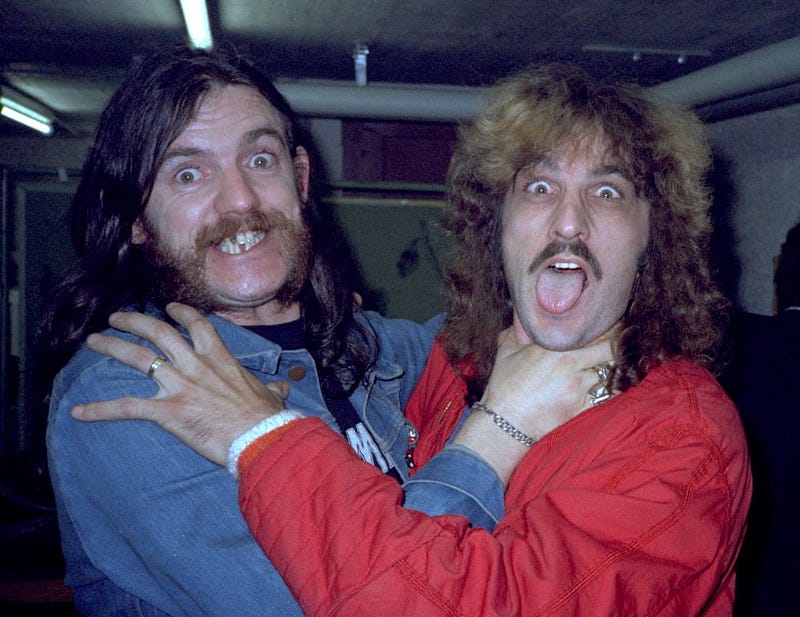
The thing about Lemmy was that he was almost universally feted. Whatever kind of hideous guitar music you were into, Motörhead and Lemmy, the band’s founder and constant, was deified.
Motörhead’s amphetamine-fueled rock ’n’ roll didn’t sell records at quite the same clip as some of their peers, though they were revered for their authentic, bow to none temperament and 40 years of overkill rock ’n’ roll.
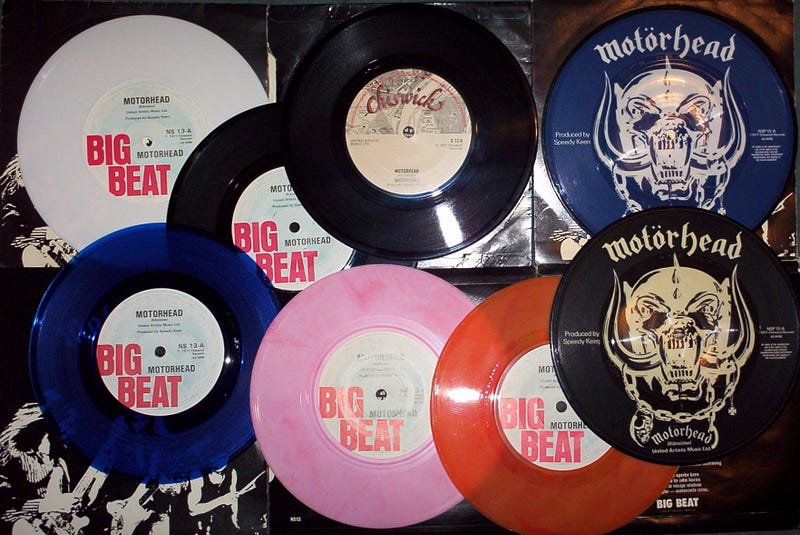
Born on Christmas Eve, 1945, Lemmy died on December 28th, 2015, just four days after his 70th birthday, from an aggressive form of cancer.
Lemmy had long been the avatar for the musician impervious to the limitations that tear mere mortals asunder, his voluminous consumption of Jack Daniels and speed without peer as synonymous to his legacy as the music he contributed.
Motörhead was a song that Lemmy wrote while in Hawkwind — 1973, if memory serves — and a forewarning of what would get him booted from that band. As the namesake for his new band of 1975, it works perfectly well—Motörhead — a euphemism for amphetamines.
He never had to pen a book about how he almost died. No misadventure of this nature befalling him. If he ever sought salvation from the chemical rush that obliterated his original teeth, he uttered no such revelation. He wasn’t here to see the light any more than he was to tell people how to be, though if you were paying attention, there was plenty to learn. He lived with the hammer down, from the point he was too much for Hawkwind to bear (wrong drugs) to where he could no longer draw breath — Lemmy took it all the way to the brink, performing the band’s final show on December 11th, at 69 years of age.
Their iconic Warpig (AKA the Little Bastard) was developed by artist Joe Petagno and attached to the band’s reimagined debut album of 1977. Motörhead sold a lot of t-shirts adorned by that icon. Petagno would go on to curate the visual accompaniment to most of Motörhead’s studio visions of rock ’n’ roll across the years, giving fans a preview of what they could expect when dropping the needle.
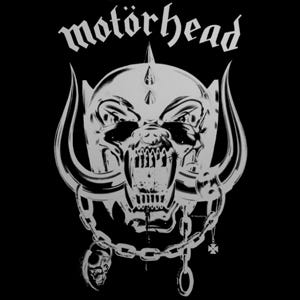
There’s a feeling that comes with being a Motörhead fan that isn’t experienced through any other band. Anyone Built For Speed will understand—Petagno’s impressions assigning the appropriate visual stature to the band’s iconic noise.
Those on the outside who tend to look in on Motörhead know Lemmy’s gruff voice, Ace of Spades (they played it on the Young Ones yaknow!), and a generalised view that the band had 20* albums comprising the same song. Lemmy penned a number of lyrics that perpetuated the idea that everything was more or less the same — White Line Fever, (We Are) The Roadcrew but for the more studious listener, the band’s facade may have appeared static, but there was plenty of musical adventure to be had.
The somewhat marginalised output of the 90s, when they set their sights on sunny California, surfaced some of their best and arguably least fitting material. The constant being the conviction, belief and devotion to their craft. Motörhead was not a band looking for feedback or input from labels or producers. They starred in fan opinion polls but could care less about whatever it was that label executives had to advise. While this form of arrogance may be deemed detrimental in certain contexts, for the fans, this perpetual authenticity meant the band would always be granted another opportunity to make an impression. Motörhead fans aren’t fickle. Everything is permissible, just not rated with equal fervour.
Lemmy was well-read, loved history, and understood it had a habit of repeating itself, particularly as people became ignorant of it. He had a noteworthy wit, even when he was the only guy who got the joke. His self-awareness and humility ensured he never became a caricature — that alone made him one of the few to go four decades and come through with his integrity untarnished. He wrote lyrics for Ozzy, musing that he made more money from those royalties than his own band. There was always an element where truth and fiction were blurred. It wasn’t braggadocio but rather his satirical appraisal of the moment and whatever role he elected to play in curating it. He never wanted to let the fans down, put on a bad show, or flood the zone with subpar material.
He was a believer.
Motörhead toured a lot, took their noise across the globe, and brought the rush to fans far and wide at a volume that no other managed to wield or weaponise in this manner. Everything louder than everything else.
There never was another like Lemmy, nor will there ever be.
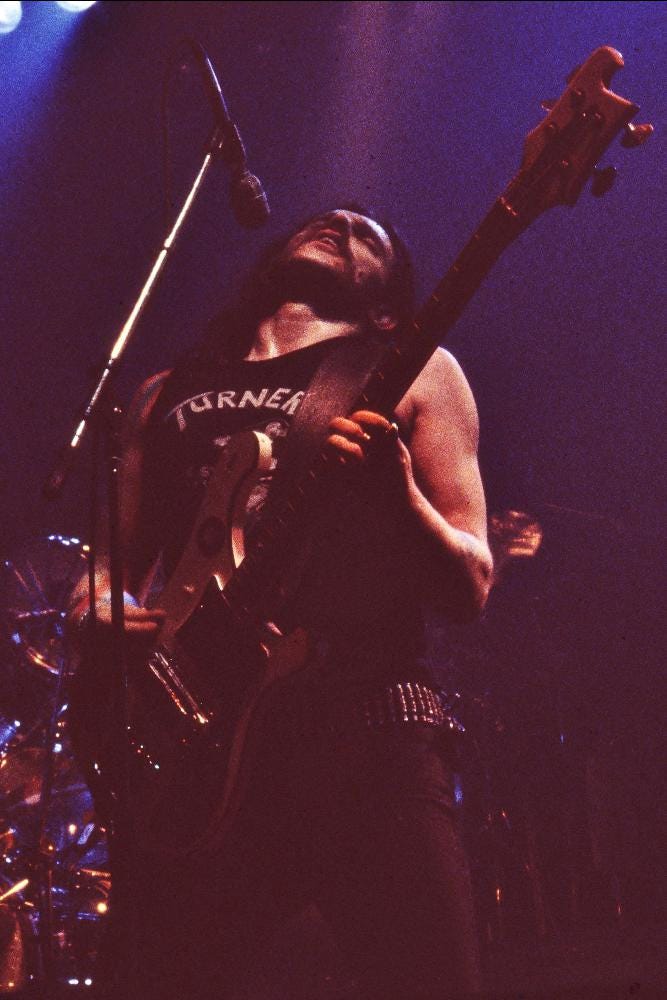
Curious? I thought so. Give the Introducing Motörhead playlist a spin.
I prepared a little playlist featuring a cut from each of their 21 official albums (excluding On Parole from 1975). If my argument on Motörhead’s musical diversity isn’t attained from this, I’ve either failed to make the case or see something others don’t.
Either way, the rush for me has perpetuated for over 30 years and shows no sign of fading.


