
“Legacy Admissions” and the Legacy of Discrimination Against Black and Latino College Applicants
By Giselle Castaneda and Dr. Benjamin M. Drury
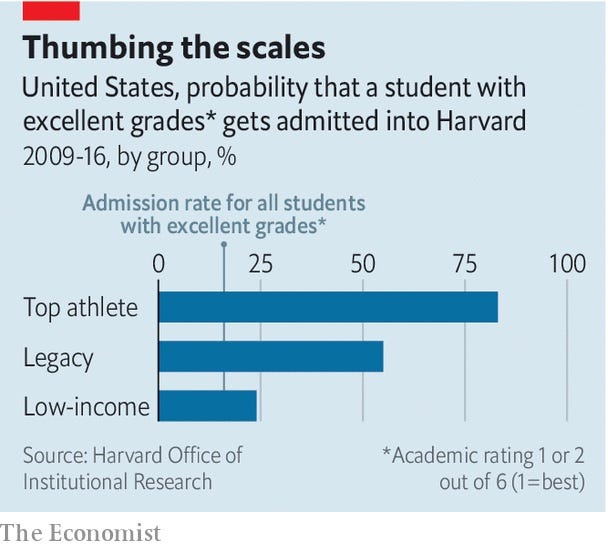
College admission processes have come under increasing scrutiny for their potentially racist reasoning for allowing some students to join their student body while rejecting others who are perfectly qualified — sometimes even better qualified — but do not fit the racial profile needed to balance the student demographics on campus…or at least hit the required percentages to facilitate some form of grant or other funding source to open. With the recent Supreme Court decision striking down affirmative action policies, the debate surrounding legacy preferences in college admissions has gained momentum in the aftermath. Legacy preferences refer to the practice of giving preference to applicants with family ties to alumni of the institution. Critics of legacy admissions have long argued that this practice, historically seen as benefiting the white and wealthy, is no longer justifiable in a world without affirmative action as a counterbalance. President Biden, in response to the court’s ruling, suggested that colleges should reconsider the use of legacy preferences, stating that they “expand privilege instead of opportunity.” This sentiment has been echoed by several Democrats in Congress, who have called for an end to the policy, as well as some Republicans, including Senator Tim Scott of South Carolina.
Legacy preferences have been criticized as a form of affirmative action for white people, with opponents arguing that they perpetuate inequality and limit opportunities for historically marginalized groups. Activists advocating for diversity and equity in admissions argue that removing legacy preferences would be a meaningful step for colleges to demonstrate their commitment to enrolling more Black, Hispanic, and Indigenous students. Various efforts have been made to challenge legacy preferences. Organizations like Ed Mobilizer have mobilized alumni from top colleges, encouraging them to withhold donations until the policy is eliminated. Colorado has already banned legacy preferences at public universities, and similar bills have been introduced in Connecticut, Massachusetts, and New York. In Congress, legislation has been proposed to forbid legacy preferences at all universities that receive federal funding.
While some prestigious colleges have already abandoned legacy preferences, others continue to defend the practice. Proponents argue that as student bodies become more diverse, the benefits of legacy status will extend to students of color. However, opponents argue that the advantages are still skewed in favor of white families who have generations of relatives with access to higher education. Public opinion on legacy admissions is mixed. Polls show that few Americans believe that legacy status or donations should play a significant role in college admissions. However, support for affirmative action in higher education remains relatively strong, albeit with the majority believing that race should play a limited role in admissions decisions. Legacy preferences often benefit predominantly white and affluent families, as historically, these groups have had greater access to higher education. These groups are also more likely to be from wealthy and well-connected families, who are more also likely to be white. This puts students from historically marginalized communities, including Black, Hispanic, and Indigenous students, at a disadvantage in the admissions process, further perpetuating racial disparities in access to higher education. This perpetuates advantages for certain racial and socioeconomic groups and reinforces existing disparities in educational opportunities.
While some colleges have remained silent on their stance, others have shown openness to reconsidering the practice. If anything might serve as comfort for those who stand to be most affected by this ruling, the forthcoming outcome of the legal battles surrounding legacy preferences remains uncertain. The changing landscape and growing pressure may prompt more institutions to reevaluate their use of legacy preferences in the coming months. Colleges and universities will be forced to align their admissions policies with principles of fairness and equal opportunity. Affirmative action policies aim to address historical and systemic disadvantages faced by marginalized groups by considering race or ethnicity as one factor among many in the admissions process. Affirmative action seeks to promote diversity and provide equal opportunities for underrepresented groups, including racial and ethnic minorities. While affirmative action has its own complexities and has faced legal challenges, its intent is to level the playing field and address past discrimination.


