
“Leave this place, go away from here”: A Female Reporter in Exile
By Lala Shams,* translated to English by Rustam Seerat
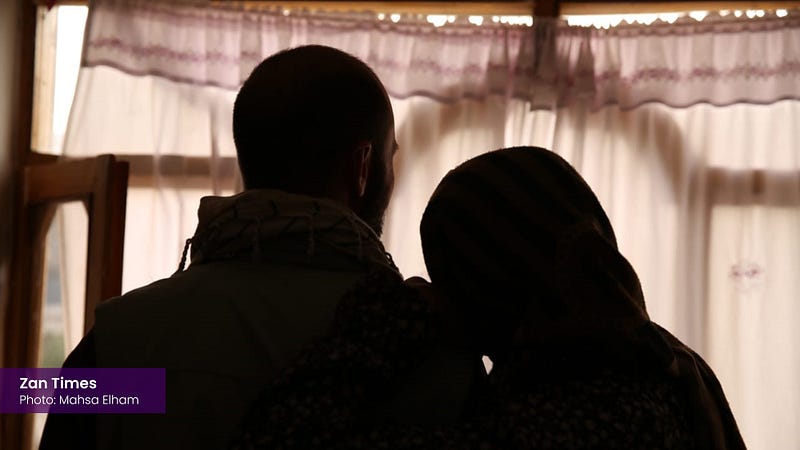
That night, my husband was sleeping, exhausted from work, while I sat up late, preoccupied about what was happening to us as refugees in Pakistan. Realizing my tea had cooled, I moved toward the thermos when I heard the outside gate slam loudly. Terrified, I hurriedly woke up my husband. Someone knocked louder on the gate. My husband, Abdullah,* went to investigate while I stayed inside, realizing that the loud voice belonged to our landlord, a tall Punjabi man with a red beard who has a loud, intimidating voice. I could hear him arguing with my husband. My heart was pounding, as I moved restlessly in the room. Then, my husband returned. Before I could ask what happened, the landlord entered, saying, “Hurry, we don’t want your troubles to get us into trouble, too.” I asked my husband what had happened. Visibly upset and nervous, he responded, “We need to leave. Hurry. He says if we don’t leave, he will hand us over to the police.”
Before I could ask what happened, the landlord entered, saying, “Hurry, we don’t want your troubles to get us into trouble, too.”
As he sat in front of the gate, we quickly gathered two sets of clothes, a blanket, and our cell phones. As I put on my shoes, I could hear the landlord still talking angrily and passionately. He said that the government had ordered them to kick all refugees out from Afghanistan. After we left the room, the landlord put a lock on the door, pocketed the key and shouted at us, “Go away! And if you don’t come back for your belongings by tomorrow, I won’t give you anything.”
We were left in a crowded, dark alley. “Where should we go?” my husband asked. “I don’t know,” I responded, tears streaming down my face. It was 1 a.m. and I wished I was back in Kabul, thinking to myself, “I wish the Taliban hadn’t come. I wish we weren’t displaced from our own home.” I sank deeper into loneliness and our displacement as the night darkened. The pain of being a refugee cut my soul, and I felt the weight of sorrow on my shoulders. There was nothing to say. We were silent like innocent convicts staring at a judge pronouncing their punishments.
We were fearful as we walked, knowing that we’d be quickly deported if the police caught us out at night. Finally, we reached an area full of trees, where we lay down under the protection of one tree. Neither of us could sleep. It was cold, and we were both scared and had nowhere to go.
As daylight approached, I wished for our fate to be blessed by the sun so we wouldn’t suffer anymore. But it seemed that no one was listening to the voice of a migrant and an exiled reporter. Our path was unclear and we worried about what other misfortunes awaited us. As dawn broke, we roamed from alley to alley, searching for a rental house, not even taking the time to take a bite of bread or a sip of water. Everywhere we looked — from homes to hotels and guesthouses — we got the same reaction. They’d ask where we were from and immediately inquire as to whether we had a visa. When we said we didn’t, they’d scold us and tell us to leave.
We were left in a crowded, dark alley. “Where should we go?” my husband asked. “I don’t know,” I responded, tears streaming down my face. It was 1 a.m. and I wished I was back in Kabul.
As day turned into evening, we sought help from a taxi driver to take us to an immigrant settlement area. To our shock, he told us that he had helped many immigrants find homes. We couldn’t trust anyone, but we had no choice but to listen to this man and go with him. We got into his taxi and he set off on a long journey. It was as if time and space had opened their mouths and said, “Leave this place, go away from here.”
In his vehicle, I cried for my exile. The air I smelled, the colours, and the people who saw me were all terrifying. I closed my eyes, and Kabul came to my mind. It was the Kabul I had left behind. It may not have been lush — its people are poor, its air is polluted, and its houses destroyed by war — but its soil was alive and vibrant.
As the taxi stopped, I let go of my thoughts of our homeland and returned to Pakistan, where hatred is poured out toward us from all sides. The driver exited the car and walked across the street, where he entered a shop. Curious, I looked at the man with whom he was talking, desperately hoping that the older man with visible wrinkles would help us. I could see him shaking his head in a negative sign. My husband touched my shoulder, saying, “Calm down, we’ll find somewhere.” I looked at his face, noticing how tired he seemed with parched lips, disheveled hair and lifeless eyes. I could see myself reflected in his eyes, appearing even worse. For his comfort, I forced a cold smile, saying, “God is merciful.”
The older man walked across the street and approached the taxi, asking if we had a visa. I replied, “Yes, my husband has a visa.” The older man said he was very affected by the plight of the refugees, but the government had decided not to allow undocumented refugees to live in homes. At that point, the driver came to our aid: “Look, brother, since morning, I have witnessed these two young people wandering. They have documents; they have visas. They can’t return to Afghanistan because one is a journalist. So help them. If I had an extra room, I could help them to the best of my ability, but I don’t.” The older man still didn’t want to help us. At that moment, my husband’s phone rang, and gave him an address, saying it would be no problem if we wanted to live there. We got back into the car. Even the driver looked happy, as he said he hoped these hard days would not be repeated.
I closed my eyes, and Kabul came to my mind. It was the Kabul I had left behind. It may not have been lush — its people are poor, its air is polluted, and its houses destroyed by war — but its soil was alive and vibrant.
I thought to myself, “How many of us had become uprooted?” Three million immigrants in Pakistan, three million in Iran, tens of thousands of young people entering other countries through smugglers, and hundreds of thousands transferred to third countries. The painful displacement continues, and history must record that they sold themselves and lost everything.
My husband’s voice interrupted my thoughts: “We have finally arrived.” Our new shelter was a third-floor apartment comprising two rooms, a small corridor, and a tiny kitchen. The landlord explained, “Actually, this place is a hostel for engineering students, not for families, but since you are only two people, you can stay here. Still, if you don’t want to, it’s okay.” I immediately replied, “No, this place is fine. We’ll bring our belongings and sign the contract right now.” The landlord looked at his watch and said, “But it’s midnight.” My husband responded, “It’s okay; we don’t have a place to stay. The previous landlord kicked us out of the house at 1 a.m. because we are immigrants. So, if there’s no problem, we’ll stay here now.”
After an hour in our new home, I took a deep breath, and my mind was at ease. However, we woke up to realize we were living in a boys’ hostel and that the four other apartments were full of men. For peace of mind, we bought a lock for our door. Still, the young Pakistani men dance and party most nights. Their loud music bothers us and the smell of their drugs permeates every part of the building. Our apartment is unsuitable, but it’s all we have.
What does the future hold?
After a week in our new place, my husband and I went out to buy more groceries. With the city under police control, we did our best to avoid officers searching to arrest refugees like us. While walking outside, I realized that a policeman was closely scrutinizing me. We changed our route so as not to reveal where we lived, but he continued to pursue us as if we were criminals accused of multiple murders or terrorism. Trying to hide, we escaped him by turning into a very crowded alley.
In the past, we’d been constantly harassed and tormented by Pakistani police, including several times when they took money from my husband. But now, the situation is different — the atmosphere in Pakistan has become completely anti-refugee, and our future seems dark.
- Lala Shams is the pseudonym of a journalist from Afghanistan, now a refugee in Pakistan.
- This report was originally published on the Zan Times Website. To access the Zan Times webpage, click on the link: https://zantimes.com/2024/01/17/leave-this-place-go-away-from-here-a-female-reporter-in-exile/
For more stories about social justice, follow Fourth Wave. Have you got a story or poem that focuses on women or other disempowered groups? Submit to the Wave!