
Learning to Release the Pain of Abuse
How I found healing, and how you can find healing, too

One of my clearest memories of my mother happened when I was a teenager. Getting ready for school, I tried on a new outfit that made me feel comfortable and confident before heading for the door. “Where do you think you’re going looking like that?” I heard her ask. “You look like a tramp, just like you always do.” This was just one of many instances of something, whether words or blows, being flung at me with the intent to wound.
It was in this moment that I began to realize that, rather than viewing me as her daughter, she was seeing me as her competition and a bug to be squashed. Everything that was wrong in her life was my fault, and for this I had to pay.
I never felt safe around her, and for good reason. There didn’t seem to be an answer for the delusions and rages; the therapy came and went; she was in the hospital and then out; no medicine seemed to work. Many days after church, school, or dance practice, I considered that today might be my last day, the day when I would be unable to get up from an assault, or the day that I would finally run away for good. I learned to avoid my mother as much as I could, and gradually, under her radar, moved in with my grandparents who lived next door.
When my friends spoke of their own teenage tragedies — a pimple before a date, a sports-team rejection — I always clammed up, my mind focused on enduring the pain of another day spent in my mother’s house. I felt alien in their world of carefree adolescence, motherly reverence, and safe places.
As soon as I graduated college, I moved 400 miles away, started working in broadcasting, and never returned. For a year, I lived in a high crime area, but I was never afraid; gunshots didn’t bother me, nor did the threat of robbery or other violence. I had survived 18 years with someone who I considered to be evil, intent on destroying my mind, body, and soul. I was a survivor in an unpredictable world, and I walked by myself on perilous streets with no fear of what surrounded me.
I didn’t know until I tried EMDR therapy many years later that I was programmed to feel unsafe as my normal way of being, and that I’d been that way for a very long time.
If you were mistreated as a child, abuse becomes a part of everyday life. I believe that the brain works to protect us from threatening situations by blocking out the ever-present danger and going numb as we get used to our new “normal.” I didn’t show my fear during the day, but at night I routinely dreamt that my mom was coming to harm or even kill me, my subconscious replaying deep-rooted memories to ensure my survival.
“Everyone heals in their own time and in their own way. The path isn’t always a straight line, and you don’t need to go it alone.” ― Zeke Thomas
Regardless of the level of abuse that we have endured, it can take a very long time to find peace with how we were raised and to start decoding the self-destructive programs that are deeply embedded in our psyches.
If we feel fear or a loss of control, it’s all too easy to push that self-destruct button in order to avoid more harm or pain. The alarm bells are always primed and ready to start ringing, and staying hyper-alert to avoid harm is a common coping method for survivors of abuse. Research shows that children who face abuse are in a near-constant state of arousal — a toxic byproduct of long-term physical or psychological harm.
It’s not easy to accept that, while many people get the essential tools that they need in childhood, many of us did not. We may not know what healthy love looks like, or how to handle conflict, or how to give ourselves a break. Asking others for help can be a foreign concept; showing compassion is often difficult; and trusting others is downright impossible, because we never learned how. Years of abuse and neglect has taught us to be unassuming yet on guard. And since it was dangerous to be seen, we may practice wearing different masks in order to hide from additional pain.
Here are four behavioral traits that survivors of child abuse often exhibit as adults:
1. Impulsive Actions Children who are mistreated are constantly on guard against physical or emotional harm. This causes the prefrontal cortex to develop differently, which then affects how survivors of childhood abuse manage their impulses.
2. Anxiety and Depression Neglected or abused children are far more likely to suffer from mental health issues as adults. This isn’t surprising given that our early experiences, good or bad, teach us about the world in which we live and how to view it. We only know what we are taught.
3. Lower Emotional Intelligence Children who have had unhealthy models of EI can only guess at what healthy behavior is. They also tend to interpret emotions through outward gestures and words while internalizing events.
4. Struggles with Intimacy An abused child doesn’t get crucial lessons of nurturing, acceptance, and unconditional love, so when that child reaches adulthood, it can be very hard to deal with newfound intimacy in a healthy way. Until healthy intimacy skills are learned, adult survivors of abuse usually either push other people away or form unhealthy attachments.
I’ve found that sustained abuse in childhood, especially long-term abuse from a primary caretaker, is reminiscent of baking a cake.
Each ingredient serves its purpose at the time, whether to stabilize, soften, or flavor, but after the cake has been baked, it’s impossible to extract the individual ingredients, even if they turn out to be damaging to the overall structure.
The next step, then, becomes re-making the cake by adding in what we were missing as children when the ingredients were chosen for us.
When we re-make our cake, we need to use a foundation of love, a swirling of compassion, several sprinkles of confidence, and all mixed together in a pan of safety.
We need to throw out the old cake of self-loathing, fear, and distrust, scattering its petrified crumbs to the wind, never to be tasted again.
Of course, this simple metaphor doesn’t mean that recovery is not incredibly, painfully, indescribably difficult. If your experience is anything like my own, you may not even realize that you’ve been missing those key ingredients because they have simply never existed for you.
And just like baking, healing takes time.
Some ingredients may need to sit for a while before they are ready to be mixed in. It may take several attempts at a new recipe before we are satisfied with the ingredients, ratios, and final product. Or sometimes you might feel like others want you to just forget about the old cake already.
Childhood abuse stigma is definitely real. We are not broken. We are not lost. We are capable of deep healing. And we want to ensure that no one else goes through what we went through, one act of compassion at a time.
“Life is like an onion; you peel it off one layer at a time, and sometimes you weep.”―Carl Sandburg
Here are just a few of the ingredients that healing from trauma requires:
Letting go of injustices
Accepting reality
Learning essential life skills that we may have missed out on
Developing conflict resolution skills
Knowing that we are enough
Living authentically
Parenting ourselves
Forgiving ourselves
Accepting ourselves
Loving ourselves
But what does it mean to heal? Or how can you know that you are healing?
The crucial first step in starting the healing process is to decide for ourselves how we want to think about our past and future.
As I was learning to process my own traumas, I thought about how each step seemed to present new challenges, more patterns to unlearn, and more things to forgive, and it was all so exhausting. How could I keep this up?
But then a question crossed my mind: “Yes it is hard, and painful, and probably unfair, but how much healing will have taken place in 10, 20, or 30 years? How will my life change after decades of lessons, growth, and healing?”
The answer was surprising. “Life will be beautiful. You will have taught yourself how to overcome what you never had. You will be a game-changer, chain-breaker, and someone who successfully rewired their brain, day by day, to see the good in life instead of the bad.”
Changing the way that we think about our traumas is one of the most beneficial things that we can do, but it is a long, painful process that may require digging into the depths of ourselves, the recesses of our humanity, before we can emerge with a new understanding and awareness of who we were then and who we have become now.
It takes a willingness to see things with a fresh perspective, to figure out and be aware of what triggers us, even though doing so will inevitably dredge up old memories or old negative ways of thinking.
We need to start thinking about where our thoughts originally come from in order to change them.
Easier said than done, right? The good news is that it can be done in tiny, minute steps. For example, saying, “Today I will speak to myself kindly as much as possible, and if I start to internally berate myself, I will shut down those thoughts with kindness and respect for myself. I’ll do a little today, and maybe a little more tomorrow.” And soon, our brain has been slowly rewiring for an entire year, building new connections to events and situations that have nothing to do with past abuse but everything to do with healing, hope, and peace.
Few people can heal themselves from childhood trauma completely on their own. Maybe your journey will be facilitated by a trusted therapist, a support group, or by simply existing in nature. Everyone’s healing path is different because what we’ve experienced and perceived is different.
Personally, I’ve found a lot of benefits in reading about healing from trauma. Here are a few of the books that have helped me the most:
1. Healing from Trauma: A Survivor’s Guide to Understanding Your Symptoms and Reclaiming Your Life
2. The Body Keeps the Score: Brain, Mind, and Body in the Healing of Trauma
3. Complex PTSD: From Surviving to Thriving: A Guide and Map for Recovering from Childhood Trauma
4. It’s not me: Understanding Complex Trauma, Attachment and Dissociation
5. The Complex PTSD Workbook: A Mind-Body Approach to Regaining Emotional Control and Becoming Whole
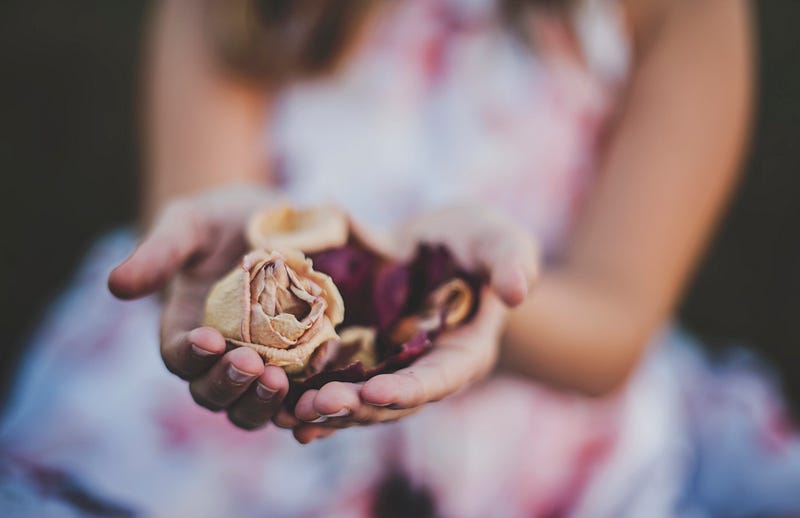
You may have learned, like I did, that no one else will rescue us, that our only hope is to rescue ourselves, that we must become our own champion because that is how we can avoid being hurt like in the past. But the truth is that you are not alone, and that help is out there, and that healing, though almost always painful, is still possible.
It may seem trite, but releasing the corroded entrapment that our traumas create can change every part of our lives, so that they truly become ours to recreate. Let this beautiful and unjust world remind us of the disquieting fact that pain is an inquiry into the soul, a low murmur of some things lost but just as many things gained.
If you’ve never heard it before, at least know this: You are worth more than you know. You are worthy. You are special. You are inherently loveable. And as for those pains from the past, let the memories scatter like ashes, the pain evaporate like water, and the eternal hope for a better path fill your soul.
I’m learning to heal, and I have faith that you can do the same.


