
Learning To Live Through Dress
Exploring the philosophy of Style
Much of life can be distilled into a simple series of if → then statements.
When one looks at the reasoning, the ‘whys’ quietly justifying our struggles against the daily drudgery of life — the thoughts, actions, habits perpetuated most often in an attempt to feel fulfilled — one finds if → then statements.
If I go to school, then I can get a better job
If I got to work, then I can buy food
If I feed my cat, then she might stop meowing (please… it’s 6am and I’m only half-alive)
The cash-value of these statements is in what they procure you. These ‘ifs’ are valuable insofar as they obtain a ‘then’.
To be clear, this isn’t always bad. Indeed, even in the case of our most basic biology, it is essential. Homeostasis is the act of an organism using these types of if, then statements (albeit implicitly) to find some equilibrium in the face of ever-changing environments and ever-depleting resources.
The problem is when this commodified way of thinking trespasses into moral domains. When that which is good is merely that which is useful, the most important things in life get priced out. A process that happens all too often.
It’s an easy to overlook problem. But, I believe (and I think most will agree) that the most important things in life exist outside of this framework. They are things, experiences, ideas that are beautifully and ironically ‘useless’. Which is to say, their value is not in their utility, but they are valuable in themselves.
They are not means to an end, but ends in themselves.
The list is long — art, love, great food, a good book, these are things we fill our free time with, the activities we actively seek out, they are that which provide us meaning.
You do not love someone, truly, because they can provide you with x or because they can satisfy x desire for you. They may well accomplish both things, but at base you love someone simply because you do. You want them to succeed in their endeavours, to be free of suffering, to achieve what the Greeks termed Eudaimonia — a flourishing of well-being. More than what they can provide you, you want them themselves.
In the world of clothing, this may be a useful framework for distinguishing, in the most idealistic of ways, what constitutes fashion and style.
Fashion is outward-facing. It views clothing as a means to an end (often destructively, in the case of ever-enlarging landfills).
Fashion is a way to impress, a way to indicate your social standing, a way of saying something to world. Its value lives and dies by what it can communicate to others. And thus, since the ears of the public are always looking to hear new things, fashion is ever-changing.
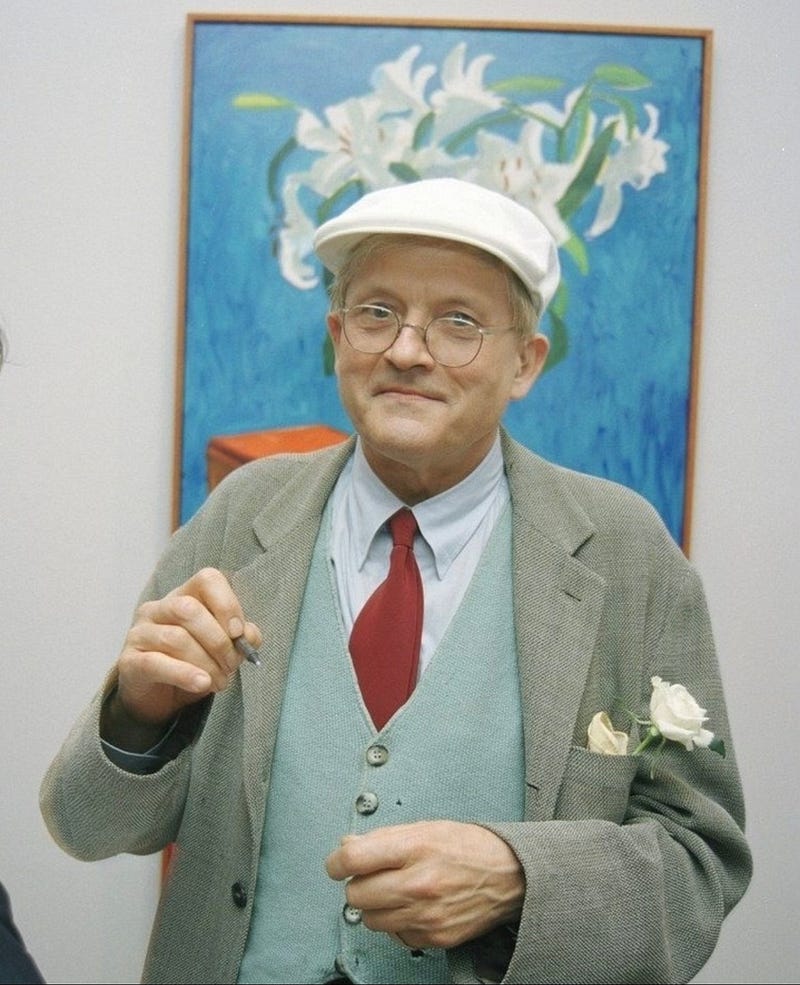
Style is subtly but importantly different. There is, of course, an outward-facing element. For this is unavoidable and undesirable to eliminate wholly (who doesn’t want to be perceived as looking good?). But this outward-facing element is incorporated into a greater whole. For style is an end in itself. It views good clothing as pleasurable and fulfilling even without reference to anything else.
There is pleasure to be taken in craftsmanship, whether the crisp hand-feel of a 4Ply or the gently lilting palette of a donegal watch cap. There is pleasure in unusual combinations or balanced proportions.
At its zenith, Style becomes an art form.
Is it an important art form? Perhaps. But not so long as we compare it to poetry, paintings, and Palm d’Or prize winners.
Style’s place in the firmament is closer to the ground. Its laudability lies in its accessibility — in requiring no special training to experience secondhand, and only an open mind to participate. As wonderful and important and irreplaceable as many of the great art forms are, to the general public they can be equally impenetrable.
Style can achieve upon the pulse of the waking day what the great artists aim for in simulacrum. From the paintings of Deigo Rivera, to the meandering revelations of Marcel Proust, one of the primary jobs of art has always been to reveal the commonplace beauty in everyday life.
At its best, this is what style achieves — the beautification of the everyday. It makes the simple act of popping to the corner store an aesthetic experience.
And that, alone, makes it a pursuit worthwhile.