avatarGeoffrey Bunting

Free AI web copilot to create summaries, insights and extended knowledge, download it at here

7887

Abstract

l into a cycle — as Kiki does — that feels like it begins and ends with work.</p><figure id="f69e"><img src="https://cdn-images-1.readmedium.com/v2/resize:fit:800/0*zW98RB50DyVTLCt3.jpeg"><figcaption>Image source: <a href="https://bloomreviewsblog.com/2019/10/30/waxing-philosophical-kikis-delivery-service-and-burnout/">Bloom Reviews</a></figcaption></figure><p id="84d7">For Kiki, there is a resolution. She rediscovers her passion alongside a new sense of self. It wouldn’t be a satisfying film otherwise. For the rest of us, it’s not so easy. The responsibility to discover our own identity beyond work falls squarely on us. A task made increasingly difficult in a world that chronically devalues creativity, caters to a specific group of white, overwhelmingly male, people, and places the burden for supporting flawed economies on the shoulders of young people. While we can look at a film from 1989 and find reflections of the 2020s, the truth is the backdrop against which the film was released and in which we watch it now are just terrifyingly similar.</p><h2 id="f24e">A (very) brief history of the Japanese economy</h2><p id="d1f5">At the publication of <i>Kiki’s Delivery Service</i>, exports drove Japan past Germany to become the third largest economy in the world. Images of its “<a href="http://content.time.com/time/photogallery/0,29307,1905385,00.html">salarymen and capsule hotels captured the world’s imagination</a>” while western businesses scrambled to emulate the practices that ostensibly made Japan such a global economic success. It represented a remarkable turnaround in the space of a few decades.</p><p id="59a7">In the Second World War, Japan funded its campaigns by issuing 200 percent of its GDP in war bonds. This drove national debt to a level only slightly lower than today. As soldiers returned and exchanged military currency for bonds, Japan experienced a rapid rise in cash-flow at a time of material scarcity. This pushed the country into austerity measures on the back of the resultant hyperinflation and, ultimately, deflationary recession.</p><p id="f1b6">Growing American demand for Japanese manufacturing during the Korean War turned this around. The increase in work led to unions and rising wages. This encouraged an upsurge in consumption and demand for even greater production as Japan entered its economic miracle. By the time of the Tōkyō Olympics in 1964, the country was experiencing a staggering annual GDP growth of 9.1 percent.</p><figure id="7442"><img src="https://cdn-images-1.readmedium.com/v2/resize:fit:800/0*pJiHFIlZNik99zw-"><figcaption>Between the Second World War and the 1964 Olympics, Japan experienced a remarkable econonomic turnaround. Image source: <a href="https://olympics.com/en/news/tokyo-1964-playback-first-asian-olympics-legacy-infrastructure-technology">Olympics</a></figcaption></figure><p id="5142">As the insularity of the Second World War gave way to globalism, so too did Japan’s economy start to reflect global trends. Nothing influenced worldwide finances more than oil and the Iranian Revolution of 1978 saw prices skyrocket. This persuaded Japan to reconsider its energy policies. Focus shifted from fossil fuels to nuclear power and greater energy efficiency. Mass production of super-conductors and computers led to increased imports and by the time Kiki’s Delivery Service hit bookshelves the economy was ostensibly healthier than ever before.</p><p id="9ebe">The power Japan exerted on the global market didn’t sit well with everyone, however. In an effort to curtail Japanese exports, the <a href="https://en.wikipedia.org/wiki/Plaza_Accord">US depreciated the dollar relative to the Japanese yen</a>. This corrected trade imbalances but drove Japanese products into east Asia and shifted the country’s focus to domestic production. Japanese international influence instead moved to real estate, but this only increased the already intense recessionary pressure on Japan’s economy.</p><figure id="8a9a"><img src="https://cdn-images-1.readmedium.com/v2/resize:fit:800/0*JGqQ3LlJp3wgZHqE"><figcaption>Street demonstration in 1978. Image source: Wikimedia Commons</figcaption></figure><p id="e672">By the time Hayao Miyazaki’s adaptation of Kiki’s Delivery Service hit theatres, the Nikkei Index was almost at its peak. Faced with this economic abundance, Japan’s demographics stagnated, the workforce stopped expanding, and though individual productivity remained high the economic burden simply became too much. In an effort to mitigate this pressure, the banks of Japan hiked up interest rates. But all they achieved was speeding up the inevitable bursting of the bubble.</p><p id="892c">By 1990, the country lost its status as an</p><blockquote id="3868"><p><a href="https://hbr.org/1998/01/reinterpreting-the-japanese-economic-miracle">economic juggernaut — the model to emulate in industrial policy, management techniques, and product engineering — and found itself a beleaguered nation in its worst recession since World War II</a>.”</p></blockquote><p id="0e4b">One can argue that Japan never recovered — that the “<a href="https://www.investopedia.com/articles/economics/08/japan-1990s-credit-crunch-liquidity-trap.asp#:~:text=Japan's%20%22Lost%20Decade%22%20was%20a,down%20the%20real%20estate%20market.">lost decade</a>” that followed has expanded to become decades. Another recession hit in 2001 and again in 2008. By 2009, <a href="https://www.nytimes.com/2009/04/23/business/global/23immigrant.html">Japan was paying foreign workers to return home</a> to ease pressure on the nation’s welfare system.</p><p id="3dbd">So many of Japan’s post-war economic policies were designed to catch up with western interests. Hayao Miyazaki branded it a country that “merely dithers around,” concerned more with the “desire to do business with and be good neighbours” to the west than developing “deeper principles.” Once the economy stabilised, Japan failed to create a clear economic plan. Instead, businesses focussed on maintaining performance and keeping up with rivals. Adopting a “<a href="https://hbr.org/1998/01/reinterpreting-the-japanese-economic-miracle">wait and see, and then go with the group</a>” mentality that to outsiders, seduced by their own orientalism, appeared as a façade of harmony; but in Japan stood in the way of much-needed reform.</p><h2 id="63b2">The Static Economy</h2><p id="65fd">Hayao Miyazaki witnessed those same post-war ebbs and flows that came to a head soon after the release of <i>Kiki’s Delivery Service</i>. While the adaptation was conceived as a story of finding one’s independence, Miyazaki acknowledged it reflected the pressure the economy was putting on young people; that “Kiki’s problems are also the problems of [Studio Ghibli’s] young staff members.”</p><figure id="1360"><img src="https://cdn-images-1.readmedium.com/v2/resize:fit:800/0*fauIpJoWTvE0LJdo"><figcaption>Image source: <a href="https://www.huffpost.com/entry/adam-posen-one-big-lesson_b_180557">HuffPost</a></figcaption></figure><p id="9c58">Japan may not have recovered from the economic crises of the 1990s, but the west is still healing from the wounds of its own, especially the 2008 financial crisis. <i>Kiki’s Delivery Service</i> is a reminder of universal economic trends, echoing the anxieties felt by young people around the world. For, no matter what the crisis or where it occurs, it is unfailingly young workers that must shoulder the economic burden.</p><p id="f5ff">In the UK, youth unemployment has reached a crisis level. As the cost-of-living rises and wages stagnate, it is hard for young people to find a foothold in professional work. Nor does it get better with time. The BMJ reported that “[youth] <a href="https://oem.bmj.com/content/oemed/early/2021/05/25/oemed-2021-107473.full.pdf">unemployment could lead to future mental health problems</a>.” Youn

Options

g people are increasingly forced to take on low-paying work while they wonder how to make ends meet. In an interview for <i>The Face</i>, a recent graduate related,</p><blockquote id="e73e"><p><a href="https://theface.com/life/university-graduates-unemployment">I’m so anxious about the future that I barely sleep anymore… You think when you leave university that doors will be open for you, but I feel like they’re all just being slammed in my face</a>.”</p></blockquote><p id="9890">It is a sentiment shared by young people across the world and all the signs suggest things are only going to get worse. If we can bring ourselves to shed the insularity that is rapidly defining the west, there are stark lessons to be learned from more concentrated populations. Since the bubble burst an economic crisis has been brewing in Japan; one that the Japanese government has thus far failed to arrest. Dropping birth-rates are causing an “<a href="https://archive.ph/mKsza#selection-847.0-847.207">extreme demographic crisis threatening the country’s economy, industries and welfare system</a>.” Statistics suggest there are only 14.93 million children under 15 in Japan, a fall of 190,000 from 2020 and the 40th successive year of decline.</p><p id="8550">Increasing lifespans leave</p><blockquote id="16fd"><p><a href="https://archive.ph/k4BHr#selection-891.29-891.282">even fewer working taxpayers supporting a growing cohort of elderly people. Almost a third of the population are now aged 65 or over. From 2030 labour shortages are expected to begin reducing economic growth by an average of 0.3 per cent [sic] a year</a>.”</p></blockquote><p id="d830">The pressure to hold up the economy is placed on young people, only exacerbating the issue as it becomes harder for them to “<a href="https://www.theatlantic.com/business/archive/2017/07/japan-mystery-low-birth-rate/534291/">marry and have children because they know they can’t afford to</a>.”</p><p id="9271">It is a decline we are already seeing in Europe, the UK, and US. It is, ironically considering the right-leaning politics of the UK and US in particular, mitigated by immigration as, “<a href="https://www.newstatesman.com/politics/2021/07/baby-bust-how-declining-birth-rate-will-reshape-world">were it not for immigration, the population of every rich country in the world would be shrinking</a>.”</p><figure id="316e"><img src="https://cdn-images-1.readmedium.com/v2/resize:fit:800/0*XuDmmuD-iMGjo00f"><figcaption>A demonstration against unemployment in Cardiff in 1982. Demonstrating that, really, nothing has changed in the last forty years. Image source: Robin Weaver</figcaption></figure><p id="d963">Economists already warn that fewer births will have a major effect on the British economy but instead of providing better protections for mothers, fixing the exploitative childcare systems in the UK, or addressing inaccessibility in the workplace, the Conservative government have instead placed the burden of social care on the poorest in society through increased National Insurance payments. Even without the demographic warnings of Japan, this is an incredible move that places the burden of mitigating the economic decline instigated by falling birth-rates on “<a href="https://www.theguardian.com/politics/2021/sep/03/raising-national-insurance-to-fund-social-care-is-fraught-with-political-risk">young workers rather than the pensioners who will be the beneficiaries of the change</a>.” The only possible result is an acceleration of a “<a href="https://www.newstatesman.com/politics/2021/07/baby-bust-how-declining-birth-rate-will-reshape-world">decades-long trend — one that will completely reconfigure the global economy, the international balance of power, and our intimate and personal lives</a>.”</p><p id="640b">It is another example of western societies vilifying the young and immiserated and failing to hold the richest in society — many of whom hold power — accountable for their wealth. And in ignoring the lessons of Japan — or, better yet, coming together globally to address the issue — it instead places yet another burden on young people. Alongside fighting discrimination, climate catastrophe, and latterly a global pandemic. Given the self-involved island mentalities of older generations — the generations that instigated so many of the crises facing the world today — it falls to young people to come together and push for reform. It is poignant then, as so many of us hold Kiki’s Delivery Service as a reflection of our struggles, that Hayao Miyazaki called it “an expression of solidarity to young viewers” who shoulder more burdens than any generation before.</p><h2 id="111f">Why we fly</h2><p id="3a4d">It is amid these economic struggles that <i>Kiki’s Delivery Service</i> offers solace. It reminds us that in societies in which our identity is so often linked to our ability to produce and in collectivistic causes in which we are but one voice in millions, we are still individuals. We are not simply a utility — a process within a greater program to be directed at whatever function is required. We are complex beings made of passions and feelings and foibles, all of which are beautiful things that require our attention. “There is magic inside each and every one of you.”</p><figure id="e17a"><img src="https://cdn-images-1.readmedium.com/v2/resize:fit:800/0*Fxio1aqcmoFAGuTD.jpg"><figcaption>Image source: Film Grab</figcaption></figure><p id="28fb">So much of our lives are devoted to the how of things — how to address climate change, how to arrest the damage of past generations, how to stay safe, to make money, how to be happy. Kiki quickly learns how to fly. But it’s not enough. Surrounded by privileged children and apathetic adults, she eventually remarks, “Flying used to be fun until I started doing it for a living.” It’s not until she rediscovers her passion — remembers why she flies — that she recaptures her magical ability.</p><p id="38a4">“How would the world be different,” Miyazaki asks, “if the human race could not yet fly and children still longed for the peaks of clouds?” How might we be different if our passions could grow and take shape outside the bonds of productivity? After all, “even if you can’t fly through the air like Kiki, you have your own unique power that is equally important.”</p><figure id="1162"><img src="https://cdn-images-1.readmedium.com/v2/resize:fit:800/0*0yZIHjJrDLkaYdCN.gif"><figcaption>Image source: Giphy</figcaption></figure><p id="7f38">The message in so many Miyazaki films is simple: live life to the fullest. A life of how cannot achieve that. No matter what you do — whether you paint, bake, or fly — Kiki’s Delivery Service encourages us to take time for ourselves. It reminds us we are not defined by what we do, but why we do it. And, in a crushing economy over which we have so little control and presided over by older generations who refuse to learn from past mistakes, sometimes the best thing we can do — whether it’s 1989 or 2021 — is remember <i>why </i>we fly.</p><p id="0ad4">This is the second time I’ve written about <i>Kiki’s Delivery Service</i>. A long time ago, <a href="https://geoffreybunting.medium.com/growing-up-5091de4a8ea4">I wrote about its relation to burnout</a> just as that kind of piece was starting to pop up everywhere. I include it here because I think it really shows how far I’ve come in the last few years — which is a nice thought to take into 2022.</p><p id="3961"><a href="https://geoffreybunting.medium.com/"><b>Geoffrey Bunting</b></a> is a writer and book designer. He has written for <i>History Today</i>, <i>Modus</i>, <i>Lock On</i>,<i> Super Jump Magazine</i>, <i>UX Collective</i>, <i>The Historian</i>, <i>Bridge Eight</i>, <i>History Magazine</i>, and more. He can be found at <a href="https://geoffreybunting.co.uk/">geoffreybunting.co.uk</a></p></article></body>

“Learning to Fly” — Kiki’s Delivery Service and the Unchanging Economy

The 1989 film remains relevant to young creatives, but why?

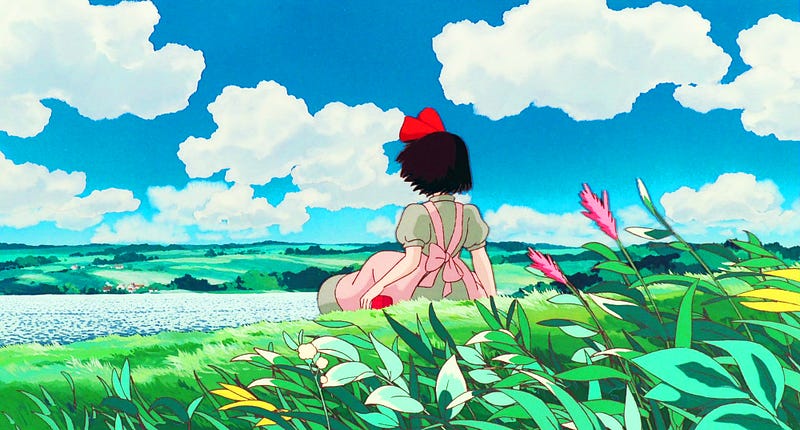
A girl flew through the night sky. “The wind blowing past her grew stronger, and the bristles of her broom sounded like a running river. Now and then she saw a scattering of lights between the dark mountains.” The roar of a plane engine and the beams of headlights split the night. Soon, “the eastern sky began to grow lighter… The hills were carpeted in the gentle greens of spring and looked light enough to float into the air… she saw a village with trails of smoke rising from chimneys.” At last, she reached a town. “Tall buildings, both box-shaped and triangular, jutted toward the sky. “On the ground, the streets were bustling with afternoon shoppers” and she was isolated, hovering above them — basking in the “solitude of flying alone.”

It is not surprising that this image resonated with Hayao Miyazaki as he adapted Eiko Kadono’s Kiki’s Delivery Service. His father and uncle both worked in the aeronautical industry and he spent his childhood drawing and building imaginary flying machines. The majesty of flight is a part of all his films. Miyazaki’s relationship to it, however, is complex. At once, it expresses freedom and inaccessibility. Can “being liberated from the ground,” he asks, “[not] also create insecurity and loneliness”?
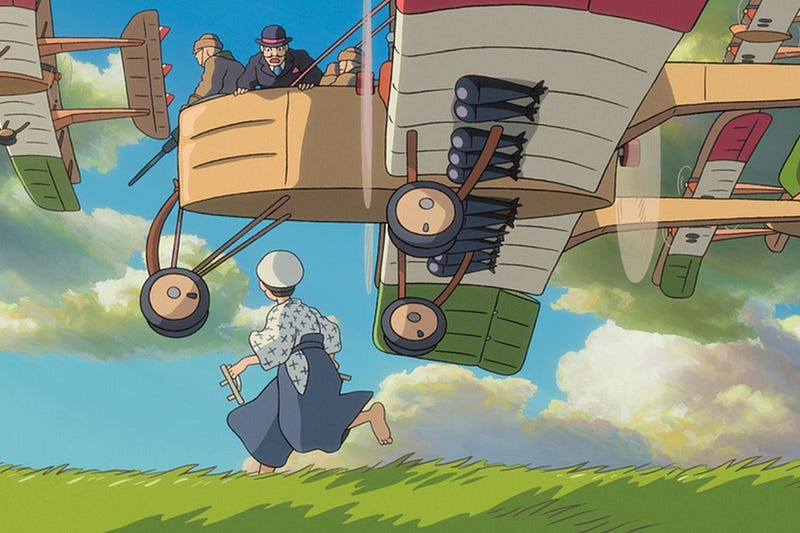
Flight has a special place in all of Hayao Miyazaki’s films. Image source: The Verge

Flight is one of humanity’s greatest accomplishments, yet in Kiki’s Delivery Service it becomes a cipher for the struggles of young creatives battling against the illusion of plenty. The book released in 1985 as the Japanese economy hurtled towards its zenith. Wage inflation and low unemployment paradoxically created job shortages; a positive output gap in the economy in which new jobs could not produce enough to cover their own costs. For Miyazaki, Kiki’s Delivery Service reflected “young women who came to the big cities all alone, dreaming of making it [and their] naïve resolve and lack of awareness” of a stagnating economy on the precipice of a steep decline.

It is this contextual background that makes the film so relatable in the west three decades later. It reflects the ups-and-downs of post-war Japan, highlighting the inequity facing young people in a bubble economy about to burst. Kiki’s Delivery Service’s timelessness is less about the subjective ways in which we push our own narratives into its story than the economic mistakes that have been repeated, globally, since the 1980s. And much as Kiki’s Delivery Service serves as both reflection and premonition of the economic hardships facing young people today, so too does it fit into a contemporary landscape in which Japan remains a microcosm of the global economy and a harbinger of the difficulties facing the west.

A Kind of Magic

Magic isn’t magic in Kiki’s Delivery Service. It isn’t the profound systems we find in Earthsea and The Lord of the Rings, wielded by enormously powerful figures. Rather, witches are no more remarkable than bakers and artists. The powers that mark witches are simply “something that all real girls possess — limited abilities that merely hint at some sort of talent.”

Discussing The Wind Rises, Hayao Miyazaki stated,

“People who design planes and machines — no matter how much they believe what they are doing is good — the winds of time eventually turn them into tools.”

This conflict is at the heart of Kiki’s Delivery Service; the battle between the passion of youth and the utility of capitalism; because magic, like all skills, can be monetised. While Kiki’s mother was revered as a potion maker in their rural village, once she arrives in the city Kiki’s flight is greeted as little more than a curiosity. Lost and unnoticed, Kiki ends up living with Osono — someone thriving in the metropolitan environment that has thus far rejected Kiki. It is Osono who suggests she commoditise her flying into a delivery service. Conversely, Ursula is a freelance artist literally living outside the society into which Kiki is so keen to fit. Where Osono sees economic viability in Kiki’s flying, Ursula sees her as a fellow creative for whom flying for profit alone can only be a constraint.
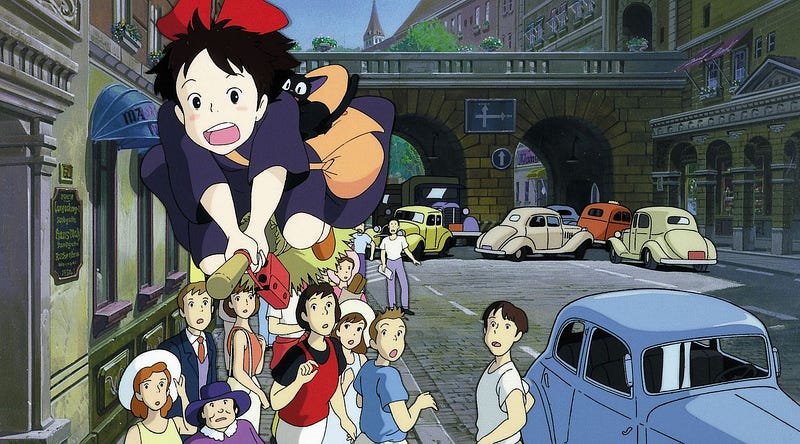
Image source: Polygon

Kiki suffers because she cannot find the balance between the two. The abstract expectations she had at home are constantly reinforced as she is “protected by her mother’s cherished broom, cheered by the transistor radio her father bought her, and always accompanied by her faithful black cat.” A deliberate nod to young people

“who dream of the bright lights of the big city and hope to make it there on their own, while still depending on the emotional (and often economic) support of their loving parents.”

Before long, Kiki’s life takes on a familiar pattern to many contemporary young people. She works and she comes home and she works again. She burns out and can no longer conjure magic. It is no coincidence that, at this point, every link to home is severed. Jiji stops speaking, her mother’s broom breaks, and she stops listening to the radio. Unable to fly, she misplaces all sense of definition. “If I lose my magic,” she says in desperation, “it means I’ve lost absolutely everything.” Where once passion drove her to seek out the sky, now she takes the bus, rides in a car with Ursula — mingles with the people who, until now, she has viewed only as potential customers.

Kiki learned how to fly. But when in need of self-determination to understand why, she is unable to define herself by any other means. Miyazaki sums up Kiki’s position succinctly when musing on his own motivations:

“When I was young poverty encouraged us to have a passion for life… I never want to lose the excitement I experience while I’m working. When I do, I think it’ll all be over for me.”

It is almost impossible not to feel defined by our work in modern society. Within economies that both vilify and depend on young people, pushing them to work more for less, it is easy to fall into a cycle — as Kiki does — that feels like it begins and ends with work.
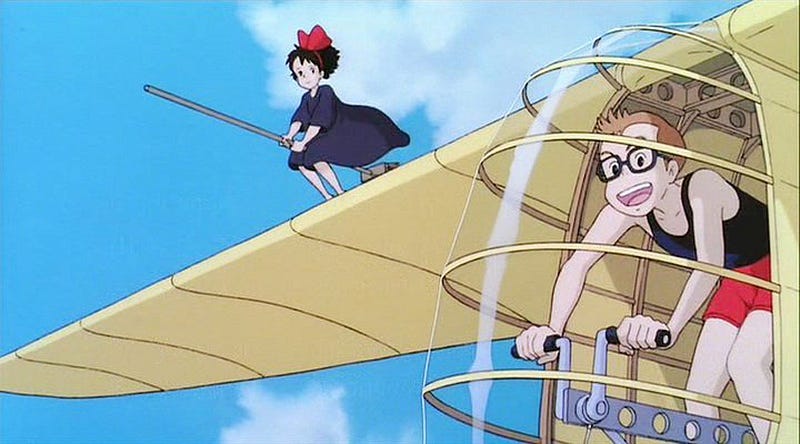
Image source: Bloom Reviews

For Kiki, there is a resolution. She rediscovers her passion alongside a new sense of self. It wouldn’t be a satisfying film otherwise. For the rest of us, it’s not so easy. The responsibility to discover our own identity beyond work falls squarely on us. A task made increasingly difficult in a world that chronically devalues creativity, caters to a specific group of white, overwhelmingly male, people, and places the burden for supporting flawed economies on the shoulders of young people. While we can look at a film from 1989 and find reflections of the 2020s, the truth is the backdrop against which the film was released and in which we watch it now are just terrifyingly similar.

A (very) brief history of the Japanese economy

At the publication of Kiki’s Delivery Service, exports drove Japan past Germany to become the third largest economy in the world. Images of its “salarymen and capsule hotels captured the world’s imagination” while western businesses scrambled to emulate the practices that ostensibly made Japan such a global economic success. It represented a remarkable turnaround in the space of a few decades.

In the Second World War, Japan funded its campaigns by issuing 200 percent of its GDP in war bonds. This drove national debt to a level only slightly lower than today. As soldiers returned and exchanged military currency for bonds, Japan experienced a rapid rise in cash-flow at a time of material scarcity. This pushed the country into austerity measures on the back of the resultant hyperinflation and, ultimately, deflationary recession.

Growing American demand for Japanese manufacturing during the Korean War turned this around. The increase in work led to unions and rising wages. This encouraged an upsurge in consumption and demand for even greater production as Japan entered its economic miracle. By the time of the Tōkyō Olympics in 1964, the country was experiencing a staggering annual GDP growth of 9.1 percent.
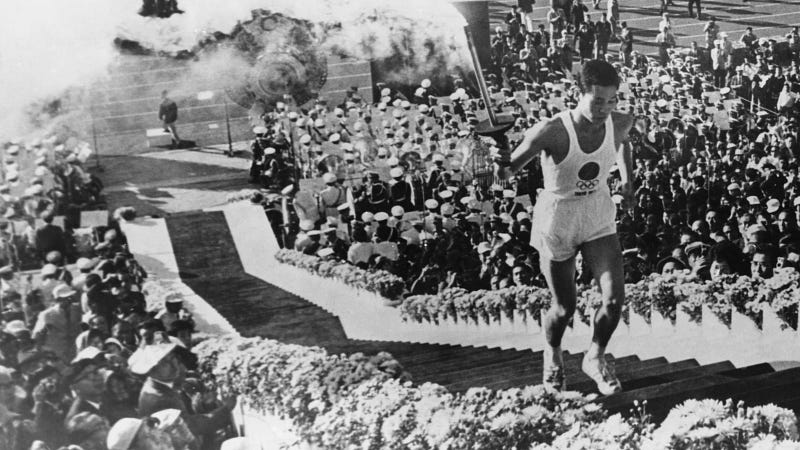
Between the Second World War and the 1964 Olympics, Japan experienced a remarkable econonomic turnaround. Image source: Olympics

As the insularity of the Second World War gave way to globalism, so too did Japan’s economy start to reflect global trends. Nothing influenced worldwide finances more than oil and the Iranian Revolution of 1978 saw prices skyrocket. This persuaded Japan to reconsider its energy policies. Focus shifted from fossil fuels to nuclear power and greater energy efficiency. Mass production of super-conductors and computers led to increased imports and by the time Kiki’s Delivery Service hit bookshelves the economy was ostensibly healthier than ever before.

The power Japan exerted on the global market didn’t sit well with everyone, however. In an effort to curtail Japanese exports, the US depreciated the dollar relative to the Japanese yen. This corrected trade imbalances but drove Japanese products into east Asia and shifted the country’s focus to domestic production. Japanese international influence instead moved to real estate, but this only increased the already intense recessionary pressure on Japan’s economy.
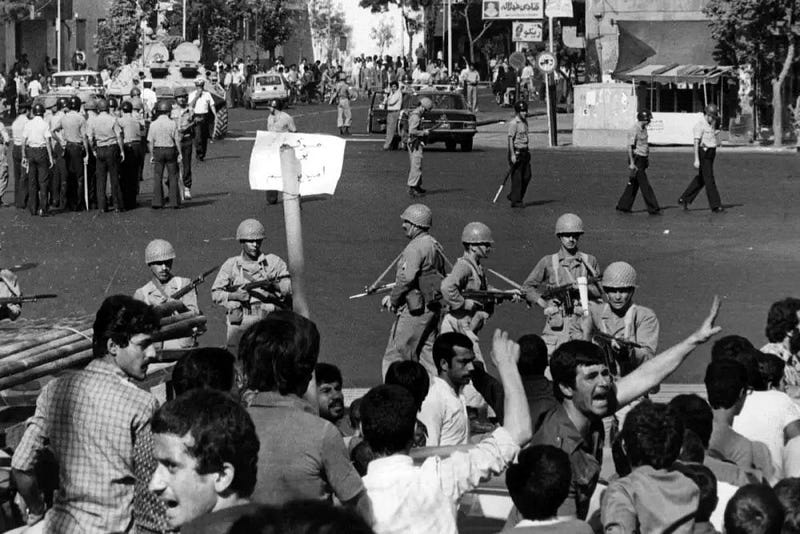
Street demonstration in 1978. Image source: Wikimedia Commons

By the time Hayao Miyazaki’s adaptation of Kiki’s Delivery Service hit theatres, the Nikkei Index was almost at its peak. Faced with this economic abundance, Japan’s demographics stagnated, the workforce stopped expanding, and though individual productivity remained high the economic burden simply became too much. In an effort to mitigate this pressure, the banks of Japan hiked up interest rates. But all they achieved was speeding up the inevitable bursting of the bubble.

By 1990, the country lost its status as an

economic juggernaut — the model to emulate in industrial policy, management techniques, and product engineering — and found itself a beleaguered nation in its worst recession since World War II.”

One can argue that Japan never recovered — that the “lost decade” that followed has expanded to become decades. Another recession hit in 2001 and again in 2008. By 2009, Japan was paying foreign workers to return home to ease pressure on the nation’s welfare system.

So many of Japan’s post-war economic policies were designed to catch up with western interests. Hayao Miyazaki branded it a country that “merely dithers around,” concerned more with the “desire to do business with and be good neighbours” to the west than developing “deeper principles.” Once the economy stabilised, Japan failed to create a clear economic plan. Instead, businesses focussed on maintaining performance and keeping up with rivals. Adopting a “wait and see, and then go with the group” mentality that to outsiders, seduced by their own orientalism, appeared as a façade of harmony; but in Japan stood in the way of much-needed reform.

The Static Economy

Hayao Miyazaki witnessed those same post-war ebbs and flows that came to a head soon after the release of Kiki’s Delivery Service. While the adaptation was conceived as a story of finding one’s independence, Miyazaki acknowledged it reflected the pressure the economy was putting on young people; that “Kiki’s problems are also the problems of [Studio Ghibli’s] young staff members.”
Image source: HuffPost

Japan may not have recovered from the economic crises of the 1990s, but the west is still healing from the wounds of its own, especially the 2008 financial crisis. Kiki’s Delivery Service is a reminder of universal economic trends, echoing the anxieties felt by young people around the world. For, no matter what the crisis or where it occurs, it is unfailingly young workers that must shoulder the economic burden.

In the UK, youth unemployment has reached a crisis level. As the cost-of-living rises and wages stagnate, it is hard for young people to find a foothold in professional work. Nor does it get better with time. The BMJ reported that “[youth] unemployment could lead to future mental health problems.” Young people are increasingly forced to take on low-paying work while they wonder how to make ends meet. In an interview for The Face, a recent graduate related,

I’m so anxious about the future that I barely sleep anymore… You think when you leave university that doors will be open for you, but I feel like they’re all just being slammed in my face.”

It is a sentiment shared by young people across the world and all the signs suggest things are only going to get worse. If we can bring ourselves to shed the insularity that is rapidly defining the west, there are stark lessons to be learned from more concentrated populations. Since the bubble burst an economic crisis has been brewing in Japan; one that the Japanese government has thus far failed to arrest. Dropping birth-rates are causing an “extreme demographic crisis threatening the country’s economy, industries and welfare system.” Statistics suggest there are only 14.93 million children under 15 in Japan, a fall of 190,000 from 2020 and the 40th successive year of decline.

Increasing lifespans leave

even fewer working taxpayers supporting a growing cohort of elderly people. Almost a third of the population are now aged 65 or over. From 2030 labour shortages are expected to begin reducing economic growth by an average of 0.3 per cent [sic] a year.”

The pressure to hold up the economy is placed on young people, only exacerbating the issue as it becomes harder for them to “marry and have children because they know they can’t afford to.”

It is a decline we are already seeing in Europe, the UK, and US. It is, ironically considering the right-leaning politics of the UK and US in particular, mitigated by immigration as, “were it not for immigration, the population of every rich country in the world would be shrinking.”

A demonstration against unemployment in Cardiff in 1982. Demonstrating that, really, nothing has changed in the last forty years. Image source: Robin Weaver

Economists already warn that fewer births will have a major effect on the British economy but instead of providing better protections for mothers, fixing the exploitative childcare systems in the UK, or addressing inaccessibility in the workplace, the Conservative government have instead placed the burden of social care on the poorest in society through increased National Insurance payments. Even without the demographic warnings of Japan, this is an incredible move that places the burden of mitigating the economic decline instigated by falling birth-rates on “young workers rather than the pensioners who will be the beneficiaries of the change.” The only possible result is an acceleration of a “decades-long trend — one that will completely reconfigure the global economy, the international balance of power, and our intimate and personal lives.”

It is another example of western societies vilifying the young and immiserated and failing to hold the richest in society — many of whom hold power — accountable for their wealth. And in ignoring the lessons of Japan — or, better yet, coming together globally to address the issue — it instead places yet another burden on young people. Alongside fighting discrimination, climate catastrophe, and latterly a global pandemic. Given the self-involved island mentalities of older generations — the generations that instigated so many of the crises facing the world today — it falls to young people to come together and push for reform. It is poignant then, as so many of us hold Kiki’s Delivery Service as a reflection of our struggles, that Hayao Miyazaki called it “an expression of solidarity to young viewers” who shoulder more burdens than any generation before.

Why we fly

It is amid these economic struggles that Kiki’s Delivery Service offers solace. It reminds us that in societies in which our identity is so often linked to our ability to produce and in collectivistic causes in which we are but one voice in millions, we are still individuals. We are not simply a utility — a process within a greater program to be directed at whatever function is required. We are complex beings made of passions and feelings and foibles, all of which are beautiful things that require our attention. “There is magic inside each and every one of you.”
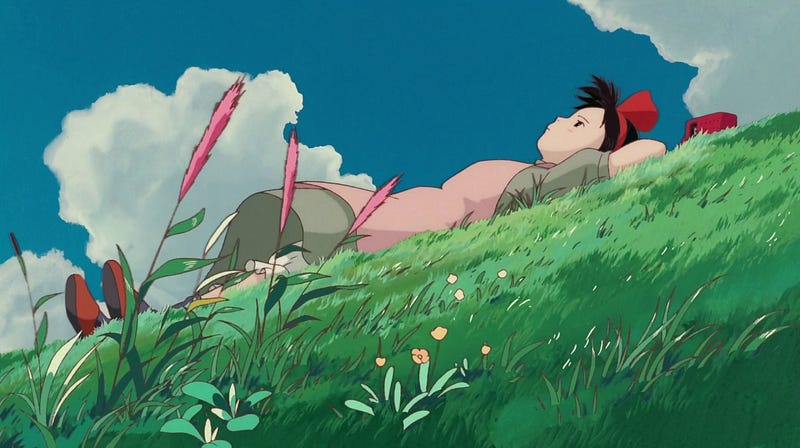
Image source: Film Grab

So much of our lives are devoted to the how of things — how to address climate change, how to arrest the damage of past generations, how to stay safe, to make money, how to be happy. Kiki quickly learns how to fly. But it’s not enough. Surrounded by privileged children and apathetic adults, she eventually remarks, “Flying used to be fun until I started doing it for a living.” It’s not until she rediscovers her passion — remembers why she flies — that she recaptures her magical ability.

“How would the world be different,” Miyazaki asks, “if the human race could not yet fly and children still longed for the peaks of clouds?” How might we be different if our passions could grow and take shape outside the bonds of productivity? After all, “even if you can’t fly through the air like Kiki, you have your own unique power that is equally important.”
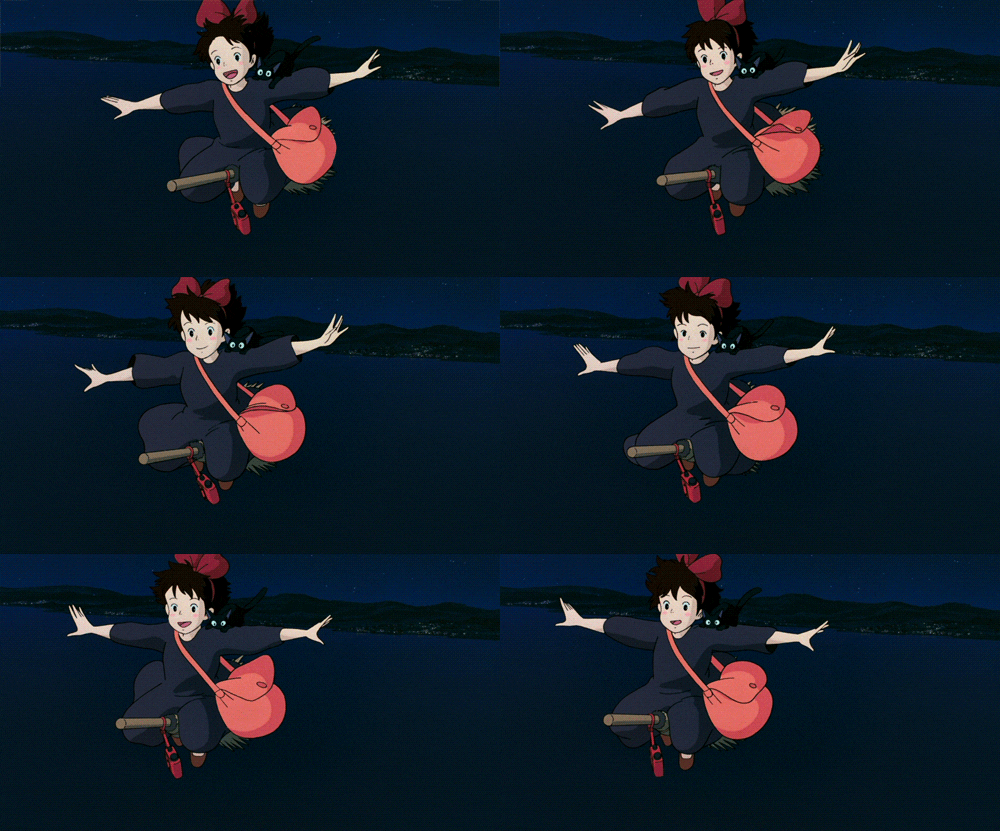
Image source: Giphy

The message in so many Miyazaki films is simple: live life to the fullest. A life of how cannot achieve that. No matter what you do — whether you paint, bake, or fly — Kiki’s Delivery Service encourages us to take time for ourselves. It reminds us we are not defined by what we do, but why we do it. And, in a crushing economy over which we have so little control and presided over by older generations who refuse to learn from past mistakes, sometimes the best thing we can do — whether it’s 1989 or 2021 — is remember why we fly.

This is the second time I’ve written about Kiki’s Delivery Service. A long time ago, I wrote about its relation to burnout just as that kind of piece was starting to pop up everywhere. I include it here because I think it really shows how far I’ve come in the last few years — which is a nice thought to take into 2022.

Geoffrey Bunting is a writer and book designer. He has written for History Today, Modus, Lock On, Super Jump Magazine, UX Collective, The Historian, Bridge Eight, History Magazine, and more. He can be found at geoffreybunting.co.uk

Life
Life Lessons
Film
Movies
Politics
Recommended from ReadMedium