
Pandemic Pod Etiquette During Covid-19: 7 Key Points
Back to School never felt so…weird.
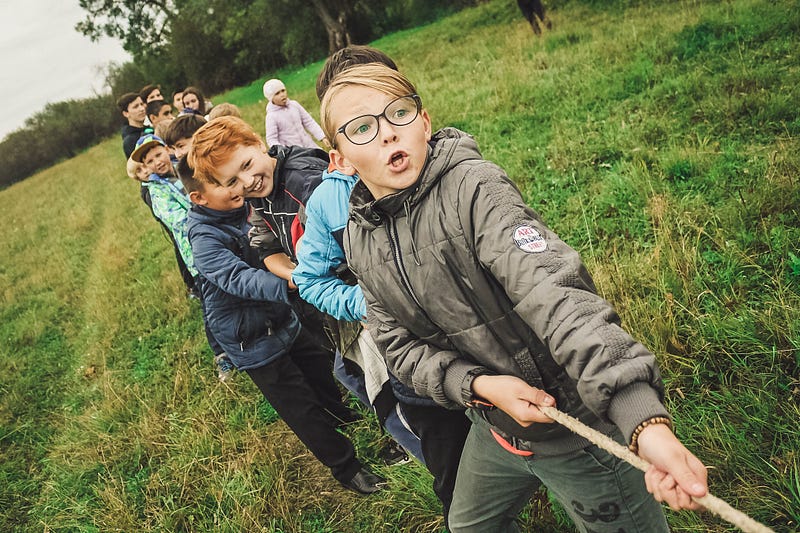
Are you a parent desperately searching for ways to make pandemic-driven distance learning work better than it did last spring? Join the club of millions of frazzled parents at wit’s end while contemplating the nightmare of virtual learning 2.0.
You have every reason to explore the possibilities. Your kids hated “Zoom screen school” as much as you resented having to force them to stay on task when they’d rather be playing video games or watching YouTube videos. (Neither are good options.) As a parent, you certainly didn’t sign up to be a drill sergeant or police officer, too! There must be a better way.
Fortunately, you have options.
If you don’t want to jump into full-blown homeschooling, (although micro-schools fit in wonderfully with the homeschooling lifestyle already), a small pandemic pod that meets outside is the safest option.
Before you rush to start or join a learning “bubble,” there are several steps you can take to reduce the risk of Covid-19 exposure or transmission once you get there. It is critically important to consider your risks before podding.
Here are some frightening recent Covid-19 stats:
- Studies show that up to 80% of all transmission happens by people showing no symptoms whatsoever.
- 50% of children positive for the virus will not have a fever. (So mandatory temperature checks are not at all reliable and provide a false sense of security.)
In fact, scientists now call kids silent spreaders whereas initially they assumed children could not be. Although children have fewer nasal receptors (to which the virus attaches during infection) than adults, they can carry huge levels of virus. This means you are absolutely right to be concerned about contact with everyone, including children. It’s always a good idea to take precautions before encounters to avoid having regrets later.
1. Keep your pandemic pod outside
It’s not called “the great outdoors” for nothing.
Scientists believe that viral transmission is significantly less likely outside than inside. In fact, it’s practically zero. The slightest wind helps disperse viral particles. Unconfined, circulating outside air also makes the virus less concentrated. This means there’s less viral load around you. And where less of it is hangin’ around, you’re less likely to become infected. Walking or running far from others (rather than sitting) also makes it less likely you’ll catch it.
Knowing these facts, I personally feel comfortable speaking outside to acquaintances, (whom I don’t know very well), without a mask, walking (not sitting) at least 6 ft. — or preferably more — away. As long as they aren’t visibly coughing or sneezing. (Inside, I’m always masked.) Outdoor pod activities without masks represent little risk as long as you’re far away and preferably moving.
However, if you’re sitting close to people at a picnic table or on a beach towel outside, talking or not, it’s a good idea to wear a mask. Because you just never know.
And you should remind your kids before pod activities begin to refrain from hugging others and whispering together in small huddles. (If you notice your child with friends becoming too friendly — which is to be expected after long absences — more gentle reminders about physical distancing will be needed. Monitor constantly!
Physical activities outside that don’t require close contact, like walking, hiking, running or swimming, would fit in the “low risk” category (as long as you’re not moving closely to each other). No mask required. But, contact sports with teams unfamiliar to you, are an entirely different story. Researchers know that viral transmission is more likely with heavy breathing and yelling. Both occur during competitive contact sports. So, these are a no-no for now if you want to be super-safe.
2. Limit pod membership to people you trust and charge a fee
It ultimately all comes down to TRUST.
Admittedly, for learning bubbles to stay safe, trust is absolutely essential at all times. Since you’re dealing with an invisible enemy that may go undetected in many people but still be transferable, it’s of critical importance for everyone involved to follow all precautions 100% of the time. This includes all:
- Participating pod members
- Members of their households
- Their contacts outside the pod (e.g., co-workers and out-of-town relatives).
If a pod member has an encounter with someone outside of the pod membership + their immediate contacts, that member must report it to the pod before returning. They should self-isolate at home for two weeks before rejoining regular pod activities.
Because unintentional oversights happen, and some people just forget to track all of their movements and whether they wore masks or not, it’s a good idea to develop a buddy system so that each pod member informs one other person about all of their whereabouts. (A GPS tracking system may be useful. There also are contact tracker apps available.) This way, buddies can keep tabs on each other. You would then have the information needed for flagging any suspicious contact that could endanger others in the micro-school. It would be your responsibility to request that the offending person self-quarantine if they haven’t already. Otherwise, that individual must leave the pod.
This may sound creepy and seem like an invasion of privacy. Frankly, it is. But it’s necessary for the good of the group.
Be forewarned: Tattle tailing, gossiping, back biting and parent shaming are possible. Engaging in anything like that is not proper Covid-19 pod etiquette.
Expulsion from the group should result if someone blatantly disobeyed the rules, thereby endangering everyone else’s life. Or, someone could just cheat a little bit by removing their mask temporarily in a store — maybe it got too uncomfortable — or not wearing one at the gas station because they left it at home. It’s all bad. Behavior like this needs to be penalized.
Stringent, enforced rules are necessary for the health and well-being of all group members. Accepting conditions as rigid as these in writing as part of a learning pod agreement should be a standard procedure for pod membership.
A better way to increase compliance is to require a membership fee that’s non-refundable in cases in which members don’t follow the rules. This fund could be used to pay teachers or tutors for their time and for any materials they may need. Members will need to decide on a figure. Because many people are struggling financially now, setting a fee may limit participation to affluent families only. Possibly, offering scholarships to needy families may be an option.
3. What’s a good number to have in a learning pod?
There’s no “magic” number of people in one micro-school that’s safe. It depends on a lot of factors. For instance, consider the following:
- Do you have outdoor space?
- What size is your outside area?
- If you’re ever indoors, how large is your biggest room?
- How many windows and doors leading to the outside are in the indoor area?
- Can seating and tables be spread out?
- Are there any family members who work in high-risk jobs (e.g., healthcare workers, EMTs)? Grocery store workers (in masks and gloves) are also included here, but not as likely to have Covid-19 as a doctor working in a hospital unit with many very sick people dying from the virus.
- Is your county in a green, yellow, orange or red zone? If individuals apply to join from zones where the Covid-19 case incidence is higher than where the pod is located, you may wish to deny them admission. But since each individual’s case is different, this fact shouldn’t necessarily be a deciding factor. Find out the latest information on your county’s or city’s Covid-19 zone status at the Harvard Global Health Institute.
Based on probability alone, the larger the size of the pandemic pod, the more likely it is that a member is or can become infected. Keep in mind, however, that there are many factors that influence the likelihood of infection, such as past and current mask-wearing, handwashing and physical distancing habits of individuals. Age, sex, race, and pre-existing conditions also are important to consider.
Also by considering just probability, fewer families with many kids are less risky that a multitude of families with one child each. The reason is that fewer families mean there are also fewer households, fewer social circles, etc. to think about as possible places where people could come in contact with the deadly coronavirus.
Although, it’s always possible — however unlikely — that one family member of a child in a small learning bubble could infect several others. This is more than just theoretical based on recent studies on kids and Covid-19 cited above. Caution and conscientiousness must be guiding principles to keep in mind at all times. Be on guard!
Another possible disadvantage of large pods with many families is that there will likely be great age disparities among the children and adolescents. These differences will make it challenging to run a single class with everyone participating.
In this case, joining or starting several different learning pods according to general age group, (e.g., ages 5–7, 8–10, 11–13, or 14–17), might be more beneficial. Logistically, this could get complicated. Risk and number of people to track increase, too.
Ultimately, it depends on each family to determine whether it’s worth it or not. You may decide to form or join only one learning pod for social or athletic activities. That’s okay!
4. Restrict indoor pod sessions to 2 hours
There have been several reports of Covid-19 outbreaks in small indoor gatherings like weddings, parties and restaurant dining. Researchers believe the virus is expelled during normal talking and breathing. Yikes!
Greater amounts of the virus (i.e., viral loads), are dislodged when people talk loudly, breathe heavily, sing, shout, pant, etc. Reports indicate that super tiny virions can travel over 30 ft. away from an infected person and remain suspended in air. This is pretty scary.
Scientists also know that tiny viral particles — that are able to infect — stay suspended in enclosed areas for several hours. They infect when people breathe them in.
Furthermore, indoor spaces often have poor air circulation. Air stagnates with suspended virus. The viral load can become concentrated. This increases your chances of inhaling enough virus to get sick.
There is also evidence that Covid-19 remains potent in recirculated air in HVAC systems.
Based on this evidence, it makes excellent sense to limit the amount of time a micro-pod stays together in one room especially if the heating or cooling system is operating. Opened windows and doors will help dilute any virus and eliminate stagnant air, but they won’t completely eliminate all potential contact with it.
So, what’s a good limit? Like so many things about this pandemic, no one knows with absolute certainty. Erring on the side of caution makes much more sense than throwing caution to the wind.
I admit that 2 hours is an arbitrary time frame. At most it would leave time for greetings and some socialization before one class. Possibly your group could keep the strictly social aspects of pods outdoors?
If well-planned in advance, focusing on a difficult topic or an activity best done in groups — like a science experiment — could work. In fact, limiting the time will ensure the learning activity gets accomplished efficiently, or else everyone will miss out.
In the model I offer here, pandemic pods do not replace a regular school day, or even a half-day. Rather, the micro-school is just that — “micro” or “mini.” It allows for limited interaction that will aid understanding and enhance solo distance learning. Kids can eagerly look forward to the next pod session with great anticipation of it being a well-orchestrated, stellar experience albeit concise! Above all, it’s a wonderful opportunity to reconnect and stay connected while staying safe.
However, I recommended restricting inside time to 2 hours at a given indoor location per week. There’s no reason why your pandemic pod can’t have an outdoor activity, too! PE is a subject. :) Bringing food and eating together (not from common bowls using common utensils) is a super way to bond friendships. And, there’s always the next time.
5. How often should learning pods get together and where?
Once a week? Every day? How often a pandemic pod meets is totally up to the members although in my last point above, I recommended once per week at a given location. This time frame will ensure that you can sanitize and thoroughly air out the house, (all windows open for a few hours every day with HVAC running to chase any virus out). Admittedly, this process wastes energy. The only way to avoid it is to keep all activities outdoors.
As long as homes are completely sanitized and ventilated before and after use, the micro-school could safely rotate from house to house and meet more often during the week. But if there is a vulnerable individual present, like an elderly grandparent or baby living in a member’s home, it would be best not to include that household in the rotation. (No offense!)
Besides the scheduled indoor educational activity, if any, learning pods can always organize day hikes or picnics in the park. Field days outside are also popular and fun for children. It’s amazing what a little sunshine and fresher air + a ball can do! Your kids will be calmer and ready to focus on “school” later. Get a better night’s sleep, too.
6. What if a pandemic pod member or teacher gets sick?
If you’re thinking of creating or joining a learning bubble this year, an important question to ask is What happens if the instructor — whether it might be a parent, teacher or paid tutor — gets sick and can’t cover their duties running the class?
It’s crucial that you have a backup plan in place. For instance, designate two people to cover every lesson or activity. That lesson, run by the backup teacher, may not take place until two weeks later after a pod-wide quarantine is completed. The originally-designated teacher would probably still be home recovering or in the hospital.
It goes unstated that the sick teacher needs to self-quarantine for at least 14 days. If possible, get tested, too. Depending on your area, other members of the pod, especially those who had been in closest contact with the teacher or member who is definitely sick, may be able to get tested as well. Check with your doctor for testing availability where you live.
If the teacher or member had been in contact with pod members — at all — during the previous two weeks, everyone should stay home for 2 weeks. Pod sessions must be canceled. To be on the safe side, even outside-only pod activities should be temporarily halted.
Organizing the learning pod sessions so that only one adult is present each time will minimize disruptions due to illness because there would be fewer individuals present who could be carriers or become infected.
I know the decision to quarantine won’t be terribly popular with kids, and probably not for parents, either. Especially if you’ve already had a few pandemic pod sessions and they’re psyched to return each time and see their friends. Moms may enjoy the break from being stuck at home with their kids all the time.
This is a perfect opportunity to explain to your children community spread and why countries haven’t met the conditions to allow herd immunity to solve the pandemic crisis. Another topic of discussion should be on asymptomatic carriers, especially because many children and teens can easily fall in this category.
These are heavy concepts for young children (and for some adults, too, as the anti-mask protesters sadly demonstrate). For ways to explain it to littles and teens, try these resources for ideas and activities.
Impressing upon them how vital it is for everyone to practice mask wearing, handwashing, and physical distancing — and eventually get vaccinated — so that all people stay healthy will hopefully be easier if someone they know gets sick with Covid-19. It’s unfortunate that someone did fall ill. It’s a bummer that the learning pod had to be temporarily suspended. All you can do is hope for better days ahead and do the best you can with distance learning or schooling while at home as a family.
7. If inside, wear masks and stay far apart
I know of two families who spend a lot of time together. The children have been best friends since they were toddlers. They have always spent considerable amounts of time in each other’s homes. Essentially, they’re quarantining together. So, they’re comfortable not wearing masks around each other. Nor do they stay 6 ft.+ apart, inside or out.
If this describes your situation with a learning bubble composed of just two families, and it’s been going well like that during the pandemic, more power to you!
Call me a hypochondriac, but I personally stay 6 ft. or more away from my own children without masks in my own home! They socialize with a certain neighbor always outside, frequently playing catch with 20 ft. between them. But I can’t monitor them every second. I know that some family members work outside the home. Since I don’t know their mask-wearing practices, I’m afraid of possible asymptomatic transmission. Again my mantra: Better safe than sorry.
In a micro-school situation, it’s different. There likely are people you don’t know very well. There may be a written contract between members. But, would you count on it to save your life? It all boils down to how much confidence you can place in others. You’d like to assume that they have:
- Good intentions about following the pod rules at all times
- Socially isolated for two weeks before joining.
- Been pre-tested (if required by your pod rules) and the results are accurate.
- No symptoms — at all.
- Quarantined again if they had traveled, had an out-of-town guest, or someone in their home was sick (from anything).
There is a small element of chance at play. But mostly, it all comes down to TRUST.
Wearing a mask inside during micro-school sessions, and staying 6 ft. or more apart, is good, sound practice. Frequent handwashing is also a great way to reduce transmission.
However, taking these precautions shouldn’t be interpreted as a lack of trust in others (although it probably will seem that way). These are extraordinary times that demand scrupulous attention to detail all the time. It just takes one “I forgot to bring my mask that time,” or one maskless, minutes-long encounter that was too close for comfort, to lead to viral infection. I say this not to scare or intimidate you. But it’s reality. I hope it doesn’t happen to you. It most likely won’t if you take all precautions and follow all the rules…all the time — along with everyone else in your learning pod.
For some, that’s a big “if.” It all depends on your level of comfort.
Making pandemic pods safe
Fed up with the distance learning disaster you were thrust into last spring, you search frantically for a better solution. Fortunately, learning pods could be the answer to your troubles.
Just like in any issue, you need to weigh the potential benefits of improved mental health that comes along with socialization. Assuredly, your child’s academic progress will also get a huge boost from mini-classes with peers.
In terms of safety during a global pandemic, micro-schools are definitely so much safer than in-person school right now, and a great supplement to distance learning. Learning pods — as I describe them here — are also compatible with modified distance learning as I detail in my previous article titled Pandemic Pods Are Too Risky for Your Child. Try Modified Distance Learning Instead.
Small numbers of homeschoolers also regularly hold classes together. Historically, these get-togethers functioned exactly like pandemic pods just without all the extra mask-wearing and physical distancing rules. Now, homeschoolers involved with learning bubbles probably practice Covid-safe behavior.
Research supports a low student:teacher ratio (where teacher may be a certified or otherwise qualified instructor or a parent) to accelerate student performance, like micro-schools accomplish for homeschoolers and for those using pandemic pods.
Stay safe in your (preferably) outdoor pandemic pod by wearing masks, and have a great school year!