MEDICAL THOUGHTS
Learning and Teaching in a Tough Medical Environment — What Works?
Lessons in heat and light

The events in this story happened years ago in the Netherlands. I was there, helping establish Emergency Medicine as a specialty in that country, working as a teacher/clinician/director in an emergency department in Amsterdam’s center.
Shortness of breath has brought Mister van der Veen to our emergency department. He’d been pitched off his bicycle several days earlier, striking his chest as he fell, a victim of Amsterdam’s old and famously-uneven pavement and its relentless traffic.

Another hospital had diagnosed him with broken ribs. Pain medications had been prescribed and instructions given to seek further medical attention should increased pain, fever, or difficulty breathing occur.
Warm Beginnings
Anouk is Mr. van der Veen’s intern. I watch them meet. She is a perpetually sunny, pink-cheeked young woman. Her patient, a 60-year-old man “salt-of-the-earth” laborer. Anouk greets him, smiling broadly. He beams in response, in spite of his discomfort.
I’m introduced as the supervising physician and included in the warmhearted interaction. Anouk gently rests her hand on Mr. van der Veen’s shoulder as they talk. It’s “gezellig” as the Dutch are fond of saying … cozy, nice, warm, intimate.
After completing her physical examination, Anouk orders a chest x-ray. She is concerned about a hemothorax, a collection of blood inside the chest cavity, necessitating treatment with a chest tube, to drain the fluid. We discuss the situation, building knowledge while awaiting test results. Moments later, her clinical assessment is confirmed by the chest x-ray findings.
Anouk is pleased by this latest affirmation of her developing clinical acumen. She glows, realizing the cheery flush of success. Prior to chest tube placement, Anouk medicates her stout, muscular patient.
As the opioids enter his system, he nods dreamily, happily, securely, stably. He’s being well looked after and knows it, cradled in as snug, restful, and caring an environment as possible, considering his frenzied surroundings.
Everything is going so well that the patient’s wife is in the room, lending support by holding her husband’s hand, whispering to him occasionally as he dozes. Anouk moves comfortably, confidently but carefully through the opening stages of the procedure. I’m beside her, coaching but not interfering. It’s going well; warmth and enlightenment suffuse the setting. The patient is blissfully contentedly well cared for.
Anouk is learning and growing, glowing happily, lustrous, and luminous. I’m quietly pleased, smiling on the inside, fulfilling my role as teacher, mentor, guide, and role model to one of emergency medicine’s next-generation physicians.
Anouk injects a measured dose of local anesthetic and waits for effect. Incising the skin overlying a rib, she dissects down to periosteum, the bone’s delicate and exquisitely sensitive covering. Entering the chest with a curved clamp, she exclaims sotto voce as the pleasant warmth of her patient’s just-relieved hemothorax cascades over her gloved hands.
Fiery Ending
Then suddenly, the Chief Surgeon swoops in. Pausing just a beat to survey his surroundings he proclaims loudly, ‘‘Right after the chest tube goes in … people crash. I’ve seen it happen.’’
Anouk pauses too, momentarily stunned into inactivity. Sensing her discomfort, the surgeon drives in behind her, literally breathing down her neck, scrutinizing her surgical field. ‘‘The incision is too small,’’ he barks. We’d discussed that. Our plan was to extend it if the tube failed to pass smoothly. Now he’s on the warpath.
Hurriedly snapping on gloves, the surgeon huffs, ‘‘Let me show you how to do this right. Watch!’’
Anouk is confused and adrift, elbowed aside, and in the end, positioned directly behind the angry, overheated, and intemperate operator. His tensed back, her only view.
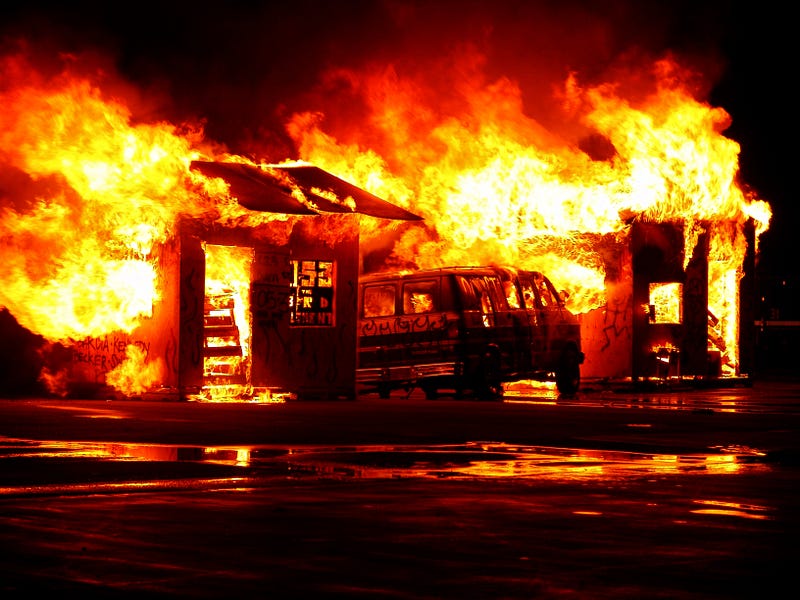
The proceedings have been drained of all warmth; combustible commotion now crouches. As the room’s temperature rises, enlightenment plummets, ultimately to nil. Learning ceases.
I’m trapped too. As a non-native visitor, I feel powerless to rescue my resident without compromising patient care or stepping outside ethical politically correct boundaries.
We talked later, the surgeon and I, reaching an understanding that a similar scene would never again occur.
Anouk and I talked as well. We concluded, among other things, that learning and teaching happen best in a warm and hospitable — even a passionate — but not a heated, environment. A lesson for her future as a leader.
When temperature flares, illumination flickers and fails.
Enlightenment can be, and often is, boiled off by degrees.