avatarMarilyn Flower

Free AI web copilot to create summaries, insights and extended knowledge, download it at here

4631

Abstract

0151326568">For the Inward Journey</a>)</p></blockquote><h2 id="b234">One lung through which all of life breathed.</h2><p id="86f2">Did he grasp the unified nature of the universe while just a kid? He may or may not have understood all its theological implications, but he sensed it with his whole being. And that’s probably even more important. Because he didn’t just read or study it, he embodied it and lived it, and would go on to teach it.</p><p id="1fe6" type="7">“When the song of the angels is stilled, When the star in the sky is gone…The Work of Christmas begins…” ~ Howard Thurman from The Mood of Christmas and Other Celebrations</p><p id="137d">Despite the death of his father at the vulnerable age of seven and the poverty that bestowed on his family, Thurman managed to attend one of the three high schools for Black students in the whole state of Florida at the time. He attended the one in Jacksonville and went on to Morehouse College in Atlanta, where he became friends with Martin Luther King, Sr.</p><p id="e3a8">In Atlanta, he was exposed to some of the most dynamic and powerful teachers and preachers of the time. They inspired him to attend Rochester Theological Seminary in 1923.</p><p id="ef9e">After graduating, he met and married Kate Kelly, a Spelman graduate from Georgia. Together they went to Oberlin, Ohio, where he ministered at Mt. Zion Baptist Church. There, their daughter, Olive, was born and Kate was diagnosed with tuberculosis.</p><p id="c3f4">The next period of his life was full of both difficulty and growth–a combination that made for much creative tension in Thurman’s life. He made good use of this creative tension when he went to Haverford College in Pennsylvania to study with the Quaker mystic, <a href="https://www.quakersintheworld.org/quakers-in-action/230/Rufus-Jones">Rufus Jones</a>.* Luckily he had this support in place when his wife died in 1930.</p><h2 id="3f4e">Two years later, he married a college friend, Sue Bailey.</h2><p id="1138">They moved to Washington D.C. where Thurman joined the School of Religion at Howard University. He later became dean of the campus’ Rankin Chapel. Together, the Thurmans developed a ministry for students, which became a lifelong passion. There, also, a second daughter, Anne Spencer Thurman was born.</p><p id="2fdc">Thanks to his growing reputation as a creative teacher, preacher, and worship leader, the Thurmans were invited to visit India, Burma, and Ceylon (now Sri Lanka). They got to meet the great mystic and Nobel Prize laureate, <a href="https://www.nobelprize.org/prizes/literature/1913/tagore/biographical/">Rabindranath Tagore</a>, as well as Gandhi, and others.</p><p id="97db">Gandhi encouraged Thurman et al to practice Non-Violent Civil Disobedience in protesting racial segregation and discrimination in the United States. Of course, the idea caught fire and became a mainstay of the Civil Rights Movement, thanks in no small part to Rev. Dr. Thurman.</p><p id="5c53">These Hindu and Buddhist leaders held Thurman’s feet to the fire when they asked him how he squared his Christianity with the slavery, lynchings, segregation, and other forms of vicious racism that white Christians practiced in the U.S.</p><figure id="3a9e"><img src="https://cdn-images-1.readmedium.com/v2/resize:fit:800/1*WMTOX5uo4rso3UA2ksS8rw.jpeg"><figcaption>Book cover courtesy of Amazon.com, image laid out in Canva.com by author</figcaption></figure><h2 id="e08c">Jesus was never a Christian.</h2><p id="61a5">These questions shook him to the core, and from there he made <i>“a careful <a href="https://www.amazon.com/Inward-Journey-Howard-Thurman/dp/0913408034/ref=sw_img_d_crh_rh_hashrec_0?_encoding=UTF8&amp;pd_rd_i=0913408034&amp;pd_rd_w=fTGR7&amp;content-id=amzn1.sym.e7263ff0-e765-43b7-bfc1-357aef0e8fbb&amp;pf_rd_p=e7263ff0-e765-43b7-bfc1-357aef0e8fbb&amp;pf_rd_r=1EV63V62C3N4HA1C88XV&amp;pd_rd_wg=KlAlz&amp;pd_rd_r=a71d9d01-7a03-4eea-abbf-86f8d83657a0">distinction</a> between Christianity and the religion of Jesus.” </i>This powerful confrontation fired him up and led to the ideas and convictions of his best-known work, <a href="https://www.amazon.com/Jesus-Disinherited-Howard-Thurman/dp/0807010294/ref=sw_img_d_pd_ewc_purchase_sim_1?_encoding=UTF8&amp;pd_rd_i=0807010294&amp;pd_rd_w=i0ewK&amp;content-id=amzn1.sym.6c765dbf-3487-473e-b7c7-4a06a3685c33&amp;pf_rd_p=6c765dbf-3487-473e-b7c7-4a06a3685c33&amp;pf_rd_r=3CV24CXVTGQFQZN8NMTB&amp;pd_rd_wg=uLYGq&amp;pd_rd_r=759c33cb-8bfc-4777-b453-5cc7c5d8ed1f"><i>Jesus and the Disinherited</i></a>.</p><p id="29ad">Also on this journey, at the Kyber Pass in the Himalayan Mountain

Options

s, Thurman caught his first glimpse of a vision of a multi-racial, multi-denominational religious fellowship open to seekers of all creeds and colors.</p><p id="cc98">This vision would become Thurman’s life work and legacy.</p><p id="d89d">This vision got concretized when, in 1944, the Thurmans moved to San Francisco to minister at the newly formed <a href="https://www.fellowshipsf.org/">Church for the Fellowship of All Peoples </a>— the country’s first interracial congregation.</p><p id="4500">This post provided the opportunity for Rev. Dr. THurman to have his inspirational meditations published. While he relished the power of the word spoken from the pulpit, this meant millions more would have easy access to their poetic blessings.</p><h2 id="6067">Thurman was to have one more post before retiring.</h2><p id="f0b8">In 1953, the year I was born, he was appointed dean of the chapel at Boston University — a position then unheard of for a Black man. By then he was an international as well as national figure, featured in <a href="https://books.google.com/books?id=4EgEAAAAMBAJ&amp;pg=PA126&amp;source=gbs_toc_r&amp;cad=2#v=onepage&amp;q&amp;f=false"><i>Life Magazine</i></a> among others.</p><p id="850b">In Boston, he befriended a young student, Martin Luther King, Jr. Thurman tried to groom King to succeed him as dean, but he had his heart set on heading south for his nation-changing ministry.</p><blockquote id="02d5"><p><i>One of his friends, <a href="https://www.nytimes.com/2014/05/22/us/vincent-harding-civil-rights-author-and-associate-of-dr-king-dies-at-82.html">Vincent Harding</a> said of Thurman, </i>“[He] was an earthy mystic, filled with pranks and jokes, ever ready to laugh at himself, at life, and at anything else close at hand. This was a perambulating mystic, tiring out younger folks on his walks up and down the hilly streets of San Francisco. Indeed, it may be that he was the wisest and most compassionate man I have ever known.”</p></blockquote><p id="0885">Even though he felt like he got off track, what I’ve learned tells me he must not have for very long. And <i>that to which his life was committed </i>turned out to be what he described as Tagore’s: <i>“He moved deep into the heart of his own spiritual idiom and came up inside all peoples, all cultures, and all faiths.</i></p><p id="5668">May we honor Rev. Dr. Howard Thurman’s legacy by being more peace-loving, compassionate, and understanding. And do this as poetically and lovingly as we can.</p><blockquote id="8828"><p><b>*<i>A highly infulential Quaker, Rufus Jones (1863–1948),</i></b><i> as described in <a href="https://www.quakersintheworld.org/quakers-in-action/230/Rufus-Jones">Quakers in the World</a>, </i>“was a founder of the <a href="https://www.quakersintheworld.org/quakers-in-action/217">American Friends Service Committee</a> and an instigator of the <a href="https://www.quakersintheworld.org/quakers-in-action/302">Quäkerspeisung</a> feeding program after the First World War.</p></blockquote><blockquote id="5e31"><p>“Following ”the 1938 attacks on Jews known as Kristallnacht, Jones went to Germany with two other Quakers and met with Reinhard Heydrich, later one of the architects of Hitler’s ‘Final Solution,’ to plead for better treatment for the Jews. ‘The promise made to us was kept,” he wrote after the war, ‘extensive relief followed our visit, including the emigration of many Jews.’</p></blockquote><blockquote id="20d6"><p>“Jones’ influence enabled the two divisions of American Quakerism, which split in the mid 19th Century, to reunite after his death. Often described as a Quaker mystic, he was able to reconcile science and modern, liberal thinking with his Quakerism.”</p></blockquote><p id="670b"><a href="undefined">Marilyn Flower</a>’s a sacred fool who writes every day — fiction, poetry, and blogs — inspired by a process called <a href="https://readmedium.com/soulcollage-an-inspirational-and-revelatory-tool-for-writers-d253fb94051b">SoulCollage</a>®. She’s the author of<a href="https://www.amazon.com/Creative-Blogging-Writers-Character-Development-ebook/dp/B09BLGQRTD"><i> Creative Blogging</i></a><i> </i>and<i> <a href="https://www.amazon.com/gp/product/B09HQGT8L7">Bucket Listers: Get Your Brave On.</a> </i>Follow her <a href="https://marilynflower.substack.com/"><i>Sacred Foolishness</i></a><i> or <a href="https://soulcollageforwriters.substack.com/">SoulCollage</a></i><a href="https://soulcollageforwriters.substack.com/">®<i> for Writers</i></a><i>, </i>and <a href="https://colossal-leader-3521.ck.page/3ec8eb3c16"><b><i>Stay in touch!</i></b></a></p></article></body>

Learning From Rev. Dr. Thurman to ‘Keep Fresh Before Us Our Moments of High Resolve’

May the powerful poetry of this African-American mystic keep us all on course
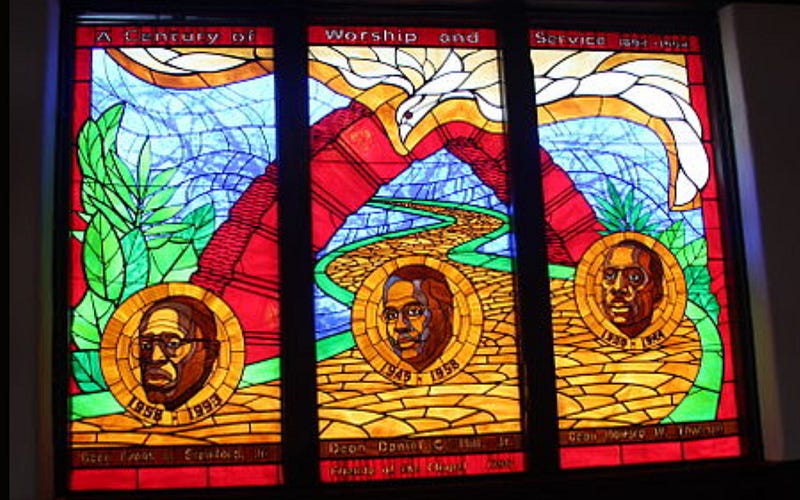
Howard University — Andrew Rankin Memorial Chapel — stained glass window with three deans including Howard Thurman.JPG, Photo by FourandSixty, courtesy of Wiki-Commons

“Keep fresh before me the moments of my High Resolve, that in fair weather or in foul, in good times or in tempests, in the days when the darkness and the foe are nameless or familiar, I may not forget that to which my life is committed.” ~ Howard Thurman

For the longest time, I knew only three things about Rev. Dr. Howard Thurman.

One: He was an African-American spiritual thinker who taught and befriended the Rev. Dr. Martin Luther King, jr.

Two: He had a church right here in San Francisco that’s still going strong today.

And three: One of his most popular — at least in my circles — meditations was called, Moments of High Resolve. From the message he wrote to remind himself and the world as well, “Keep fresh before me my moments of high resolve.” (Bolding mine.)

We just ushered in a brand new year.

Did you make any resolutions? Set any goals or intentions? I sure did.

I resolved to lose weight, get fit, sit less, move more, declutter my home, eat more green and less white, finish two novels, and learn about the lives and legacy of modern-day mystics — Howard Thurman being one of them.

If you made resolutions, too, those were your moments of high resolve.
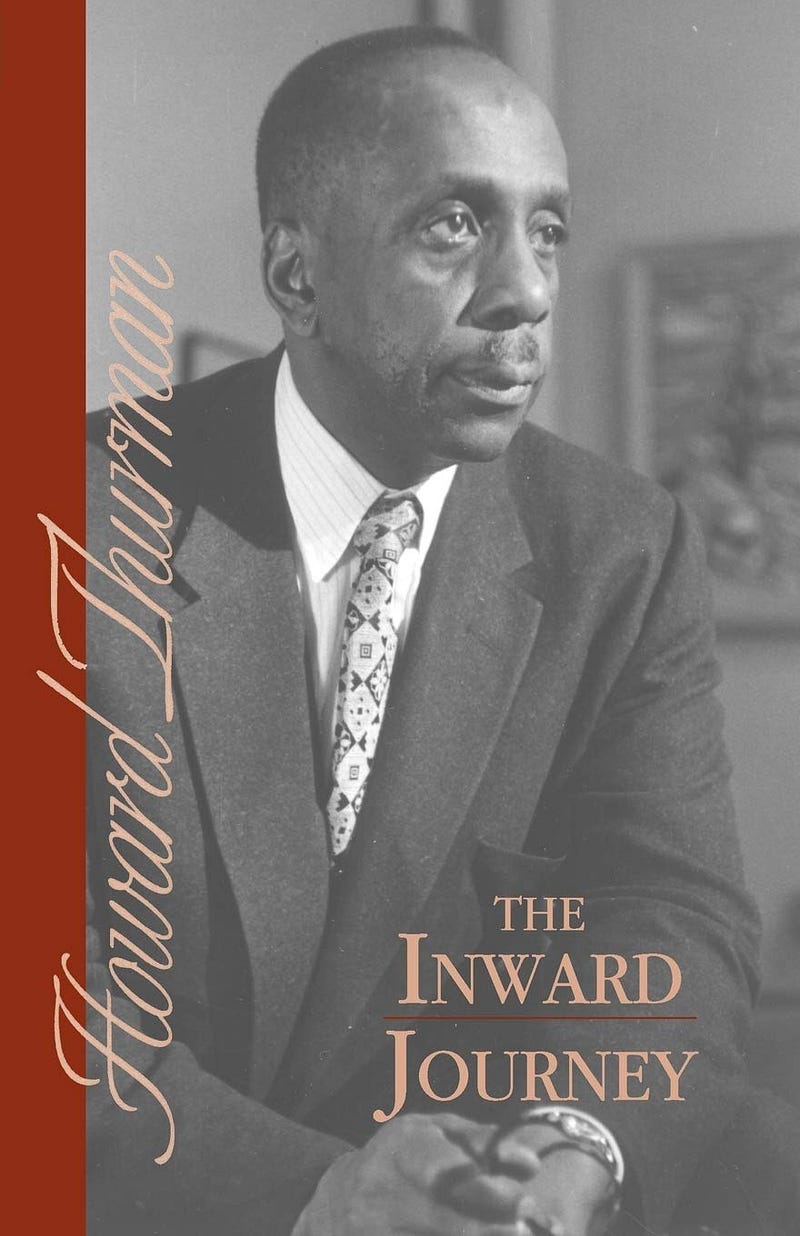
Image courtesy of Amazon.com

How are you doing with them so far?

I for one, need to be reminded to keep my moments and contents of high resolve fresh before me. Already? It’s still the first week in January. Surely I haven’t lost track of them this soon.

I set those goals in Shaunta GrimesFresh Start process on December 26, so it’s been ten whole days. And while I haven’t forgotten them entirely, I haven’t made any changes based on them, either If anything, I’ve eaten more white (sugar) and blamed the holidays for it and the fact that I haven’t written on either novel. Gotta have a break, you know?

But I am delving into the life and legacy of a modern-day mystic by writing about him here.

So who was the Rev. Dr. Howard Thurman, anyway?

In brief, Rev. Dr. Thurman is someone who brought both the terror and the beauty of the Black Experience in twentieth-century America into his life as a poet, teacher, mystic, preacher, counselor, friend, and guide to thousands in this country and abroad. He penned over twenty books and many more sermons over the course of his long life.

Born in Daytona Beach, Florida in 1900, he found nurture in the church and the broader Black community. More specifically, he was touched by the wisdom and disciplined spirituality of his maternal grandmother, Nancy Ambrose, and the ever-changing rhythms of Mother Nature surrounding him.

Reflecting later, he wrote:

“As a boy in Florida, I walked along the beach of the Atlantic in the quiet stillness….I held my breath against the night and watched the stars etch their brightness on the face of the darkened canopy of the heavens. I had the sense that all things, the sand, the sea, the night, and I, were one lung through which all of life breathed.” (quoted in the intro to his book For the Inward Journey)

One lung through which all of life breathed.

Did he grasp the unified nature of the universe while just a kid? He may or may not have understood all its theological implications, but he sensed it with his whole being. And that’s probably even more important. Because he didn’t just read or study it, he embodied it and lived it, and would go on to teach it.

“When the song of the angels is stilled, When the star in the sky is gone…The Work of Christmas begins…” ~ Howard Thurman from The Mood of Christmas and Other Celebrations

Despite the death of his father at the vulnerable age of seven and the poverty that bestowed on his family, Thurman managed to attend one of the three high schools for Black students in the whole state of Florida at the time. He attended the one in Jacksonville and went on to Morehouse College in Atlanta, where he became friends with Martin Luther King, Sr.

In Atlanta, he was exposed to some of the most dynamic and powerful teachers and preachers of the time. They inspired him to attend Rochester Theological Seminary in 1923.

After graduating, he met and married Kate Kelly, a Spelman graduate from Georgia. Together they went to Oberlin, Ohio, where he ministered at Mt. Zion Baptist Church. There, their daughter, Olive, was born and Kate was diagnosed with tuberculosis.

The next period of his life was full of both difficulty and growth–a combination that made for much creative tension in Thurman’s life. He made good use of this creative tension when he went to Haverford College in Pennsylvania to study with the Quaker mystic, Rufus Jones.* Luckily he had this support in place when his wife died in 1930.

Two years later, he married a college friend, Sue Bailey.

They moved to Washington D.C. where Thurman joined the School of Religion at Howard University. He later became dean of the campus’ Rankin Chapel. Together, the Thurmans developed a ministry for students, which became a lifelong passion. There, also, a second daughter, Anne Spencer Thurman was born.

Thanks to his growing reputation as a creative teacher, preacher, and worship leader, the Thurmans were invited to visit India, Burma, and Ceylon (now Sri Lanka). They got to meet the great mystic and Nobel Prize laureate, Rabindranath Tagore, as well as Gandhi, and others.

Gandhi encouraged Thurman et al to practice Non-Violent Civil Disobedience in protesting racial segregation and discrimination in the United States. Of course, the idea caught fire and became a mainstay of the Civil Rights Movement, thanks in no small part to Rev. Dr. Thurman.

These Hindu and Buddhist leaders held Thurman’s feet to the fire when they asked him how he squared his Christianity with the slavery, lynchings, segregation, and other forms of vicious racism that white Christians practiced in the U.S.
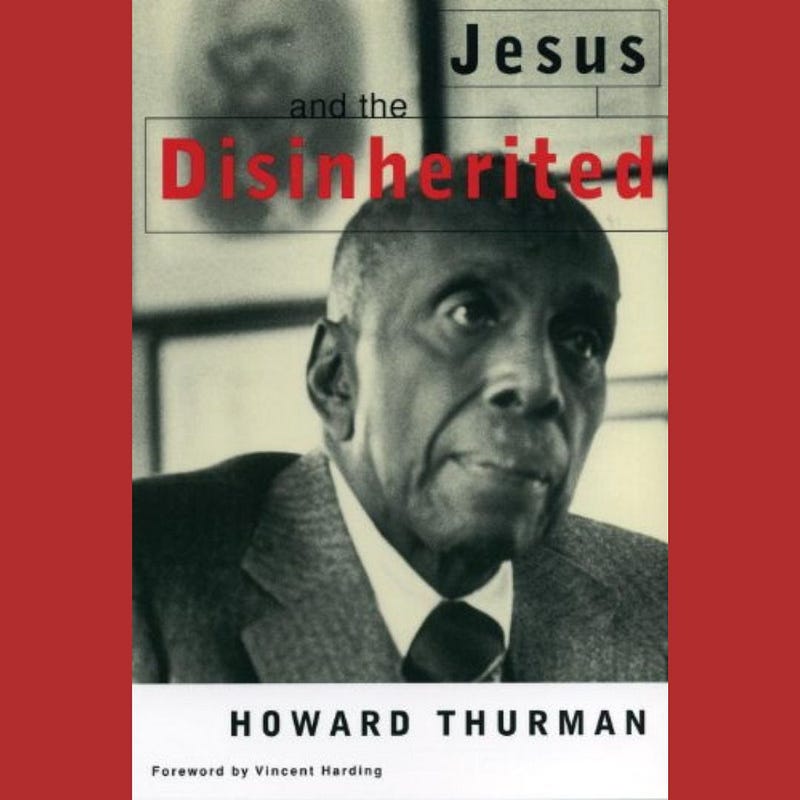
Book cover courtesy of Amazon.com, image laid out in Canva.com by author

Jesus was never a Christian.

These questions shook him to the core, and from there he made “a careful distinction between Christianity and the religion of Jesus.” This powerful confrontation fired him up and led to the ideas and convictions of his best-known work, Jesus and the Disinherited.

Also on this journey, at the Kyber Pass in the Himalayan Mountains, Thurman caught his first glimpse of a vision of a multi-racial, multi-denominational religious fellowship open to seekers of all creeds and colors.

This vision would become Thurman’s life work and legacy.

This vision got concretized when, in 1944, the Thurmans moved to San Francisco to minister at the newly formed Church for the Fellowship of All Peoples — the country’s first interracial congregation.

This post provided the opportunity for Rev. Dr. THurman to have his inspirational meditations published. While he relished the power of the word spoken from the pulpit, this meant millions more would have easy access to their poetic blessings.

Thurman was to have one more post before retiring.

In 1953, the year I was born, he was appointed dean of the chapel at Boston University — a position then unheard of for a Black man. By then he was an international as well as national figure, featured in Life Magazine among others.

In Boston, he befriended a young student, Martin Luther King, Jr. Thurman tried to groom King to succeed him as dean, but he had his heart set on heading south for his nation-changing ministry.

One of his friends, Vincent Harding said of Thurman, “[He] was an earthy mystic, filled with pranks and jokes, ever ready to laugh at himself, at life, and at anything else close at hand. This was a perambulating mystic, tiring out younger folks on his walks up and down the hilly streets of San Francisco. Indeed, it may be that he was the wisest and most compassionate man I have ever known.”

Even though he felt like he got off track, what I’ve learned tells me he must not have for very long. And that to which his life was committed turned out to be what he described as Tagore’s: “He moved deep into the heart of his own spiritual idiom and came up inside all peoples, all cultures, and all faiths.

May we honor Rev. Dr. Howard Thurman’s legacy by being more peace-loving, compassionate, and understanding. And do this as poetically and lovingly as we can.

*A highly infulential Quaker, Rufus Jones (1863–1948), as described in Quakers in the World, “was a founder of the American Friends Service Committee and an instigator of the Quäkerspeisung feeding program after the First World War.

“Following ”the 1938 attacks on Jews known as Kristallnacht, Jones went to Germany with two other Quakers and met with Reinhard Heydrich, later one of the architects of Hitler’s ‘Final Solution,’ to plead for better treatment for the Jews. ‘The promise made to us was kept,” he wrote after the war, ‘extensive relief followed our visit, including the emigration of many Jews.’

“Jones’ influence enabled the two divisions of American Quakerism, which split in the mid 19th Century, to reunite after his death. Often described as a Quaker mystic, he was able to reconcile science and modern, liberal thinking with his Quakerism.”

Marilyn Flower’s a sacred fool who writes every day — fiction, poetry, and blogs — inspired by a process called SoulCollage®. She’s the author of Creative Blogging and Bucket Listers: Get Your Brave On. Follow her Sacred Foolishness or SoulCollage® for Writers, and Stay in touch!

Howard Thurman
African American
Christianity
Jesus
Gandhi
Recommended from ReadMedium