Learning and Development in the Age of AI: Create an AI Skills Matrix
Creating an effective “Finance in the Age of AI Skills Matrix” within your teams is an essential step towards harnessing the full potential of advanced technologies in financial operations and decision-making.
This process starts with individual discussions and culminates in a collaborative and modern skills framework.
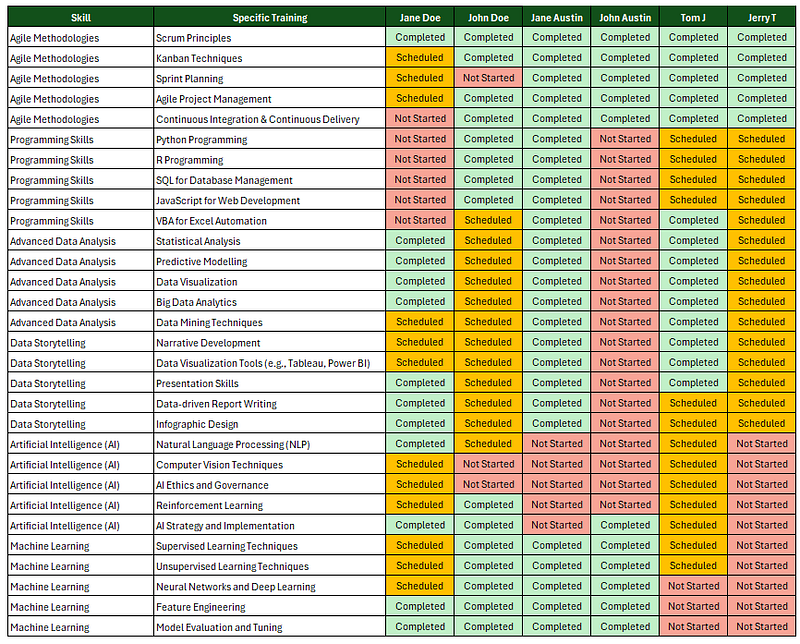
Step 1: Conduct One-on-One Discussions
The process begins by having one-on-one meetings with each member of the finance department. These discussions are crucial for understanding each individual’s current skill set, their experience with AI and related technologies, and their willingness to learn and adapt.
It’s essential to approach these conversations with an open mind, ensuring that team members feel comfortable expressing both their strengths and areas where they need development.

Step 2: Identify Key Skills and Competencies
From these discussions, key skills and competencies that are relevant to the finance department in the context of AI and modern technologies should be identified.
These include, but are not limited to:
- Agile Methodologies: Understanding and applying agile practices to improve flexibility and responsiveness in financial operations.
- Programming Skills: Basic to advanced knowledge in programming languages such as Python or R, which are crucial for data analysis and automation.
- Advanced Data Analysis: Proficiency in handling and interpreting complex data sets to derive actionable insights.
- Data Storytelling: The ability to communicate data insights effectively to stakeholders through compelling narratives and visualizations.
- Artificial Intelligence (AI): Understanding AI principles and applications in finance, such as predictive analytics and automated decision-making.
- Machine Learning: Knowledge of machine learning techniques and their application in financial modeling and forecasting.
Step 3: Develop a Collaborative Skills Matrix
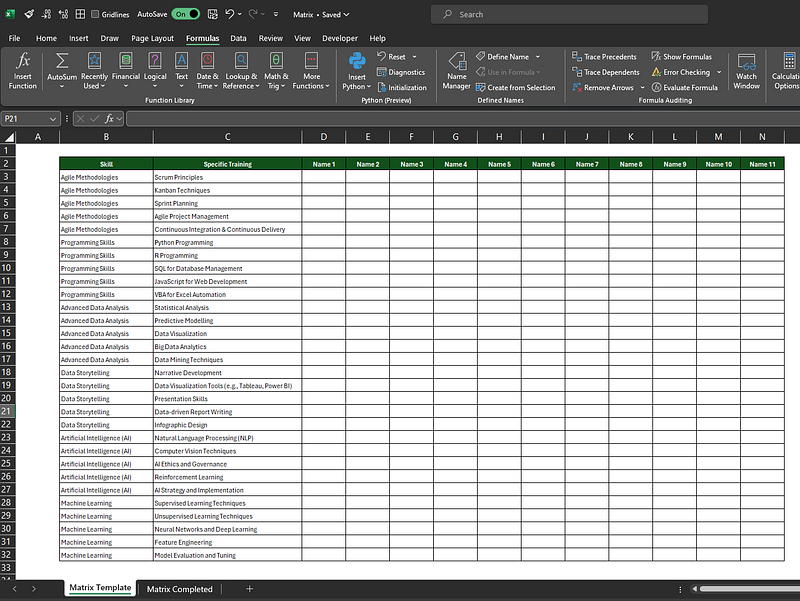
Once the key skills are identified, the next step is to develop a skills matrix collaboratively with the team.
This matrix should categorize skills in terms of their relevance and the current competency levels within the team. It should also identify gaps where additional training or hiring might be necessary.
Step 4: Implement Training and Development Plans
Identifying skill gaps is only the first step; addressing them is crucial.
Develop tailored training and development plans to help team members upskill in areas like AI and data analysis.
This could involve formal training, workshops, online courses, or even peer-to-peer learning sessions.

Step 5: Regular Review and Update
The AI landscape is continually evolving, and so should the skills matrix. Regularly review and update the matrix to reflect new technologies, methodologies, and skill requirements.
This ensures that the finance team remains at the forefront of AI application in the financial sector.
Best Practices for Successful Implementation
Creating an AI skills matrix in finance teams is a dynamic and strategic process that requires continuous engagement and adaptation.
By understanding individual capabilities, identifying essential skills, and fostering a culture of continuous learning, finance teams can effectively integrate AI and related technologies into their workflows.
This not only enhances their operational efficiency but also positions them to be proactive and innovative in a rapidly evolving financial landscape.
Some best practices for this are:
- Set Realistic Goals: When developing the skills matrix, set achievable goals that align with both individual career aspirations and the department’s objectives.
- Leverage Diverse Learning Opportunities: Offer a mix of learning methods including workshops, online courses, mentorship, and hands-on projects to cater to different learning preferences.
- Encourage Open Communication: Foster an environment where team members feel comfortable discussing their skills and areas for improvement.
- Focus on Practical Application: Ensure that the skills being developed are directly applicable to the challenges and projects within the finance department.
- Adapt to Change: Stay informed about emerging technologies and industry trends to continually adapt and update the skills matrix.
The Role of Leadership
Leadership plays a crucial role in this process. Leaders should not only endorse this initiative but also actively participate in learning and development activities. By leading by example, they can significantly boost morale and emphasize the importance of adapting to new technologies.
Implementing an AI skills matrix in a finance team is not just about staying relevant in the age of digital transformation; it’s about unlocking new potentials, fostering innovation, and driving growth.
With a well-planned approach, finance teams can transform challenges posed by AI and related technologies into opportunities for development and advancement, both at an individual and organizational level.