
Learning About the Future of AI and Cyborgs from 「Ghost in the Shell」
In 1989, a shining star appeared in the world of manga.
That was 「Ghost in the Shell」 by Masamune Shirow.
As we approached the early 1990s, with technology beginning to permeate daily life, this work portrayed our future from a revolutionary perspective.
History has shown that characters and stories in movies and books sometimes anticipate or influence the trends of real-world science and society.
The 19th-century writer, Jules Verne, depicted technologies far advanced from his time, and his visions would later influence the progress of space industries and deep-sea explorations. 「Ghost in the Shell」 was no exception.
By delving deeply into the relationship between technology and humans, and exploring its impact on our way of life and perception, it gradually garnered international attention.
In 1995, the much-anticipated film adaptation was released. Its cinematic representation captivated many audiences, leading to a growing fan base. Its influence went beyond the realm of entertainment, touching business and scientific communities.
Film director James Cameron publicly expressed his admiration for the innovative vision of this work. Furthermore, technology mogul Elon Musk also acknowledged its impact.
One particularly renowned work influenced by 「Ghost in the Shell」 is the Hollywood blockbuster 「The Matrix」.
Concepts of cyborg technology virtual reality are believed to be based on the prescient vision of 「Ghost in the Shell」.
This forward-looking work presents us with a profound message that goes beyond mere entertainment.
It challenges us to consider how we should coexist with technology in the future we are heading towards and to contemplate the eternal theme of what it means to be human.
1. The Theme and Foresight of the Movie 「Ghost in the Shell」
In a future Tokyo, a night drenched in rain is whimsically illuminated by neon lights. In a corner of this city lives a woman named Motoko Kusanagi, who, despite having a cyborg body, carries a warm human heart. Yet, her heart is filled with profound worries.
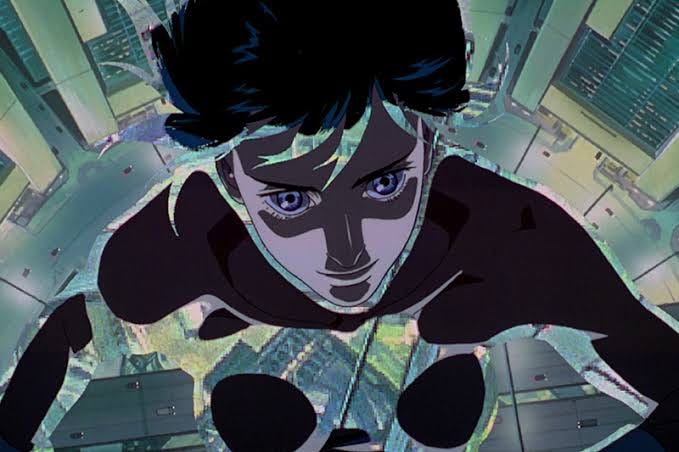
While she seems indistinguishable from an average person, her memories are electronically stored. Each memory, every emotion, and event she’s experienced, is recorded as data on a server. She was aware of this fact, but one day she confronts the realization that her memories can be rewritten by others.
「Are my memories not my own?」
A profound sense of crisis and anxiety overwhelms her. If memories can be altered, her entire past and the emotions associated with them come into question. Memories form the foundation of our identity. If they waver, her very existence becomes uncertain.
Her struggles resonate with us today. In an age where we express ourselves through SNS and VR, seeking our identity within, one might wonder how solid our beliefs and values truly are. Through Kusanagi’s story, we are encouraged to confront and reflect deeply on our own existence.
In this manner, the insights provided by 「Ghost in the Shell」 serve as a foundation for examining how our identity and consciousness shift alongside technological advancements.
Through this work, we are given an opportunity to ponder how we should engage and coexist with future technologies. In this sense, it’s indeed a profoundly philosophical and contemplative piece.
2. The Relevance of 「Ghost in the Shell」 to Modern AI Technology
Neon lights in the city at night shimmer, often evoking a feeling as if our world overlaps with that of 「Ghost in the Shell」.
Particularly notable in the forefront of modern technology is the rapid evolution of AI. For instance, AlphaGo, developed by Google’s DeepMind, defeated the world champion of Go, showing the world that AI can surpass human intuition and strategy. Such AI presence is pervasive, from home assistants to autonomous vehicles and medical diagnoses.
Yet, amidst this technological progress, the lingering question is, 「Can AI possess human-like consciousness?」
Companies like Neuralink are advancing brain-computer interface technologies, said to be capable of interpreting human brain activity and transmitting it as digital signals. Such advancements hint at the realization of the cyborg tech and brain hacking depicted in 「Ghost in the Shell」.
Moreover, the smartphones and cloud tech we rely upon daily can essentially be seen as extensions of our brains. In 2020, Facebook announced 「Project Aria,」 laying out plans to advance AR tech that recognizes and provides information on real-world environments. This suggests a future where our surrounding reality can be electronically manipulated or supplemented with information.
In this way, the cutting-edge technologies of today and the future depicted in 「Ghost in the Shell」 intersect in many areas, blurring the boundaries between them.
These advancements hold significant implications as we contemplate our ways of life, values, hopes, and anxieties about the future.
3. Future Prediction: The Distant Radiance of the Future as Portrayed by 「Ghost in the Shell」
When we look up at the night sky, the twinkling stars seem to dance with a premonition of the future. One of those stars is 「Ghost in the Shell」, and we can feel its glow illuminating the path to our future.
Imagine waking up in the morning, your skin shining like metal, and within your heart, a light similar to a tiny star – a beacon of AI – shines brightly.
This is the dawn of entering a new world of cyborg existence. As your body transforms, you engage in dialogues with AI, which shines like stars, painting your daily life. It’s as if we are connecting like constellations, constructing a new universe together.
Yet, lurking within the brilliance of these stars are shadows: the loss of memory or distortions in identity. These challenges might test us, just like the hidden darkness that the stars in the night sky conceal. And within this new universe, our role as 「humans」 might evolve into something different than before.
Amid the revolutions brought about by these new star-like technologies, we may find ourselves in the role of captains, charting new courses in our spaceship. This could be likened to an invitation to explore a new universe, perhaps a message 「Ghost in the Shell」 intended to convey.
However, literature, anime, and films do not provide solutions. They merely, with foresight, communicate the trials we might face. This becomes the truth we must understand before embarking on our new adventures beneath the starry skies.
Lastly, I’m aiming for 10,000 followers, so I would greatly appreciate it if you could follow, comment, or give a clap.
Your support truly motivates me. Thank you!

If you’re interested, this work is also available on Netflix, so give it a watch!