
Learning a Second Language in Quarantine
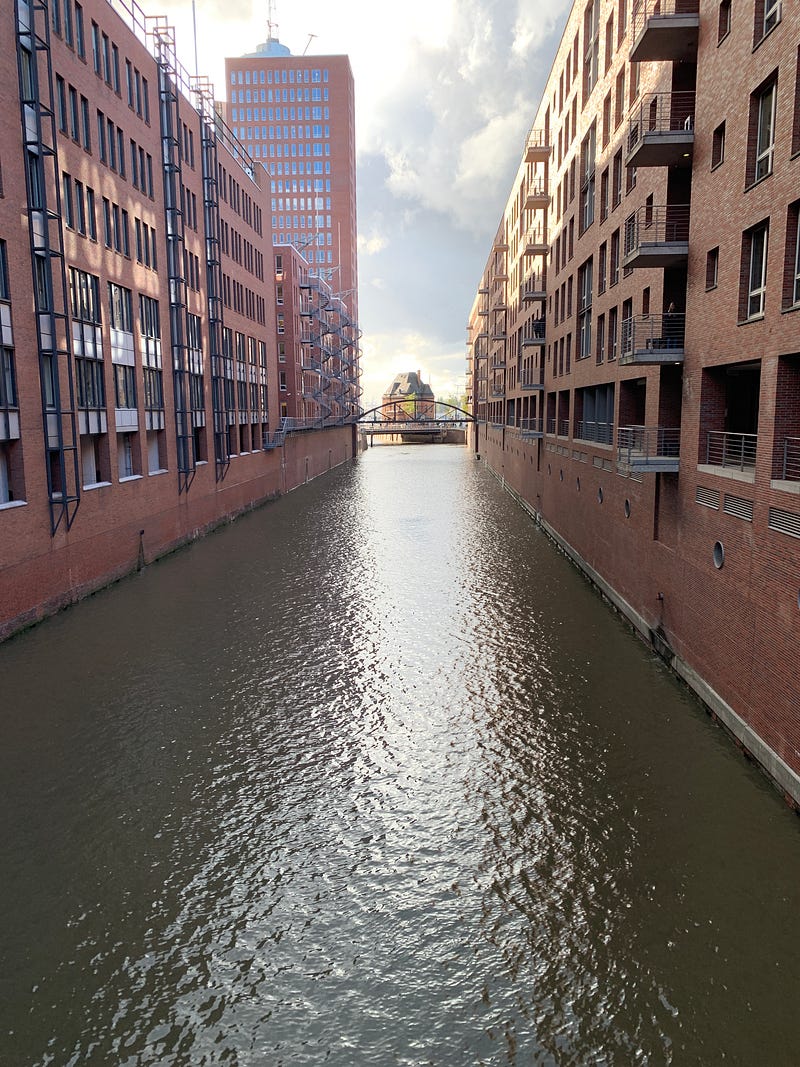
With a global pandemic and stay-at-home orders, you may find yourself unemployed and unmotivated. This is where I found myself earlier this year. In March 2020, I had just come back home to New York City after working abroad in Europe as a singer on a cruise ship for a German company.
I had first heard about this opportunity in April 2019, when I auditioned for the company alongside 400 other performers in a small New York City practice studio. I had never worked for a cruise line before. Their base was in Hamburg, Germany.
Before this job, I had never traveled to Europe, other than to visit my brother. Once. My brother has been living in the EU since 2015. He studied for his graduate degree in Dublin, Ireland. After he graduated, he briefly taught English in Austria, before moving to Milan, where his girlfriend is from. He currently works and studies at the University of Milan.
Having my brother in Italy while I would be rehearsing in Hamburg for two months was what helped push me to make the decision to take the contract. I always wanted to travel the world, and while my job as a performer certainly helped me travel around the United States, this new job would give me international travel experience. And if anything went wrong, I didn’t have to travel across the ocean (no pun intended).
Living in Hamburg was extremely fulfilling, for so many reasons, and reliving my experiences though the memories I had made, made me yearn for the day I could return. As of April 2020, I had been assured that my next contract with the company would still be valid, with a start date of May 22nd. Of course, this all fell through due to the pandemic. But in the beginning of all this, when I felt so powerless and unmotivated to do anything, these memories of Hamburg kept me going.
I loved traveling. I still love traveling. So, my only alternative would be to keep planning for the future. Keep working towards the goal of travel. This lead to the beginning of my German Langauge self-instruction.
Yes. I lived in Hamburg for two months and then performed on a German speaking and functioning cruise ship for four months. And on this ship I sang in German. And yes, during this entire time, I didn’t even speak the language.
I was determined to prepare myself for the next time I would be in Hamburg. This time, I would do it right. Speaking the language would help me really feel immersed in the local culture and gain a full understanding of my surroundings.
The only problem was, I was bad at language.
My mother is the ultimate language guru. Having also spent time abroad when she was younger, she learned languages through working a variety of jobs and ultimately: She has a doctorate in communication. She speaks Dutch after living in the Netherlands during a foreign exchange program, Hungarian and German after working in Hungry and Switzerland, French from school and travel, and Spanish from living in Costa Rica. And when I asked her for all these details, she also enlightened me with the fact that she can read Portuguese. I’m guessing this is because she has some work partners in Brazil. So casual.
As I said, my brother has lived in the EU for some time. He speaks Italian fluently and practically exclusively these days. However, he also knows other languages. When we were growing up, we went to a school with early language instruction. I should clarify, in the United States, most students start learning a second language around the ages of 11, or 14. We began to learn Spanish in kindergarten. Also my godmother is from Costa Rica, so we practiced Spanish outside of school…or, I should clarify, we were encouraged to. When my brother was in high school, he had a free period and decided to sit in on a French class for fun. Without using any course materials and by simply sitting in on the class everyday, he could carry on a full conversation in French with my mother.
So it would appear that my family has a knack for learning language. I’m being so honest, I really don’t understand where I came from. I mean, I was taught by the same people as my brother and yet, I can hardly understand Spanish. I also learned Mandarin in high school, and I remember nothing.
Still, I was determined that I would learn German in quarantine. So, I downloaded the app, “Duolingo”,and started some lessons. There were many challenges I was met with while using this app.
For one thing, Duolingo does not represent normal conversational language. It is set up like a game, where you basically guess the translations until you get it right. The program then uses repetition to help you “learn”. For the basics, this works. But German is a grammatically complex language. You need to understand sentence structure, cases, and genders. These elements of the language need to be broken down in a way that Duolingo’s system can not accomplish. (Although their “tips” for each section are a helpful attempt.)
The game changer for me was when my mother bought me some books from the company “Langenscheidt”. I can not promote this company enough for self-instructed language learning. They have books on the basics, on grammar and practice routines.
Along with completing the exercises in these books, I kept a notebook where I categorized all the vocabulary I learned. I organized them into verbs, nouns (sub categorized by theme) and “transition words”, which included adverbs, articles, and any other useful small word that would be helpful to remember.
I am normally not a very organized with handwritten notes, so I made sure that my work was really clean and correct when taking these notes. I found that reading my own handwriting over and over again helped the words stay in my head. I also wrote down a list of common questions, statements and phrases.
I continued to use Duolingo and bought a DuolingoPlus subscription, so I could continue practicing without “losing lives” when I answered the question wrong.
German is a complex language for native English speakers to understand. It’s actually quite deceiving. The language has many “false friends” where the vocabulary words may sound like English words, but the meanings are entirely different.
Along with this, there are verb tenses similar to a language like Spanish, that change depending on the subject that is doing the said verb. For example, the verb “haben”, (meaning “to have”) would change to “Ich habe, Du hast, Wir haben…”(I have, You have, We have).
There is also these fun things called “cases”, which are Normative, Accusative, Dative and Genitive, along with three genders, which are masculine, feminine and neutral. THESE ALL CHANGE DEPENDING ON THE SUBJECTS AND WHO YOU ARE SPEAKING TO AND WHERE THEY FALL IN THE SENTENCE. SO basically, you think you know a sentence or phrase in German, but if you change one factor in the whole sentence the entire sentence changes.
The hardest thing for me to understand was the word “this”. For example, the sentence “This woman drives this car with this key” translates to “Diese Frau fährt dieses Auto mit diesem Schlüssel”. And if you want to say “these keys” instead of “this key”, it would be “Diesen Schlüsseln”. And as you can see in that example, making the object a plural is a whole other story.
So, it’s a complex language. You have to do a lot of practice and reading to understand why the grammar works the way it does. This is something that a program like Duolingo is not equipped to do.
In conclusion, learning a second language on your own is totally possible. But you must use multiple resources. In fact, I learned so fast that I have a German translation of this article! (Just kidding, I am still very much a beginner.)
My biggest challenge has been in speaking. There is no way to truly learn a language unless you can start speaking with a native speaker and practice it all out loud. And, if you are stuck at home, who is there to talk to who is a naive speaker? This is my next step in my journey, now that my reading and grammar are pretty decent. I have many friends who are German and Austrian, but I am too shy to speak with them. I guess I just need to move to Hamburg again and begin practicing! But in all seriousness, I’ll be sure to write an update of how to practice speaking. (Feel free to follow me on instagram, @rcyonkers, to stay updated on my self-instruction.)
So if you are looking for something to do while you live out your most boring life, I highly encourage you to seek out learning a second language. It will broaden your understanding of another culture, look great on a resume and… It’s honestly, so much fun!