
Learn to Trade Using Market Simulators
Don’t have money to invest? Want to learn a little before you invest? Free market simulators might be the key.
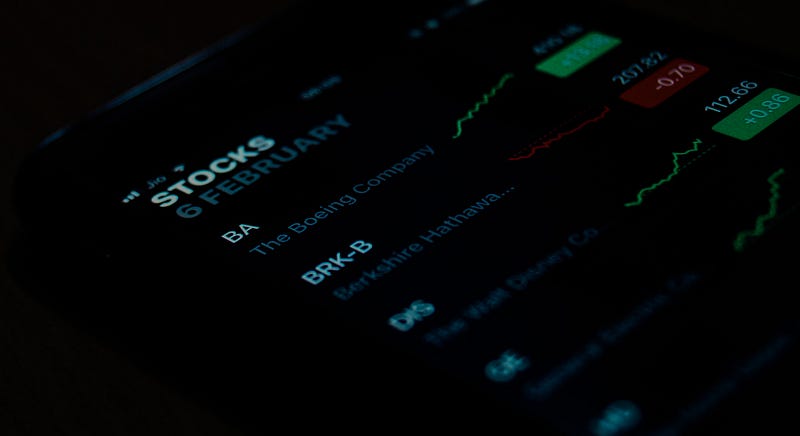
Using a market simulator might be right up your alley. Market simulators are exactly what they sound like, they’re programs that simulate the market in real-time to give you as authentic an experience as possible.
In financial jargon, it’s called paper trading. You the investor, are given fake cash to purchase fake stocks. And these fake stocks move up and down with the real market. It’s a great learning tool that will enable you to test out multiple strategies without any risk.
And you actually might up end up learning even more than actually trading with a smaller portfolio because the likelihood you’ll take riskier trades is higher given that it is all make-believe (somewhat). Monopoly money is a lot easier to trade with than hard-earned cash.
I honestly wish I had known about this concept before I started investing. I had always been really hesitant to start putting money into the market because I had zero clues how it worked, and I think I would’ve gotten in a lot sooner had I known about these simulators.
Some of these simulators are run by actual brokers in the hopes that you will become a real customer, and some are simply third-party apps. Just like real brokers each of these programs has its pros and cons.
Here’s a rundown of some of the top market simulators. Use one, use them all, but get into it and build your confidence, so that when you do start investing your own money you have a little bit more knowledge under your belt than I did, and you can start making that $$$.
Best Brokers
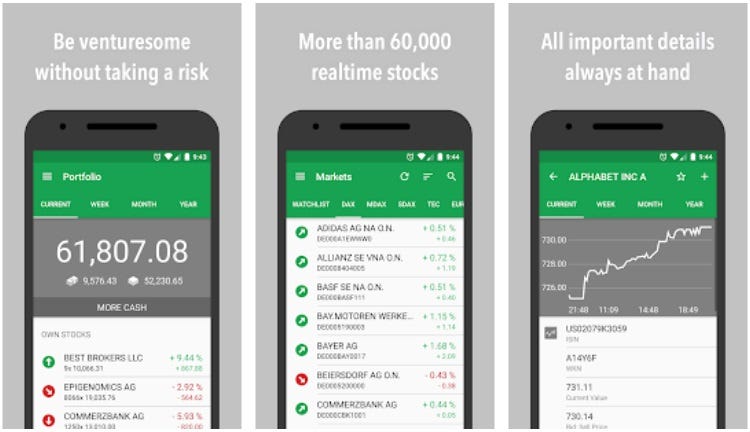
Best Brokers is a free app-based market simulator. The app is extremely user friendly and the interface is clean and aesthetic, with a more casual vibe akin to Robinhood. Best Brokers has one of the widest ranges of stocks available for purchase with over 60,000 real-time stocks equipped with weekly and monthly charts. You can even buy ETFs, funds, and bonds. The app also has a separate tab for cryptocurrency investments and advanced features like stops and limits.
When you download the app, you are given an initial 25k in virtual cash to invest (only during stock market hours, which maintains the apps realtime simulation). The app also allows you to connect and compete with friends, even climbing up a leaderboard to give you that competitive edge.
And just like real brokers, there is a newsreader section that gives you up to date stock news. They also provide a video/FAQ section with educational material to further your investment knowledge.
Wall Street Survivor
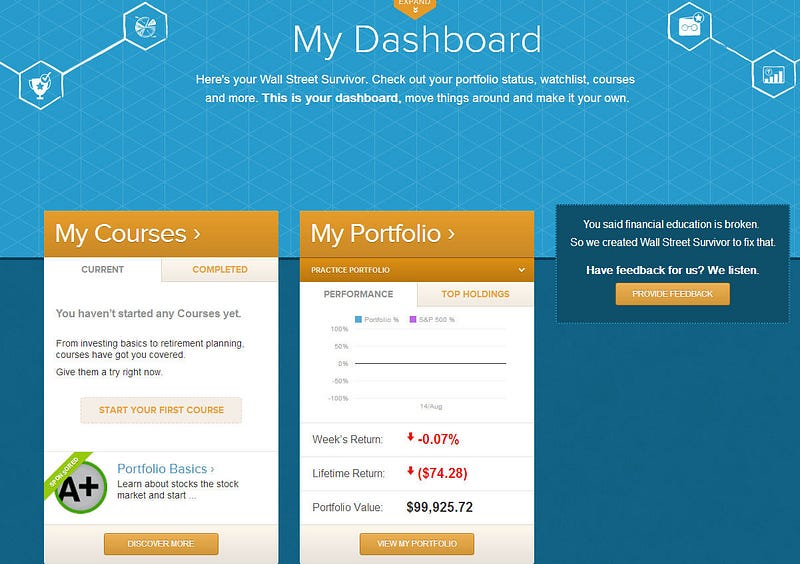
Wall Street Survivor is a free desktop-based market simulator. It’s mainly marketed as an educational tool to teach people about investing. They have a wide range of videos, articles, and other educational material about investing and finances. These lessons are taught using gamification. Basically a fancy word that means that users need to complete certain tasks to move on. And you are given 100k in virtual cash to practice what you’ve learned.
In the beginning, you start off in a practice league because they don’t want to throw you in with the sharks, which is kind of meta because you’re practicing to practice, but hey if it works it works.
In the program, you can create your own contests against your friends, family, peers, or you can join Wall Street Survivor’s monthly contest and compete for real money cash prizes, eBooks, and subscriptions. The three best investors in the sponsored leagues win the prizes.
Market Watch Virtual Stock Exchange
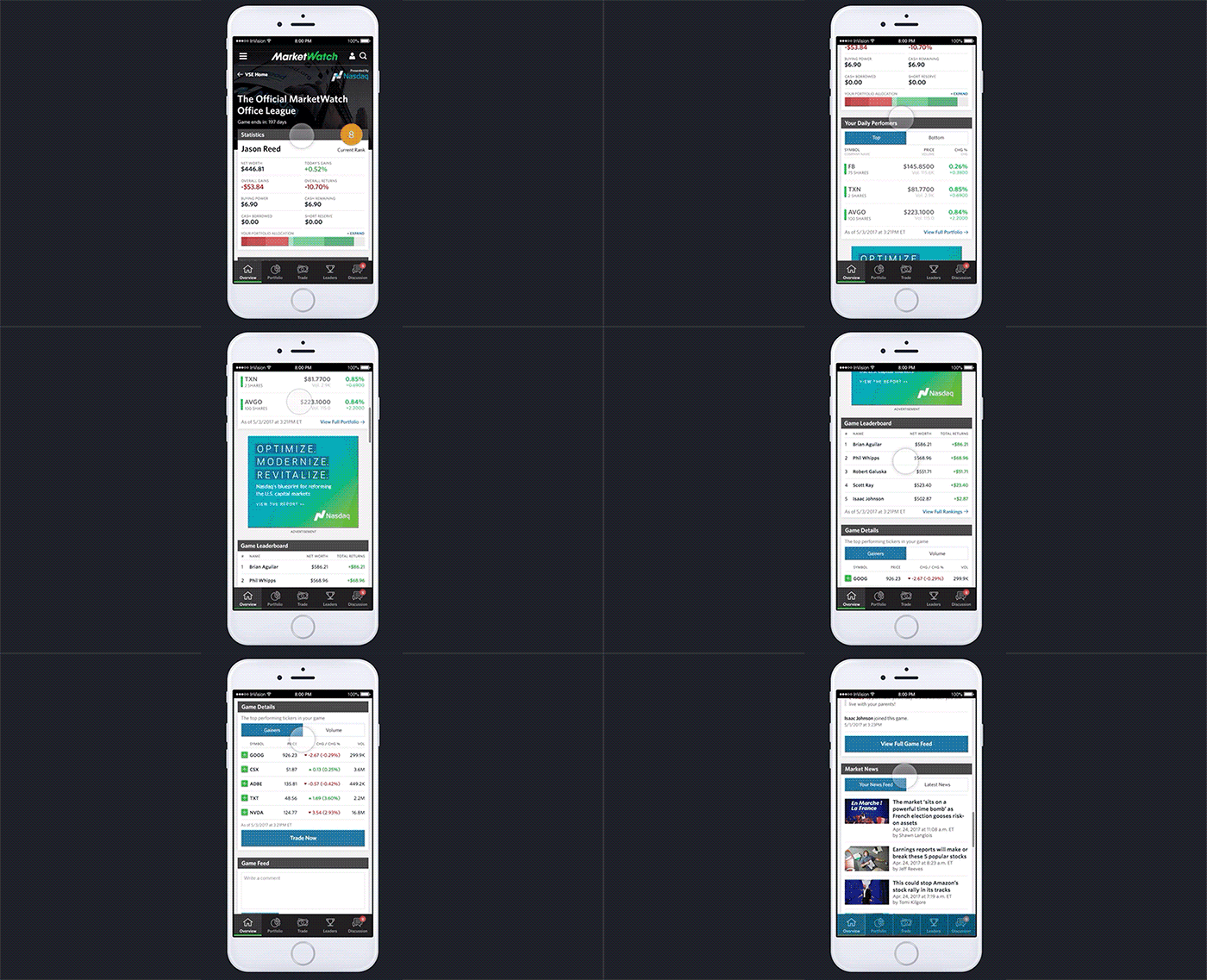
Market Watch is another desktop-based simulator. You do need to register for a free account with MarketWatch to play, and then you can either create or find a game to join. Like the other programs you trade-stocks in real-time, but the customization options here are amazing. You can choose to have or not have advanced trading strategies like stop-loss or limits. You can trade partial shares, and trade on margin. You set the starting budget. You can decide which symbols to trade. You are really in control of your investing narrative in this program.
There is also a collaborative nature to this game as you can discuss strategies with other players.
TD Ameritrade thinkorswim paperMoney
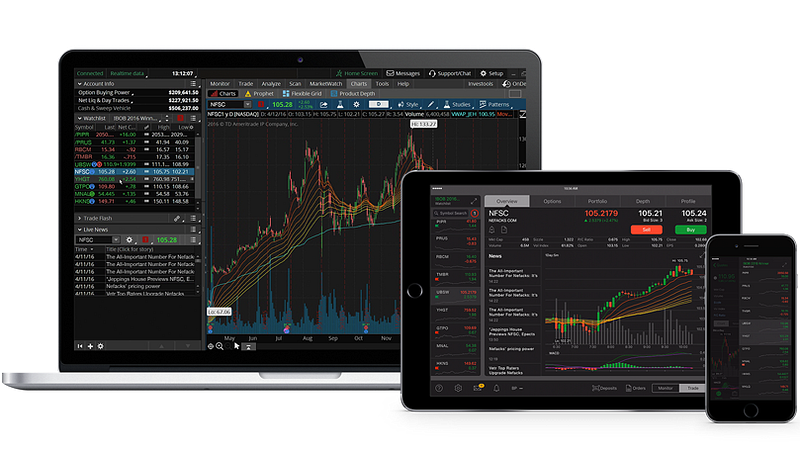
TD Ameritrade is an actual broker that offers paper trading services. You can either have an account with the brokerage or register for a demo account, which is completely free and has no associated costs, but it is only available for 60 days. The one downside is that if you do not have a live funded account with TD Ameritrade you will have a twenty-minute quote delay. But once you access your account you can use their desktop or app platform to access their simulated trading tools.
Your account will be virtually funded with 100k in practice money, and you will have two accounts an IRA account and a margin account. Within this program, you can make advanced orders and even backtest. You can try long and short strategies, and there are even stock scanners.
This is definitely a more sophisticated program that seems to be geared towards advanced traders, and TD’s beginner-friendly platform Trader Architect was recently discontinued.
If you like being thrown in with the sharks to learn to swim this might be for you. If not these other options might be a better bet.
How the Market Works
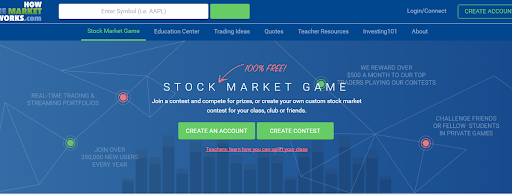
This free browser real-time simulator is ideal for beginners. It offers extensive educational material and tools to build a solid foundation of how the stock market works. This site is mainly geared towards educators and classrooms, but it can be used in almost all settings.
Once you register, you receive 100k in virtual cash, and like some of the other simulators, it has a competition feature so you can go up against your friends, family, or peers.
You can trade stocks, ETFs, mutual funds, options, and even commodity futures. It also has a news/articles section to keep you up to date on companies and their stocks.
These are overall safe places to learn your new trade. Risk it all. Play it conservative. Make mistakes. Just trade, and learn how to grow your money.
https://twitter.com/thecapital_io


