
Learn to Step Out of Your Comfort Zone With Cold Showers
The surprising benefits of adding cold showers into your daily routine.
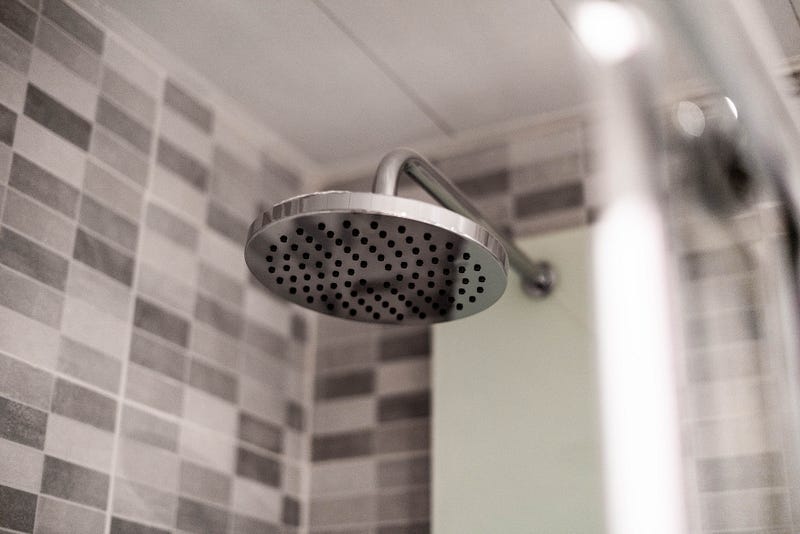
Over the last 40 days, I’ve done something every day that I previously thought I would never do: cold showers.
I am working on a longer article and podcast episode about the Wim Hoff method — if you haven’t heard of him you can check out this video. The method involves conscious breathing, meditations, and cold water therapy.
But as I work on that, I just wanted to write something shorter about how cold showers have positively affected me, and hopefully convince a few people to try it.
**Disclaimer: Especially if you have a heart condition, be smart and consult your doctor before taking cold showers**
Why I Started
Before February 2020, I used to think that some people could handle cold showers and I just simply wasn’t one of them. I tried it once or twice many years ago and my breathing completely freaked out. It felt awful and I turned the water off right away. What could be the point anyways?
I’ve since completely changed my mind, and in addition to cold showers, I have even started submerging myself in ice water baths. I realize it sounds crazy — and maybe it is — but stay with me here.
I first encountered Wim Hoff years ago. I found him interesting but never really committed to his method. But when I encountered him again in January 2020, something was different. It could be that I’m five years older (and hopefully a bit wiser). Or it could be the proximity to the new year — perhaps there was some left-over new years resolution energy in the air.
I think the biggest contributor, though, is that I am much deeper into the world of mindfulness and meditation. Meditation has convinced me that there are depths of my mind that I don’t understand and don’t regularly use. And Wim’s method, as well as cold therapy in general, is all about going deeper into the mind and unlocking your full potential.
Whatever it was that officially convinced me to try it, I could feel the discipline switch flip in my head. Once my discipline switch is flipped, I can’t respect myself if I don’t follow through.
I committed to doing the method for at least one month. After a few days, I even convinced my fianceé to give it a try. It involves a breathing method (5 min or so) and ending your shower by turning the water all the way to cold.
So what’s the point?
Going Outside Your Comfort Zone
In short, cold showers have taught me that the subjective feeling of my comfort zone is not what I thought it was. At almost 50 days into cold showers, I feel like my mind and my nervous system have shifted into a different mode of being.
I’ve since concluded that even if the science showed zero health benefits physiologically, I would still continue taking cold showers. They have had that big of an impact on me.
Now there is some promising science that shows potential benefits of cold exposure, but it’s still too early to draw confident conclusions. And it’s not the angle I want to take here.
I want to instead talk about the psychological benefits that I’ve noticed. The outer and more objective science is obviously important, but I am talking more about the “subjective science”. Much like meditation, this is an experiment you can run in your own mind to see what happens.
We all have a comfort zone. It’s where our nervous systems are in rest and digest mode. Things are stable there. Our breathing is calm and our heart rates are low. Things are going as expected.
Stability can be good, but too much of it limits our growth.
As we begin to leave our comfort zone, our nervous systems let us know. Fear enters into the system. Depending on the situation, our reaction can range from subtle anxiety to a full-on dumping of adrenaline into the bloodstream. Either way, our hard wired instinct is to avoid the triggers of these feelings. From simple organisms on up to the complex human being, nervous systems are repelled by dangerous things in the environment and attracted to comfortable things. It’s how we survive.
But our fear is often improperly calibrated.
How much does your fear of leaving the comfort zone hold you back? The answer is you can’t really know until you actually step outside of it.
There are logical ways to begin stepping out of your comfort zone, and it isn’t to climb Mount Everest in your shorts as Wim Hoff did. It also isn’t getting into a fight next time you’re at a bar, and it probably isn’t quitting your job without a plan either.
But you can get a taste of what it’s like to leave your comfort zone by simply taking a 20-second cold shower. You know it will be uncomfortable, but you’ve decided that you need to recalibrate your comfort zone. You are doing this.
As you get closer to turning on the cold water, your brain will invent all sorts of excuses. “This is stupid” and “what’s the point of this” and “what if it’s bad for me” were the looping thoughts running through my head the first few times. I could feel my body’s nervous system rejecting the idea before it even felt the cold water. It remembered how awful it was years ago.
But you’ve committed to going outside your comfort zone, so quitting is no longer an option. If you quit, you’ve further trained your nervous system in the wrong direction, and it will be even harder to leave your comfort zone next time.
Mindfulness is helpful here because you can watch your body and mind from behind the chaos. While observing from this space, there’s a way you can be sure that you’re about to leave your comfort zone. It’s what the author Julian Smith calls “the flinch”
The Flinch
During the first few cold showers, my heart rate increased before I even switched the water to cold. I felt a panic mode bubbling up and it was trying to convince me to back away. In his book The Flinch, author Julian Smith describes this moment as your signal:
“A moment before, the flinch seems so uncomfortable that you might talk yourself out of this. You convince yourself that it’s pointless, but it isn’t; it’s training. You need to build a habit of seeing the flinch and going forward, not rationalizing your fear and stepping away.”
Your body’s flinch towards something is a sign that you are at a crossroads. In one direction you back away and retreat to your comfort zone. In the other direction, you face your fear and decide to go into the unknown.
You made the decision beforehand to do this, and you won’t respect yourself if you back down.
The first time I took my cold shower I did 15 seconds. It was awful and I gasped for air the whole time. But the point was I did it, and afterward I was proud of myself. I now had the momentum to do 30 seconds next time. During the 30 second cold shower, I finally arrived — I got control of my breathing and started to find a sense of comfort within the discomfort.
I let the cold water hit everywhere on my body and focused on slow deep breathing. The key is to get control of the breathing. Your body will automatically go into a fight or flight mode and your breathing will be panicked and shallow. But you are in control. A particular game-changer for me was to face the cold water chest forward with an open posture.
A closed posture signals defeat and fear. But I was purposefully facing fear. And by opening my posture towards the cold, I was signaling to my body that I am in control and I am strong enough to face this uncomfortable feeling.
I am now easily doing 3 minutes of cold showering, and sometimes I don’t even want to get out.
At almost 50 days into cold showers, I respect myself more and have way more confidence. My fianceé has remarked that my posture seems better — my spine is more erect and my shoulders are rolled back.
I can feel momentum building in a great direction. I knew if I backed away from this challenge that the opposite would occur — I would build momentum in the negative direction and be more afraid. Or as Julian Smith writes:
“Those who are unwilling to face the flinch are obvious, too. Their eyes are dead. Their voices sound defeated. They have defensive body language. They’re all talk. They see obstacles as assailants instead of adversaries. Their flinch is the elephant in the room, and they don’t want to hear about it.”
I realize that for a cold shower this might seem dramatic. Maybe you have a natural tolerance for the cold or maybe this particular exercise is not at the edge of your comfort zone. For me, though, it was. And there is definitely something that will push you outside of your comfort zone. If it’s not a cold shower, an ice bath should definitely work.
I have a different energy after a cold shower. I feel confident and grounded. I feel extremely energetic but in a stable way. My posture is tall and my shoulders are rolled back. I faced one challenge for the day, and I survived. My nervous system was wrong, and I feel the reward for facing fear and accomplishing something.
The cold showers are just the beginning. What other activities do you back away from for fear of leaving your comfort zone? Mindfulness will help you to learn your body’s cues — you will learn when your body is repelled by something.
Maybe your body is right and the situation is dangerous. But chances are it’s just the fear that is holding you back. Cold showers are the first step to leaving your comfort zone, facing your fears, and finding success.


