
Our civilization is transitioning from a Print Age (linear sequential thought) to a Digital Age (Unified Field).
LEARN TO MANIPULATE THE UNIFIED FIELD
Playing Sudoku develops habits of the mind. Sudoku aids the development of attention, perception, and memory as well as being an environment to practice formal logic and reasoning as a unified field (necessary in our Digital age of web/cloud).

Civilization advances by extending the number of important operations that we can perform without thinking about them. All things that we “know” no longer demand our attention. To know something is to do it automatically, without thinking, to categorize it at a glance, or to ignore it entirely. The nervous system is “designed” to eliminate predictability from consideration and to focus limited analytical resources where focus would produce useful results. The Art of Measurement:…
Our civilization is transitioning from a Print Age (linear sequential thought) to a Digital Age (Unified Field).
- If you want to do a deep dive into this concept read:
THE OPPORTUNITY/PROBLEM: Learning to work in a Unified Field
Linear sequential reasoning is no longer sufficient in our digital age. The twist in our thinking comes from this: Our digital age transports us back into the unified field experience of oral and auditory modes [even if using a visual technology, its universal nature is analogous to traditional oral communication]. This Unified Field is the multi-directional sphere in which the web/cloud operates. *No you won’t find this in a Wikipedia search. We are traversing new ground here.
You already know this (implicitly). Virtually any MMOP (massively multiplayer online game or more commonly, MMO) operates as a Unified Field. Most successful technology companies operate as Unified Fields for both database management, and operations (Amazon, Uber, Facebook, Google). This is good news. Problems can be solved faster and more easily when considered in the frame of this Unified Field reality.
Consider the algorithm that determines your Uber ride. You are asked to put in your destination FIRST and THEN any intermediate stops. This is a Unified Field at work — define the range and then enter data within that range. Most of us from the print culture would much rather start from the beginning, put in our next stop and THEN the final destination (liner-sequential thought).
The use of machine learning and the internet has given us our digital age. To operate in the digital age, we must think differently — in the Unified Field that our digital age generates.
Civilization advances by extending the number of important operations that we can perform without thinking about them. All things that we “know” no longer demand our attention. To know something is to do it automatically, without thinking, to categorize it at a glance, or to ignore it entirely. The nervous system is “designed” to eliminate predictability from consideration and to focus limited analytical resources where focus would produce useful results. THE ART OF MEASUREMENT:…
We each inhabit a story, describing where we are, where we are going, and the actions we must undertake to get from the former to the latter. These inhabited stories are predicated on an underlying value system (as we must want to be where we are going more than we value where we are). In addition, they are frames of reference, allowing us to perceive (things that move us along; things that get in our way), make most of the world irrelevant (things that have no bearing on our current frame), and determine emotional significance (positive: things that move us along; negative: things that get in our way). Jordan Peterson
As a civilization, we must break the hold of linear sequential thought and embrace the Unified Field.
To appreciate just how difficult the process can be, read Flatland by Edwin Abbott (where a two-dimensional square is visited by a three-dimensional sphere).
WHAT I DISCOVERED: How people think
Even though we literally don’t realize it, we have moved much of our cognitive development from the explicit to the implicit realm (you know it when you see it). Accordingly, the vast majority of our education follows the tradition of our fathers, linear sequential thought. We think and organize like ants marching — 1,2,3,4, — Top-Down, A,B,C,D… The source of this implicit learning is not Language (the first tool of man) but the development of the printing press and the reading of the books it gives us (the start of our mass production age).
THE DANGER: Facts v. Knowledge
Yes, the world is changing and people are learning to work in the Digital Realm. The danger is merely using this new capability without developing the skills to manipulate it (play all the XBOX you want — it won’t be enough). Plato recognized such a risk (applicable to our age) when he had Phaedrus warn of the dangers of a new technology/method of learning. Our over-reliance on [written words in his age and digital media in ours]
“By telling them of many things without teaching them, you will make them seem to know much, while for the most part, they know NOTHING and as men filled, not with wisdom, but with the conceit of wisdom, they will be a burden to their fellows.” Plato’s Phaedrus
How do we learn this skill: Not in school
The purpose of lecture and learning is to transfer information from dynamic memory (only exist as long a consciously maintained) to structural memory (that can persist even when they are not being actively considered). This is little help in our Digital Age. You must develop active learning. It causes structural changes in the brain that will endure over time. There are various means to establish this ability. It takes practice and a great way to practice is playing a game.
What type of game?
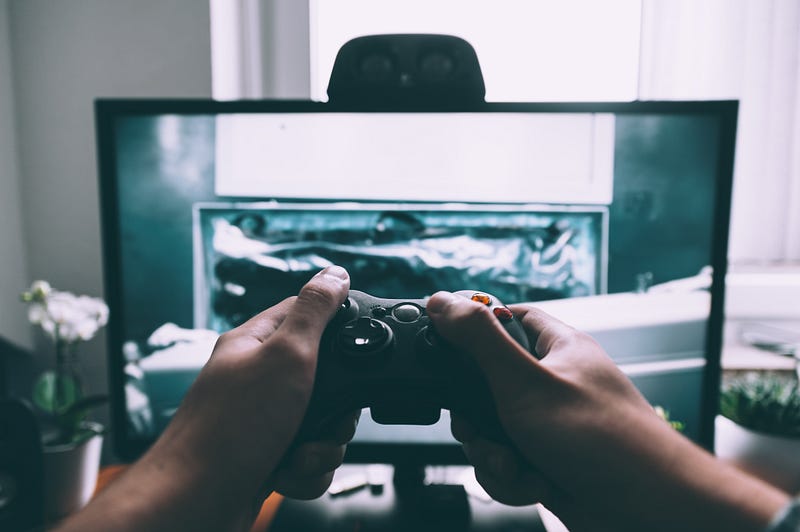
Don’t get ahead of yourself — no XBOX or Playstation game teaches you the skills you need!
If you want to train your mind to traverse the digital realm nimbly and manipulate the cloud, play Sudoku!
The goal is to use conscious action to develop a new way of processing information. Then through practice, allow it to settle into a semi-conscious habit. Also, to use the ability to focus (developed playing dominos, cards, and chess) in a new multi-dimensional way (unified field). By using a single-player puzzle, we can avoid the need for competition and speed demanded by the social imperatives competition introduces with cards and chess.
WHY SUDOKU?:
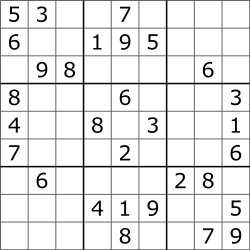
Sudoku is a puzzle consisting of a square grid subdivided into nine boxes, each with nine squares. Some of the squares contain numbers, and the object is to fill in the remaining squares so that every row, column, and box has numbers one to nine. Each number can only be used once per any row, column or box.
“Su” means number in Japanese. “Doku” refers to a single place on the puzzle board that each number can fit into. As with solving math, Sudoku players rely solely on pure deductions, and they spontaneously acquire various deductive tactics, which differ in their difficulty. Sudoku puzzles are pure deduction, and their solution depends ultimately on the ability to make valid deductive inferences. To draw conclusions that must be true given the truth of their premises. This is the same method used to solve math problems and write elegant code.
The more complex the Sudoku puzzle is, the more stages and tactics a player must use to solve the puzzle. The kicker is that individuals learn not to make guesses rather to transition from simple tactics to advanced tactics embedded in an advanced strategy once they discover that they can make no further progress relying solely on simple tactics. In other words, players progress from System 1 reasoning that exploits automatic processes to System 2 that uses logic and calculation (read Thinking, Fast and Slow by Daniel Kahneman).
In the past, life has tended to function like a card game — uniform, continuous and sequential. You wait for your turn and play your card. Today’s digitally-driven world operates like Sudoku. You can begin anywhere and focus on what you want — everyone can play simultaneously.
The digital realm allows you to access and manipulate data in several ways at once, just as Sudoku allows you to consider a number as part of a row, column or box and use a variety of tactics to solve the puzzle. You can fill any square in any order — the whole puzzle is available at once, like a digital cloud.
Sudoku, as an activity, can help you develop mental procedural pathways that draw on a set of cognitive processes that aid in developing mental rigor necessary for cloud computing and developing elegant code.
Sudoku is a problem-solving game that encompasses a set of cognitive processes and employs reasoning to make inferences from knowledge and draw conclusions. The player must draw upon memory, attention, and perception to identify and solve the puzzle — just as your future founder/coder/hacker must.
Play sudoku.
A member of the Digital Age (as a Unified Field expert) would be completely comfortable with the boxes-within-a-box structure. They will also be comfortable with looking at the puzzle as one Unified Field, not as 81 separate problems. The ability to look at each square in multiple dimensions — its membership in a row, column and 3X3 box — allows the player to fill ANY SQUARE with confirmation across these multiple dimensions. This cross-referencing also speeds up the process.
References:
Effects of Two Types of Sudoku Puzzles on Students’ Logical Thinking by Youngyun Baek, Bokyeong Kim of Korea National University of Education, South Korea and Department of Instructional Technology, University of Virginia, USA
The Psychological Puzzle of Sudoku in THINKING & REASONING, 2008. 14(4). 342–364 by N.Y. Louis Lee, Geoffrey P. Goodwin, P.N. Johnson-Laird
The Organised Mind by Levitin, D. (2014) Random House
For more information on how this devilishly simple game can train your brain to walk in the digital realm, read THE ART OF MEASUREMENT: How Playing Sudoku Can Teach Math and Bridge the Digital Divide.
Sometimes… you find that your slow progress, and careful accumulation of tools and ideas, has suddenly allowed you to do a bunch of new things that you couldn’t possibly do before. Even though you were learning things that were useless by themselves, when they’ve all become second nature, a whole new world of possibility appears. You have ‘leveled up’, if you will. Something clicks, but now there are new challenges, and now, things you were barely able to think about before suddenly become critically important.
Levels of thought: a striking metaphor It’s usually obvious when you’re talking to somebody a level above you, because they see lots of things instantly when those things take considerable work for you to figure out. These are good people to learn from, because they remember what it’s like to struggle in the place where you’re struggling, but the things they do still make sense from your perspective (you just couldn’t do them yourself).
Talking to somebody two levels above you is a different story. They’re barely speaking the same language, and it’s almost impossible to imagine that you could ever know what they know. You can still learn from them, if you don’t get discouraged, but the things they want to teach you seem really philosophical, and you don’t think they’ll help you — but for some reason, they do.
Somebody three levels above is actually speaking a different language. They probably seem less impressive to you than the person two levels above, because most of what they’re thinking about is completely invisible to you. From where you are, it is not possible to imagine what they think about, or why. You might think you can, but this is only because they know how to tell entertaining stories. Any one of these stories probably contains enough wisdom to get you halfway to your next level if you put in enough time thinking about it. Levitin, D. (2014) The Organised Mind
If you like this article and want to read more such articles without any restrictions, why not consider becoming a Medium member (if you are not one already) by using my referral link below?
I get a portion from your monthly fee at no extra cost to you and it will go a long way in supporting me as a writer.