
Learn the Journaling Tips from Icons
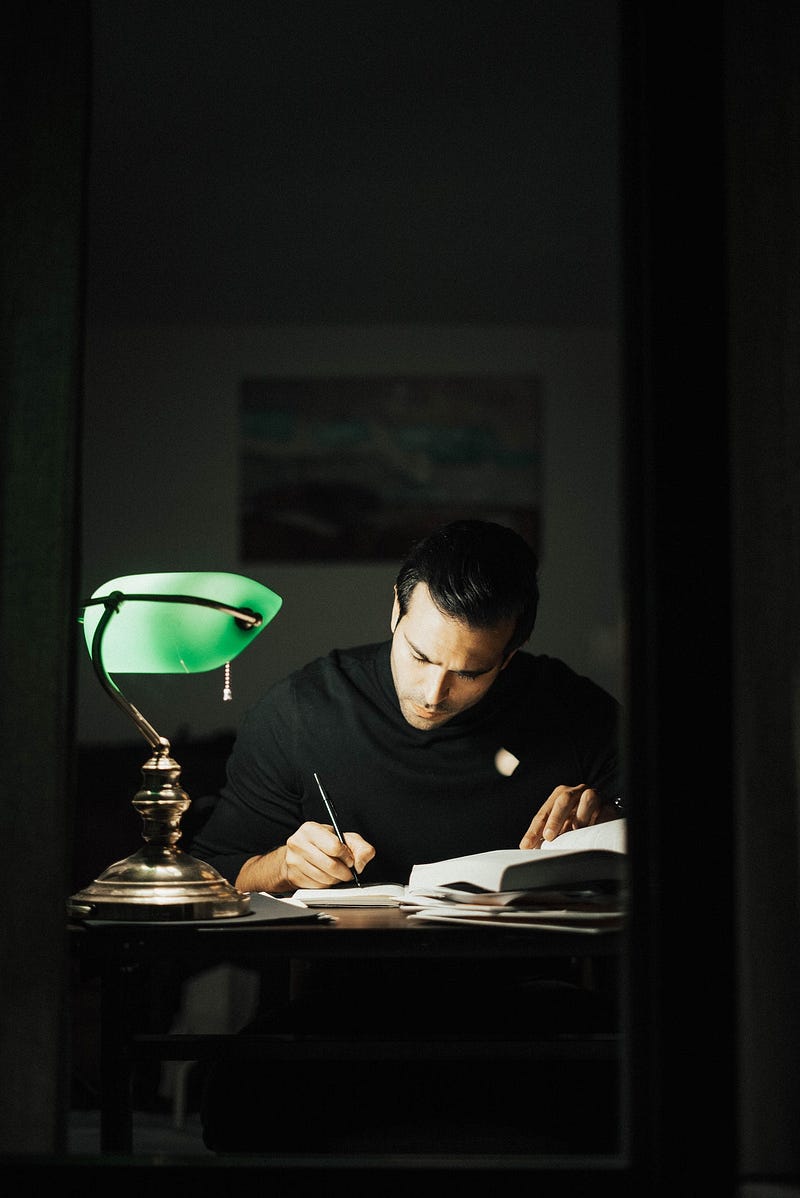
Let’s skip past why we all should be journaling. Just kidding, here are yet more quotes to throw at you in hopes of persuading you to pick up the pen (or digital app).
- “Journaled at the end of the day had a 25% increase in performance when compared with a control group who did not journal.”— Ryan Holiday
- “Journaling is a practice that teaches us better than any other the elusive art of solitude — how to be present with our own selves, bear witness to our experience, and fully inhabit our inner lives.” — Maria Popova
- “Could bitching and moaning on paper for five minutes each morning change your life? As crazy as it might seem, I believe the answer is yes.” — Tim Ferriss
Hoping that’s enough said and we can move this conversation towards, how can we journal better.
I’ll admit that sometimes I get arrogant and if I see something geared towards ‘beginners,’ I might skip it and jump to the ‘advanced’ section. In that spirit, I did a deep dive on two icons perhaps famous for their journals. First, Anne Frank, famous posthumously for her first-hand account of the Holocaust in her book, The Diary of a Young Girl, and why her literary gem still endures. Secondly, Ben Saunders, the record holder for the longest human-powered polar journey in history (2,888 km), and why his blog imbues us with adventure.
Finally, I’ll end this piece with my favorite tip to get you to journal like the icon you already are.
Journaling Tips From Anne Frank
Who’s perhaps one of the most famous people ever known for journaling? A 13-year old teenage girl named Anne Frank, that’s who.
“Anne is relatable, above all else, possibly because her writing is so unfailingly honest and unashamed about feelings that are universal and timeless to teens the world over.”
— Study Guide: The Diary of Anne Frank
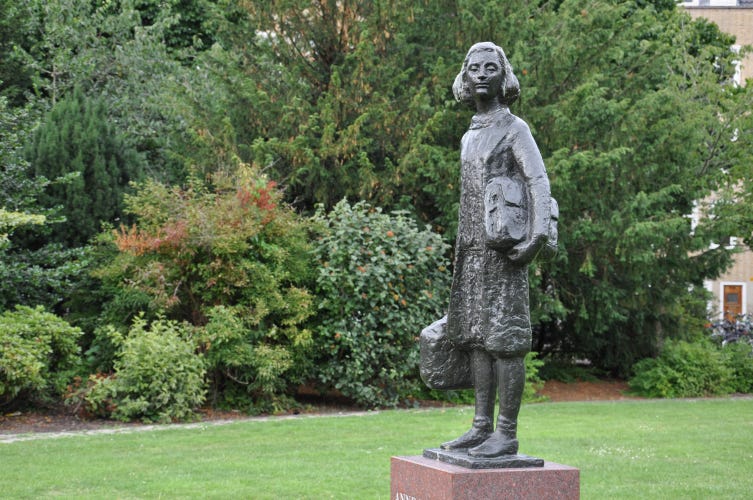
So, when it comes to our journaling, let’s learn from Anne Frank and what has made her diary endure all these years. It might be because it seems like a piece of “found art” that she never intended for others to read. We now know that’s false; that she actually edited her journal meticulously and had aspirations to be a writer. Nevertheless, the raw and relatable intense emotion she conveys is universal in the present day.
Here are some takeaways from the Diary of Anne Frank that you can consider in your own journaling:
Her maturation as a writer: her style noticeably improves from beginning to end.
Wouldn’t it be nice to actually be a good writer? I’ve been writing Venture Out for almost 3 years now and I can tell you that my ability to write has improved. And better yet, that improvement transfers to writing better emails at work, better IM/chat messages, and a more thoughtful way of thinking.
Wrote as if she was sharing her deepest secrets with a cherished friend.
— Holocaust Memorial Resource and Education
In 2021, 12% of Americans said they had zero close friends. Furthermore, 1 in 5 people reported having 1 or no close friends. Personally, my friends are my family too, and it takes a village to survive and thrive. In the meantime, make your journal your best friend, as Anne did.
Not just an outlet for her creativity, but also a substitute for the experiences she was denied by her circumstances.
— Holocaust Memorial Resource and Education
As I read through some of my old writings, I noticed that at times I imagined the what-ifs. I’d write about possible scenarios if things had played out differently. Perhaps in our older age, that might look like revenge fantasies or regrets. If you can write about it, I think you can then let it go easier. Like writing an angry email but never sending it.
Her ability to turn living people into characters, her observational powers, her eye for detail, her ear for dialogue and monologue, and her sense of pacing.
— Francine Prose
Perhaps the one I need to practice the most, getting better at observing the world around me. I tell myself that I have a low vocabulary and therefore repetitively use the same small words to describe things, which is not healthy. Practice makes us better, so write about something memorable that happened and practice tapping into all your senses to create a vivid image.
Journaling Tips From Ben Saunders
I’ve been enthralled by Ben Saunders’s blog about his 2013 expedition with Tarka to reach the South pole, unassisted. Let me translate — 2 guys hiking by themselves, pulling a sled of over 400 pounds, for over 1800 miles in Antarctica, every day for 4 months living in the same tent, with no showers, and eating pre-packaged food.
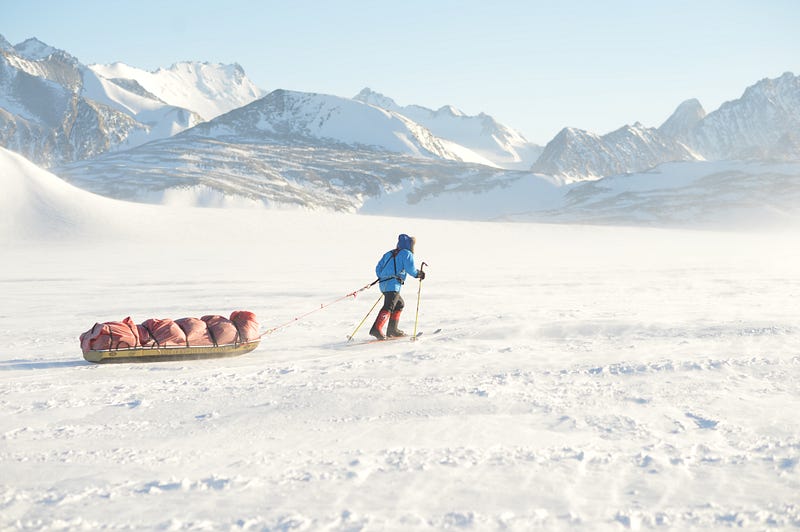
And yes, he kept a daily journal about that absolutely epic feat of humanity.
So, let’s talk more about the power of journaling in our daily lives from the comfort of our homes in our sweatpants. We don’t have to be like Ben Saunders testing the limits of our body, we can still push ourselves by journaling and documenting the limits of our mind.
Here are a few takeaways from the Scott Expedition that you can learn for your own journaling:
- No fixed length. Over the course of 100+ entries, Ben wrote them at the end of the day, typically after a grueling day of trekking. Therefore, some entries were longer or shorter than others. And that’s ok. When you’re journaling, don’t think because you only have a couple of minutes that it’s not worth it. Or that every entry has to be of a certain length to be worth it. One sentence is enough and is better than nothing.
- Deal with all kinds of stress. In his research paper reflecting on the journey, Ben wrote that he coped with environmental, logistical, psychological, and motivational stressors. Similarly, use your journaling to deal with what life is like for you now, such as coping with bad coworkers, endless errands, and just all-around bad days.
- Make it riveting. As I read Saunders’s blog about the expedition, by the time I got to Day 70, it was perhaps the most dramatic entry thus far. Read that entry if you don’t mind the spoiler. My takeaway for your journaling is that it’s yours, so give yourself artistic license to make it as dramatic as you want. You are the author and narrator of your life, so the only permission you need is from yourself. Go big.
Wrapping it up…
A tip you'll find in any good ‘how to be productive’ article will include journaling, drinking water in the morning, morning and evening routines, meditation, reading, cold showers, and by the time you’re done, it’ll be evening. But, like you, I’m low on time and high on confidence, so I want the advanced tip. In that case, my advanced journaling takeaway is to ignore time. If you want the words to flow, you need to let go of any time constraints. Write as if there's nothing else in the world to do. Once you free yourself of that pressure, the words will be poppin’.
References:
- The Art of Journaling: How To Start Journaling, Benefits of Journaling, and More by Ryan Holiday
- Study Guide: The Diary of Anne Frank
- January 7, 1944 — Anne Frank by Holocaust Memorial Resource and Education
- Francine Prose Explores Anne Frank’s Literary Genius by NPR
- The state of American friendship: Change, challenges, and loss by Daniel A. Cox
- Coping Strategies Used During an Extreme Antarctic Expedition by Nathan Smith, Florence Kinnafick, and Ben Saunders


