
Language Learning
Learn A New Language Quickly And Easily
Why I love Duolingo
I have been trying to learn Swedish for some time now. And I’ve tried a lot of different apps, books, and other learning materials: Babbel, Rosetta Stone, LingQ, PONS language courses (books + CDs), and language crime stories. These have given me a wide range of experiences: from total frustration to the impression that it works to some extent. With all of them, however, I gave up at some point — either because I found learning dull or because I couldn’t keep up.
But there’s one language learning application I haven’t mentioned before that I use currently and think is really good. So, after using it for 100 days, I want to share my experience. I’m talking about the app Duolingo, which is available for smartphones and as a browser version. The functionalities of both are slightly different. I use the free browser-based version, but I also tried the smartphone version. However, in the free version for smartphones, the number of lessons you can do in a row is limited. On the other hand, unlike the browser version, it also offers pronunciation exercises .
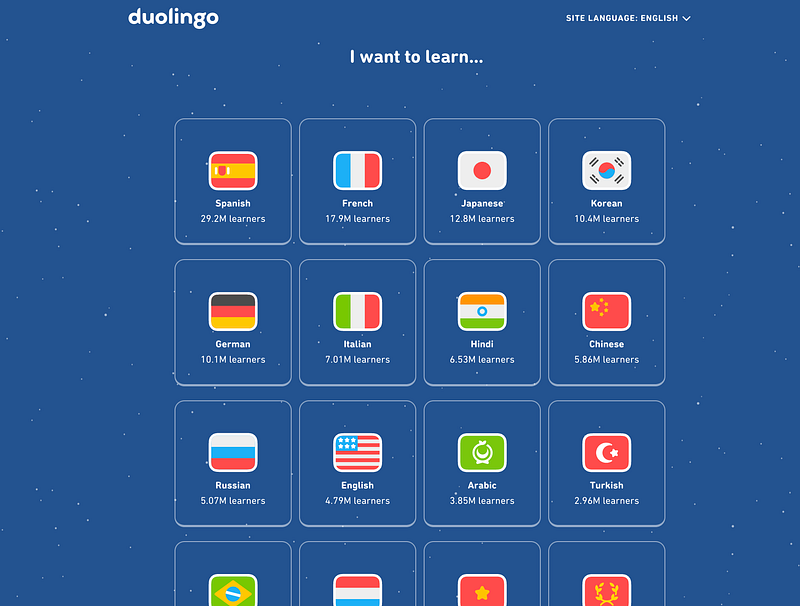
So let’s take a closer look at the browser version. First, choose the language you want to learn, create an account and start with a short placement test. However, there is a small difficulty in choosing the language. For example, if you select “German” as the site language, you will only be able to choose from 4 languages, but if you choose “English,” you can choose from 39. Swedish is also only available in combination with English.
After completing the test, you can start with the lessons.
Because of the following advantages, I am excited:
- Almost every lesson comes with a short overview of the basics you learn. You can read it, print it out, or just ignore it and jump straight to the practice.
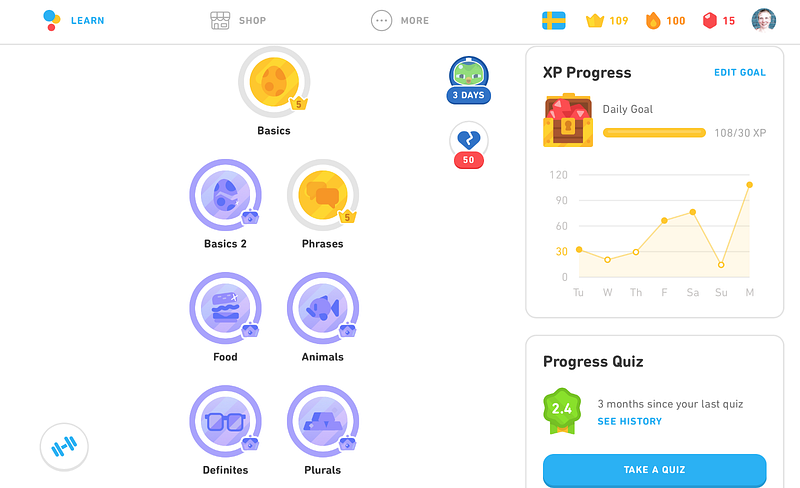
- Each lesson includes 6 levels. The level of difficulty is slowly increased. By reaching the next level, you earn “lingots.” For the sixth level (“Legendary”), you need lingots. You don’t always have enough lingots available, but over time you accumulate enough to reach this level even with some lessons.
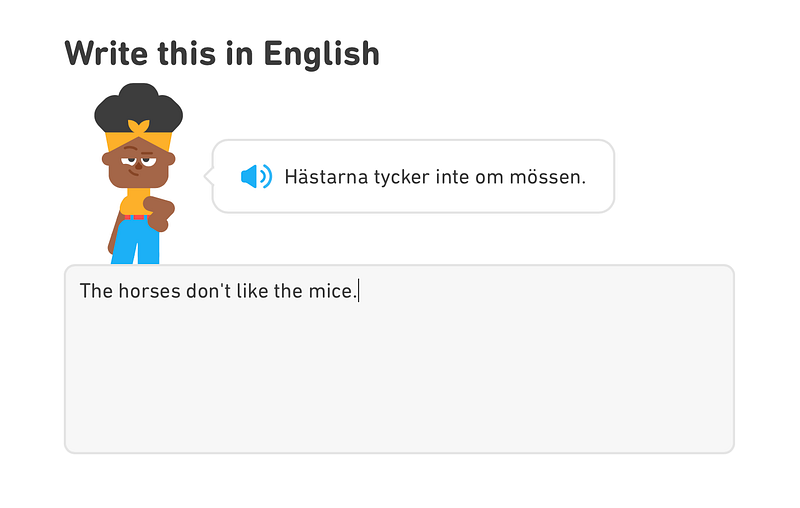
- Listening, writing, and translating are trained.
- The grammar is well trained. However, through many repetitions, it is internalized.
- The lessons build on each other, and the previously learned grammar comes up repeatedly.
- There are statistics about your learning progress: - Display how many days without a break you have learned (streak), - With each learning unit, you earn XPs. You can set a daily goal and see your achievement. - From time to time, a progress quiz is offered. - Weekly overview of the time you spent learning.
- Motivation: You get motivated to learn daily by encouraging you not to lose your streak. I wouldn’t mind losing it, but the daily reminder motivates me to do at least one session.
- There is the possibility to participate in cheap or free meetups/classes to practice speaking. I haven’t tried that yet.
- There is a Discord group if you want to share with other learners.
- It’s free: The features of the Plus version are maybe lovely but not necessary for your learning journey (e.g., Streak repair, more often Progress Quiz).
Are there any disadvantages?
- The vocabulary is built up slowly. To my taste, there could be a few more vocabulary words. Example: The lesson “Animals” contained the following animals: ant, spider, elephant, moose, mouse, fish, reindeer, turtle, bird, bear, dog, cat, and wolf.
- The choice of languages is limited for people who do not speak English. For me, with the mother tongue German the combination of English — Swedish is not ideal because the sentence structure and the vocabulary of Swedish are partly closer to German than to English. But I can train my English and learn Swedish at the same time.
The advantages outweigh the disadvantages, and I will continue learning with Duolingo. Have you already tried Duolingo? What is your experience?