
Is Your Gardener’s Leaf Blower Killing You Both?
A gardening saga possibly resulting in lung cancer.
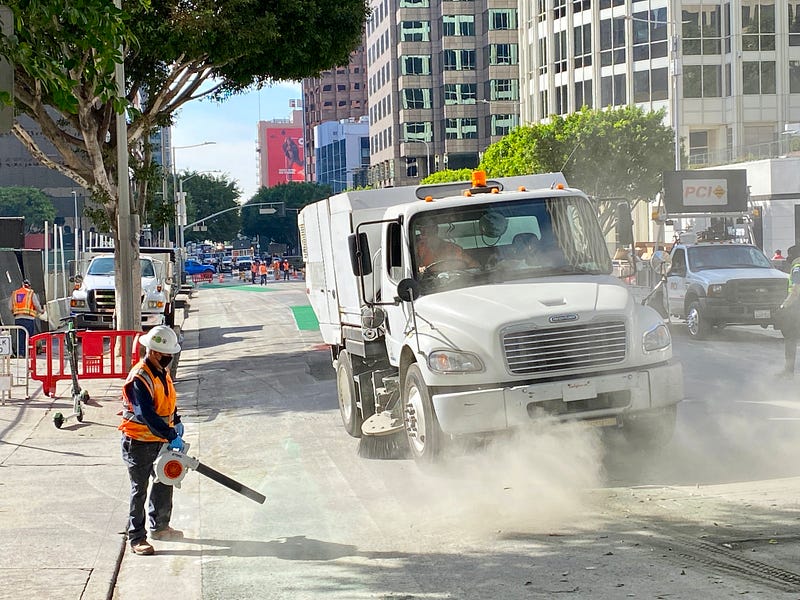
It’s bad enough our food is poisoned with pesticides and harmful chemicals, but do we have to pollute the very air we breathe around our home, our domicile, our place of abode? Well, that’s what gas powered and electric leaf blowers do.
At 68 years old, I was diagnosed with lung cancer last year and a very rare disease called nocardia, the cause of which entails breathing bacteria found in soil. Since I am not a smoker, and don’t live with smokers, I was at a loss as to how this could have happened. I’ve always had healthy lungs, maybe had bronchitis 3 times in my life! So I started looking at my environment. I noticed when leaf blowers were used by gardeners at my neighbors’ homes, huge clouds of dust floated in the air all around my house.
I’ve always been a little leery of leaf blowers, as my daughter had asthma growing up, so I was particularly careful with instructions to our gardeners. It just made sense to me; you don’t create grimy dirt clouds outside your house that can be inhaled by the occupants of said house. So I made them use — dear God, no, not that — RAKES.
As I began to research the harmful impact of leaf blowers, I learned that the EPA has shown that leaf blowers and other gas powered lawn and garden equipment expose workers and the public to high levels of toxic and carcinogenic emissions such as benzene, butadiene, formaldehyde and fine particulates. In addition, think about what is on the ground — do you really want to breathe dried animal feces and all manner of garbage, because that is what the leaf blowers are forcing into the air.
The American Heart Association, World Health Organization, and the Center for Disease Control and Prevention, all report on the dangerous health risks associated with exposure to these types of emissions, including cancer, lung disease, respiratory illnesses and dementia. Children and the elderly are particularly vulnerable to the dust and toxic emissions created by gas leaf blowers. Animals, pets, and wildlife are also vulnerable to the dust, fine particulates and extreme noise.
Other negative issues include dirtier home interiors due to the constant dust that is permeating the neighborhood from leaf blowers on every side of the home. My windows are filthy, as are the screens. The countertops in my home must be cleaned constantly if we leave the windows open for any length of time. My car, which is parked in my driveway, is not immune. I have watched the blowers create a huge cloud of dust across the street and waft its way up to my driveway. Needless to say, my neighborhood car wash knows me very well.
Gas leaf blowers produce high levels of noise which have been shown to pose serious health risks, including hearing loss, hypertension, and productivity loss, and noise generated from leaf blowers has been shown to negatively impact cognitive development in children. Testing shows that gas powered leaf blowers produce lower frequency noise, which travels farther and impacts more people and households than battery electric leaf blowers. Gas blower manufacturers recommend safe distances of 50 feet between leaf blowers and bystanders. This is nearly impossible to establish in urban environments.
I can’t tell you how many times I have woken up to that droning, whir, whir, whir sound, in the morning on what was supposed to be a pleasant weekend. And the blower was five houses down. Is it really that hard to use a rake? Or a broom? I understand some of the gardener associations have rallied against the ban stating it will destroy their business. Seems to me that if they lose a client or two because they can’t work as fast, adding $5 or $10 to existing clients’ bills should take up the loss. And the benefit of clean air, healthy gardens, quieter neighborhoods, and fewer diseases should take precedent.
Let’s talk about the garden — the whole reason behind this debacle. The winds generated by blowers destroy habitats for beneficial insects and deplete topsoil. Somehow our society has decided that all leaves must go! Not sure how that happened as our gardens would be much better off if we left the leaves on the ground. There is nothing more beneficial for plants than decomposing leaves used as mulch. As organic mulches decompose, they release valuable nutrients for use by your landscape plants. Leaves can be used as mulch in vegetable gardens, flower beds, and around shrubs and trees. I rake up the leaves in my yard and crush them around the plants. I can just hear my plants thanking me.
And do you really need a sidewalk devoid of all leaves? They just come back within hours if not minutes after the said leaf blowing culprit has left. Many gardeners blow the debris into the middle of the street and leave it! So what is the point?
But there is hope in sight. It appears people are waking up to the toxic effect of those little smog creating, disease spreading, tornado making, mechanical devices. Leaf blowers are illegal or banned in certain towns and cities in the states of California, Colorado, Illinois, Massachusetts, New Jersey, New York, Texas, and Vermont.
Adding fuel to the fire, the people who are operating these mechanical monsters seem to be null and void. Two weeks after the fires ravaged my neighborhood a few years ago, dropping thick black ash and poisonous debris from the homes that burned (melted plastic, chemicals, paint, etc.), the gardeners started blowing the debris in the yards of my neighbors throughout the area. The cloud they created was incredible. I mean, really? No common sense.
While I am still recovering, it seems my husband and I can’t walk our dogs at any time of day in our neighborhood without running into a gardener who is blowing dirt and leaves and dog/cat/bird feces into the air we breathe. And it lingers in the air for sometime after the blower leaves. I’ll wager if someone were to do a study of the number of people who contracted a lung disease in a given community before the blowers verses after, there would probably be quite a difference.
So please ask your local officials sitting on your city council to read this and ask your gardener (if you have one) to stop using the blower. Your lungs will thank you, your ears will thank you, your garden will thank you, and I will thank you. And maybe, just maybe, you’ll be surprised by just how much healthier your garden will become.
A recent article in Grist details the harmful impact of leaf blowers here.


