
Lead, Follow, and Get Out of The Way
But do them all in the right places and the right times

There’s a pithy and rather dismissive saying that’s used by people when talking about change:
“Lead, Follow, or Get Out of The Way”
I’ll admit that I’ve used it at times, mostly in a dismissive way when people object to change that is necessary or imminent…but with age comes a certain amount of wisdom, and I can see how that isn’t as helpful as I thought it was.
It’s not that there isn’t a certain truth to it. There are times when we all will have to do one of the three, but it isn’t as true as I used to believe. Throughout our lives there are times when we will have to do all of these things — and we may be trying to do them all at the same time. But there aren’t many times when we will be doing them in more than one part of our lives.
In fact, that’s where the problem often lies…people who consider themselves “leaders” are trying too hard to lead in places where they should either be following or simply getting out of the way.
The Myth of the Perfect Leader
There is a pervasive myth going around that there is such a thing as a “perfect leader” — someone who can lead everywhere and all the time. We see this all the time when someone who is legitimately a leader in their own area is assigned to take on a leadership role in an entirely different area that what they’re accustomed to.
That’s not to say that these people are not strong leaders, or that you can only ever lead in one area, but as with everything else in life there is a time and a place to lead. Many of them succeed, largely because they are good leaders and rely on the people who work with them to provide the expertise and direction they need.
But even the best leaders know that they can’t lead everywhere all the time. Somehow, many people seem to have fallen into this idea that a leader in one area should be a leader in every area. We think that because they’re a good business leader, they’d be a good politician. We think that because they’re a General (or Admiral) in the armed forces, they can also lead healthcare systems.
There are distinct differences in every sector, and expecting someone to be a good leader all of them, or in multiple areas at once is only setting them up for failure.
Pick Your Lane
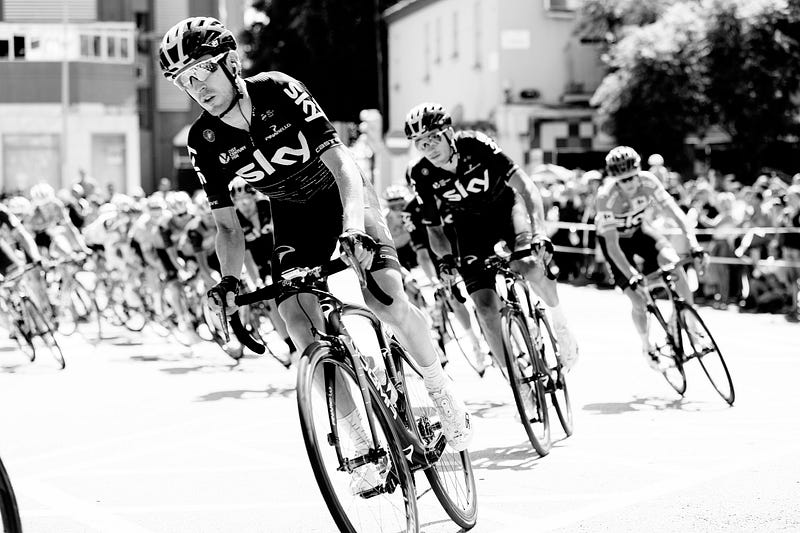
When you watch bike races like the Tour De France, you’ll notice that rarely will the leader always be the same at the end of every stage. In the 2021 race, there were 13 stage winners across the 21 stages of the race. That’s 13 different leaders at the end of a stage, not counting all of the position changes that would have happened during the race. In fact the overall winner of the Tour De France wasn’t even the first to cross the finish line of the final stage and only won three stages overall.
Instead, he took in turns to lead, follow, and get out of the way.
Where he was strong, he led. He knew exactly where his strengths lay, and he used those strengths to push himself up the standings. He took his time and focused on the places where he knew he could lead.
Where he was weak, he followed his teammates. Cyclists often ride in packs to help reduce wind resistance and make it easier for everyone to ride for long distances. This means that their focus isn’t on being the leader of the race or even the pack, but to follow along and do the work to help support the leader.
This requires a tremendous amount of self-awareness on the part of all the cyclists, especially those who are taking it in turns to lead and follow. It can be easy to start thinking that just because you’re a leader, you should always be leading. It’s just as easy for others to start getting jealous and thinking they should have an opportunity to lead.
When there was someone faster in a stage, he got out of the way. Failing to do so could have been catastrophic for everyone involved — leaving people injured, bikes wrecked, and taking riders out of the race altogether.
Viewer discretion is advised — the video does contain some particularly graphic injuries.
Most of us will never race in the Tour De France, but we can all learn from the way that these cyclists pick their lane and pick their moments. They don’t lead all the time, and some of them will never lead — but they figure out where they should be and they make sure they’re where they need to be. They pick their lane.
When your time comes, be ready to lead — but don’t forget that you also need to follow, and sometimes get out of the way. Pick your lane where you can lead, and be ready for other opportunities, but make sure you are just as open to following or getting out of the way. You’ll be better off in the end by playing to your strengths and letting others use theirs.