
Lawless Police Brutality I Have Lived With as a Gay Man
Personal stories illustrate violent police-state culture
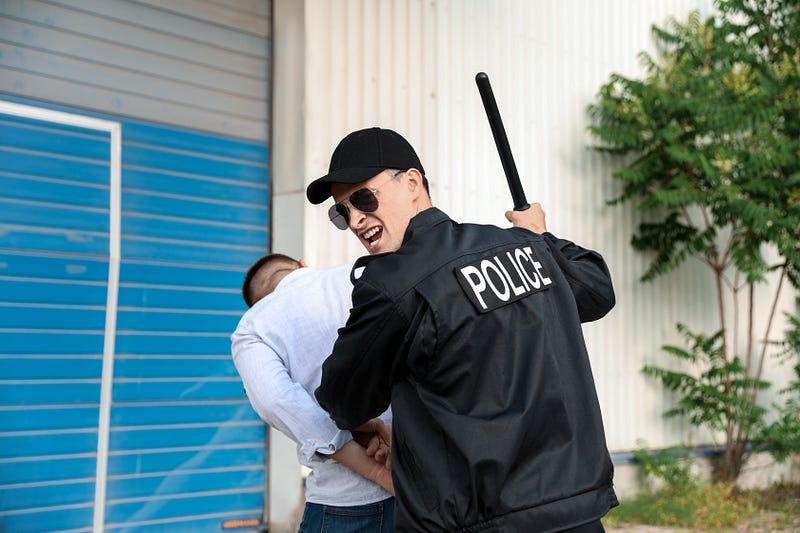
Justice was finally served yesterday as a jury convicted Derick Chauvin of the brutal murder of George Floyd. I shouted with joy as the judge read out the verdict. But my news feeds are still full of stories about police racism and brutality. I fear the Chauvin verdict will change little unless we as a nation commit to fundamental, drastic restructuring of police culture. If you’re straight/cis/white, I understand you may not know how brutal and vicious American cops are, but marginalized people live with police-state culture. We know. We must tell our stories. We must demand change.
My experiences of police brutality can’t match the experiences of Black and Brown people, and I don’t want them to sound equivalent, but I need to add my voice to a growing chorus of Americans demanding an end to racist police brutality.
I hate cops. If that angers you, I’m sorry, but you need to hear this:
“But, Dad!” I protested in an 11-year-old soprano cracking with outrage. “The police have to be the good guys! They just HAVE to!”
I had just received my first lesson in police lawlessness, and it sickened me. My father’s Indianapolis police friend threw me a tight smile and patted my head. Mom and Dad stared. They were already used to my passion for social justice. Mom confided decades later she’d always feared I’d become one of those “loud people who march in the streets with signs.”
As an adult at my first NYC Pride Parade, I would receive a more wrenching lesson in how vicious and lawless American cops are, but that morning in Indianapolis I lost my white-hat virginity. I’ll tell the New York story in a moment, but let’s get Indianapolis out of the way first.
My dad was assistant pastor at one of the city’s largest Baptist churches. One of the deacons was a cop, a kind man with kids my siblings and I played with. He invited Dad several times to ride on patrol with him in Dad’s capacity as a minister and community leader.
The morning of my first wrenching lesson, Dad and his police friend woke me early with shouts. Angry voices pulled me out of bed and downstairs into the kitchen.
“But they beat that man!” Dad yelled. “They beat him black, blue and bloody!”
“I don’t like it either! But what do you want me to do? They’re cops too. If I report them, I’ll never get backup again. If I get in trouble out there, I’ll be on my own. I’ll be shunned.”
“They broke the law!” insisted Dad. “You can’t just beat people with clubs, not even if you’re a police officer. That man was nothing but a harmless old drunk!”
“There’s nothing I can do about it. I’m sorry.”
My stomach clenched, and I felt sick. My dad was SO mad, and I was SO used to knowing cops were the good guys. I couldn’t conceive they would break the law on purpose.
“The police have to be the good guys! They just HAVE to!”
I didn’t learn the full details that morning, but by the time of the NYC Pride incident, Dad had spilled the tea. He and his cop friend had rolled up on a scene where two patrol officers were beating a homeless elderly Black man with night sticks. He’d been hanging outside a shop, the owners had called in a complaint, and the rest was … standard-American-issue police brutality and racism.
New York City Pride Reveals NYPD Lawlessness
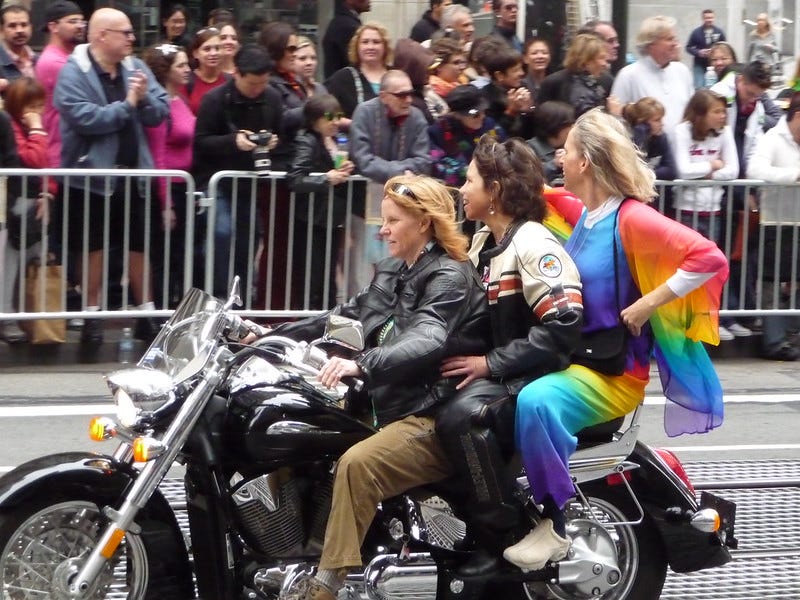
The sun beat down and a cool breeze blew that June day in 1990 when my new lover Lenny and I toted lawn chairs and icy drinks to Manhattan’s 6th Avenue to take in the Pride parade. What a joyful day! Pride is all about acceptance and love, about throngs of marginalized people coming together to be in a majority. It’s about being totally safe — if just for one day of the year.
Millions of people attend NYC Pride, and the crowd that day was dense with love. Cops were stationed every dozen feet or so up and down the avenue, but I didn’t give them a second thought. I was a white man just out of the military. I thought of them as my natural allies.
Dykes with Bikes started the parade, fierce lesbians revving Harleys, pumping fists, and shouting joy. Act Up followed shortly, pumping fists and shouting fury at straight politicians who clenched tight fists around budgets and let us die of AIDS.
Marching bands serenaded, go-go boys shook booties, drag queens threw glitter, and strangers embraced and wept tears of joy in the street. If you’ve been to Pride, you know!
Through it all, long lines of cops on crowd-control duty just stared.
Then silence gripped the avenue as, one by one, cops turned their backs on the parade. Lenny pushed me a couple feet into the street and pointed. For blocks, as far as I could see, every cop had turned.
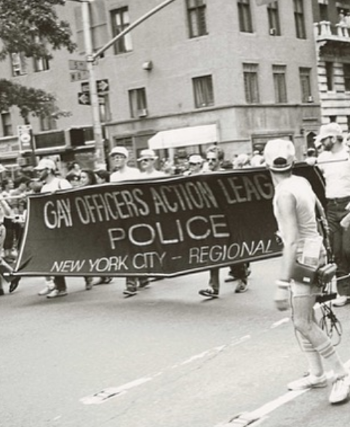
“What the hell?” I started to ask. Lenny waved at a small group marching by. I saw 6 or 7 guys in jeans and t-shirts looking pretty conservative for Pride marchers. But people were snapping photos and cheering.
Then I saw their banner.
Gay Officers Action League
G.O.A.L. These were out gay cops! Marching at Pride! But even though the crowd was throwing love at them, they didn’t look joyful. Their expressions were stern, serious, and nervous. I think I read fear in their faces.
Lenny told me why.
Every cop on duty that day, with no exceptions, turned their backs on the G.O.A.L. cops in a deliberate show of loathing and exclusion. They were telling the gay cops that they were dead to them. They didn’t recognize them as colleagues and they would not come to their aid if they needed help.
They were doing exactly what my dad’s Indianapolis cop friend explained, making and enforcing their own rules.
They announced with their bodies that they would do as they pleased. They would not work with gay cops even though the law required them to. They announced to the entire City that they were above the law. When they turned back around, their sneers dared us to do something about it.
Cops’ sneering hatred featured at every Pride parade I attended right up through 1999. NYPD officers turned their backs on gay cops every year, telling the world they were brutal, lawless thugs.
NYC LGBTQ people usually experienced cops as lawless thugs
I joined Queer Nation a few weeks later, marching with signs in the streets to protest a wave of gay-bashing violence that swept Greenwich Village that year. NYC cops weren’t protecting us and neither were the Guardian Angels, a volunteer street patrol group that looked after vulnerable people, unless they were fags or XXXXXies. (X-ing out a common street slur for transgender women.)
We formed the Pink Panther Patrol to fight the gay bashers. As Queer Nation, we took to the streets to vent our outrage at the lack of police protection. How did NYC cops respond? They didn’t start protecting us. Instead, they picked us off the peripheries of our marches, dragged us into alleys, and beat the shit out of us.
We knew we had no legal recourse. They showed us every year at Pride how much they hated us and how far above the law they stood.
More personal lessons in police brutality
Two other events in my life taught me more than I wanted to know about brutal police culture. Don, my best friend and former lover from back when I served in the Air Force in Berlin, became a state trooper. It only took him a year or two to tell me how much he came to hate cops — even though he was a cop.
He told me his colleagues were practically all bullies who resented and harassed him for being kind to people. When they found out he was bisexual, the shit really hit the fan. He feared for his safety and transferred to an administrative position before getting his nursing degree and leaving the force.
A few years later, I ghost-wrote the biography of a former Chicago cop who told me story after story about officers brutalizing people, mostly Black and Brown people. The details are disgusting, involving creative ways to turn human beings into bleeding wrecks in the backs of police cruisers without laying a hand on them.
The same old story of brutal cops protecting brutal cops
He told me the same story I started hearing when I was only 11 years old. If he’d said a word, if he’d objected, if he’d reported any of the brutal violence he witnessed, he’d have feared for his safety. He would have expected violent retaliation at the worst and lawless refusal to come to his aid at the least.
You know what he wouldn’t have expected? He wouldn’t have expected other cops to follow the law or behave professionally. He knows better. He knows cops in the United States are often lawless thugs.
That’s not hyperbole. I’m not exaggerating.
That’s my lived truth as a gay man who grew up experiencing cops as agents of pain and oppression. Maybe that happens less now to white gay men who are no longer quite as marginalized. But Black trans women aren’t less marginalized. Black men aren’t less marginalized. The proliferation of cell phone video is letting all of us see how vicious and lawless cops often are to marginalized people.
The question is, what are we going to do about it? We can’t just shout with joy over the Chauvin verdict. We can’t just assume the verdict will change brutal police-state culture. If we want real change, we have to demand it. We have to make it happen.
We have to take to the streets, to the polls, and to the media. We have to shout out our stories and tell our representatives that unless they fundamentally remake police culture, we will elect representatives who will.
James Finn is a former Air Force intelligence analyst, long-time LGBTQ activist, an alumnus of Queer Nation and Act Up NY, an essayist occasionally published in queer news outlets, and an “agented” novelist. Send questions, comments, and story ideas to [email protected].

This story is a response to Prism & Pen’s writing prompt, Police States and Police Brutality.