
Last Night’s Celebration of Pop Divas (and the Gay Men Who Love Them)
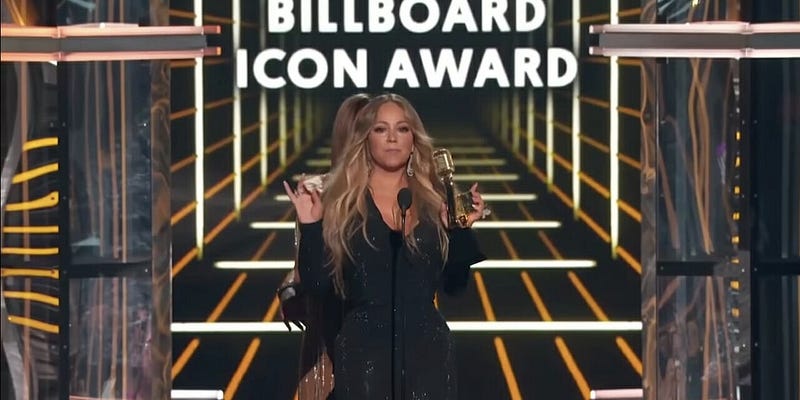
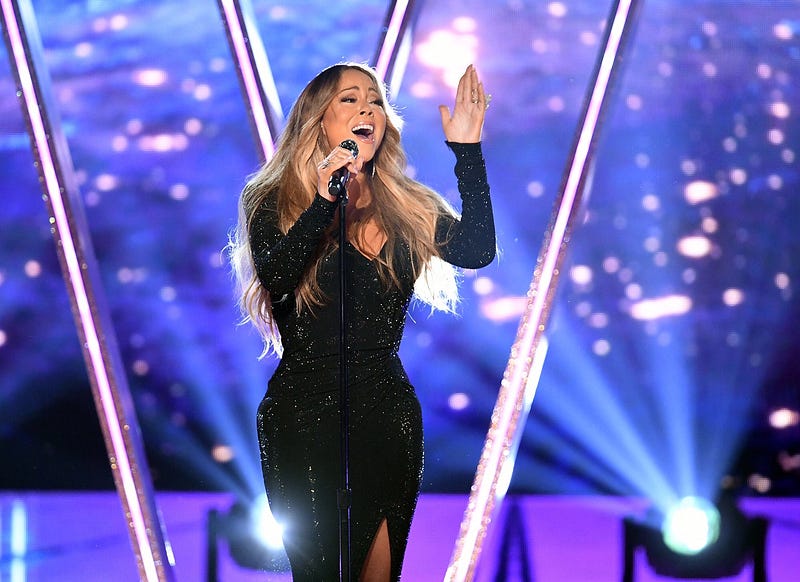
Last night, the Billboard Music Awards crowned Mariah Carey with their prestigious Icon Award, showcased the live premieres of new music from Madonna and Taylor Swift, were hosted by Kelly Clarkson, and closed with Paula Abdul doing a medley of her greatest hits. And somehow there was not a single report of a thirty-something gay man dying from heart failure.
The relationship between gay men and female pop stars has never entirely made sense to me. Sure, I know gay men who have no interest in female pop stars and I know straight men who either secretly or openly adore female pop stars. But the disproportionate fandom for female pop stars among gay men is undeniable. And it has existed for at least a half century.
First there was Judy Garland, perhaps the original Hollywood diva to become a gay icon. The ’60s then brought Cher, Barbra Streisand, and Diana Ross. The ’70s brought us Liza Minnelli and Bette Midler. The ’80s gave us Madonna, Whitney Houston, Janet Jackson, and Paula Abdul. In the ’90s we were blessed with Mariah Carey, Celine Dion, Britney Spears, and Beyonce. And this century we have several aspiring gay icons like Adele, Taylor Swift, Katy Perry, Kelly Clarkson, Rihanna, and Ariana Grande, along with one who has already cemented her status — Lady Gaga.
Perhaps the connection between pop divas and gay men is driven by the big hair, loud makeup, and sexy costumes that make pop divas a favorite of drag artists across the globe. Perhaps it’s driven by the tendency of pop divas to gravitate toward two types of songs that particularly resonate with the LGBT community— empowering, dance-hall anthems and soul-wrenching power ballads. Perhaps it’s their rocky romantic relationships with men that make them so relatable. Or perhaps it’s the fact that these divas have historically embraced their gay fans even when the rest of Hollywood — and society at large — failed to. Whatever the reason, the link is undeniable.
As a gay man who rose to pop culture consciousness around 1990, the quartet of pop divas who meant the most to me when I was growing up were undoubtedly Mariah, Madonna, Whitney, and Paula. To say I was excited when I found out that this year’s Billboard Music Awards would involve performances by the three living ones (R.I.P. Whitney!), would be a massive understatement.
Although it was hardly billed as such — and perhaps not even intended as such — the 26th Billboard Music Awards was a love letter to pop divas and the gay men who love them.
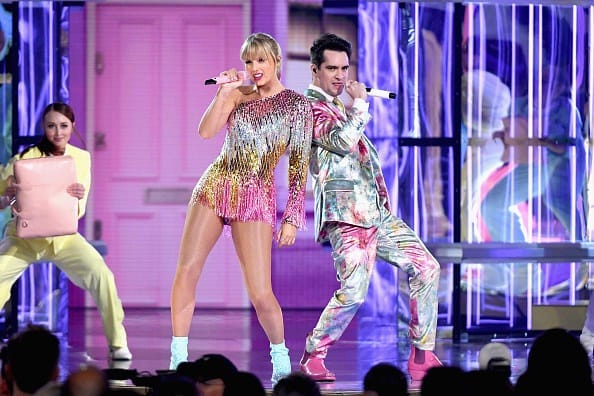
The show started off with Taylor Swift and Panic! At the Disco’s Brendon Urie unveiling the live premiere of their new song “Me!” It was a euphoric, rainbow-colored number that was unabashedly sentimental — a sharp contrast to Taylor Swift’s more cynical Reputation era. As the applause from that number wrapped, the original American Idol Kelly Clarkson entered as host and delivered a medley of some of the year’s most popular songs in which she effortlessly showcased why she is one of the premiere vocalists (and personalities) of her generation. Throughout the night we also got performances from Ariana Grande (pre-recorded from her “Sweetener” world tour), a reunited Jonas Brothers, K-Pop sensation BTS, host Kelly Clarkson, Ciara, Panic! At the Disco, and up-and comers Dan + Shay, Halsey, Khalid, and Lauren Daigle.
Yeah, yeah, they were all fine or whatever but I was just waiting for my triumvirate of divas. After all, the women who meant so much to me growing up (and continue to do so) were all taking the stage on the same night, many years after their success had peaked.
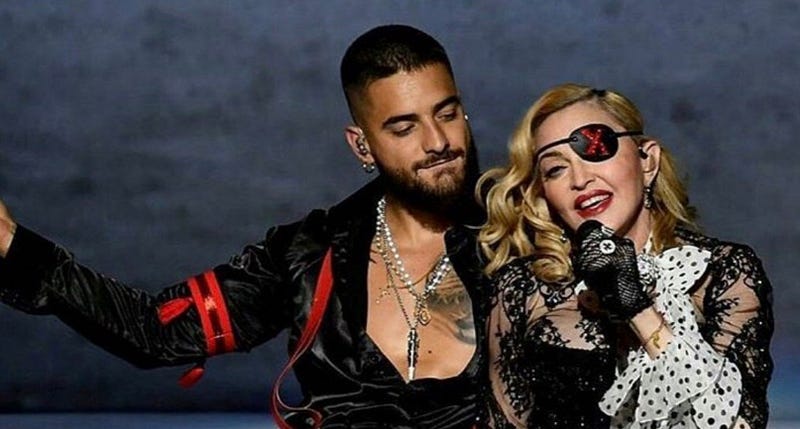
First up was the 60-year-old legend Madonna, whose performance of her new song “Medellin” with Latin sensation Maluma was hugely buzzed but only mildly satisfying. The performance was the elaborate set piece we expected from the iconic performer, her chemistry with her duet partner was evident, and the song is catchier than the social media universe is admitting. But, outside of the innovative use of holograms, it failed to really wow. For the record, failing to wow would be fine if wowing wasn’t Madonna’s perpetual goal (and calling card).
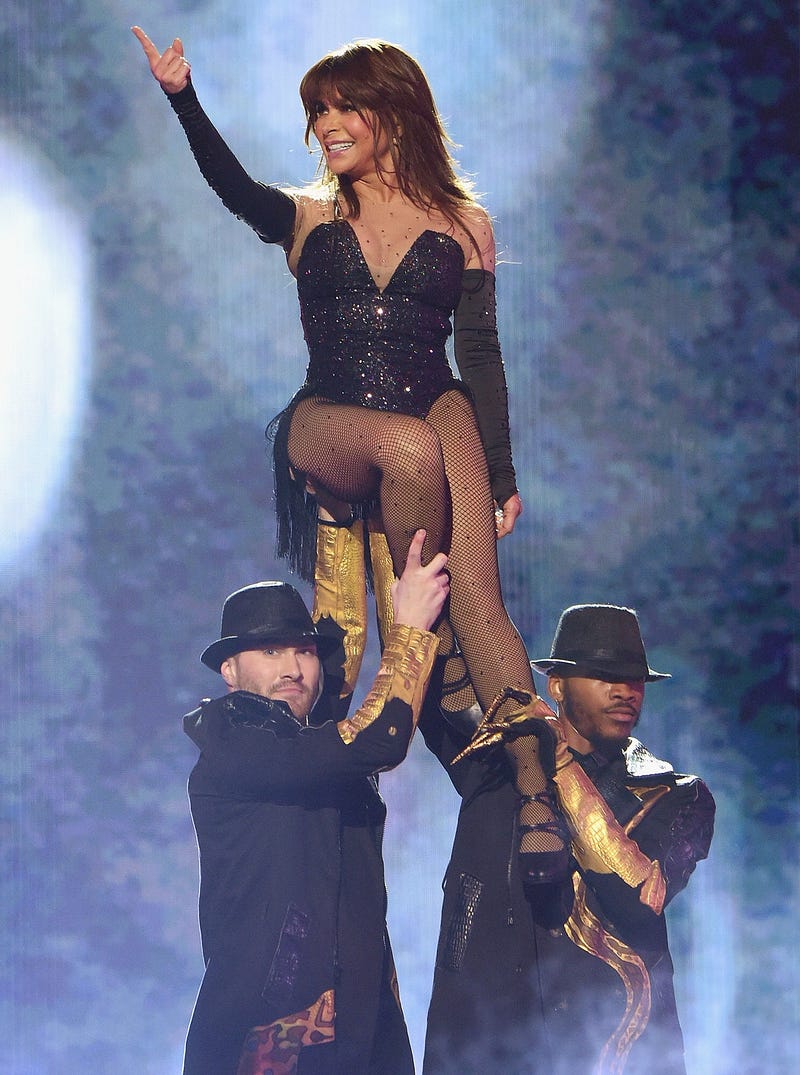
Closing the show was Paula Abdul, the late ’80s/early ’90s pop sensation whose music career came to an abrupt end only for her to return to stardom as one of the judges of American Idol during its heyday. She performed a medley of 6 hits (including 4 of her 6 #1s). Although she didn’t do much in the way of live vocals, the 56-year-old put the rest of the night’s performers to shame with regard to showmanship and dancing ability. She made a very strong case for why her musical legacy should not be overlooked and why her upcoming residency in Las Vegas will be a hot ticket.
And in between there was Mariah. The legendary songstress was the 8th recipient of the prestigious Icon Award, following Neil Diamond, Stevie Wonder, Prince, Jennifer Lopez, Celine Dion, Cher, and Janet Jackson. Oscar- and Grammy-winner Jennifer Hudson introduced a 3-minute montage that highlighted the singer-songwriter-producer’s astonishing achievements during her 29 years in the music industry. The intro segued into a medley in which Mariah — looking radiant, stunning, and far younger than her 49 years — sang her new single “A No No” alongside 4 of her record 18(!) #1s (“Always Be My Baby,” “Emotions,” “We Belong Together,” and “Hero.”) She seemed a bit shaky out of the gate, but by the time “Emotions” rolled around she delivered some of her best vocals on a televised performance in many, many years. The shots of A-list youngsters in the audience passionately singing along to every word (here’s looking at you, Taylor Swift) only underscored the power of her performance and the reason she was crowned an icon.
But it wasn’t her performance that was the highlight of the night for me. It was her acceptance speech that followed. It was a speech that perhaps once and for all demystified the special relationship between pop divas and the gay men who adore them.
Mariah’s speech had it all. There was the meme-worthy tissue toss that started it off. There was the humble and heartfelt thanks to her family, friends, colleagues, and fans. There were self-deprecating references to the “ups and downs” of her astronomically successful, but at times quite rocky, career. And there was a recognition of what drives the woman under the diva persona. She referenced the discrimination and hopelessness she experienced growing up a poor, biracial young woman in the 1970s and 1980s. She discussed how her creativity was an outlet that allowed her to survive and her drive to create something to prove that she was “worthy of existing.” And she reminisced on her times in the depths of hell (emotionally speaking.)
Ultimately, I think it is these things that Mariah Carey referenced in her speech that make so many pop divas so special to gay men. Their glitzy, extravagant personas often belie the pervasive insecurity they experience, the immense hurdles they have faced, the emotional roller coasters they have ridden, and their longing for liberation.
And, honestly, what gay man can’t relate?
Read recent articles by this writer about other musicians: Lady Gaga, Mariah Carey, Aretha Franklin, Elton John, Madonna, Taylor Swift, and Florence Welch


![https://cdn-images-1.readmedium.com/v2/resize:fit:800/1*[email protected]">](https://cdn-images-1.readmedium.com/v2/resize:fit:800/1*HL7FOBdS_f6-QGrx38lQgg@2x.jpeg%22%3E)