
Language Games in the World of Today

I have a vivid memory of an argument that broke out during geography class when I was fifteen years old. It was good-natured for the most part, but it always stuck with me for some reason. It was one of those classes where little in the way of meaningful work was ever done; beginning as it always did with the teacher setting us a task and leaving us to our own devices. And so the room divided itself into cliques, whose boisterous post-lunchbreak conversations were made all the more restless from the mid-afternoon sun creeping in through the windows. The teacher seemed to preside over this contained chaos in an invisible, sound-proof bubble at his desk as he sat there with the look of a man contemplating the feasibility of faking his own death and legging it to Tijuana. But then he’d straighten his tie and carry on marking papers.
Right at the back of the class I sat with two guys, and in the row in front of us was a mirror group of three girls. The girls would turn their chairs around and we’d have animated conversations that marched in perfect step to the drumbeat of adolescence. One of the girls was Scottish, and my friend tried to tease her by saying “Scotland’s not even a real country!”
What started out as just another cheap attempt to wind her up turned into a straight-faced, sober debate. Ironically, our usual bid to escape geography class had resulted in, well, a geography class. We’d willingly abandoned games of “Blind Date” and “Spin the Pencil Case” for the pursuit of knowledge. We even got curious enough about the whole business that we called the teacher over and asked him to give us an answer.
The girls argued that it was a country: it had a history, a sense of identity, a culture, a government, a football team, a flag. What more do you want, right?
The guys countered that it wasn’t a country: they’re a part of the United Kingdom and can’t make decisions without the blessing of Parliament. If Scotland was a country, then the U.K couldn’t be. We’d have to start calling it something else.
I was troubled by this inconsistency. I didn’t care about nationality or politics, but I wanted exactitude in all things. The girl looked me in the eye and said “If it’s not a country, then what is it?”
“It’s an…area…” I faltered, trying to find the right word. But no such word existed in my fifteen year old lexicon. My nan’s backyard could be considered an area.
We all looked up at the teacher and waited for his verdict. He was the grown-up, the professional, the ultimate authority. When you’re a kid you want certainty, a point at which the book is closed for good on a given issue. You believe there is a right answer and a definitively wrong one. It makes sense, because that’s how you start learning things. When you start out in life you have to be a sponge when it comes to receiving information. It’s the same whether you’re a human baby, an elephant calf, or a leopard cub. You gotta learn fast to survive, and you have no reason to doubt the entity that feeds you, shows you how to perform basic tasks, and stops you from walking into a busy road and being splattered over the asphalt like so much dropped casserole.
But you grow up and it seems like the world only gets more confusing. Nuance emerges without warning, and you find yourself clinging to the world of absolutes in which you were raised. That’s what happened to us in that geography class in 2008.
“Scotland…” our teacher said, “is a principality.”
I’d never heard that word before. It sounded like he was saying “It’s kind of a country and it kind of isn’t.”
Of course, the answer was meaningless because the starting question was meaningless. The debate had been framed in improper terms from the very beginning. The word “country” is troublesome and capricious. It can denote the complex political apparatus of a nation-state, a vague tract of land, or almost anything in-between. When I’m stateside, I hear people talk about the old growth forests of northern Wisconsin and say “They got beautiful country up there.”
“Country” in this sense of the word is not an area that can be measured or refined- it refers to an idea of a contiguous landscape. And yet the word in the sense that we meant it had to be specific. What is a country, anyway? We couldn’t even agree on its political definition. Was the Roman Empire a country? Was the ISIS Caliphate a country? Does the western concept of a country align with the eastern one? Muhammad Ali Jinnah once remarked that “India is not a nation, nor a country. It is a subcontinent of nationalities.”
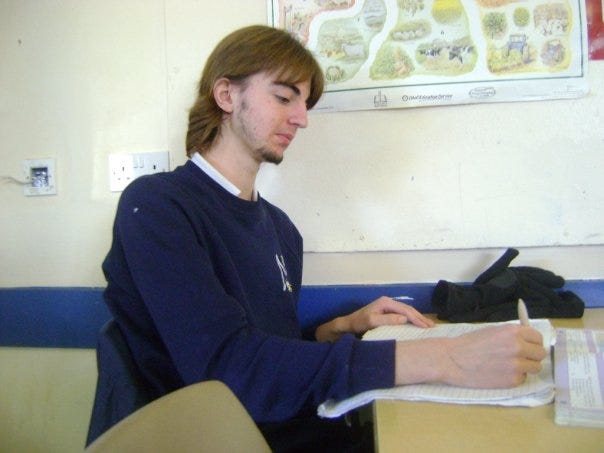
A few years after that geography debate, I took a class in philosophy at college. It was here that education started to focus less on remembering facts and more on examining the basic workings of things. It was like I had to think about thinking, and it took me a while to get used to. I have a distinct memory of walking into class one day and seeing the name “WITTGENSTEIN” written in big block-capitals across the entire width of the whiteboard. Today’s philosopher. Before the teacher got back from the staffroom, one of the guys rubbed out the “W” and replaced it with “SH”. The teacher laughed and decided to keep it there for the whole lesson.
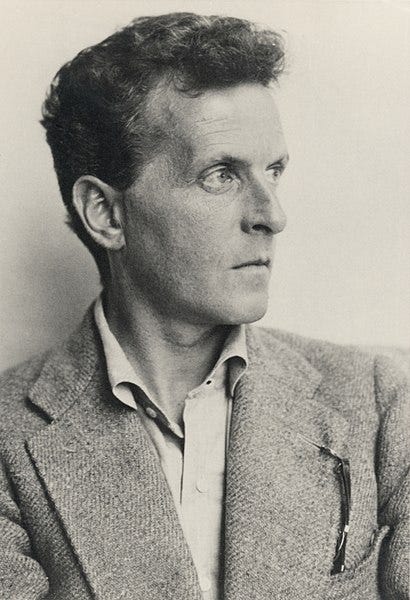
But that’s not the only reason I remember that class. We started to learn about the Austrian philosopher Ludwig Wittgenstein and his concept of “Language Games”. As soon as I heard the phrase “Language Games” I felt like I knew instinctively what it meant. The basic premise is that a word only has meaning insofar as the context in which it is used- that is to say, the rules of the game being played. Our teacher told us that too often, in Wittgenstein’s opinion, debates didn’t go anywhere because the participants were playing different games without realizing it. When you say something, you’re conjuring an image in the mind of the listener, and often the speaker assumes that the listener’s image will have complete fidelity to their own.
As soon as I heard this, I wondered why schools weren’t teaching kids these sorts of things from an early age. It instantly rang true for me, as though it were something I had long felt on an instinctual level, but couldn’t express. I began to think of language as something crude and limited. I realized that two people using the same words could still find themselves lost in translation.
The word I’ve abused the most down the years is “Literally”. I’ll freely admit it- dabbling in Wittgenstein as a college student did little to curb my linguistic atrocities throughout the years that followed. When I got off the plane in Houston last February, I told my friends “I’m literally starving” before they whisked me away to their local taqueria. Obviously, that wasn’t true, but we take a creative approach to language in order to convey a clearer message. From a purely semantic perspective I was lying, and yet my friends understood me better than if I’d said “I’m a little peckish.”
I didn’t think about what I was saying, I just unconsciously reached for the phrase that seemed to carry a sense of emphasis and urgency. We do this all the time. When someone does something selfish or insensitive, we grab our phones and Tweet that they’re “Literally the worst” because we’re looking for reaction rather than accuracy. In the grand pantheon of human awfulness, the crime ranks fairly low, but we want people to know that we’re upset.
When couples argue, they might throw lines at each other such as “You never listen!” or “You don’t care about me!” without meaning them. The speaker- as in the above examples- is trying to draw attention to something with emphasis, but too often the listener will take the remark at face value. The listener becomes defensive and the original point is lost. It’s hard to articulate with both semantic exactness and rhetorical effectiveness at the best of times, and more so when we’re upset. “You don’t care about me” had little chance of being framed as “I feel like you’re not sensitive to my emotional needs right now” in the context of the many factors that contribute to a combustible situation- be it boredom, mental health, tiredness, recent bad news, unrelated stresses, physical sickness, or even the weather.
Social media only increases the chances of miscommunication with the excision of the body language, tone of voice, and eye contact needed for human empathy. When Wittgenstein introduced his concept of “Language Games” he was living in a world where most ordinary people had a very small, homogeneous network of people available to them. Even though his points about the contextual use of words were certainly applicable to people who only ever interacted with their family and neighbors, he was likely more interested in its relevance to philosophical discourse- either in the exchange of letters, in oral debates, or in books written in response to the old books that came before them. And even that is a pretty homogenous, exclusive group of folks if you think about it.
I wonder what Wittgenstein would think about social media, because it’s a fascinating insight into the way we use language. This is especially true when you consider that most social media algorithms favor inflammatory content. User engagement is measured in the intensity of reaction, which mirrors the way we exaggerate for effect in our spoken dialogue. In essence, every social media user is a published author. A YouTube comment telling me to “Drink bleach” because I preordered a copy of The Last of Us Part II has a wide, diverse readership that the old philosophers could have only dreamed of. The reaction to published content, for better or worse, has never been so immense.
Online commentators debate ad nauseum whether Michael Jordan is truly the greatest basketball player that ever lived. You can’t quantify a concept as broad, vague, and subjective as the “the greatest player”, but it undoubtedly has more romantic appeal than debates around the greatest shooter, the greatest scorer, the greatest rim protector, which can all be measured with statistics.
Words change faster on social media too. To stick with the basketball example, “G.O.A.T” started out as an acronym for “Greatest of all Time”. But now it exists as little more than a slang term for anyone that’s halfway decent at something. Commentators will caption a photo of two friends with “A couple of GOATs!!” which obviously doesn’t make sense. If anything slightly amuses us, we write “Lol” even though we’ve known for twenty years now that no one’s really laughing out loud. In the span of ten years from 2010 to 2020, the term “Woke” went from denoting alertness to racial injustice to being a broad, catch-all reference to anything vaguely left-wing once corporate media platforms got hold of it. The tone changed too- what was quite a serious message used in working class African-American communities to remind each other that the system was set up against them is now mostly phrased in mocking or ironic terms by white, bourgeois internet-users to refer to something as insubstantial as a vague sense of “coolness”.
I first saw the phrase “Black Lives Matter” on social media in the aftermath of the 2014 Ferguson Protests. Given that I don’t have an irrational hatred toward different levels of melanin, I got behind the sentiment. Then I started hearing people yelling “All Lives Matter!” in response and at first- I’m ashamed to admit- I didn’t understand why it was so offensive. Taken at face value, “All Lives Matter” seems like a pretty agreeable message. But to take it at face value is to ignore the context in which it is being said, which- Wittgenstein will tell you- is absolutely crucial in a given dialogue. To take the words at face value is to ignore (and thereby excuse) the speaker’s disregard for the suffering of the black community and the defensive tone that speaks to longstanding ethnocentric fears of replacement by “the other”. When it comes to language, you have to look beyond the words themselves to ascertain meaning. You have to be a vigilant listener and an active reader. It’s not easy, but you have to do it.
I’m absolutely not saying that every disagreement is a simple miscommunication and everyone deep-down has good intentions. That’s obviously not the case. I tried to give a variety of examples, and some of them brush up on wider issues such as the polarization of our current political climate, or the trend of bigoted rhetoric to disguise itself in seemingly-democratic terms. Language is one factor among many- but an important factor in my opinion.


