
Language
Words are Springboards
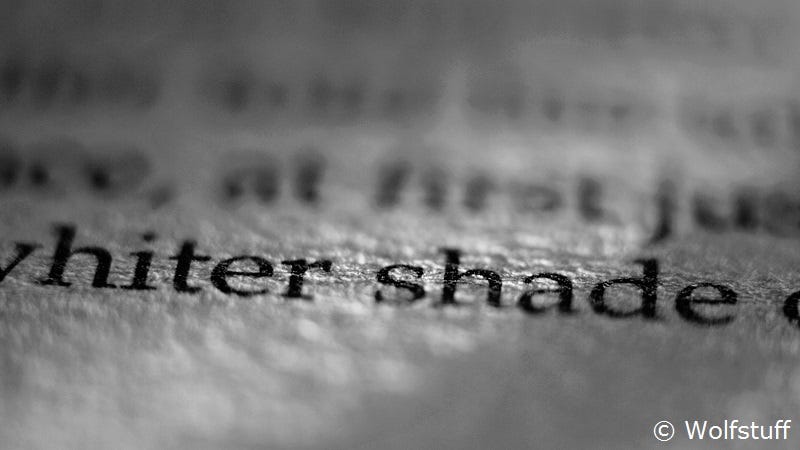
Words are springboards to their meanings
I often take a running start and then jump hard for I love to catapult high into the more refined air of meanings. Granted, of course, some words bounce you higher than others — pronouns to name a weakish category. Adjectives, on the other hand, oh, do they have spring to them (if they’re the right — and appropriate — ones, of course).
And so, we read, bounce, take off, and understand in flight. A good book rarely, if ever, puts you down.
Words are wondrous things and we carry within us the most majestic, nuanced, complete dictionaries — tailored to our specific needs and linking. As it happens, I have two of them, a Swedish one (getting old and kinda out of date by now) and an English one that I keep current as best I can.
I often wonder where, precisely, these dictionaries are stored; how close at hand they are, especially of late when I find that some word I had right here, the perfect one for just this concept, has gone missing — nary a trace.
Tip of the tongue, they say. Halfway out of your mouth. But, but where is it? I just had it, just had it right here and now, vanished. I last used it only yesterday, and I swear I put it back on the shelf, just so. But now, the shelf’s empty, no word there, and I am left hanging, wordlessly, with a sorry and incompletely voiced thought. Oh well, put it down to age.
Sometimes I see language (along with its many, many words) as subtle, elaborate perception quanta that materialize into precise meanings just as we need them. That’s (quantum) magic.
Other days, usually while out strolling along the Pacific shore, step by step and word by word I find myself a walking language. This is something I relish — I expand with it into competing with the noisy breakers to my right.
Of course, there are many languages — other than Swedish and English and French and a few hundred other members of the general species. Mathematics, for one, which I find to be an intricate, elegant, beautiful Language, just as I find Language to be an intricate, elegant, beautiful Mathematics.
Anything that communicates, no? And Mathematics does, to those in the Math-Know, as it were.
At its core, Language means Tongue. How deliciously apropos. Though, even without a tongue, when I’m thinking (quite tonguelessly), I still find this language so vibrantly alive: a muted, meaningful mind modulation is what it is: words, like silent fish (until they speak) swim about and give voice to internal meanings.
Some claim that there are no thoughts without language. I would not go that far, for I have many a thought which is image only — no commentary at all. Sometimes I don’t even bother putting those images into words. I know what they mean and that’s good enough for me.
But then, other times, I want to dress the image in poetry and that’s is when words come in very, very handy.
When I write poetry, I often take a running start and then jump hard for I love to catapult high into the more refined air of meanings.
© Wolfstuff
P.S. If you like what you’ve read here and would like to contribute to the creative motion, as it were, you can do so via PayPal: here.


