
Land of Endless Shadows and Mass Rage
Before the virus of incivility undo us all
The flight time from Lagos to my last destination, Pointe Noire, ought not to have taken over five hours. But, because there were no direct flights from Lagos, the journey took a circuitous route that lasted over 24 hours. We spent one night in Addis Ababa before resuming our flight in the opposite direction the following day. Just before dusk, our flight finally touched down at Pointe Noire in the Republic of Congo.
On the first day, taking off from Lagos, our flight headed for the Ethiopian capital city of Addis Ababa. It was my first time in Ethiopia. The sprawling airport is nestled in a vast depression with rolling peaks in the faraway horizon. Unlike what one gets back at Lagos, the air was cool and dry. Far and near, rolling hills and verdant grassland interspersed the landscape surrounding the airport.
Many of the passengers on my flight were traveling to other South and Eastern African countries. I was to lodge at the airline’s hotel with some of them before we all resume our respective flights the following morning. We disembarked the plane and the protocols at the Immigration were soon completed. Afterward, we joined the Toyota Coaster bus in batches to lodge at one of the designated hotels for the night.
No sooner have we settled down for the ride that a discussion ensued with one of my co-travelers. As it was already dark and with the lights turned off inside the bus, I couldn’t make out her features. But her voice and ascent were unmistakable. The Zambian woman was bemoaning her experiences in Nigeria.
“Nigerians, I don’t understand them. They are so noisy. Everywhere you go, they are so uncouth, impatient, and even rude. As a group, Nigerians could be very mean. But when you relate with them at a one-to-one level, they could be so warm, and amiable. In fact, you may even enjoy their company and start liking them. But me, I don’t understand them at all.”
Her grievances were real. I waited for her to finish before I interjected. “I am from Nigeria. Everything you said about my country is true.” Hearing my response, all the passengers kept calmer. Several eyes turned toward the direction of my voice. All ears were ready to hear what this unabashed Nigerian guy had to say.
Thereafter, I recited a family story as told from my wife’s perspective. When I got married, my wife and I do not speak the same language. At home, English language is our lingua franca. My brothers often come to visit. Occasionally, heated conversations will ensue between me and my siblings to the bemused spectacle of my wife. Since she doesn’t speak our dialect, all the chants and rants between me and my brothers were lost on her.
While our heated exchanges were on, my wife will often stay by the corner watching and wondering what these brothers were always quarreling over. According to her, she used to wonder, “Why are these brothers always screaming at one another and quarreling on every visit.” At the end of every one of such heated diatribes she always notices that these “quarreling brothers” always end their boisterous exchanges in warm, back-slapping, smiles and laughter.
Only then were her fears allayed as she reflects within her mind, “So you people were not quarreling or at loggerheads after all.” At the end of my story, my co-travelers erupted in laughter.
Today, as I recollect that experience, I wished that the situation in my country were as benign as that brotherly banter I still have with my siblings today. In today’s Nigeria, the only group that is not enraged are little children who know little or the insane who are living in blissful ignorance or members of the ruling classes and the “useful idiots” who are participating in or celebrating in this land of misrule.
One index of a healthy, free, and democratic society is its ability to deal constructively with differences and disagreements. ~ Os Guinness
He who would be no slave must consent to have no slave. Those who deny freedom to others deserve it not for themselves. ~ Abraham Lincoln
Nigeria and her teeming millions are hemorrhaging to the point of mutually assured self-destruction. This is due to the absence of covenantal solidarity that ought to exist between citizens of the same nation.
In the Last Call for Liberty, Dr Os Guinness, described this as “the tragedy of the commons. In a highly individualistic society, each person takes back a little of their public commitment, thinking that their part is so small that no one will notice.”
In today’s Nigeria, only little children or abysmal simpletons will not shed tears for the Hobbesian state of affairs in the land. The former group could be forgiven but not the latter who prefer living in ignorance like the proverbial ostrich that hides its head when beset by events it would rather not confront.
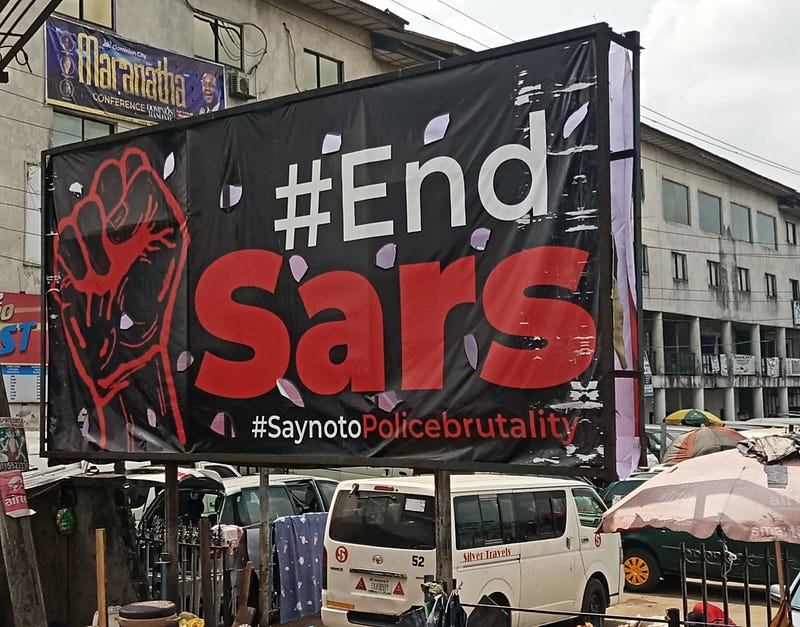
Last October, Nigerians long caught between the two evils of COVID-19 pandemic and institutionalized police brutality erupted in mass protests. The #endSARS protests which started peacefully in many cities ended in violence with loss of lives and massive destructions of private businesses and government infrastructures.
It was an ill-wind that brought losses and tears to many innocent lives. The government and the entire country have been puttering in an uneasy calm with simmering violence ever since. Why has it proved so tough to end the SARS brutality? The answer is simple. If you are a Nigerian, you know that the “SARS attitude” virus is present in the chest of (almost) all Nigerians.
What you hear of, “The seen” is the brutality meted out on the masses (villains and angels) by a renegade unit of the police force. “The unseen”, like the hidden mass of a floating iceberg, is the hidden SARS like violence that Nigerians unleash on their fellow Nigerians at every opportunity.
You need no other evidence to prove that this endemic virus in our nation than the way the masses who were protesting against police brutality became brutal in their treatment of police and other law enforcement agents when the policemen were overwhelmed by rampaging mob of protesters.
Directly or indirectly, no Nigerian has been left uscathed by traumatic recurring tales of police brutality and several extra-judicial killings. I am not in any way justifying or excusing police brutality, unnecessary use of excessive force or their countless inhumane acts on innocent citizens.
It must be stated that when it comes to the subject of their dealings with their fellow citizens, many Nigerians (I mean civilians) are as brutal as the dreaded former SARS police force.
Some Nigerians who are complaining about police brutality are ready to threaten you with, “I will call SARS police to arrest you.” over some simple misunderstandings. In Nigeria, your life could literally be hell because your neighbour has some slight “connections in the high places” advantage over you.
You never know who a man is until you give him some power.
In Nigeria, we celebrate our fellow nationals who after “escaping” from our beleaguered shores rose to influential positions in Western countries. But back home, you can be living in a community for several generations and yet still be treated as a total stranger. Even strangers are supposed to be treated with hospitality.
“Charity”, as the saying goes, “begins at home.” In Nigeria, charity begins outside. That is why Nigerians and their governments will shout BLM to racism and mistreatment of their fellow Africans in Europe and America while keeping mute over tribally motivated genocidal in-fightings back at home.

Till Incivility Destroy Us All
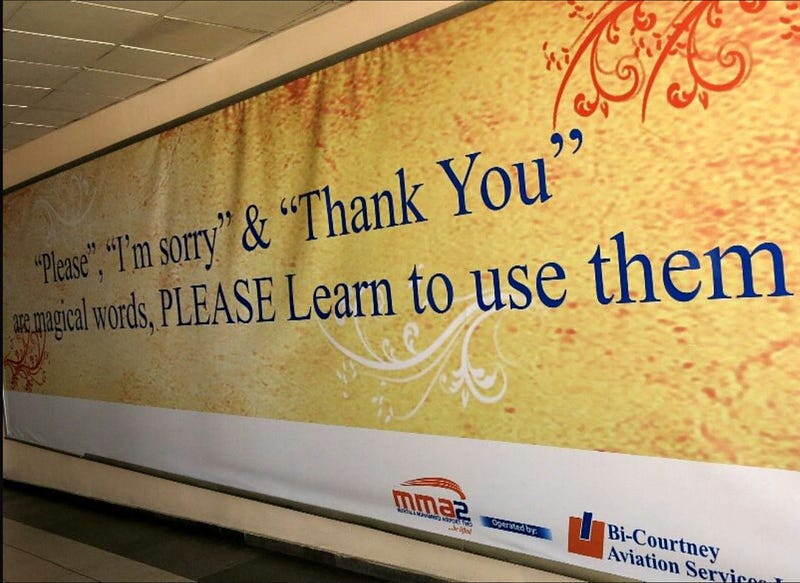
Reminiscing on the exchange I had with the Zambian I met in Addis Ababa, there is no hiding from the sad experience. Nigerians are not civil. It is like incivility is our national trade mark. This uncouth and disrespectful attitude cuts across all classes of the society. Starting from the highest levels of government, incivility cascades down, amplifying with destructive force on all.
The government and their enforcers are disrespectful of those they were meant to serve. The citizens pay the government and the rulers back in their own coins for as long as they can get away with such acts. Where I grew up, you instinctively know when you have been rude to your neighbors (especially elders) and immediately seek restitution. But not in today’s Nigeria.
Riding on any rickety bus, the taxi drivers and their conductors are rude to their passengers at the least provocation. The market women are rude to their potential customers. The police officers are rude to the citizens with threats and harassments.
It is only in Nigerians that you will see drivers speeding across zebra-crossings or towards busy traffic junctions, not minding that other drivers and road users are being put at avoidable accident risks. It is also in Nigeria that some pedestrians will dash across a busy motorway daring taxi-drivers to come and kill them.
In all walks of life and in all the professions, Nigerians threat their fellow men and women rudely. It is only in Nigeria that communities will seal off community roads during their burial ceremonies unmindful of the harm or distress they are putting their fellow citizens through. In Nigeria, some people measure their morbid power and influence by the afflictions they can inflict on others.
Even today, the governments are unwittingly adding salt to the sorrow on the citizens through arbitrary levies and sanctions imposed on SARS weary citizens. Citizens of the nation where COVID-19 was unleashed are going about their lives in near normalcy, while our governments are never short of inhumane levies on those who break their Draconian COVID-19 orders.
The catalog of havoc of incivilities that Nigerians and their rulers daily unload on their fellow citizens will fill many textbooks and journals. Here, Nigerians are not only at the mercy of armed robbers, kidnappers, killer-herdsmen and the security agencies, we are also suspicious of our fellow citizens.
Last October, after days of endSARS protests, the Nigerian Police announced the end of that infamous police unit. The first question is, “Has the attitude of the Nigerian police changed?” Nigerians are yet to see any change. The second question is, “Even if it were possible to wean the police of their sadistic SARS methods and dismiss all renegade officers, what about the SARS mentality and the violence that Nigerians unload on their fellow Nigerians at every opportunity, everyday?”
I’ve forgotten the name of the National Geographic magazine writer who aptly described Nigeria as a country of shadows where the more shadows you uncover, the more the shadows still waiting to be uncovered. The light has been shined on brutality in Nigeria. Millions of searchlights needs to be shined into the heart of millions of Nigeria to expose and expel the SARS of incivility and disrespect that is at the root of our nation’s ills.
Any nation where incivility and disrespect are the reigning trademarks is a nation waiting to self-destruct. Every Nigerian must expel the virus of violence and brutality they unload on their fellow Nigerians. Everywhere, Nigerians in their own country are annoyed and their transferred aggressions manifesting in a society drowning in incivility, disrespect and mutual aggression at all levels.
In natural history, they taught us that dinosaurs were destroyed when our planet experienced collisions with asteroids. If Nigeria is to survive, we must retrace our trajectory from the deadly asteroids of incivility and disrespect.
At all levels, Nigerians must bring back civility and decency into their daily interpersonal relationships with their fellow Nigerians. Civilized societies are built on mutual respect and civility. Without these first foundations, every effort at nation building and transformation will be an impossible mirage.
Thank you for reading my story. Click here for more details and subscribe to receive updates to my latest weekly life enriching stories and essays.


