Lake Vyrnwy
The valley in Wales once flooded to provide fresh drinking water for Liverpool makes a great day out
Amazingly, it’s not raining. When tourists come to Wales they often expect it to be raining. But, that’s not always the case as thousands of photos in my image library will confirm.
But when the English city of Liverpool went in search of somewhere to build a reservoir that could provide the ever-expanding conurbation with fresh drinking water, they naturally picked somewhere that gets a lot of rain.
So when the Reverend Thomas H Evans, vicar of Llanwddyn, collected lots of fascinating facts and figures about his parish and published them in the sixth volume of his snazzily titled Montgomeryshire Collections in 1873, he just happened to comment that this part of mid-Wales had an abundance of water, often leaving a third of valley flooded in winter.
I can’t help but wonder if he ever regretted writing those words.
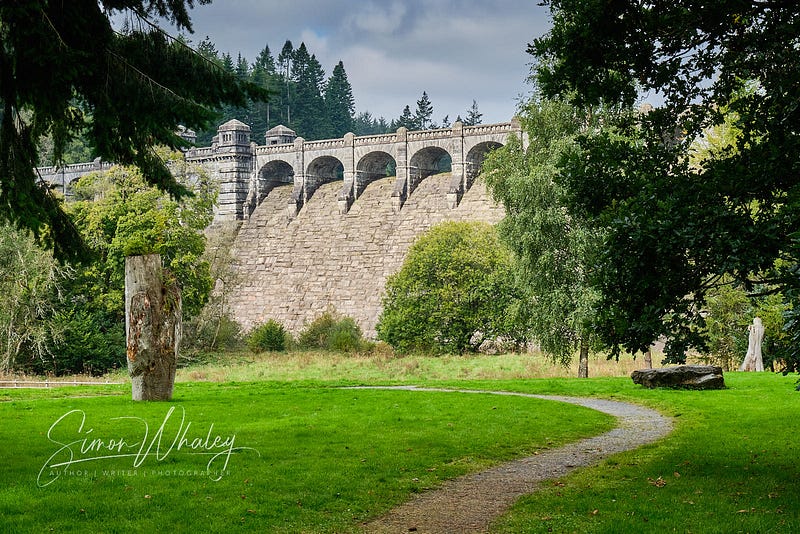
Standing at the foot of Lake Vyrnwy’s 146-feet high dam, I contemplate what 60 gigalitres of water might look like. That’s certainly a lot of rain! The reservoir covers an area equal to 600 football pitches. I told you — they get a lot of rain here!
Before I show you how much water a stone dam that is 1,165-feet long and 120-feet thick at its base can hold back, I want to show you the sculpture park.
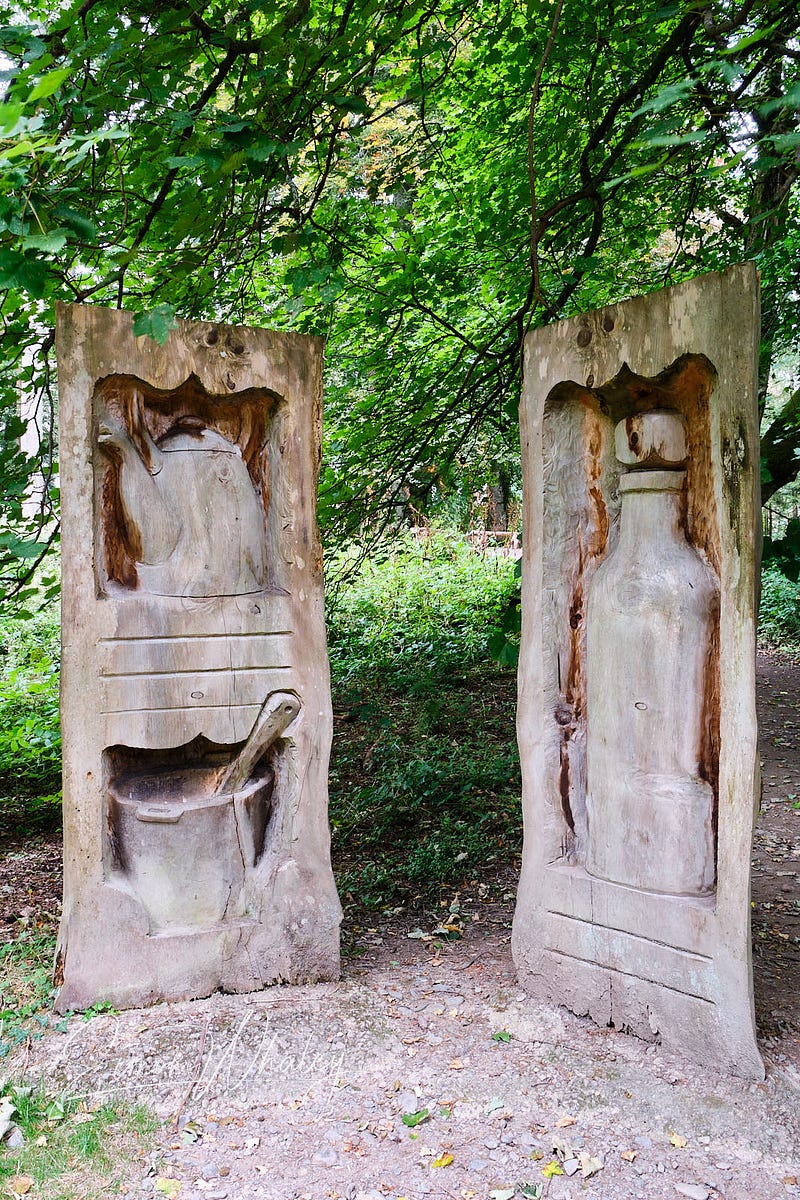
It was first created in 1999 using wood from the Lake Vyrnwy estate and it’s constantly evolving. New sculptures are added to replace the ones that are slowly rotting away. Some are interesting to look at, while others might make you blush!
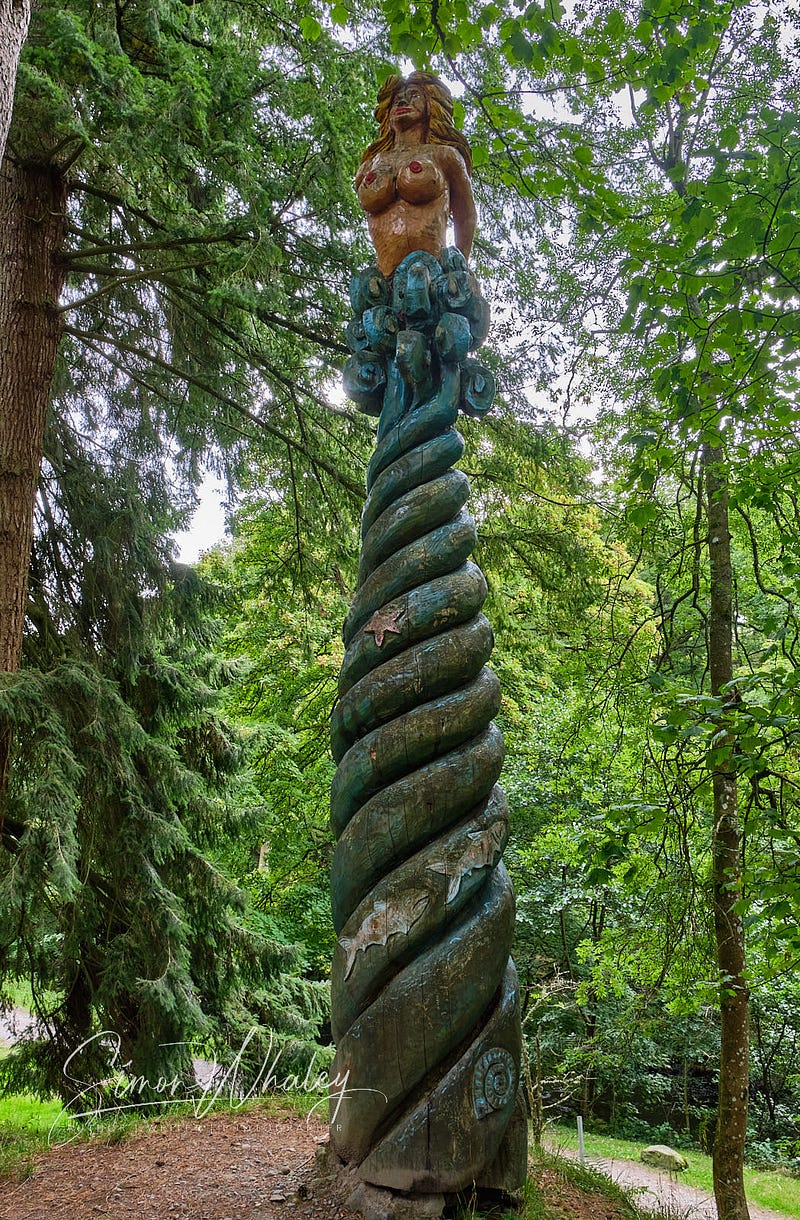
Located in the north-east corner of Wales, about 50 miles from Chester and 25 from Oswestry (from where it’s signposted), this whole area is perfect for those who enjoy the outdoor, whether it be walking, running, or sailing.
I follow a footpath downstream to the new village of Llanwddyn, where houses were built to re-home those whose original homes were flooded. They were built in the wonderful Arts and Craft style, and became one of the first communities in Wales to have electricity.
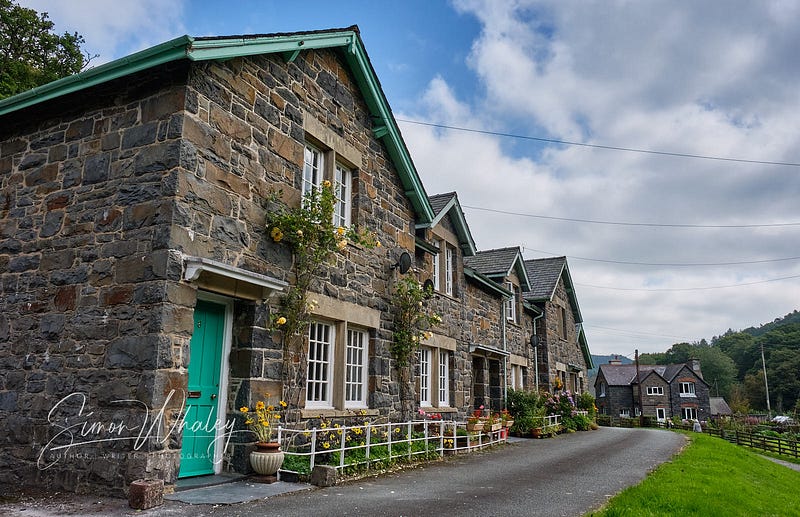
Mind you, it’s rather shocking to learn that the villagers of Llanwddyn were not consulted about having their homes flooded and being forced out of their valley. Despite setting up a petition, which had 331 signatures against the development, the Liverpool Corporation was granted permission by an act of parliament on 6th August 1880.
It took 1,000 labourers over seven years to build this dam, the first of its type in the UK. Earlier dams had been built with a channel down one side to allow excess water to flow into the river valley below. But the dam at Lake Vyrnwy has been built in such a way that any excess water simply flows over the top. (It looks stunning when this happens, typically in winter. It’s like one giant waterfall.)
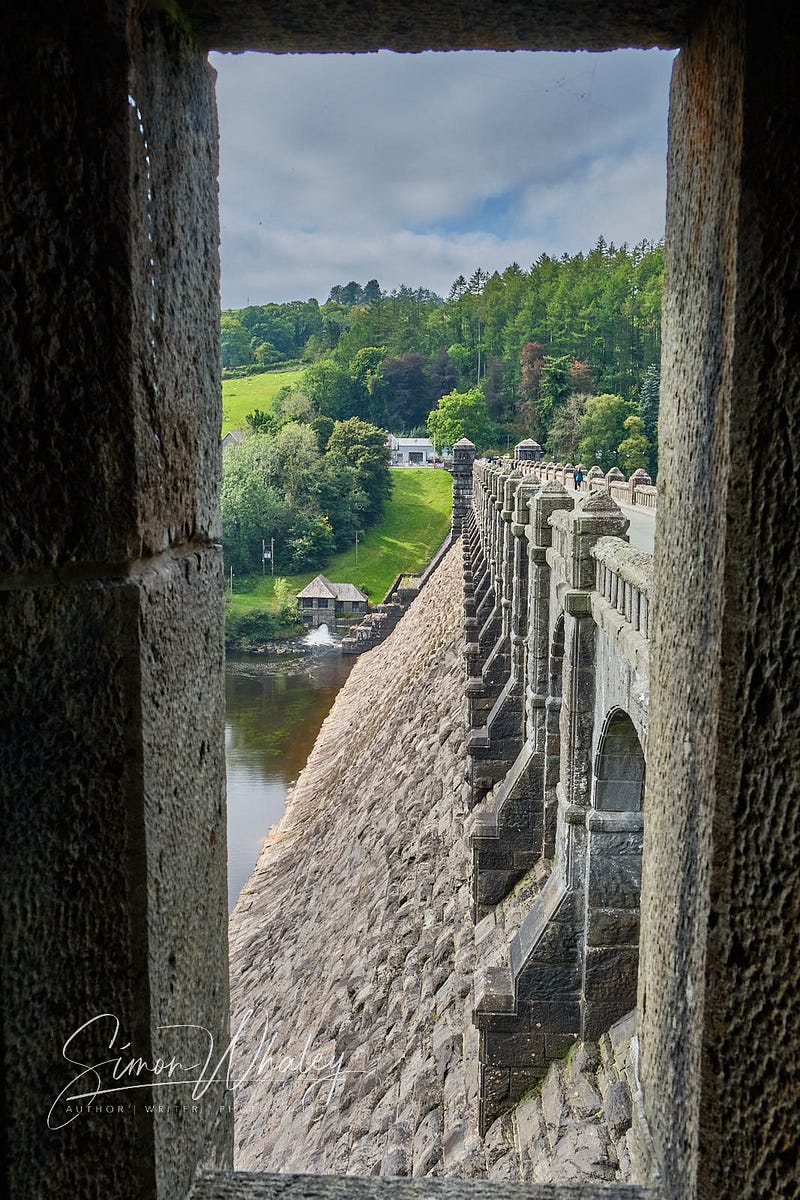
But the engineers didn’t stop there. A road was needed to cross the valley so a bridge, supported by 31 arches, was built on top. It would have been easier had they built it a bit wider, so today’s motorists have to take it in turns to cross the singe-carriageway that spans the valley.
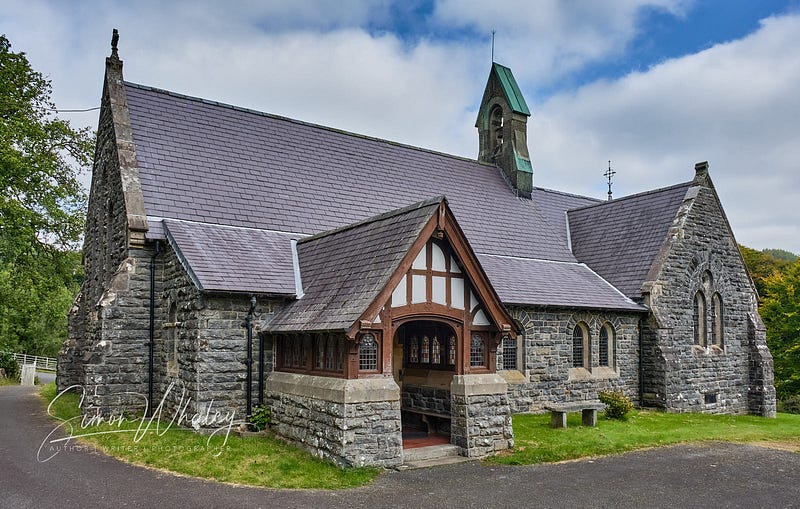
As I climb up towards the Church of St Wddyn, I get a better glimpse of the valley. Despite some 200,000 visitors a year, it’s surprisingly quiet. But then the Lake Vyrnwy estate extends for over 24,000 acres, so there’s plenty of room for everyone.
I spot some paddle-boarders on the water, which suggests it’s not too choppy today. Understandably, the reservoir is popular with those who love their watersports.
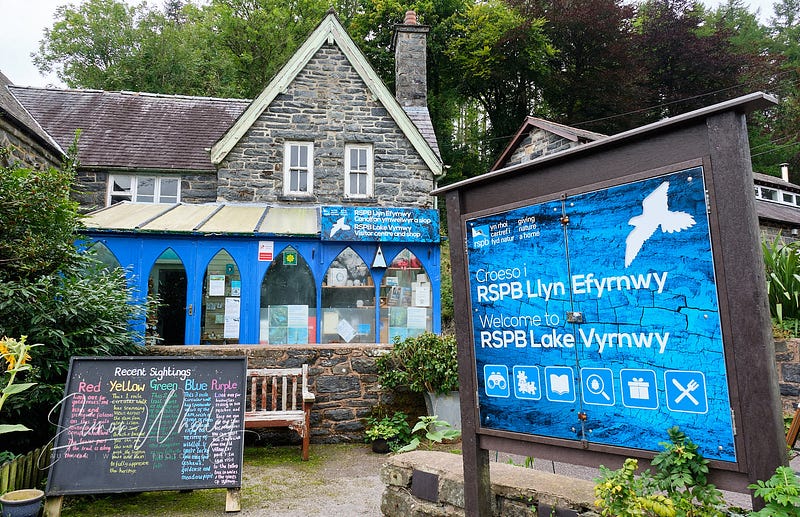
If you look at the dates on the gravestones in the churchyard you’ll soon see some of them predate the valley’s flooding. That’s because the villagers persuaded the Liverpool Water Corporation to exhume every body in the original churchyard and rebury them in the new one.
Anyone looking for fine dining and a pampering experience heads to wards the Lake Vyrnwy Hotel. It’s position, perched high on the hills, gives it some stunning views right along the reservoir’s valley. Unsurprisingly, when the Victorians persuaded the Prince of Wales, who later became King George V to officially open the dam, they checked him into this building overnight.
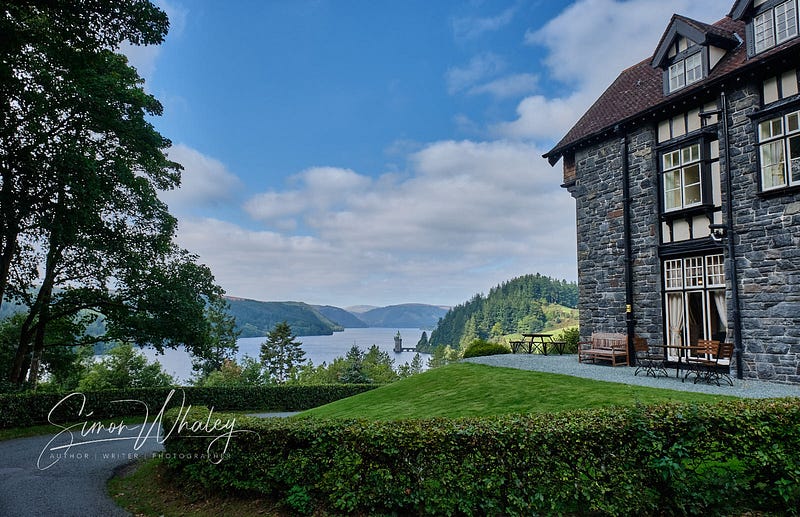
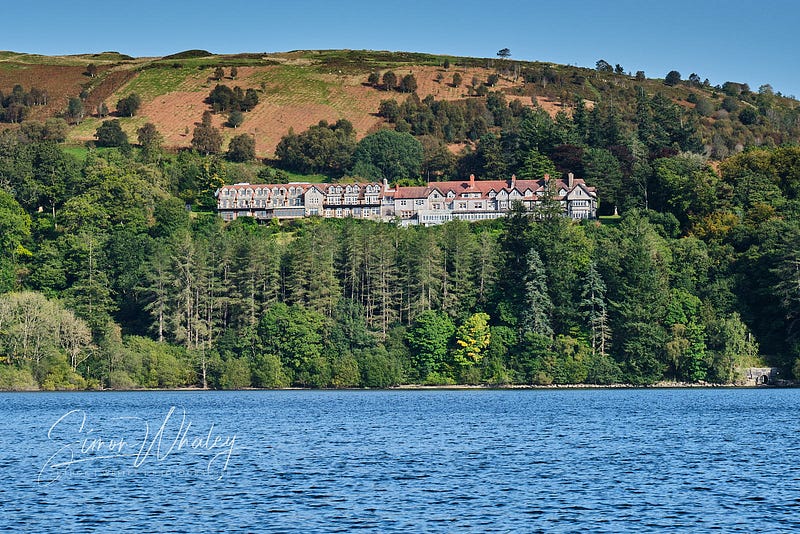
There is a narrow road that circumnavigates the entire reservoir. It’s about 12 miles in total, which, for some people, is the perfect length for a day’s walk, or a morning’s run, or an hour’s cycle ride (bikes can be hired at The Old Sawmill, near the main car park). In other words, if you do decide to make the drive in your car (and it is a beautiful drive) don’t expect to nip round in ten minutes. There’s plenty of other people enjoying themselves to slow you down.
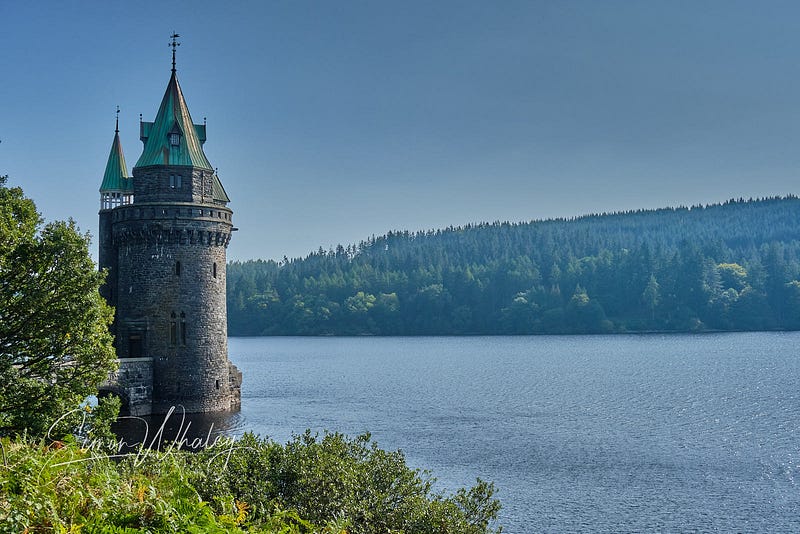
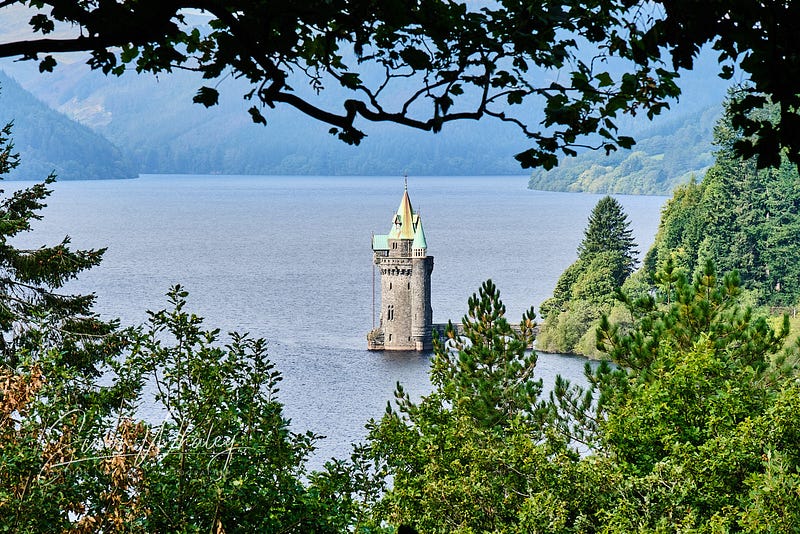
And you wouldn’t want to drive too fast because you’ll miss some wonderful scenery and fascinating sights . . . like the Victorian Straining Tower. This Bavarian-style stone turret sits in the water, a short distance from shore, like a fairy-tale castle. It’s actually the point where water is extracted from the reservoir to begin its journey to Liverpool.
Another reason not to rush around the reservoir is because there are several bird hides secreted away among the trees. Much of the surrounding estate is managed by the RSPB (Royal Society for the Protection of Birds), because it is such a fantastic habitat for them.
If you’re lucky, you might catch a glimpse of peregrine falcon, pied flycatcher, redstarts, siskins, wood warblers, great north divers, and many, many more.
The RSPB also manages Lake Vyrnwy farm, which is the largest organic farm in England and Wales.
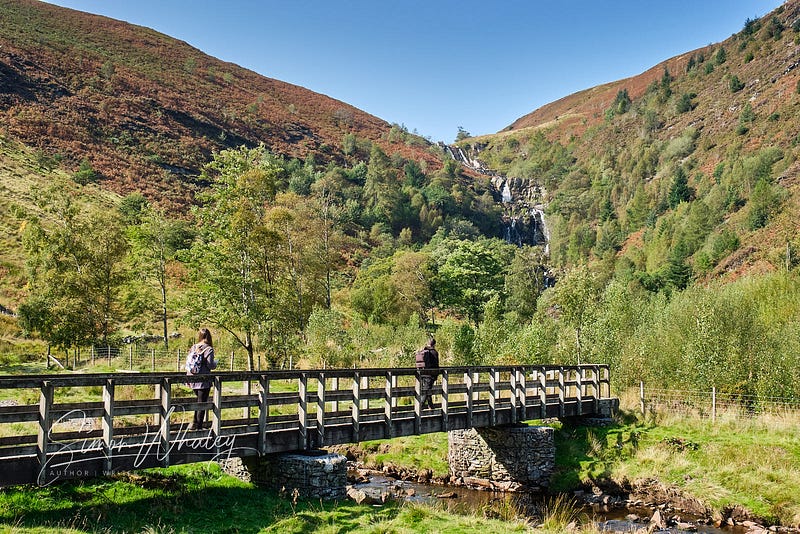
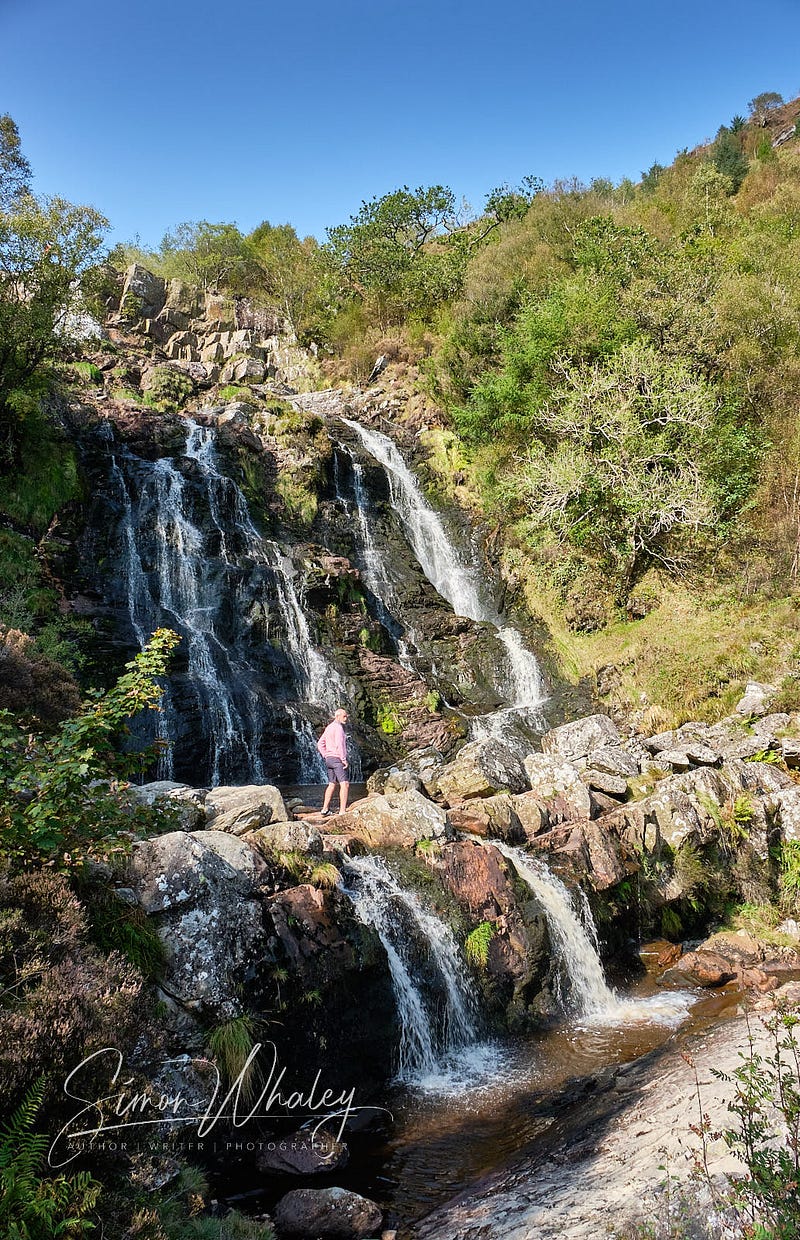
At the reservoirs furthest point from the dam is Rhiwargor Waterfall car park. From here, it’s possible to take a gentle stroll through the upper valley, along the banks of the bubbling River Eiddew, to the base of the spectacular Pistyll Rhyd-y-meinciau waterfalls. Here, the river drops 275 feet down a rocky chasm into the valley.
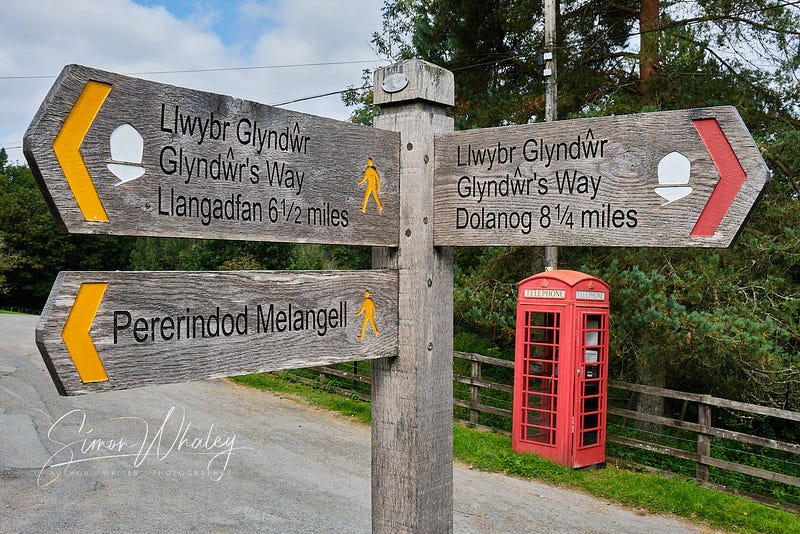
If walking is your thing, then you might like to walk to Lake Vyrnwy going the pretty way, which involves using the 135-mile long Glyndwr’s Way that meanders through mid-Wales and cuts across the dam. And the 15-mile Pererindod Melangell Walk passes Lake Vyrnwy and its hotel as it heads towards the ancient church at Pennant Melangell, which is Britain’s oldest Romanesque shrine.
As I sit in the cafe nibbling a gluten-free chocolate brownie, I can’t help but think about the fact that to get this water to Liverpool, the Victorian had to build three pipelines underneath the River Mersey.
But that’s what happens when the abundance of water, as the Reverend Thomas H Evans put it, is not nearer to the people who need it!
And if you can time your visit to coincide with a day when it’s not raining (like I managed to) you’ll have an amazing day out!