
Lady of Light
Clementina, Lady Hawarden, was among the first female photographers and forged her own genre to light the way for fashion and fine art.
In the mid-1800s, becoming a photographer was like joining a cult. These new alchemists shared their arcane knowledge and put each other in touch with suppliers of strange and dangerous chemicals. Joining the cult and acquiring one of the little magic boxes wasn’t cheap either. So, early photographers tended to be aristocrats who were acquainted. In Britain, the circle was small and out of it grew the Royal Photographic Society, founded in 1853, which unlike many clubs of the day, welcomed both men and women. If they had the kit and the knowledge to use it, they just had to bring their passion and a subscription fee!
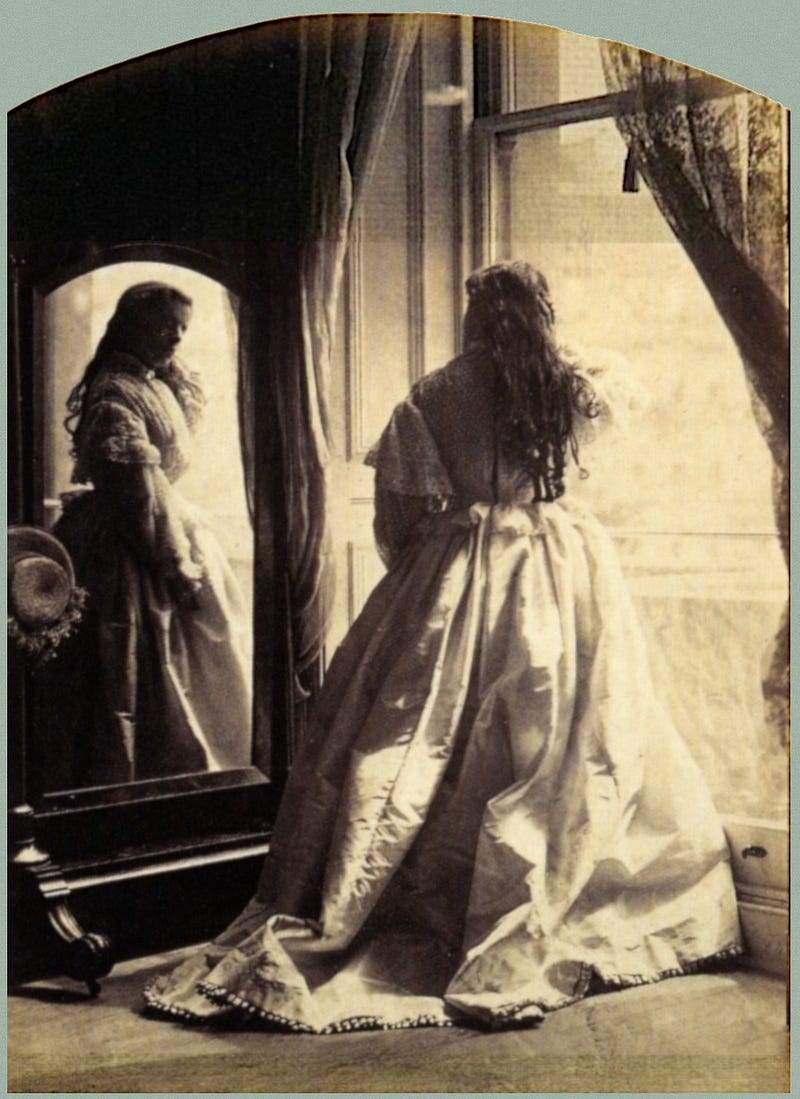
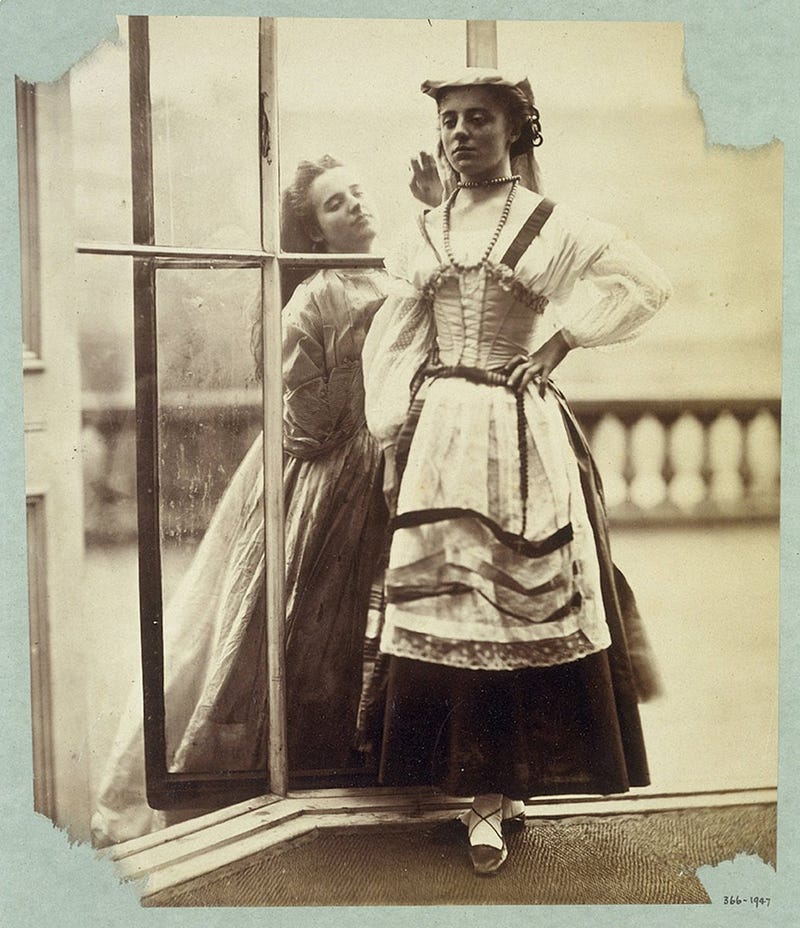
Among those pioneering female photography enthusiasts was Clementina, Lady Hawarden, who swiftly rose to short-lived prominence in the mid-nineteenth-century. She was invited to join the Royal Photographic Society and consecutively won two of their medals in 1863 and 1864. After her career was cut short by an early death in 1865, her work faded into obscurity. A century later, it was rediscovered and became a significant influence upon fashion photography in the 1960s and '70s..
Clementina took up photography when the technology for fixing and printing patterns of light was in its infancy, but rapidly developing. After much experimentation, French inventor, Nicéphore Niépce had managed to make a lasting photographic image in 1826. It was an unremarkable subject — a view of rooftops from his window — but a remarkable achievement. It had taken eight hours for the chemicals to react and such a long exposure time limited the applications of this new imaging process.
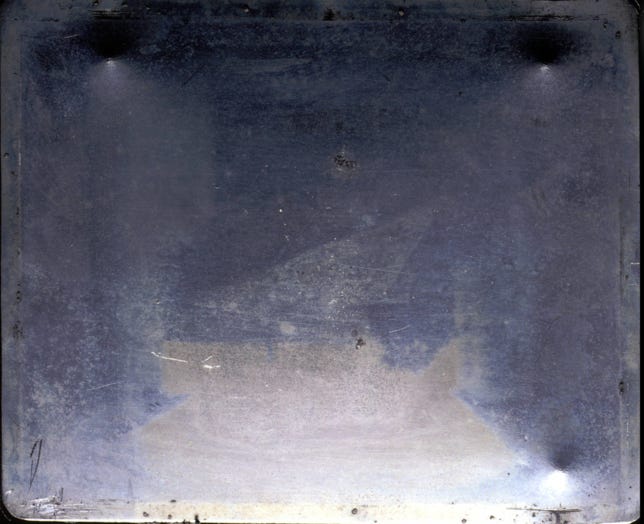
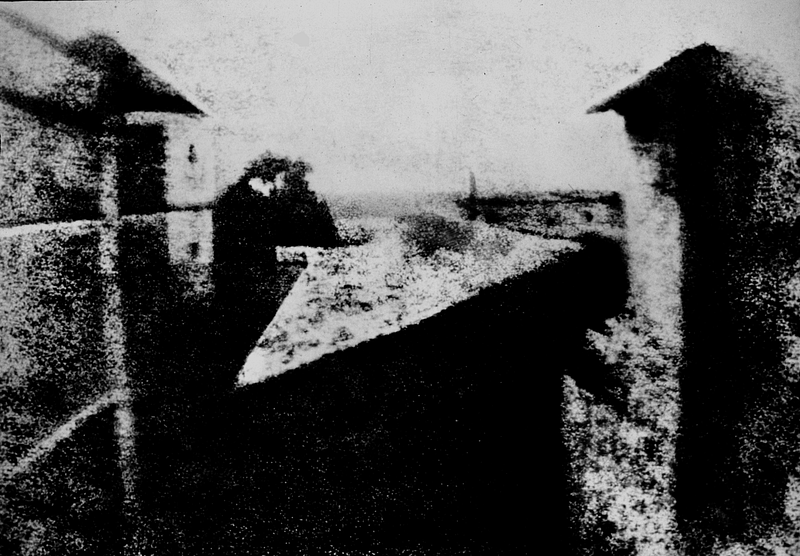
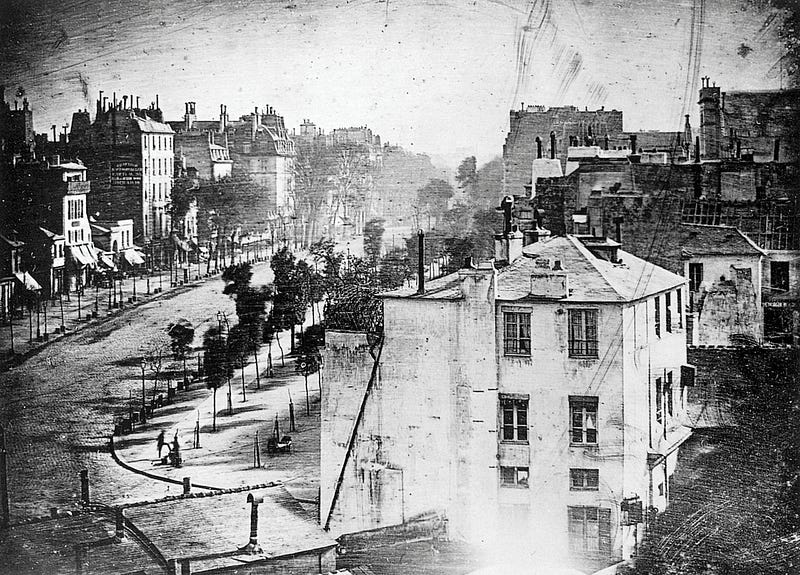
Early photographers chose subjects that didn’t move much, such as architecture or landscapes on sunny, still days. It wasn’t until 1838 that the first photo of a human was captured, and then by accident. Pioneering photographer Louis Daguerre, inventor of the daguerreotype process, set up his camera for an elevated, panoramic Parisian street scene.
The resulting View of the Boulevard du Temple seems eerily empty. There were pedestrians promenading on the street, perhaps even horse-drawn carriages, but no one stayed still long enough to leave an impression… Except for a shoe-shiner and their client on the street corner who became a piece of photographic history.
The new medium was mainly used as a way to document people and places. Photography became fashionable for family portraits as it was perceived as both ‘magical’ and ‘modern’. Although it meant being ‘dead’ still for minutes, it was also quicker and cheaper than sitting for a professional painter and it’s novelty made it a talking point. To begin with, photographers followed the same aesthetic conventions as paintings, and saw it as a substitute rather than an artform in its own right.
Henry Fox Talbot invented a quicker process using different silver salts that could be exposed on transparent glass plates. His calotypes could then be used as negatives, placed directly onto paper coated with similar salts to create contact prints. The salts he used were more reactive, meaning exposure times were shorter — just a minute or two — and numerous paper prints could be made directly from each plate. It no longer required images to be fixed with highly toxic mercury vapour, as was the case with daguerreotypes. However, resolution had been sacrificed and daguerreotype metal plates still produced sharper photos. Talbot licensed his process as early as 1841.
When British sculptor, Frederick Scott Archer, devised his wet collodion process, he decided not to license it and made it freely available to all in 1851. This much quicker method used a syrupy substance of nitrocellulose dissolved in ether as a medium for photochemical salts. As the salts were in solution, they reacted rapidly — requiring exposures of seconds rather than minutes—and the definition was superior to granular coatings.
This wet-plate process also created translucent negatives that allowed multiple paper prints to be made. With this cheaper and versatile method, photographers became more adventurous, exploring their individual styles instead of aping painting.
However, the photographer needed a conducive set-up to use Archer’s process as the plates had to be coated with freshly prepared collodion, then used and processed before the mixture dried. This would be between 10 and 20 minutes, depending on environmental conditions such as temperature and humidity.
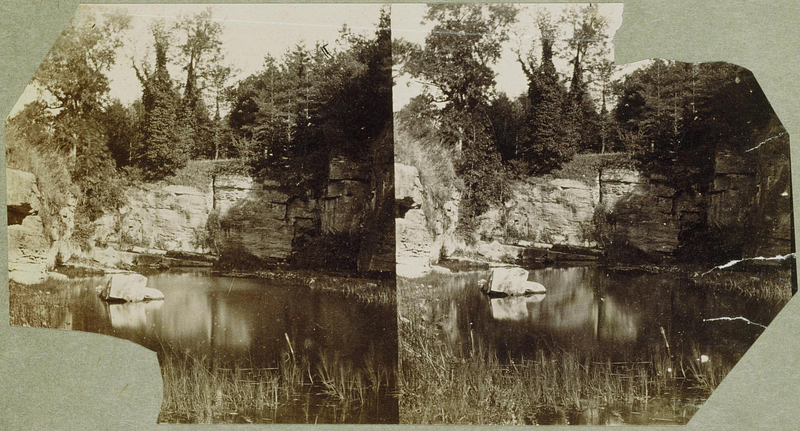
Whilst Lady Hawarden was living in Ireland on the family estate at Dundrum, in County Tipperary, she enjoyed the freedom of the extensive grounds and took up landscape photography. She often used a stereoscopic camera to produce two almost identical, though slightly off-set, images. When placed in a stereo-viewer, the illusion of a three-dimensional scene was created.
A quarry on the Dundrum estate fascinated her with its interplay of organic tree forms, angular cliffs and their reflections on the surface of the lake. Her attention to these elements and their compositional potential was ahead of the times. It prefigures the Modern approach, later explored by painters such as Paul Cézanne in his 1895 painting of Bibemus Quarry.
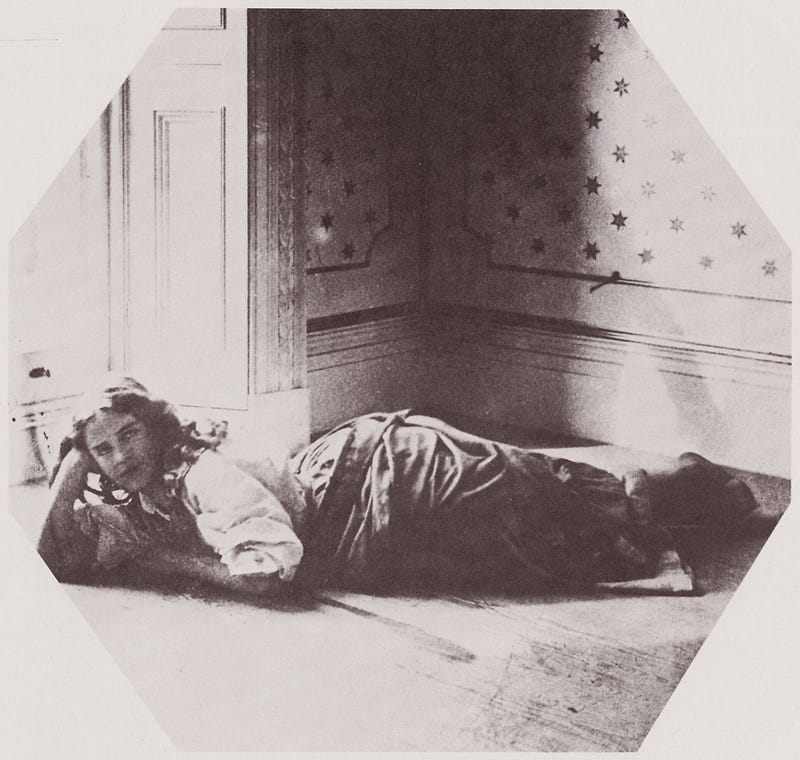
When, in 1859, she moved with her family to live in South Kensington, London, she had to adapt her practice. In those days, it was unacceptable for a ‘Lady’ to walk out and about without a chaperone. So, she converted a large second floor room into her studio with an adjoining darkroom, set up for Archer’s wet collodion process. Instead of trees and quarries, her children became her main subjects — eight daughters and two sons.
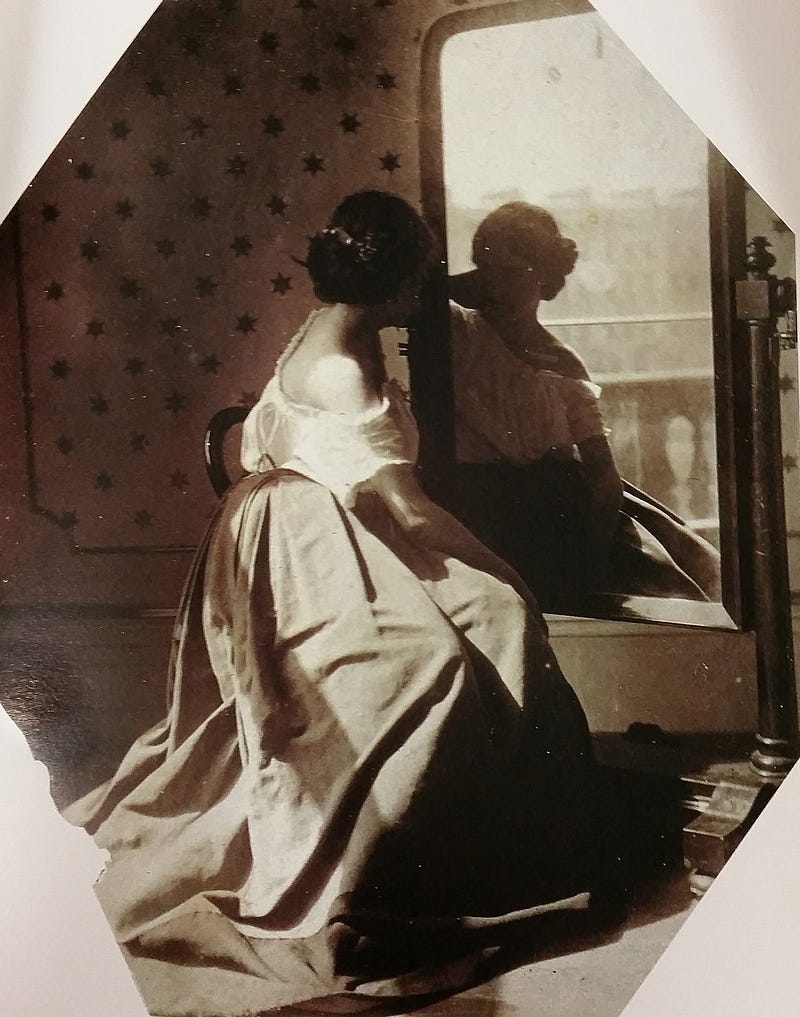
Favouring only natural light, but wanting plenty of it, she would utilise mirrors to bounce illumination that poured in through the large windows. This brightness distinguishes her work from the fashion of the day for stark, dark, almost baroque, portraits as did her tendency to use much more relaxed, naturalistic poses. Although her set-ups were meticulous in their choice of costume, props and position, some of her portraits look like they might’ve been captured candidly and often imply a narrative.
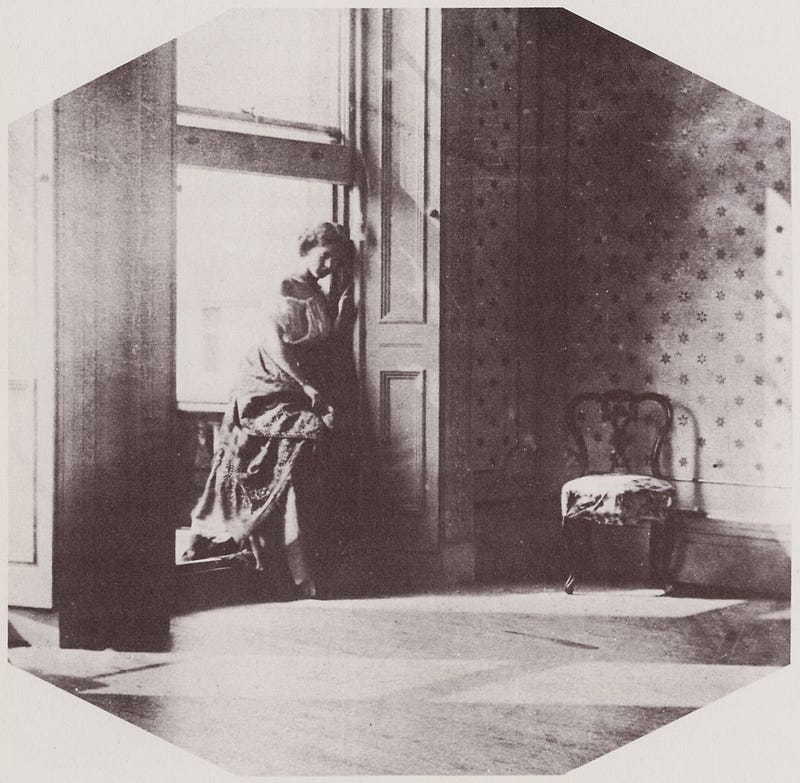
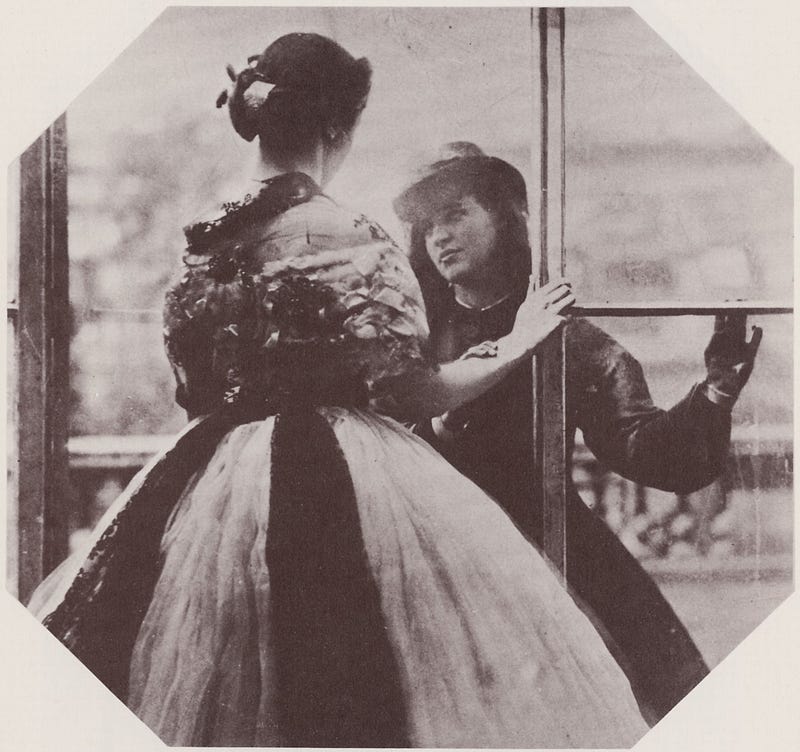
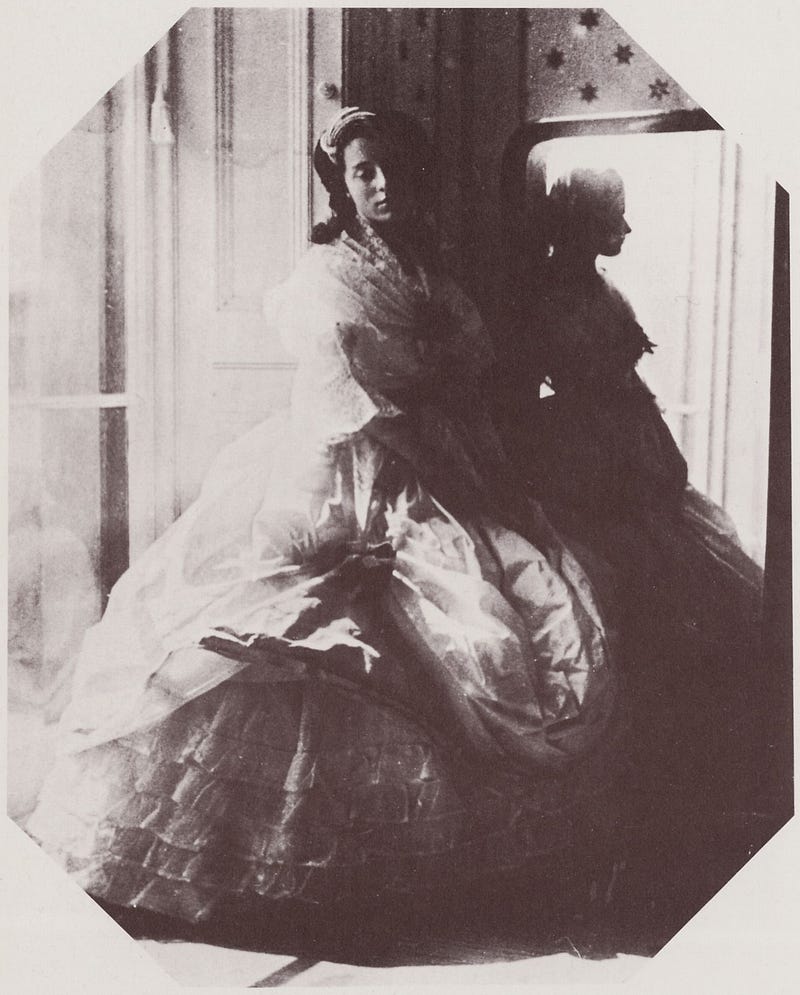
Her experience as a stereographer, along with the use of mirrors to light her scenarios, led Clementina to explore notions of reflection—both literal and poetic — along with the interplay of symmetry and asymmetry to achieve a visual balance. As well as a purely formal element, she also investigated the ideas of similarities and differences in this way.
Her children were similar in familial resemblance, yet they had very different personalities. Collaborating with them as models was also a way to encourage their self-expression and for them to learn about each other on a deeper level. It also presented a way for the surface of the picture to allow aspects of personality to emerge from beyond the surface of the individuals it portrayed. This idea of an underlying, poetic reality that could be expressed thorough art, aligned her ideology with that of the Romantics.
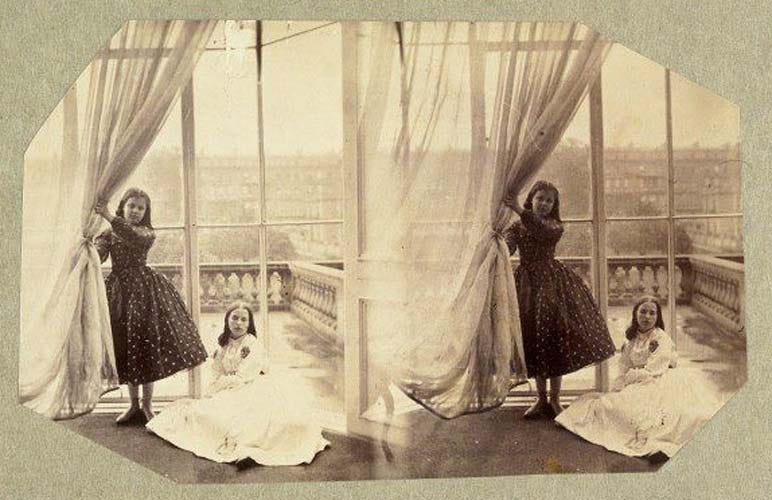
Victorian portraiture was generally straightforward and whilst dressing-up the subjects in theatrical costume was nothing new, Clementina also showed her daughters in their à la mode finery. They often wore fashionable dresses. Sometimes they relaxed shoeless or in their petticoats. This, her daring light-drenched compositions, the often unusual poses, and a conceptual approach were hugely innovative.
Most of her her peers, although employing the same new technology, were aesthetically stuck in long-established tradition, evident in the work of fellow female photographer Julia Margaret Cameron, whose photography mimicked the popular neo-classical painters of the time, and Charles Dodgson (aka Lewis Carroll).
Sadly, as she was earning great respect in the new category of a fine art photography she was helping to define, she died of pneumonia in 1856 aged 42. It is thought that regular exposure to the chemicals used in the wet collodion photography, which could include acids and cyanide, may have detrimentally affected her health. In her short career as a photographer, Clementina had made around 1,000 images.
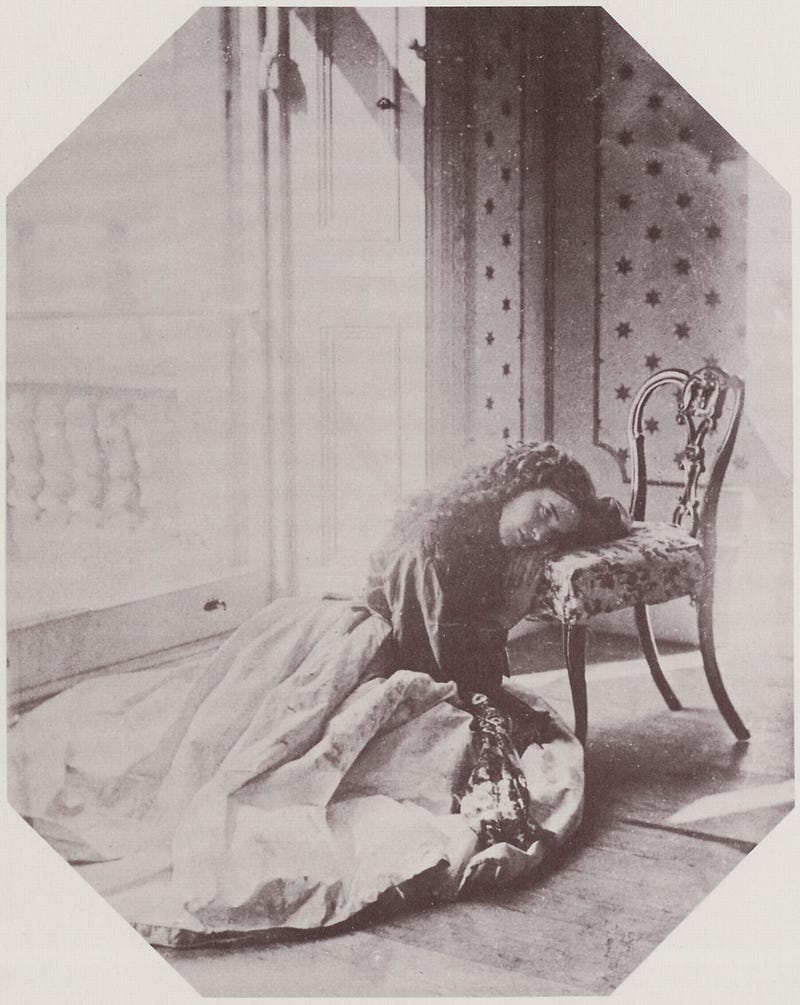
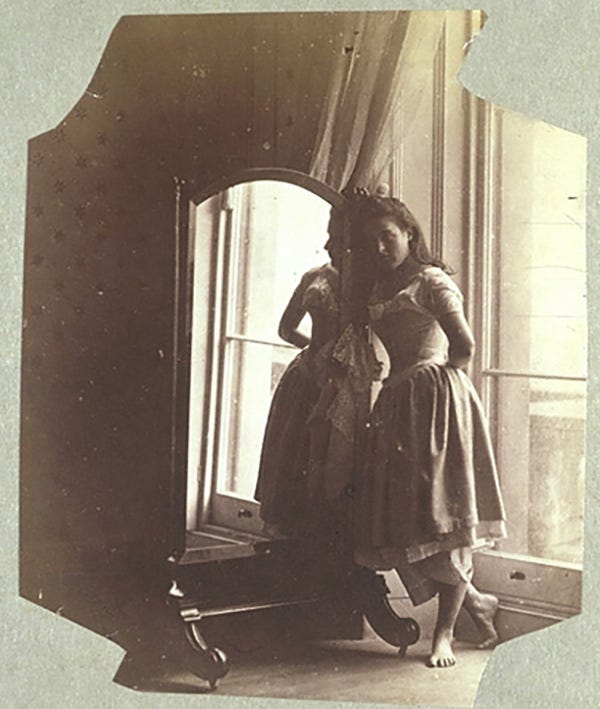
In 1939, a major exhibition at London’s Victoria and Albert Museum celebrated a century of photography since that first image of a human had been captured. Clementina’s granddaughter, also named Clementina, was very disappointed to find that not one of Lady Hawarden’s pictures were included. To redress this omission, she donated the family collection of her grandmother’s photographs to the museum. Over the years, most of these had been retrieved from the pages of various albums in which they had been gummed down. Hence the corners of nearly all the prints were cut or torn on removal — an unintentional yet aesthetically pleasing result that tells a little of each print’s unique history.
Interest in her work grew among a new wave of fine art and fashion photographers. In 1974, a selection of photographs from the V&A collection was compiled for publication in a book simply titled, Clementina, Lady Hawarden. This brought her work to the attention of a wider audience who were struck by the modern quality of her compositions.
The portrayal of an unaffected, adolescent femineity displayed by the sisters, relaxed and acting naturally in the presence of their mother, also struck a chord with the ‘second wave’ feminist movement which was gathering momentum. The aesthetics of the photographs, their hints of narrative, the poses, the beautiful dresses, all influenced and informed fashion and the way it was promoted…
* All images are used with permission or presented here for educational purposes under fair usage policy.


.jpg)
.jpg)
.jpg)

.jpg)
.jpg)
.jpg)