
Lady Gaga’s “Chromatica”: Track-by-Track Review

Two weeks ago today, Lady Gaga dropped her 6th official album, Chromatica. On the surface, it marks a return to her dance floor roots. But underneath the surface, it is a musically complex and psychologically rich masterwork.
Lady Gaga’s Journey to Chromatica
At some point early in Lady Gaga’s meteoric rise to superstardom, I mused about Gaga’s probable career arc. I half-joked that I expected her to gradually amp up the weirdness of her musical stylings, aesthetic, and persona to the point that the most shocking thing she could do was release a stripped-down, soul-bearing rock album and embrace a much more relatable persona. And, well, that’s pretty much how it went down.
After releasing four critically and commercially successful electronica-heavy albums of increasing boldness and strangeness (2008’s The Fame, 2009’s The Fame-augmenting EP Monster, 2011’s Born This Way, and 2013’s ArtPop), we entered a several-year period with a radically different Gaga. She recorded an album of standards with elderly music legend Tony Bennett (2014’s Cheek to Cheek); a stripped down, singer-songwriter album (2016’s Joanne); and a rock-oriented soundtrack album to accompany her big screen debut as a leading lady (2018’s A Star is Born). She performed a medley of The Sound of Music at the Oscars. She released an acclaimed Netflix documentary about her personal struggles (2017’s Gaga: Five Foot Two). Her image was further fragmented and complicated by her dual Las Vegas residencies, one which highlighted her dance hits and the other which emphasizes jazz songs with piano accompaniment. During this time, Gaga also became highly involved in social justice, pumping her fame and considerable wealth into initiatives to raise awareness of mental health issues, sexual and gender minority rights issues, and — more recently — equality for racial and ethnic minorities.
By 2019, the Gaga whose otherwise naked body was wrapped in caution tape and whose hair was rolled in Diet Coke cans while locked inside a prison cell in the “Telephone” video seemed all but extinct. And the question lingered: What would she do next?

Then Lady Gaga announced a return to the dance floor. She announced that her sixth official album (her 8th if you count Cheek to Cheek and A Star is Born, which I do) would be a pop-heavy, dance-ready return to her early days that was focused on the healing power of music. Fans went wild at the mere thought of this and the album became the year’s most buzz-worthy release. Although it’s actual release was delayed for nearly two months by COVID-19 (Lady Gaga and her team wisely put the release plans on pause to figure out how to properly promote an album in these extraordinarily strange times). The album was released on May 29, 2020 and debuted at #1 (her sixth album to do so). In addition to its commercial success, it received significant critical acclaim with an average score of 79/100 on Metacritic.
After having the album on replay for most of the past two weeks, I finally feel equipped to process my thoughts on it.
Chromatica: Track by Track Review
- Chromatica I. This haunting, vocal-free, string-heavy prelude effectively sets the tone for an epic journey. The massive sonic and tonal shift as it segues into the album’s first song is jarring in the best of ways.
- Alice. “My name isn’t Alice, but I’ll keep looking, I’ll keep looking for Wonderland.” The opening lyrics to the album may feel painfully trite on the first listen, but upon subsequent listens, the deeper and darker message is readily apparent. This is a woman in profound pain looking for escape and healing. And, as the song ramps up with its fierce vocals and electronica-laden, bass-heavy beats, the lyrics hardly matter.
- Stupid Love. The catchy and effervescent lead single off the album (which peaked at a healthy #5 on the Billboard Hot 100) is certainly one of the album’s frothier and more pop-oriented tracks. The lyrics depict a woman wondering if she could be freed from the pain and shame of her existence by love.
- Rain On Me. The album’s second single debuted at #1 on the Billboard Hot 100, becoming Lady Gaga’s 5th chart-topper and duet partner Ariana Grande’s 4th. The vocal stylings of the two pop divas mix well and the song has an infectious, radio-friendly beat. The song also continues the album’s lyrical themes as it ostensibly depicts two women embracing the profound disappointments to which life has subjected them and deciding to fight on.
- Free Woman. “This is my dance floor/that I fought for.” These are my favorite of the many powerful lyrics that are easy to lose track of amidst the glorious dance hall beats and soaring vocals. Perhaps the best song on the album, Lady Gaga has discussed that this feminist anthem was borne out of a sexual assault she experienced by a music producer early in her career.
- Fun Tonight. Despite the title, which suggests that we are in for a “Just Dance”-style banger, this is actually the album’s among the most poignant and pensive song. (Although of course, the song is still dance floor-ready like every other song on the album.) It depicts a woman coming to terms with the end of a romantic relationship that is now bringing her far more pain than joy. Memorable lyric: “You love the paparazzi, love the fame/Even though you know it causes me pain/I feel like I’m in a prison hell/Stick my hands through the steels bars and yell.”
- Chromatica II. After five utterly exhilarating songs, the album pauses for another string-heavy interlude. The flawless and ingenious segue that bridges the piece to the next track has rightfully been the focus of much praise.
- 911. If the opening five songs evoked Lady Gaga’s first two albums The Fame and Monster, this one decidedly evokes the Born This Way and ArtPop eras with its more bizarre, edgy sound. It contains largely spoken word verses and heavily uses synthesizers and autotune, but these bells and whistles belie the fact that the song is actually about Lady Gaga’s struggle with mental illness (references to mania and psychosis abound) and the medications that she relies on to quell the chaos.
- Plastic Doll. This solid track is one of the album’s weaker offerings, as it just feels a bit more ordinary all around. Its lyrics about feeling like a plaything that is there for others to use and abuse don’t resonate or cohere as well as the others on the album.
- Sour Candy. This collaboration with the all female K-Pop group Blackpink heavily uses a sample of “What They Say” by Maya Jane Coles. (This is the same song that Katy Perry sampled with her song “Swish Swish,” hence the similarities between the two.) The sample works superbly, the vocals blend well, and the lyrics — in which the ladies own their unpredictable and chaotic behavior in relationships in both English and Korean— are clever. And at a super brief 2 minutes and 38 seconds, it leaves the listener wanting more.
- Enigma. After two songs that heavily gravitated toward bubble-gum pop, this song sets the album back on track with its emphasis on bold vocals, heavy beats, and mature lyrics. (Interestingly, this song shares the title of her Las Vegas residency yet doesn’t seem to have an overly obvious tie-in to it.)
- Replay. “The monster inside you is torturing me/the scars on my mind are on replay.” The psychological consequences of a toxic relationship haunt Lady Gaga on this brief, intense, banger that has heavy doses of disco.
- Chromatica III. The final string-laden interlude feels undoubtedly lighter and more hopeful, which is perfectly fitting as the album transitions into three songs that will end the album in a much happier place than it began.
- Sine From Above. This track rivals “Free Woman” as the album’s best. The lyrics about the profound ability of music to heal people’s suffering are powerful and inspiring and the frenzied climax shoots this song into the stratosphere. Oh, and it is a duet with the legendary Sir Elton John, a friend of Gaga’s whose distinctive vocals alone greatly enhance the song’s resonance.
- 1000 Doves. Like “Fun Tonight,” this song maintains its dance hall beat, but has a profound sadness that permeates it. In the song, Lady Gaga desperately years for someone to show her the love and encouragement she needs to lift herself back up and soar. It is also the most emotionally raw vocal performance she delivers on the album. Memorable lyric: “Lift me up, give me a start/Cause I’ve been flying with some broken arms/Lift me up, just a small nudge/And I’ll be flying like a thousand doves.”
- Babylon. This unlikely album-capper undoubtedly feels like it was recorded during the ArtPop sessions, with its bold and brassy production that incorporates spoken word, a choir, and lots of references to Mesopotamia of all things. It shouldn’t work, but it does — gloriously — and it ends the album on an assured and joyous note.
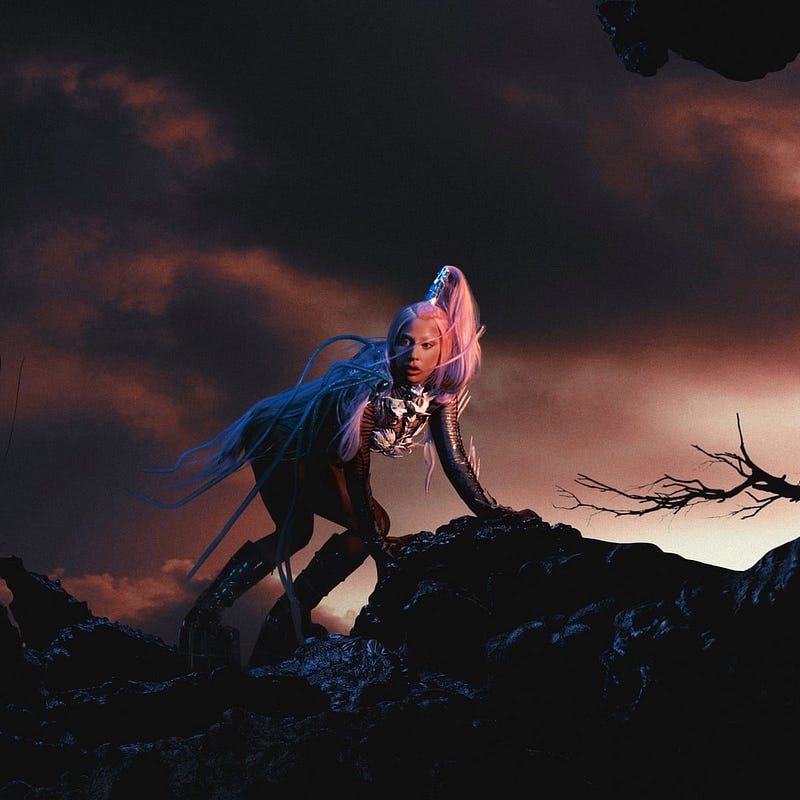
In sum, Chromatica is remarkably deceptive album. It is very possible to casually listen to it from start to finish and conclude that all the songs sound alike and blend together, and that it is just frothy bubblegum pop. But close, repeated listens reveal that it is a sonically cohesive stunner that seamlessly blends countless genres while delving into deeply personal and poignant lyrics about a variety of substantive issues.
Grade for “Chromatica”: 4.5/5 stars
Follow the author of this article on Medium and Twitter.
Read other articles by this author about musical legends like Whitney Houston, Mariah Carey, Madonna, Elton John, Florence + The Machine, and Taylor Swift.


