
Ladies, There Is More to ‘Provocative Dressing’ Than You Know
At what point does sexual prowess become self-deprecating?
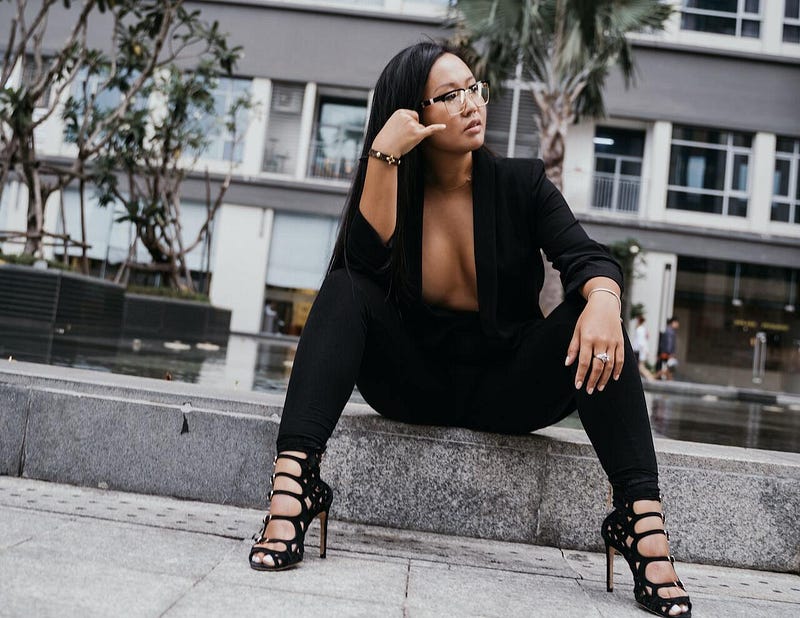
Last Friday, I was getting ready for a business meeting. The investor I was meeting recently opened a new club. A partnership would be mutually beneficial to both of us.
As I glanced through my wardrobe, I picked an outfit with a more professional appeal, a denim suit with a four-inch heel. Just as I was about to leave my bedroom, something felt off.
I looked in the mirror one more time. My clothes were good, but my figure was hidden. So I quickly changed into a more revealing outfit, a blue mini bodycon dress.
As I walked to my car, a thought kept bothering me. Why did I feel the need to dress more appealing?
The business plan I was proposing would be viable for the two parties, but I wanted to make sure I sealed the deal and not lose it to a competition.
My motives became evident that I actually wanted to seduce my way into winning a contract. But behind that thought, there is a woman who felt confident and proud of her femininity.
From the moment a girl is born, we are socialized to embrace misogyny as normal.
We learn to recognize our worth in how attractive men find us, to be grateful for street harassment, to protect ourselves with flirtation and subtlety, to find strength in masculinity, and to be content with invisibility.
We are taught that any act of violence we experience is a result of how short our skirt is or how deep our shirt line is running down our bodies.
This is why some male chauvinists have argued that women have an easy life.
Other times, women are criticized for taking advantage of this sexist system that objectifies their bodies for class mobility and other resources.
This sexually objectifying culture persuades women to self-objectify by evaluating and controlling themselves in terms of sexual attraction to others rather than in terms of health, happiness, and desires.
Self-objectification destroys a woman’s worth
Self-objectification occurs when individuals treat themselves as objects to be seen and judged on the basis of appearance.
The internalization of the objectifying messages of the media leads women to self-objectification and guides the perception of their value.
Women exposed to a specific ideology, i.e. sexist attitudes, increase their level of self-objectification.
They conclude that self-objectification can be seen as a consequence of an ideological model that justifies and maintains the social status quo.
Self-objectification acts as a harmful tool for keeping girls and women “in their place” as objects of sexual attraction and beauty.
Through self-objectification, we assume that clothing makes an important contribution to the body and emotional experience of contemporary women.
Because the clothing that exposes the body leads to greater states of self-objectification, body shame, dissatisfaction with the body, and negative mood.
This severely limits their ability to think freely and understand their worth in a world that so desperately needs their unique contributions and insights.
We should know the difference between self-objectification and sexual prowess
Women can be sexual without objectifying themselves. These are different and unrelated points that we missed.
Self-objectification means that your experiences are irrelevant, causing you to internalize your worth as a mere object for another’s sexual pleasure.
When you self-objectify, you can start to confuse your worth with your sexuality.
Women should be able to embrace their sexuality without having to worry about sexist comments and bigotry.
They should appreciate their beauty, and part of that is tuning in to their physical beauty and sexuality.
Sexual prowess or feeling sexual comes from a source of empowerment and self-trust. It has nothing to do with how others see you.
Women are more than just bodies. Just like men are more than their bodies. If we can see more than just a body in ourselves and in others, we have the opportunity to be more.
If you would like to get updated with stories like this in your inbox, subscribe to my newsletter. You might want to become a premium member, for as low as $5 you get the chance to read unlimited stories on Medium. Check out more of my relationship stories here.