Lab-Grown Meat: 2 Simple Questions We Must Ask Before Accepting It.
We might have been brainwashed to believe lab-grown meat is the food for the future.
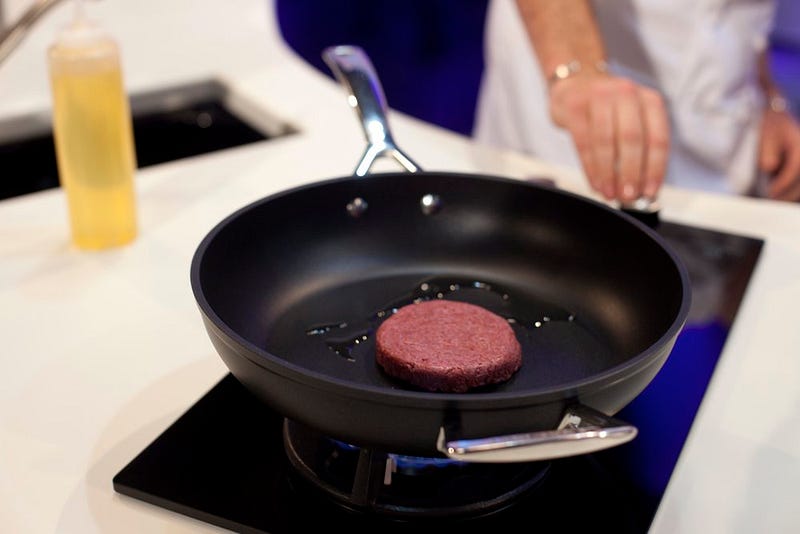
Lab-grown meat, sometimes also known as cultured meat, artificial meat, or test tube meat. These many names are referring to the same “meat” that is grown in a lab. The technology used to grow meat in a lab is known as the cell culture technique. It is a common technique used in the medical and biotechnology settings, then transferred to the lab-grown meat industry.
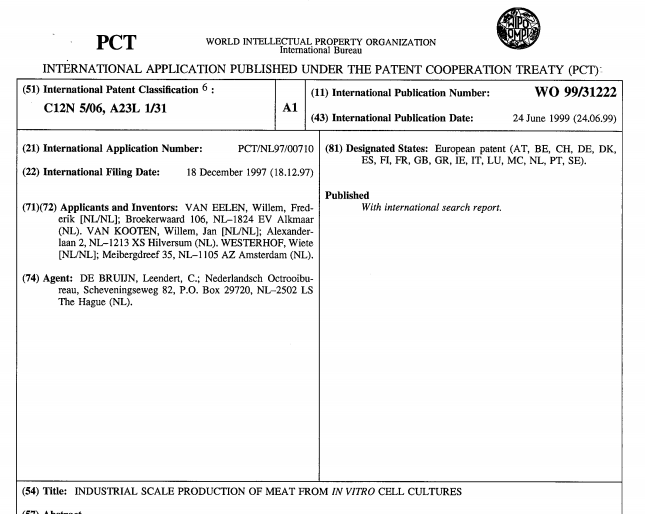
Believe it or not, the technology to grow meat in a lab exists as early as 1997 and has been patented by a French scientist. The following image is a snapshot of the patent:
Initially, NASA funded the study of lab-grown meat with the intention to enable our astronauts to grow their own meat on prolonged space missions that lasted for years.
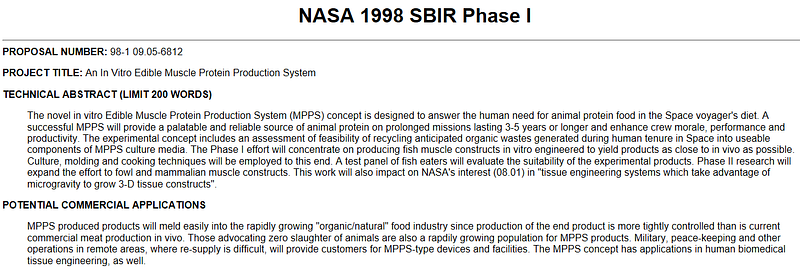
It is okay if you say “I love meat”, NASA agreed, astronauts would love to have meat during their space missions.
In 2013, Dr Mark Post became famous when he successfully produced the world’s first cultured beef burger patty. Nowadays, many companies are trying to make lab-grown meat. The booming lab-grown meat industry potentially gives consumers the opportunity to enjoy a wide variety of lab-grown meat with different textures. Mosa Meat and Memphis Meat very ambitiously planned to have their lab-grown meat products on shelves in 2021.
While there are obvious questions about the taste and price, I think we must be informed of the answers to two key questions:
- Is lab-grown meat truly victimless?
- Is lab-grown meat truly environment friendly?
Is lab-grown meat truly victimless?
What is currently known?
For your information, to grow meat from a single cell, scientists must first collect a biopsy sample of muscle tissue from a living adult animal, such as cattle. Then, scientists extract muscle stem cells from the biopsied sample. People often think lab-grown meat is genetically engineered to grow outside of the animal body, but this is not true. A stem cell is perfectly capable to grow by itself as long as we supply it with a medium of nutrients and growth factors.
A single stem cell can multiply into an uncountable number of muscle cells, but it certainly cannot multiply indefinitely due to cell ageing. Hence, a continuous supply of muscle sample from cattle is necessary. Fortunately, no slaughtering is involved in this step.
What is currently not known?
Stem cell must be fed with a medium of nutrients and growth factors. The role of a medium is to fool the stem cell to believe they still reside in an animal’s body.
Traditionally, the most effective medium is fetal bovine serum (FBS). FBS is extracted from the blood of a fetal calf that is still in its mother’s womb. Therefore, in order to collect FBS, one has to kill a pregnant cow, then puncture the heart of a fetal calf without anaesthesia. It is a technically nasty job to do and is a huge problem.
Lab-grown meat is meant to introduce a world without slaughter.
Is it an ethical or scientific problem? Do we ethically justify the use of FBS? Or do we experience a scientific hurdle to grow meat from a stem cell? Recently, a group of scientists recently wanted to use by-products of the food industry as a replacement for FBS. They have tested chicken carcass, cod backbone, eggshell membrane, egg white powder and pork plasma so far, and have found pork plasma to be promising.

Furthermore, an article recently published on Forbes suggested that another group of scientists found fish blood as a good replacement for FBS.
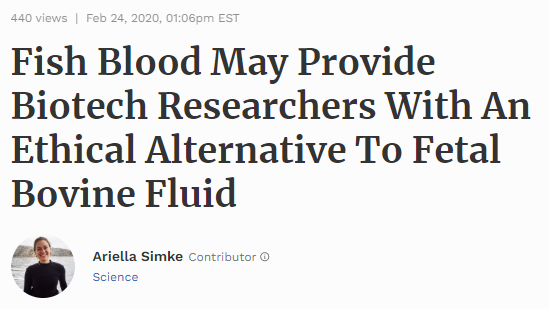
Irrespective of pork blood or fish blood, they are still blood. Unless scientists can find a synthetic or plant-based medium to replace FBS, this is the main factor that prevents me from accepting lab-grown meat. Until then, lab-grown meat is not victimless.
Interestingly, scientists have been able to grow insects tissue from a soy-based medium since 1998. When compared to mammalian (cattle) or avian (chicken) cells, insect cells are much easier to grow and have less stringent growth requirement. That is probably why insects thrive so well in a harsh environment. Lab-grown insect tissues are more likely to be ethically acceptable.
Is lab-grown meat truly environmentally friendly?
The lab-grown meat companies claim their products to be environmentally friendly, in terms of:
- Producing less methane and carbon dioxide
- Using less water
- Occupying less land
As a person who works in a lab, I probably can point out that lab work itself is not environmentally friendly and this is often not known by the public.
The laboratory is a sterile environment to ensure our the lab-grown cells are not contaminated by bacteria, viruses, chemicals, or any foreign biological substances. As such, most laboratory consumables are for single-use only and made of rubber, plastic and glass that are non-reusable and non-recyclable. The main wastes include gloves, syringes, pipette tips, test-tubes, glass tubes, petri dish, chemical containers, etc. A researcher from the University of Exeter, UK estimated that their Bioscience department generated 267 tonnes of plastic waste in 2014. The number was enormous. Personally, I feel guilty every time I discard a pipette tip, but that has to be done.
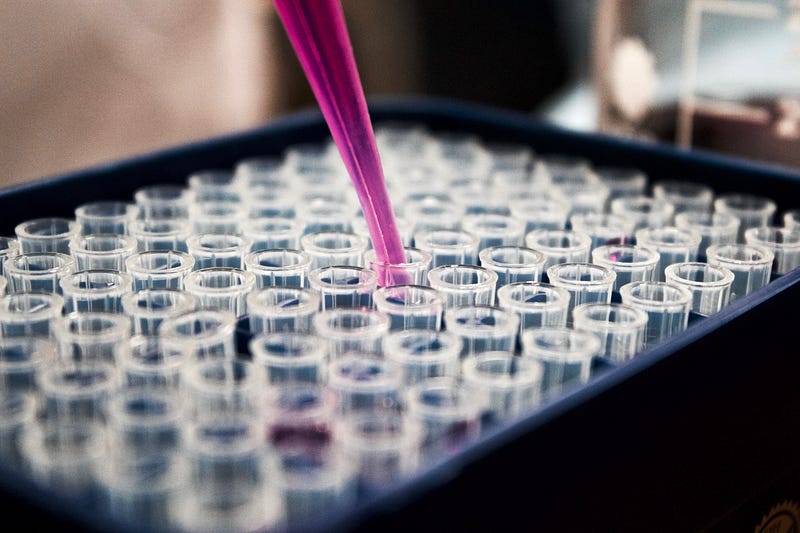
Furthermore, I am yet to see how they come up with a detailed calculation on how they conclude lab-grown meat as environmentally friendly. Certainly, the cells are producing less methane and carbon dioxide, consuming less water, and occupying less land. However, what about the environmental cost to manufacture laboratory consumables and equipment as well as the environmental cost used to sustain the functioning of lab machines?
I am not implying that lab-grown meat is not environmentally friendly. However, I believe that the lab-grown meat industry is underestimating the environment impact of their “meat production” and just recently been discussed by scientists who are not related to the lab-grown meat industry.
Concluding remarks
We have been listening to the lab-grown meat industry, almost being brainwashed, thinking that lab-grown meat might be the food for the future. The lab-grown meat industry has shown us evidence that is in favour of their science. Not that the science is inaccurate, but is often incomplete and biased.
In short, the widespread use of FBS to grow meat is not acceptable. Lab-grown meat is meant to introduce a world without slaughter. Ideally, we don’t want any animal blood to be used to grow meat. Lastly, I want to highlight that lab work is not environmentally friendly.
Is lab-grown meat the food for the future? I will be satisfied if it is free of animal blood and if the industry can demonstrate the evidence that they will not add plastic pollution as a trade-off as well as showing us the evidence of less greenhouse gas production and less water use after taking into account of the environmental costs to sustain lab operations.