
LA Times Writer Paints Mexico City Residents as Intolerant & Bigoted
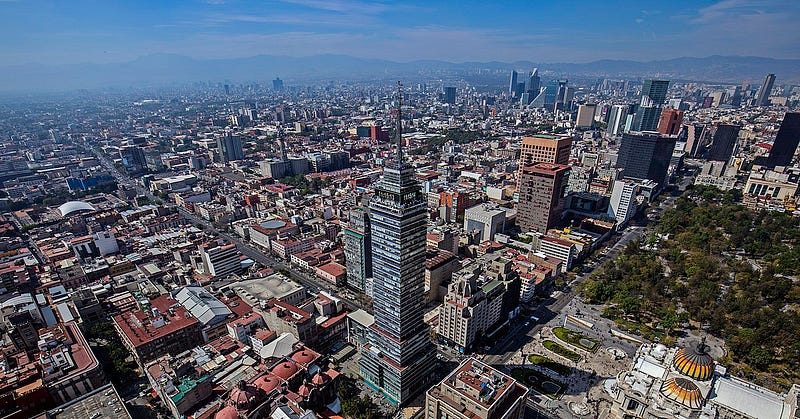
In August, an LA Times staff writer and esteemed journalist, published a piece criticizing American digital nomads moving to Mexico City. To arrive at the conclusion that some locals want Americans to leave their city — particularly Californians — the writer referenced an anonymously posted flier and interviewed three well-heeled Mexicans who represent the Mexican people about as much as a hot dog with jalapeños represents Mexican cuisine.
Despite the lack of connection the writer has with regular Chilangos, as evidenced by her interviewees — a barista in an upscale neighborhood, a Tik-Tok star who doubles as a professor, and a real estate agent serving foreign clients — in our current click-bait age of journalism, it appears that whatever journalists can do to pit one group of people against another while exposing “injustice” is sure to get published and reap rewards.
Before I begin, let me say that this is not a subject I wanted to write about given its inflammatory nature and likelihood to make zero impact on the people actually affected by gentrification. But as an American who’s lived in Mexico City for seven years after falling in love with a woman from Zacatecas (an immigrant to the city), and as a citizen of the world, I found the recent article titled “Californians and Other Americans are Flooding Mexico City: Some Locals Want Them to Go Home” to be one-sided at best — and dishonest, hateful, and bigoted at worst.
Here are five reasons why:
1. One of the main pieces of “evidence” that locals aren’t happy with the “influx” of gringos to CDMX is a flier that was recently posted throughout the city. The flier read: “New to the city? Working remotely? You’re a f — ing plague and the locals f — ing hate you. Leave.”
Besides the angry, adolescent tone of the complaint, you don’t have to be Sherlock Holmes to see the red flags. First, the flier was written in English by someone who I would bet a hamburger is American. It was posted anonymously (of course), so we can’t be sure. But what other nationality would find it fitting to use the word “f — ing” twice in such a short message?
Along the same lines, the flier doesn’t say “We hate you.” Instead, it says the “locals” hate you. In other words, it (most likely) wasn’t written by a local, but rather an outsider who appears to be interpreting the locals’ situation and voicing their opinion for them. Presumptuous? Maybe. Condescending? I’d say so.
Lastly, here’s a thought experiment that an eight-year-old could do but LA Times’ writers seem incapable of. If this flier was posted anywhere in America and was directed at Mexicans, it would be disregarded as hateful and bigoted, and likely be investigated as a hate crime. Why? Because it is hateful and bigoted. The vandal is calling an entire group of people a “plague” and saying that another group of people (comprised of 22 million individuals) “f — ing” hates them. If that’s not racist, or at least hateful and bigoted language, then I don’t know what is.
2. The next piece of “evidence” as to why “some locals” want gringos to leave comes from a writer, professor, and popular Tik-Tokker whom I’ll refer to as Mr. G.
Mr G. backs up the writer’s claim by recalling an experience when he was at a restaurant with friends, and they suddenly realized they were “outnumbered.” From the line, you might think an ambush was coming. But Mr. G goes on to explain, “We’re the only brown people.” The only ones “speaking Spanish besides the waiters.”
In seven years of wining and dining in Mexico City, I have never been to a restaurant where there were no Mexican clients, or as Mr. G calls them — “brown people.” It makes me wonder, where does this Tik-Tok star and his friends go out to eat — The American Legion? Even the popular barbecue spot Pinche Gringo has a mostly Mexican clientele and staff.
But let’s give Mr. G the benefit of the doubt. Maybe he really did eat at a place that was dominated by foreigners speaking their native tongues. Well — so what?
Imagine an American professor publicly saying that they went out to eat and were “outnumbered.” That he and his friends were the only white people in the restaurant, the only ones speaking English. This type of experience is much more probable in America than in Mexico City, and as an American who grew up in the northeast, being around people who look and speak differently than me is something I’ve experienced many, many times. But of course, an American professor would never say this because if they did, they’d lose their job and earn a reputation as a bigot — and it would be justified. Mr. G’s comments, however, earned him a spot in one of America’s biggest newspapers, and of course, more Tik-Tok followers.
Note: After judging people for their country of origin and language, Mr. G goes on to say, “Mexico is classist and racist.” Well, okay professor — I believe you.
3. The next source that the LA Times’ writer — who by the way, works remotely from Mexico City (perhaps from one of the gentrified neighborhoods she’s ripping on in her article) — uses is Omar, a barista in La Roma. Omar says that he is “sick of feeling like an outsider in his city. Nearly 60%-70% of his clients are foreigners. And “some people order in English and get mad when I don’t understand them.”
That’s infuriating, and anyone who gets upset at a barista for not being able to speak a foreign language gets no sympathy from me. But Omar sounds like he’s also mad that his foreign clients are — well, foreign and English-speaking. Is that any different than the American who gets mad when they have to press 1 for English every time they call the bank? To me, Omar sounds a lot like a stereotypical racist grandpa who can’t keep up with the changing times.
4. The last source our writer quotes is a real estate agent named Sandra — and this one’s a real doozy. Sandra unabashedly reports that all the recent deals she’s closed involved Americans who “are happy to pay the asking price.” But somehow, she has the gumption to say that she’s not happy about it. So, here’s a woman making bank from foreign money who still has the nerve to tell a foreign writer that she doesn’t like that foreigners are in Mexico City. A huevo!
5. Finally, somewhere in the article this sentence appears: “And English — well, it’s everywhere: ringing out at supermarkets, natural wine bars and fitness classes in the park.”
This is such a weird statement that’s it difficult to dissect. During all my years in the city, I’ve been to a “Supermarket” a handful of times. That’s because most Mexicans don’t shop at Supermarkets, but at mercados or tianguis — the pre-Hispanic name for open-aired markets that are far superior to the American monstrosity that is the supermarket.
And the other two examples are about as strange as it gets — “Natural wine bars?” “Fitness classes in the park?” Wine isn’t popular in Mexico, so people going to “natural wine bars” are likely to be foreign. And could I dare ask — fitness classes in what park? There are thousands of parks in Mexico City, and my bet is you’ll hear English spoken in less than 1% of them. In other words, the statement is similar to an American saying, “Spanish is everywhere — you hear it all the time at Salsa classes, soccer games in the Bronx, and mezcal bars.”
Do you see my point? I can go months without hearing English in Mexico City, and the only time I do hear it spoken is when I visit the upscale neighborhoods that foreigners (not just Americans but Brits, Argentinians, Chileans, Europeans, etc.) frequent. To write such a ridiculous line, these must be the only neighborhoods the writer spends her time in.
As America continues to implode, I expect more Americans will pack their bags and head south to Mexico and other countries where they can afford to have a better life — no matter what the smug writers at the LA Times say about them. The problems this can cause in the communities they decide to live in are very real and troublesome, but also complex — as the Mexico News Daily has thoughtfully reported on in the past by interviewing locals who are truly affected by the changes happening in their communities. But these people aren’t Tik-Tok stars, bougie baristas, or bilingual real estate agents making a killing off foreigners. They are poor people who are always the most vulnerable when the world changes.
As for me, I came to Mexico for one reason — love — and that is why I stay. But I’m not dumb to the fact that access to our military-backed U.S. dollars and a golden passport gives me an advantage. What that means for me personally is that I can have a decent life here as I try to pay off the outrageous student loan debt I racked up before I realized the U.S. government and Sallie Mae didn’t have my best interest in mind. It also means I can support my fiancé and kids (god willing) in a way that I wouldn’t be able to do in America — especially in places like Los Angeles, with its sky-rocketing housing prices driven by inflation and sharkish real estate investors.
I’m sure many Americans and foreigners from around the world have come to Mexico City or decided to stay for similar reasons. It would be nice if some of these people were interviewed for the LA Times’ article — but perhaps providing a nuanced perspective to readers during these black and white (or red and blue) times is too much to ask.
Does that mean that it’s fair that because of the country I was born in I have the advantage to earn in dollars and travel to nearly any country in the world? No, it’s not fair. It’s also not fair that in Zacatecas, where my fiancé’s from, most of the mineral mines are owned by foreign companies, or that my mother-in-law doesn’t have running water three days a week because Modelo (owned by Anheuser-Busch InBev — a Belgian-based beer company) is using it up for its watery beer, most of which is exported. These are just a few examples of modern-day “colonialism” or “imperialism” in Mexico — terms the writer has no shame in using in an article about latte-sipping digital nomads.
It’s also not fair that rents are rising around the world and causing many people to not be able to afford to live in the places that we’re from. In my hometown, for example, the local Deli, the only store for as long as the town’s existence, has been bought by an Indian billionaire who refuses to rent it and holds onto it for a tax write-off.
I do not wish to suggest that the issue the LA Times is discussing is not an issue, but rather that the way in which they’ve chosen to discuss it is shallow and cheap — like writing an anonymous hateful message about an entire group of people and posting it on city walls. The writer also chose not to include interviews with working-class Mexican people, which either shows a lapse in judgement, a lack of connection, or a conscious decision not to include a wider array of opinions.
So, why write about millennials with laptops when there is actual modern-day imperialism happening in Mexico? Perhaps because to cover the latter would take real investigative journalism, and access to real power to make any changes. Or perhaps because to hate on primarily white digital nomads from California is easy pickings and nobody seems to care, even if it’s a white digital nomad from California doing the hating.
But I ask this in all seriousness — as the world becomes more global, how are we going to treat people who come from one place and decide to live in another?
For the LA Times and its writers, the move is to demonize folks in search of a better life. Even though foreigners have spent over $851 million dollars in the first four months of the year at hotels alone in Mexico (as mentioned in their own article) — something that could be very good for Mexico at a time when U.S.-caused inflation threatens to drag it (and much of the world’s economy) down with it — from what I see, the author and her editor care little about the Mexican economy or its people and much more about woke-friendly race-baiting.
In closing, I make this proposal to the writer: If digital nomads from California (or elsewhere) really are the problem and locals want them gone — why don’t you take the lead and head back home?
As for me and my family, we’ll be staying put.
PS: For a funnier opinion on this same article, check out Tim Dillon’s podcast episode 309 starting at 36 minutes.