
La Gomera — A Small Island Which Defied An Empire
My New Home Has An Impressive History

I moved to La Gomera last July, and one of the first things I did in a new place was check out local history. There is always plenty to learn.
The popular myth is that Spain conquered the Canary Islands without much effort. The indigenous people resisted, some for a long time. When French explorer Jean de Bethancourt arrived at La Gomera in 1404, he probably thought taking over such a small island would be easy.
But the Gomeros fought back — for ninety years.
The island and its early inhabitants
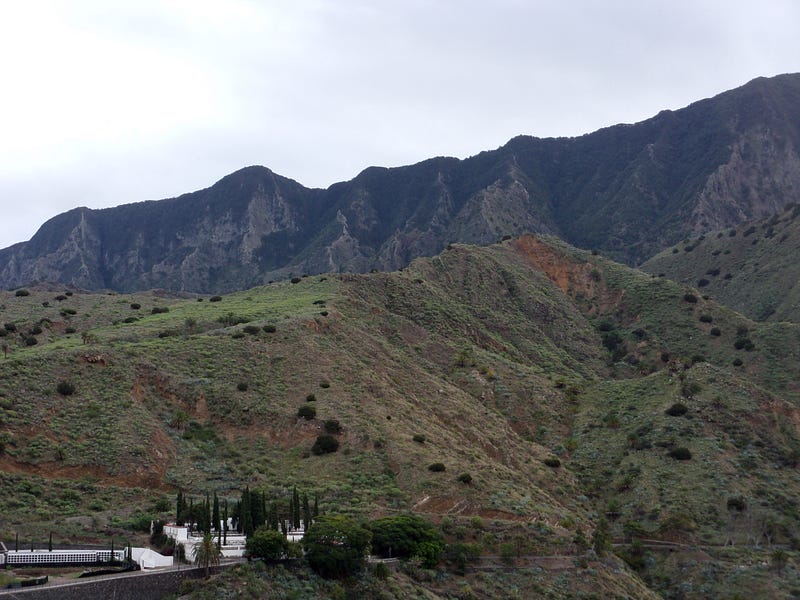
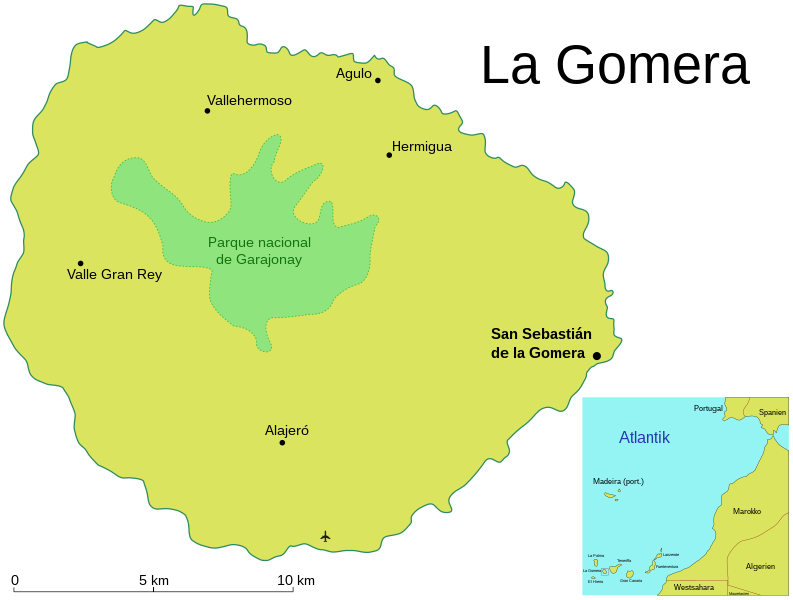
La Gomera is just south of Tenerife and is almost round, with a diameter of about 22 kilometers (14 miles). Its area is 370.03 square kilometers (142.87 square miles). The last volcanic eruption in La Gomera was around 2 million years ago. Its steepness is caused by erosion.
The early inhabitants remained largely isolated, presumably by choice, as they must have sailed there. The evidence so far supports them being North African Amazigh-Berbers who left Africa from Morocco, Mauritania, or the Mediterranean. There is a theory that the name “Gomera” comes from “Ghomara,” a tribe from the Rif region of Morocco.
The earliest inhabitants arrived around 3,000 years ago, likely in several waves. The Phoenicians, who founded Carthage, regularly sailed into the Atlantic so that these settlers may have heard of the islands from them.
Archaeology is relatively new to La Gomera, as it had few modern roads until the 1980s, and the terrain is exceptionally steep for excavating. In recent excavations, a few items that originated in Tenerife have been found, including a small obsidian blade.
The Gomeros had no metals but used basalt and rock from taparuchas (volcanic dykes) for utensils and tool-making, along with bone, horn, shell, and wood. With these tools, they prepared food, cured skins, and sometimes fought. Wood was used to make combs, sticks, and spears.
They had no potter’s wheels but made simple pottery with local clay. Clothes were made from skins and vegetable fibers, dyed red using the tajinaste plant and blue using the now-extinct hierba pastel.
La Gomera is a great place to live, and the early inhabitants brought goats, sheep, and some pigs. They fished and collected wild barley (which they later farmed), edible fruits, roots, and bulbs. There are concheros or piles of shells, which suggest feasting on shellfish and collecting shells for later decorative use.
There was water in pools, streams, and springs; their legendary king, Hupalupa, made his home in Valle Gran Rey, where there was a good supply. The Gomeros greatly respected Hupalupa. Even now, he is described as a “wise man.”
Hollow depressions in rock, found at summit ridges and edges of slopes and ravines, have been used to channel water.
The Gomeros made themselves at home.
Garajonay and other sacred sites
One well-known legend is the story of Gara and Jonay, who loved each other despite their families’ disapproval. This Canarian Romeo and Juliet left Tenerife and moved to La Gomera, where they committed suicide. Exactly why isn’t clear; their families may have found them.
They are commemorated in the name of Garajonay National Park, in the island's center. From the park, huge volcanic ridges are separated by deep ravines that fan out towards the coast. Garajonay is humid, with lush vegetation, and includes the highest point, of 1.487 meters (4,878.6 feet).
El Alto de Garajonay was one of the Gomeros’ sacred sites, with sacrificial stones where they burned offerings and sacrificed goats and sheep to their principal deity, Orahan.
There were also family shrines and grabados rupestres — engraved stones. What they signified remains unknown, though such written signs probably had several purposes.
Another site with evidence of ceremonial use is La Fortaleza, with proof of vertical stones and parts of walls. It seems to have been an actual fortress during some of its time:
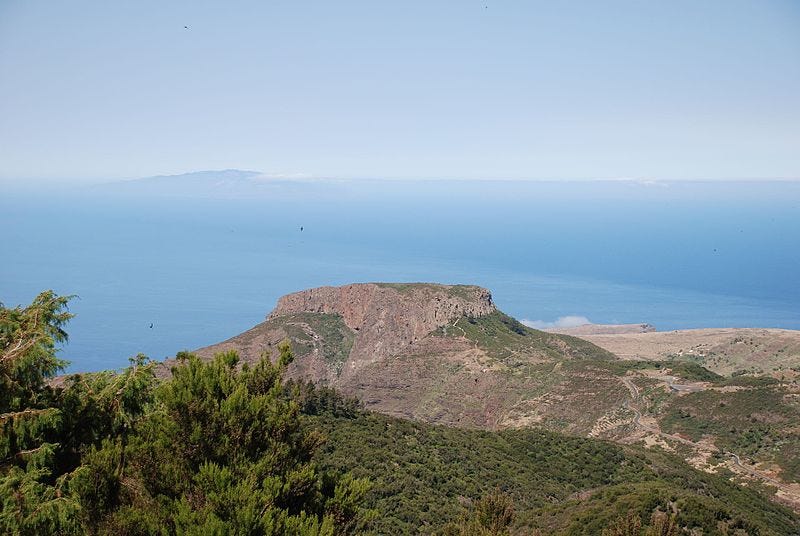
These sites are in high places and may have been used by the community or the “wise people” who allegedly interpreted divine signs and knew the future. They also believed in Yrguanes, part man and part giant goat, and lit fires to keep these large, hairy monsters away.
The Gomeros saw death as a step into another world. Burials were in caves, which were hard to access, and were used repeatedly, moving older bones to the back to accommodate the next. Many burials were found in the fetal position, some with weapons or animals.
Spanish arrival in La Gomera
When the Spanish arrived in La Gomera, they found four clans living on the island: Mulagua, Hipala, Agana, and Orone. Each clan chief was said to be descended from Hupalupa.
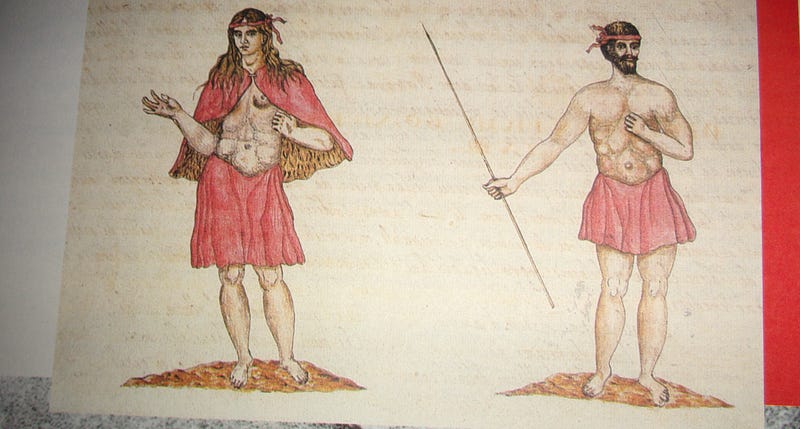
The people were small to medium height, athletic and skilled at aiming stones and darts. Torriani, who drew the picture above, described them in 1594 as strong and agile, great warriors, lovers of solitude, and sad.
Archaeologists have found evidence of fractures, dental abscesses, tumors, congenital malformations, and occasionally osteoporosis.
They lived in small villages, in caves or stone huts. Their society was strongly based on the family and was matrilineal — when a man died, his property was inherited by his sisters’ sons, not his own.
Their society was hierarchical, with nobles and vassals. Access to resources was limited by social status, sex, and age. Boys gained warrior status at age 15. It was customary for men to share their wives with guests and forbidden them to marry within the clan.
The Perazas come to La Gomera
Hernán Peraza the Elder gained Fuerteventura as a dowry when he married Inez de las Casas. Peraza traded his estate in Huévar with Inez’s relative, Guillén de las Casas, for lordships in the Canary Islands.
People living on the islands were, of course, kept from being consulted.
Peraza moved to the islands in 1447, looking for slaves and anything else of value. The Benahoares (natives of La Palma island) defeated him, killing his son, Guillén Peraza, making his daughter Inez his only heir. He returned to La Gomera.
Having insufficient troops to conquer the island, Hernán Peraza the Elder accepted the Gomeran system of pacts. The Guadehum Pact was agreed by drinking milk from the same clay vessel, which united his family with the Hipala clan.
Hupalupa organized this.
Mulagua and Agana allied with the Portuguese against him, attacking in 1450 . So he built a strong defensive tower in San Sebastián, La Torre del Conde.
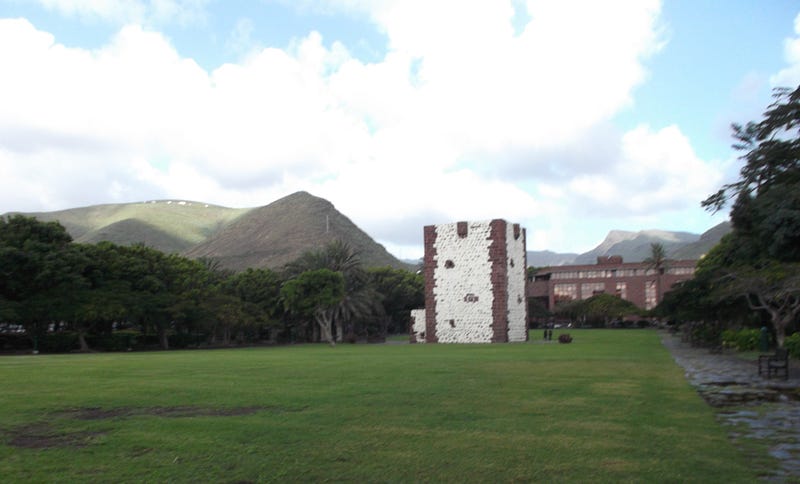
His grandson, Hernán Peraza the Younger, was born to his daughter Inez and her husband Diego García de Herrera in 1450. From 1477, he was governor of La Gomera on behalf of his parents.
Hernán Peraza the Younger
In 1482, he married Beatriz de Bobadilla, and in 1483, they returned to La Gomera. In 1484, they were besieged in the Torre del Conde by rebels, who resented Peraza’s cruelty to his Aboriginal family. Those involved were either killed or sold as slaves. As soon as this was over, they continued their ill-treatment of the Gomeros.
The Guadehum Pact made a Hipala noblewoman, Yballa, Peraza’s “blood sister.” In 1488, when Peraza began an affair with her, this was considered incestuous. The clan’s council, with Hupalupa, agreed to take him prisoner.
Before they could, the Warrior Hautacuperche, who was Yballa’s cousin, executed him with a lance at the place now known as “Degollada de Peraza.” Hupalupa died later the same year, at a great age.
Sixteenth-century texts about Peraza’s death contain the first reference to the whistling language still used in La Gomera (see below).
Hautacuperche led a further rebellion, and Peraza’s widow had to get help from the Governor of Gran Canaria, Pedro de Vera. In 1489, de Vera returned with 200 soldiers who finally conquered La Gomera. He executed many warriors of Hipala, Mulagua, and Orone clans, and sold the women and children as slaves.
Beatriz was a notorious slave-trader, and as promiscuous as her husband; Queen Isabella called her “The Huntress,” because one of her lovers was King Ferdinand. She also allegedly entertained Columbus in the Torre del Conde.
The present-day
Modern genetic studies have revealed that native Gomeros still carry the highest percentage of U6b1a lineage of all the islands. This lineage is that of the original Berbers. So they haven’t completely disappeared.
Although their spoken language (a variant of Tamazight-Berber) is no longer spoken, a form of their whistling language silbo gomero is still used. (The video is in Spanish, but YouTube allows translation.)
Conclusion
La Gomera is one of the islands that fought against the Spanish Empire for a long time. In all, over 200 “rebels” were killed fighting the Spanish Empire in La Gomera, and many more were enslaved. From an estimated population of around 2,000, some 10% actively resisted Spanish rule for nearly a century.
Spain wanted the Canary Islands mainly as a helpful embarkation point to access their American colonies, but they also liked living here. Columbus had a house in San Sebastián, but the “Casa Columbus” which is there now is more modern.
Here in La Gomera, we are still finding out about the people who lived here before the Spanish came.
Sources
- Tras las Huellas de los Aborígenes, Harald Braem, 2010, Editorial Verena Zech, Tenerife.
- Guide to the Archaeologial Museum of La Gamera, San Sebastian, 2005, Tenerife.
- https://www.researchgate.net/figure/Sketch-of-the-area-of-Ptolemys-map-that-refers-to-the-Canary-Islands-extracted-from_fig3_332424889
- https://www3.gobiernodecanarias.org/medusa/wiki/index.php?title=Torre_del_Conde


