
#TalkThree 16: Concepts, Themes, and Culture
A short note about the #newKPI discourse
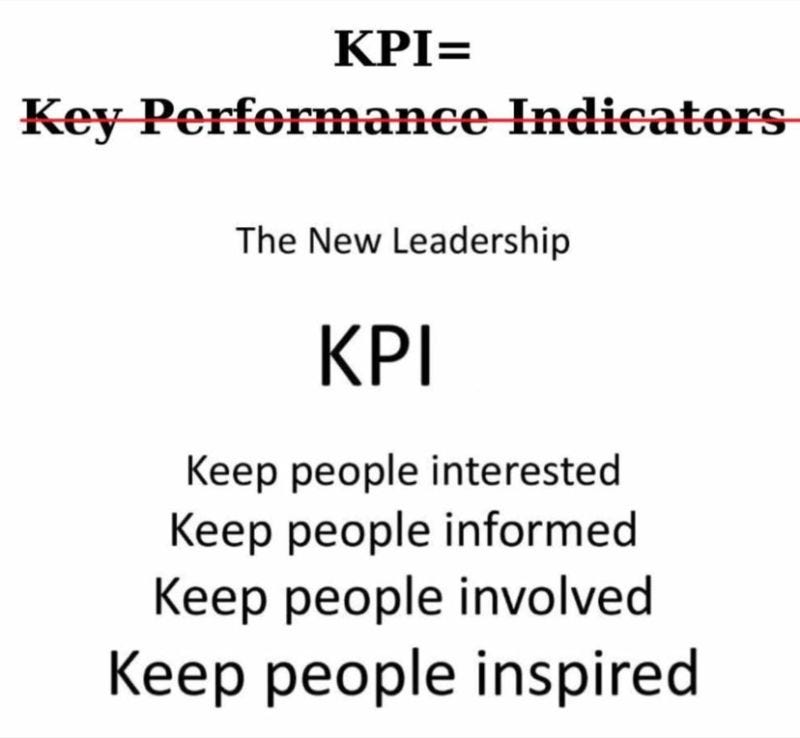
A friend of mine sent the above picture to me and asked for my opinion, especially from the perspective of Thems of Practice.
Wow! This is an interesting case because it is related to my projects. In fact, it is better to use the Concept Dynamics framework for understanding this case.
This post will use discuss Concept Dynamics, Themes of Practice, and Culture.
The #NewKPI Post
The above new KPI picture is quoted from a Linkedin post which is published by Kaushik Das.
Today, sustainable business models are not only about bringing newer technology and transitioning from a platform to pay-per-use model, it’s tilting more towards having empowered people who are future ready; with a resilient mindset to create great experiences for their customers.
Moving ahead, businesses are expected to be leaner and driven by technology with purpose. Therefore, how well you manage talent to drive your business models will define your market leadership. And and effective performance management system plays a pivotal role in shaping the culture- emcompassing the leadership narratives. Here are the key leadership KPIs if rightly practised- collectively has the power to influence and inspire multiple generations at work.
In all, organisations that proactively rethink and re-evaluate the leadership KPIs and put those into practice may succeed in building and retaining talent- consequently driving market leadership in any business.
So what’re your KPIs(Key People Indicators) and are you measuring those at regular intervals?
What’s KPI? In the field of management, KPI stands for Key Performance Indicator. According to Wikipedia:
A performance indicator or key performance indicator (KPI) is a type of performance measurement. KPIs evaluate the success of an organization or of a particular activity (such as projects, programs, products and other initiatives) in which it engages. KPIs provides a focus for strategic and operational improvement, create an analytical basis for decision making and help focus attention on what matters most.
…A very common way to choose KPIs is to apply a management framework such as the balanced scorecard.
An emerging alternative to KPI is called OKR which stands for Objectives and Key Results.
“Themes of Practice” and “Culture”
Last week some friends discussed the notion of “Themes of Practice” with me. They wanted to know the relationship between “Themes of Practice” and “Culture”.
This is a challenge for me.
I consider Themes of Practice as a process type of concept, not a substance type of concept. Thus, it is not a new category of themes, but a transformational process between individual life themes and collective culture themes. It refers to both concept and action. It connects mind and practice. It indicates the transformation of both person and society.
Does Culture only mean Culture Themes?
To be honest, I didn’t give a definition of Culture. I only considered it as a background.
The uniqueness of Themes of Practice is connecting “practice” and “theme”.
I realized that there is a difference between “Themes of Practice” and “Culture”.
Language is part of Culture, but not “Themes of Practice”.
Yesterday I made the diagram below and sent it to my friends.
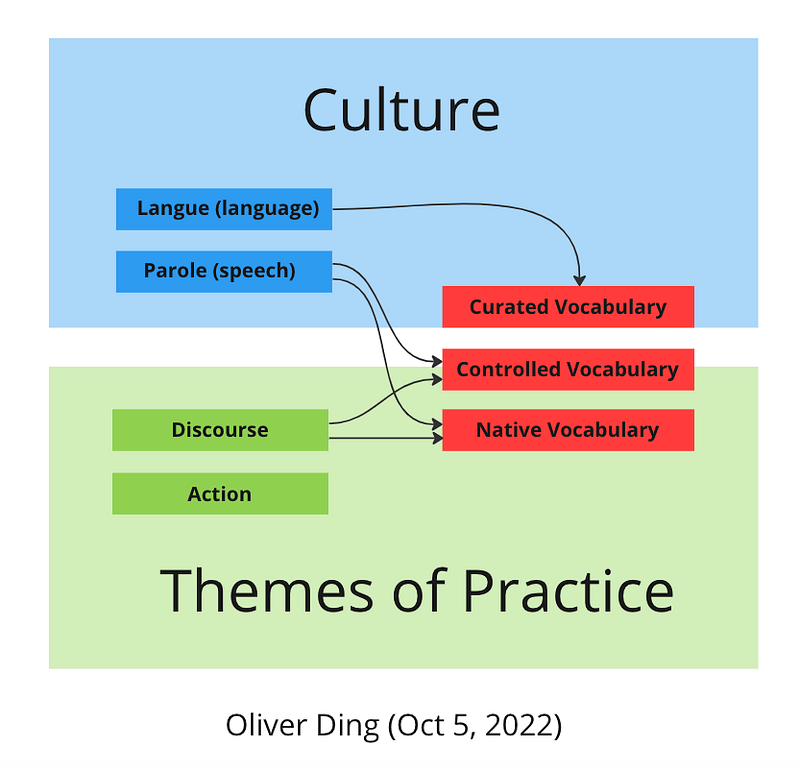
Both “Themes of Practice” and “Culture” share “Controlled Vocabulary” and “Native Vocabulary”, but “Langue (language)” only belongs to “Culture”.
Langue and parole is a theoretical linguistic dichotomy distinguished by Ferdinand de Saussure in his Course in General Linguistics.
Langue refers to the abstract system of language while parole means concrete speech.
I also developed a typology of Vocabulary to discuss the complexity of these entities.
There are some themes behind “Action”, but “Action” does directly refer to Vocabulary. Once you use Vocabulary, you start “Discourse”.
Parole (speech) and Discourse can be understood as the same thing. Both refer to Native Vocabulary and Controlled Vocabulary.
Langue (language) only refers to Curated Vocabulary.
This is the newest version of the “Themes of Practice” approach. It offers a solution to explain the relationship between Culture, Themes of Practice, and Language.
Let’s apply the new model to discuss the #newKPI case.
Kaushik Das’ post and the above picture are Discourse which is a specific type of action because it relies on speaking or writing about a topic. This is a common social practice. Discourse Studies is an approach to the analysis of written, vocal, or sign language use, or any significant semiotic event. You can find a peer-reviewed journal here.
The original KPI is a Controlled Vocabulary because it was defined by the field of Key Performance Indicators and it refers to real practice around the concept.
The new KPI is a Native Vocabulary because it refers to a rough interpretation of three letters: K, P, and I.
There are many ways to understand these three letters. For example, you can find some examples on Wikipedia.
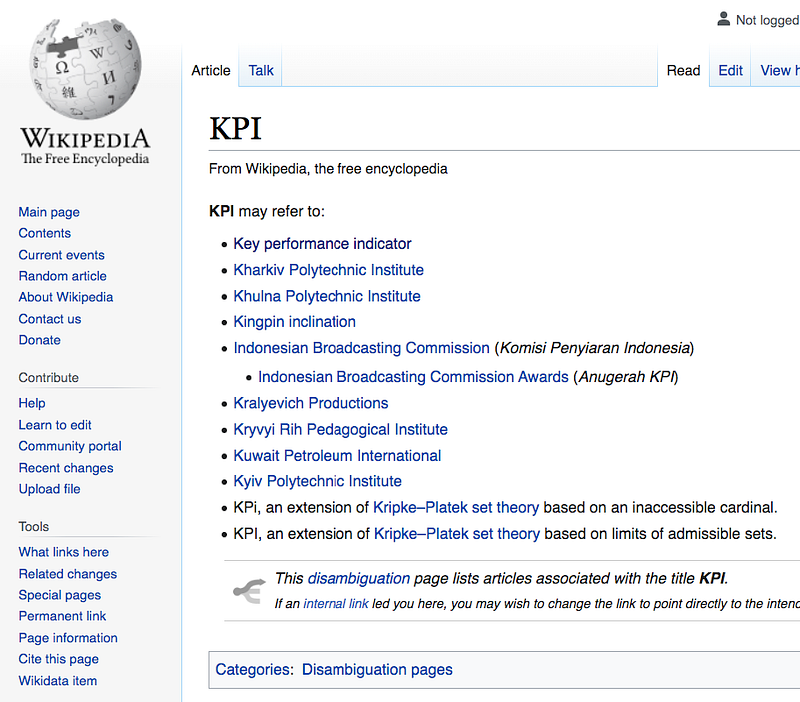
Wikipedia uses “Disambiguation” to resolve conflicts in article titles that occur when a single term can be associated with more than one topic.
If the new KPI’s definition is accepted by many people, we will see a new item on the above Wikipedia page.
However, Wikipedia doesn’t represent the whole landscape of human culture. The #newKPI Discourse belongs to a category of daily discourse which is a significant part of human culture.
Concept Dynamics
Now let’s use the Concept Dynamics framework to discuss this case.
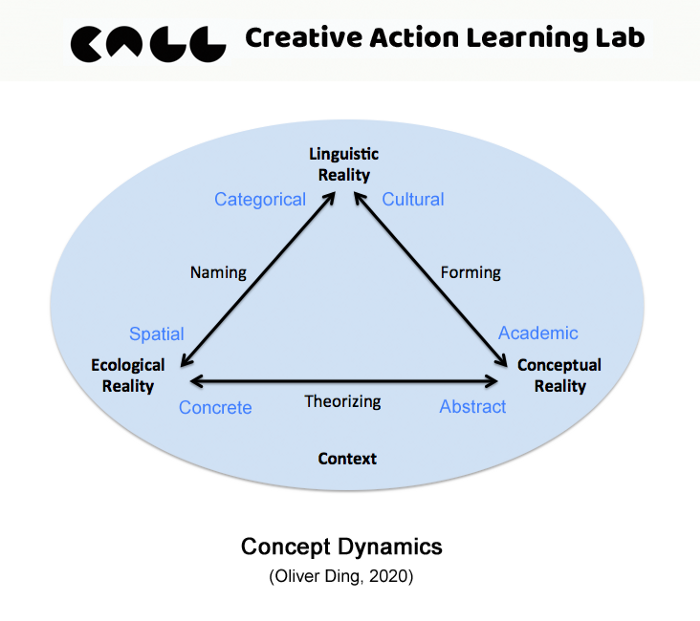
The Concept Dynamics framework suggests four views on a concept:
- Ecological Reality: real experience with a concept
- Conceptual Reality: idea about a concept
- Linguistic Reality: name of a concept or ordinary language
- Context: what’s the background of the situation?
You can find more details in Knowledge Discovery: The Concept Dynamics Framework and Against Conceptual Heterogeneity: A Case Study of Academic Knowledge Curation.
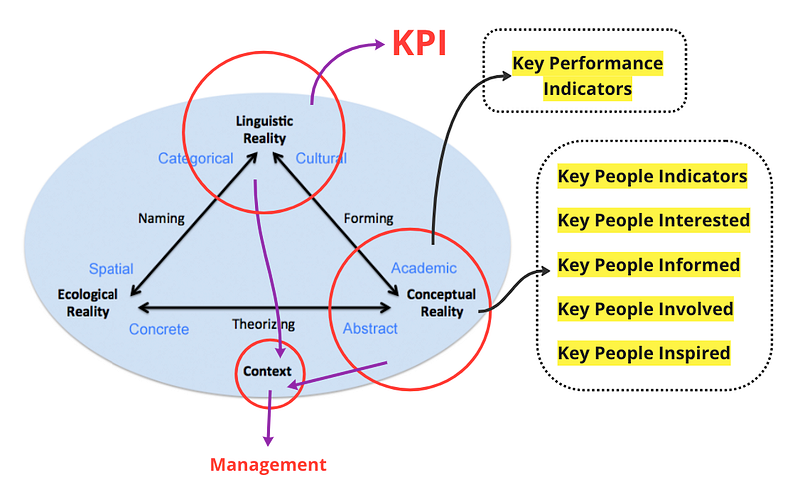
It’s clear that the new KPI case is about the re-conceptualization of a concept.
The original concept of KPI is a fit between three things:
- Linguistic Reality: KPI
- Conceptual Reality: Kew Performance Indicators, a type of performance measurement.
- Ecological Reality: real practice such as the balanced scorecard.
The new KPI keeps using the original name with a new conceptual reality. It made a good fit between Linguistic Reality and Conceptual Reality.
However, it still needs to achieve the Ecological Reality — Conceptual Reality fit in order to establish a new concept. For the new KPI, what’s its version of “balanced scorecard”?
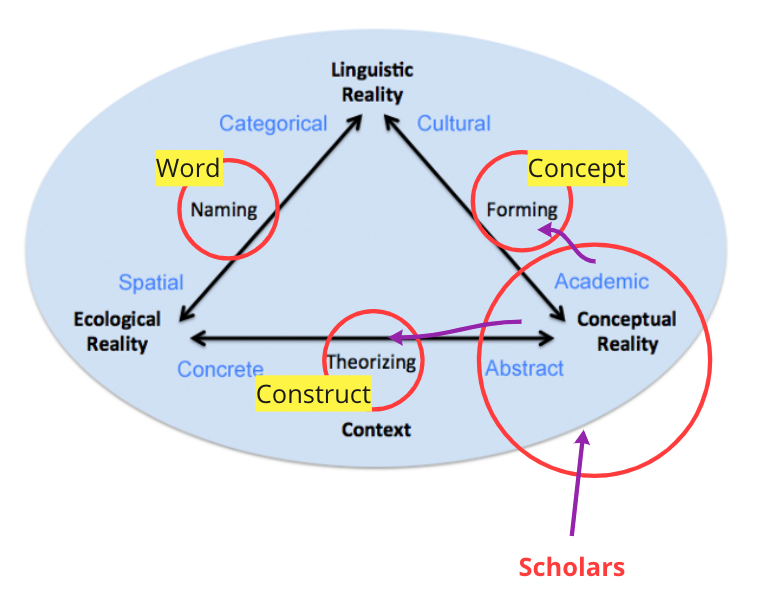
In Against Conceptual Heterogeneity: A Case Study of Academic Knowledge Curation, I mentioned three types of activities:
- Theorizing: Construct
- Forming: Concept
- Naming: Word
The Theorizing Activity is about connecting Ecological Reality and Conceptual Reality. The outcome is a Construct that can define a theoretical concept for academic research.
The Forming Activity is about connecting Conceptual Reality and Linguistic Reality. If you have an idea about a conceptual creation, how do you present it in texts, diagrams, or other forms? For the present discussion, the term Concept is more about defining a general theme for a field of academic research.
The Naming Activity refers to normal life communicative practice which is about connecting Ecological Reality and Linguistic Reality.
For non-academic normal discussion, we can also use “Theme/Concept” to replace “Concept/Construct”.
- Theorizing: Concept
- Forming: Theme
- Naming: Word
If we only work on the Forming activity, then we stay around a theme. This is about discourse.
Discourse is important to our social life. It can inspire some people to take real action and make a new ecological reality. For example, OKRs.


