
Food
Koshari — Egypt’s National Dish
How we discovered this delicacy by pure chance
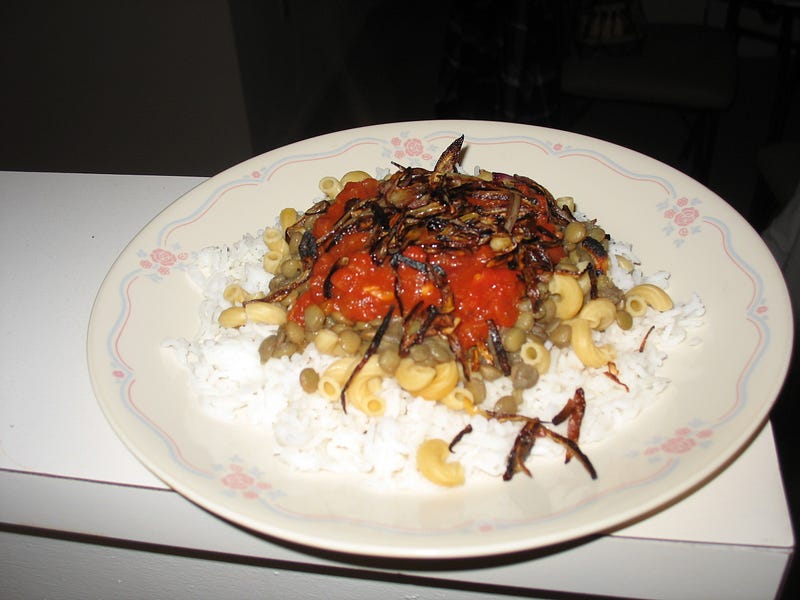
If everything had gone to plan, we would never have tasted koshari. Thankfully they didn’t and our lives are richer for it.
It was our first day in Cairo and it had been hectic. We had landed in the morning and had immediately embarked on the Day 1 itinerary. (Those were the days when we traveled to check items off a list. I don’t miss those days). Between the Step Pyramid in Saqqara, the Memphis museum and the Giza pyramids, we covered a good amount of ground and ended up skipping lunch. Or rather didn’t feel like lunching when our guide, Yusuf hinted at it. So on we went, till after we got our clicks with the Sphinx and the first hunger pangs bubbled up.
It was past 3 in the afternoon then. We asked Yusuf to recommend a place to eat. Something light, something not too fussy or elaborate. With vegetarian options. He looked around and declared there wasn’t anything that would work out. I asked him about a small joint across the road. He grimaced and said something about it not being right. Or good. In hindsight, I realize he thought the place was not good enough to take tourists/visitors to. Well, that was exactly the kind of place we wanted to go to. So we pushed a little and he reluctantly gave in.
The restaurant ticked all the boxes to qualify as a hole-in-the-wall. There were about 6 wooden tables, three to each side, with chairs and the odd bench strewn about. Each table had the familiar red plastic squeezy (the global indicator for ketchup) and that thin hot sauce bottle so common in restaurants across the region. There was another bottle filled with a colorless liquid, which we would come to know better shortly. At the end of the room was a counter and beyond it, in the darkness, presumably the kitchen. The lunch crowd was mostly gone by the time we entered, only one family occupying the middle table on the right. We took the one farthest from the door on the left and asked Yusuf what we should have here. He said the place mostly served one thing. And that is when I heard the word koshari. Since then I have seen it spelt in different ways. Koshary. Kushari. For me it is comfort food, spelt with a capital K.
Within a few minutes of placing our orders, the lone server brought out two heaping plates of food.
Koshari is an Egyptian staple. It is simple, hearty and loaded with goodness. It is people’s food. Some call it Egypt’s national dish. It has a long history and the name itself has roots in Ancient Egyptian. We didn’t know any of this yet. All we knew was that we were hungry and in front of us was deliverance. And how it delivered!
Koshari is a loaded mix of rice, macaroni, chickpeas, vermicelli and lentils, topped with a bright (in color and flavor) tomato sauce. Topped further with curly, crispy onions. It looked humble but was packed with flavor. The tomato sauce was tangy and sweet and slightly spicy. The onions were well-caramelized and crunchy. We dug into it, every mouthful a riot of textures and flavors.
From the corner of my eye, I saw the family across the aisle use the bottle filled with the clear liquid. Trusting the wisdom of locals, I did the same. The bottle lid had a few holes punched into it, allowing us to sprinkle the liquid onto our plates. It was vinegary with a strong cumin flavor and rounded out the tomato sauce perfectly. It also allowed the sauce to flow more freely and season the koshari base more uniformly. The server brought us a few more of the delicious fried onions. Life was good, as we tip-toed deeper into carb heaven with every spoonful.
They say that when you are hungry anything tastes nice. But that doesn’t do justice to koshari. Since that afternoon I have had it a few more times, in places as varied from New Jersey to Dubai. We have also made it ourselves a few times*. And every single time, it has hit the spot.
And to think we might have remained unaware of this delicacy, were it not for serendipity!
*The picture above shows one of our first efforts at recreating this at home. Not pretty, but ah, so comforting.
See this story for a different perspective and more details (plus better pictures!)