
Knud Rasmussen and the Drawings of the Inuit Shaman Anarqaq
Rare cultural insights about Inuit
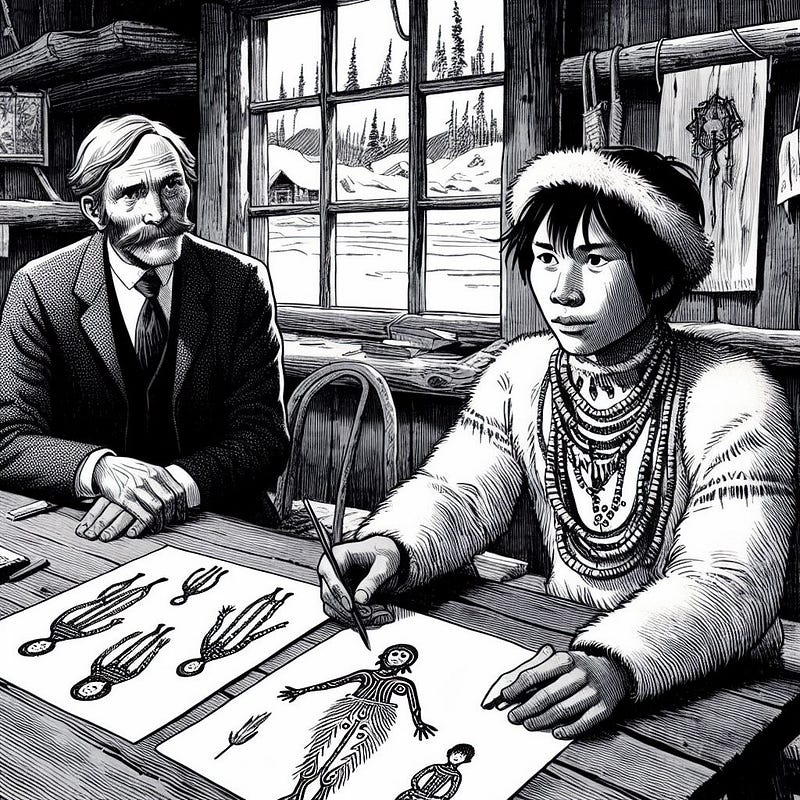
Hidden in a remote corner of the vast National Museum in Copenhagen is a collection of drawings offering a unique gaze into the spiritual and cultural world of the Inuit people. These rare artworks are the fruit of a 1923 collaboration between explorer and anthropologist Knud Rasmussen and the Inuit shaman Anarqaq.
Rasmussen
Rasmussen, the son of a Danish missionary and an Inuit woman, dedicated his life to studying and documenting the fascinating but little-known Arctic culture. During his travels in the extreme north of Canada, Rasmussen was particularly struck by the central role the shamanic tradition played in the daily life of the Inuit. He decided therefore to document this fundamental aspect of their culture through the stories and drawings of Anarqaq, an Inuit shaman.
Rasmussen writes in his book “REPORT OF THE FIFTH THULE EXPEDITION 1921–24 — THE DANISH EXPEDITION TO ARCTIC NORTH AMERICA IN CHARGE OF KNUD RASMUSSEN PhD. VOL. VII. NO. 1 — INTELLECTUAL CULTURE OF THE IGLOOLIK ESKIMOS”, that when discussing the initial stages of the formation of a shaman, it is said after receiving teaching from a more experienced shaman, the young one must continue to train alone in desolate places.
Spirits
In this phase, the helping spirits can abandon him but he must obtain the helping spirits. To do so he must obtain the helping spirits. To do this he must “meet” animal spirits, preferably in the animated state, but can also obtain them through amulets consecrated by the spirits. Shortly after, Rasmussen talks about how some particularly powerful shamans can obtain special admission to the dwelling place of the Moon Spirit for the dead. This can happen through amulets consecrated by a shaman’s prayers.
Anarqaq
As a young man, the shaman Anarqaq had a slight physique, making him less capable than others as a hunter. He was highly strung in temperament and prone to visions. Anarqaq often travelled alone into the interior during hunts. His personality traits included nervousness and a propensity to believe in his visions. He frequently ventured into the hinterlands by himself while others pursued game
When Rasmussen invited Anarqaq to his cabin to discuss his visions in more depth, Anarqaq provided rather confused and inconsistent descriptions, demonstrating rather superficial knowledge of the traditional shamanic imagery. Often, when Rasmussen asked for greater details, Anarqaq seemed in difficulty and resorted to impromptu inventions to mask his ignorance.
Visions
Nevertheless, Rasmussen remained fascinated by the conviction with which the simple Anarqaq recounted his alleged visions and mystical experiences. He therefore decided to encourage Anarqaq to visually represent some of these visions, believing the drawings would be among the first of their kind created by the Inuit. He was convinced that visually capturing the visions could provide novel insights into the complex and nuanced spirituality of the Inuit people.
Initially reluctant, Anarqaq finally agreed to draw some of his spiritual apparitions for Rasmussen, provided however that the drawings remain confidential and not shown to other members of the tribe. Anarqaq feared in fact that his fellow tribesmen, more sceptical, could mock those drawings as fruits of hallucinations.
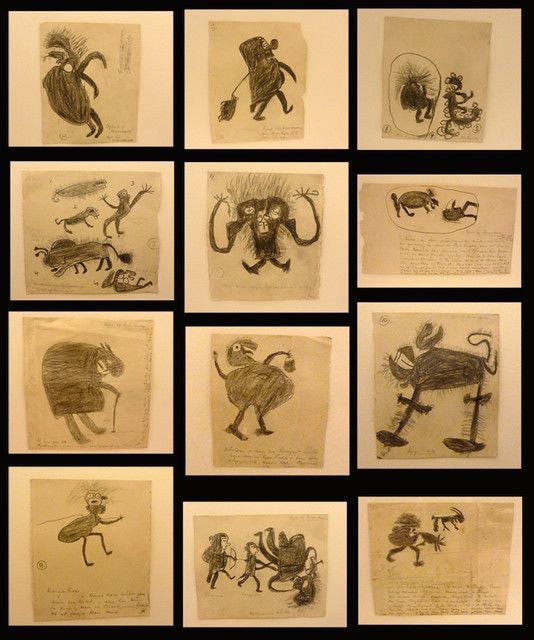
The drawings produced by Anarqaq were rather primitive and naïve, but he seemed to take hours to make them, focusing intensely on trying to transpose onto paper the visions he claimed to have truly experienced during his ecstatic journeys.
Giant-sized beings
Anarqaq drew some of the strange human-shaped but giant-sized beings that he claimed to frequently encounter during his solitary wanderings on the vast Arctic tundra. He also depicted other animal spirits like bears, whales and caribou with anthropomorphic features, according to the typically animistic conception of Inuit spirituality.
Arctic landscape
Anarqaq explained to Rasmussen that his most intense visions occurred when he was completely alone in the vast and desolate Arctic landscape. He also claimed to be able to peer into faraway events in space and time and read the thoughts of others thanks to his mediumistic powers.
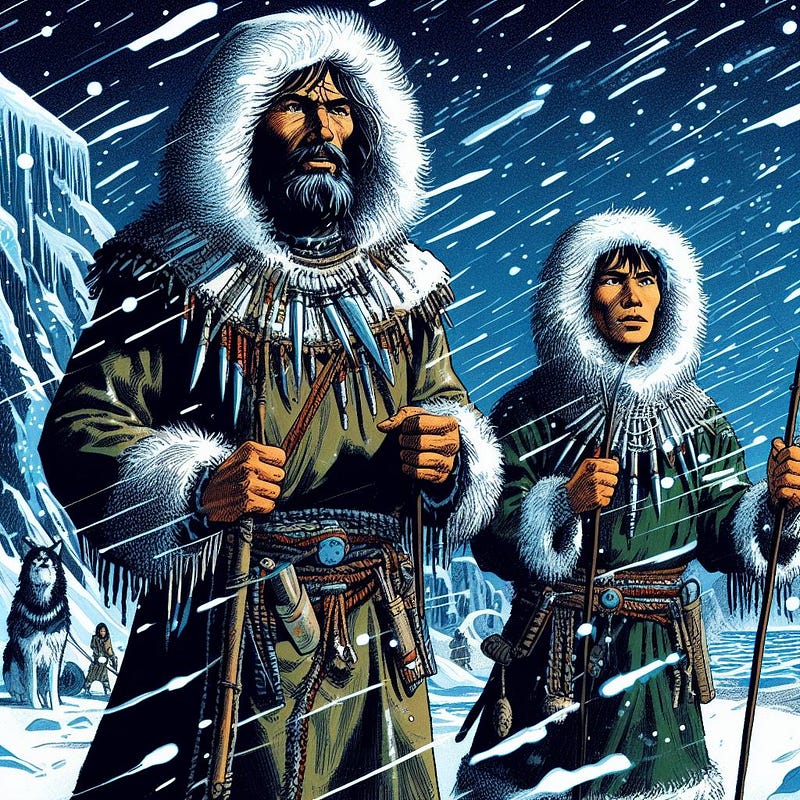
On one occasion during a violent snowstorm, Anarqaq persuaded Rasmussen and other members of the expedition that the storm was the work of the angry spirit of Sedna, the goddess of the sea and animals. He then proposed to placate his wrath through a shamanic apotropaic ritual.
Stories
In addition to the drawings, Rasmussen also collected Anarqaq’s stories regarding other visions and mystical experiences of his. Among these, the account stood out when the shaman said he was abducted by the Moon Spirit during a ritual ceremony and taken to an otherworldly realm.
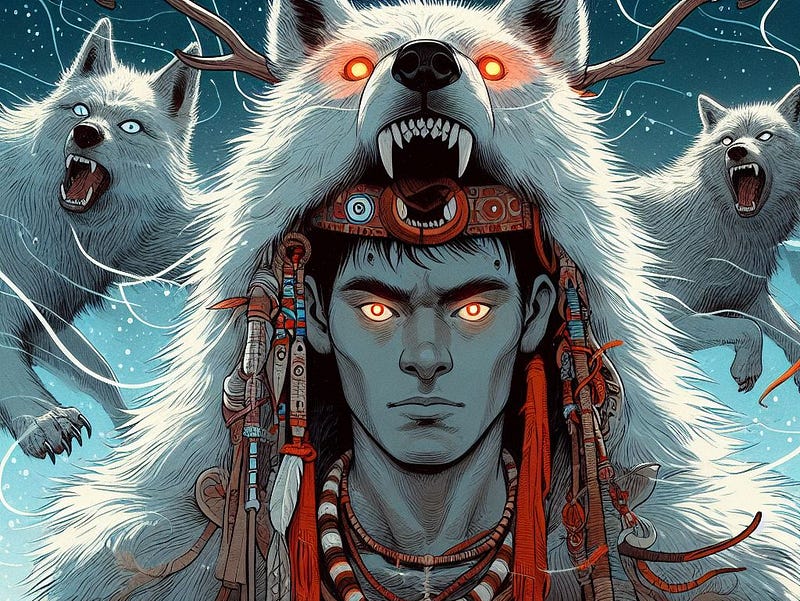
Anarqaq claimed to regularly make contact with various spiritual entities during his ecstatic states: from the powerful Takanakapsaluk, protector of marine animals, to the vengeful spirits of bears, wolves and dogs, which could torment men if not placated with appropriate rituals. Recurring in his visions were also the spirits of Chipewyan natives, a tribe that lived further south of Inuit territory.
Soul
According to Inuit beliefs, every animal possessed a soul that survived physical death. Killing an animal without respecting precise rituals and prohibitions could unleash the vengeful wrath of its spirit. Anarqaq claimed to be able to communicate with these animal souls.
Anarqaq represented an emblematic case of a primitive Inuit shaman: a simple man of limited ability, yet firmly convinced of possessing supernatural powers allowing him access to a spiritual dimension inaccessible to most.
Unique glimpse
Nonetheless, the encounter with Anarqaq allowed Rasmussen to more deeply understand the complex spiritual imaginary permeating Inuit culture, beyond the actual individual capacities of any specific shaman.
His naive drawings and tales offered a unique glimpse into a layered system of beliefs, aimed at mediating the delicate balance between man and nature in an extreme environment.
Today this collection of works constitutes a valuable anthropological and artistic testimony, allowing us a privileged look into the heart of Inuit culture through the eyes of one of its shamans, permitting us better to understand their complex relationship with the surrounding spiritual world.
Check also:
What do you think about my article?
Thanks for reading.
Source:
“REPORT OF THE FIFTH THULE EXPEDITION 1921–24- THE DANISH EXPEDITION TO ARCTIC NORTH AMERICA IN CHARGE OF KNUD RASMUSSEN PhD. VOL. VII. NO. 1 — INTELLECTUAL CULTURE OF THE IGLOOLIK ESKIMOS”