
Know This Before Buying Another Cup of Mediocre Coffee
Always end up buying coffee that doesn’t suit you? Then this article is for you!
Among hundreds of types of coffee, varying in flavors, aromas and additives, there lies a perfect cup of coffee that you love and crave for every time.
But whether it is a grocery store or an unfamiliar coffee shop, you don’t know which type of coffee will serve your needs.
Which country origin should I select?
Should I go for light roast or dark roast?
Should I brew with a french press or with a chemex?
Should I buy from Starbucks or from a cheap brand?
With a little knowledge about how coffee is made, how it is produced and from where we get it, you can make a better decision about your coffee.
What determines the taste of coffee?
There are mainly three things which make the difference:
- How coffee beans are extracted.
- Where they are grown.
- How much they are roasted.
Extraction Process:
Coffee beans are not grown directly on plant. They are extracted from Cherries! But how they are extracted from the fruit makes a huge impact on how the coffee tastes.
There are two primary methods:
- Washed Method (Involves major human activity)
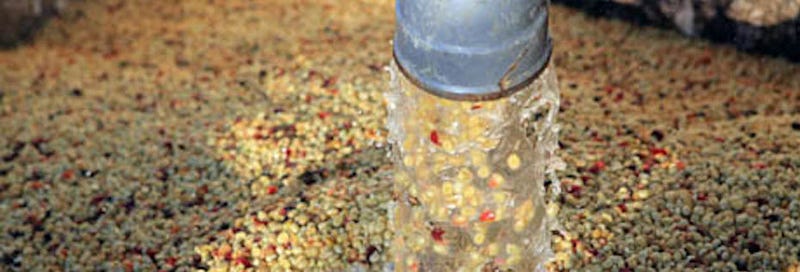
You might have seen the word ‘washed’ or ‘clean’ on the package of coffee beans. This comes from washed method.
In this method, Cherries are heavily washed to remove the pulp from coffee beans. After that, the beans are dried under the sun for 30 to 40 days.
Since there is no involvement of any bacterial process, a washed coffee gives the taste of coffee itself.
If you are drinking a washed coffee, you are having the taste of solely coffee, nothing else. It has the pure intrinsic flavor of coffee beans.
Washed beans give more acidic coffee!
2. Natural Method
The natural coffee is made by simply drying cherry fruits under the sun for 20 to 30 days. Like every fruit, bacteria metabolizes the sugar of the fruit, resulting in decay of it and providing the special taste we feel with this kind of coffee.
If you want a sweeter, less intense and creamier coffee, go for natural one.
Natural coffee is less acidic than Washed coffee
We got the idea of how coffee is processed, but you are still confused with the country names. How Brazilian coffee is different than Indonesian?
Origin of Coffee:
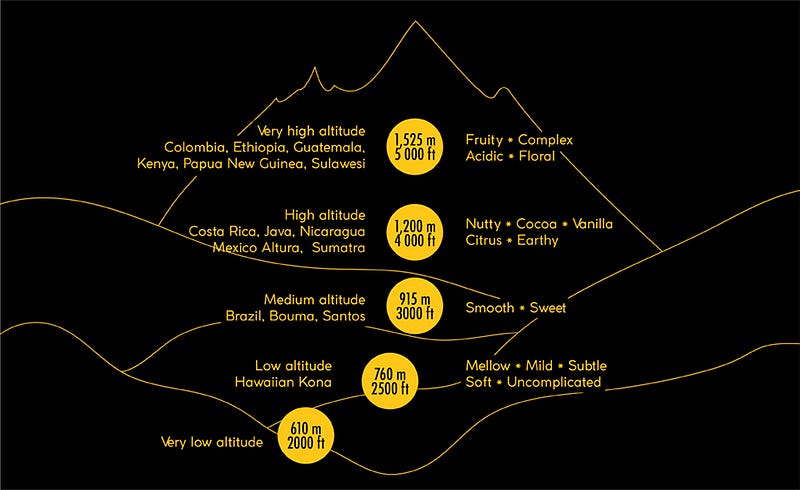
Coffees are grown with different altitudes in different countries, and that affects the taste of your cup. That is why selecting a proper origin is important.
- Coffees grown at low altitude
Starbucks uses coffees from Indonesia, where they are grown on low altitudes. Low altitudes produce higher yields of beans, fulfilling higher demands.
This kind of coffee is softer and can’t tolerate darker roast. When lightly roasted, the flavor profile is often described as “earthy, muddy, grainy, or rubbery.”
2. Coffees grown at higher altitudes
Due to lack of Oxygen at higher altitudes, coffee plants use anaerobic respiration, creating Lactic acid. Before this seems all Greek to you, let me jump to my point.
The Lactic acid imparts special tastes to coffee, Adding the creaminess, sweetness, fruit-like acidity and making the coffee brighter!
Roasting Coffee:
From light to dark roast, coffee beans are given varieties of tastes, color and composition.
We know that coffee is more heated to get darker roasts. What happens during the heating process tells us about how each roast varies in taste from one another.
In the presence of high heat, coffee combines Sugars and Amino acids to introduce new flavors. These new flavors are desirable. It makes coffee caramelized, chocolaty and even makes it almost bitter without being overwhelming.
Dark roast is highly burnt. Thus contains more of these savory flavors.
If you are a fan of having intrinsic coffee taste, then lighter roasts are for you.
Lighter roasts have slightly more amount of Caffeine than Darker ones and this difference doesn’t make much difference ;)
Conclusion
With this knowledge, you can’t make the perfect cup of coffee but you can select your desired pack of coffee from grocery store. How your daily cup will look and taste depends upon other factors such as brewing methods.
That is for another article maybe ;)