King’s Cross Central at 20.
I wrote this at the point we were submitting our extensive and amazing application to commence the development of King’s Cross Central; a 27hectare regenerative project in Central London. The whole team, private and public bodies all cared deeply about getting it right.
Much has been written in recent weeks as we hit the 20-year mark since Argent, the developer, began the journey. This was my reflection on the 6 years of work by everyone to craft, test and discover what the new district would be.
The personal irony is not lost on me, now having left London and sitting, working remotely in the uppermost left corner of England that despite this, I still believe and yearn for the spirit of what moved me at the time.
How can we treat our neighbours ethically by crafting the physical city in such a way that it can be easily used by all of its people — so that not only able-bodied, well-off adults with cars but also children, the elderly, the poor, the blind, the halt, and the lame can have freedom of movement and convenient access to all the good things that cities offer? We can strive for no less if we imagine ourselves to be a just and ethical society. Political and economic freedom in the abstract mean little without any practical freedom of movement or action.
Good urban design enables people to get around safely, efficiently, and in pleasant surroundings, creating value in a fairly direct and obvious way. Nevertheless, good urban design also creates value indirectly by enabling a city’s people to create value and make it available to others through free exchange. At one level, we are concerned with the cities hardware; at another level, we are concerned with the software — with what people do in the city. The most important thing that people do in cities is exchange things — goods, services, and money, but also ideas, beliefs, knowledge, protest and love — with other people.
Exchange depends on proximity. moreover, proximity is the business of cities.
At least it used to be. After the second world war, and increasingly after 1960, urban form fundamentally changed with the rise of the regional shopping mall, the large discount store, the fast-food franchise, the office ark, the motorways, the insular residential housing estate, and the functional segregation brought by land-use zoning — in short, suburbanisation. Proximity and connectedness — which were a matter of course in the compact, intimately scaled city of the past — have been replaced by fragmentation and separation, both in the expanding peripheries and, increasingly, in the decaying and “urban-renewaled” interiors of cities. exchange of goods, knowledge, and ideas is uninhibited. Television, radio, the internet and email now provide artificial proximity, but this is a pale imitation of the real proximity of a glance at the shop window and a visit to the neighbours.
I am not a geographic determinist. An arrangement of urban space that facilitates exchange will not solve all urban ills. Connectedness and proximity are, I believe, necessary conditions for a healthy economy, culture, and community, but they are not the only necessary conditions, and they are certainly not sufficient conditions. Nor do I entertain nostalgic yearnings for the supposed golden age before automobiles, expressways, television and Tesco.
I do, however, entertain a reasonable and practical hope that these and other features of contemporary culture can be integrated into a coherent framework that facilitates many kinds of exchange and preserves not just the sense of community but the fact of it. That is the guiding principle behind a new urban terrain.
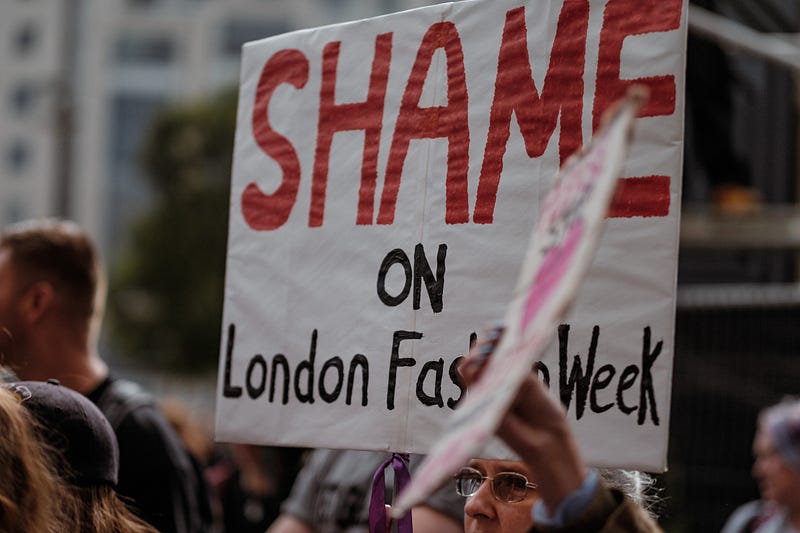
There is a lot at stake in this project. The intense creativity and democratisation that occurred in cities from the middle ages through the late industrial period were, I believe, associated with the physicality of those cities — not just with the fact of concentration but with the how of it, with certain characteristics of scale and density and the way the parts interrelated. The compact city of the old style is now valued, where it survives, mainly for its “historic charm.” but it also was and is a highly efficient technology for fostering innovation, supporting diversity, and extending freedom while at the same time maintaining a stable base of historical consciousness, tradition, and social cohesion. We shouldn’t dismiss the undeniable difficulties, dangers and injustices of life in the pre-modern city, but it seems to me that there were aspects of the manner by which historic cities were assembled that brought people, things, and ideas together in a self-sustaining, continually spiralling cycle of exchanges that created value.
In its essence, the city is a technology and a medium of communication. In that case, have not advances in electronic communications made the city obsolete? Is not the old city of streets and stores and theatres and offices being supplanted by the new city of fibre-optic cable and dispersed workstations?
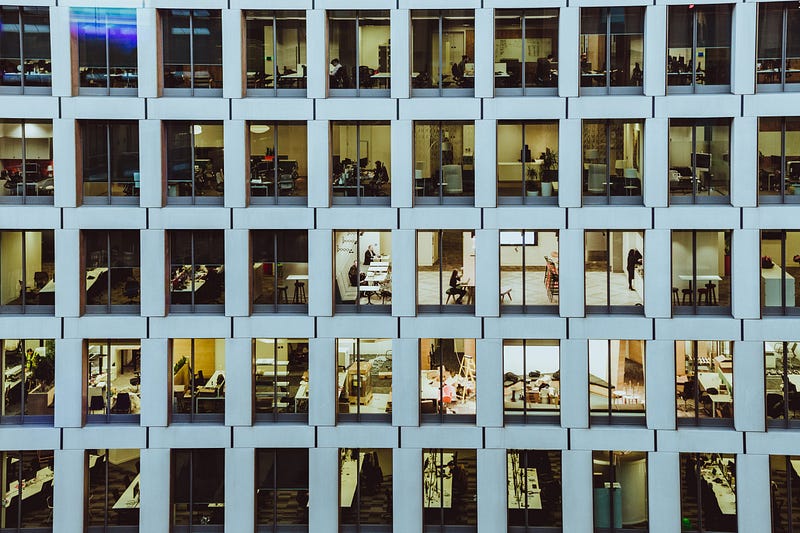
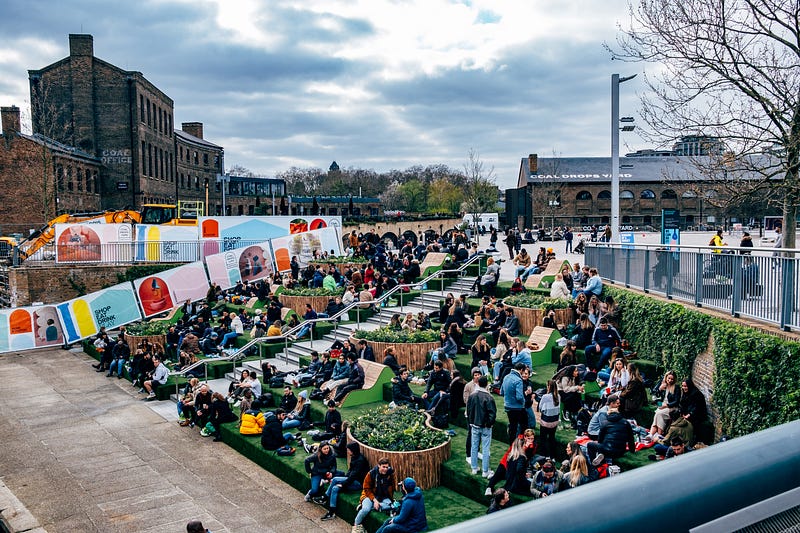
I do not believe that the communitarian city of personal contact is obsolete, either economically or socially. It used to be predicted that thirty or forty channels of television would keep people glued constantly to the television. However, since broadband and satellite television have become more widespread, the use of parks, theatres, and recreation facilities has increased, not decreased, even in those inner-city neighbourhoods where the population has declined. People still want to get out of the house and enjoy community life in the company of their neighbours. It seems that the more we appreciate what electronics cannot give us, corporations whose idea-workers can now do their jobs in private offices or private homes, connected to their colleagues only by computer networks and telephones, have learned the importance of architectural features that encourage, even require, serendipitous social contact at strategically placed water-coolers and lounges, which is where much real work gets done—because it is “unplugged” interaction in multiple senses of the word.
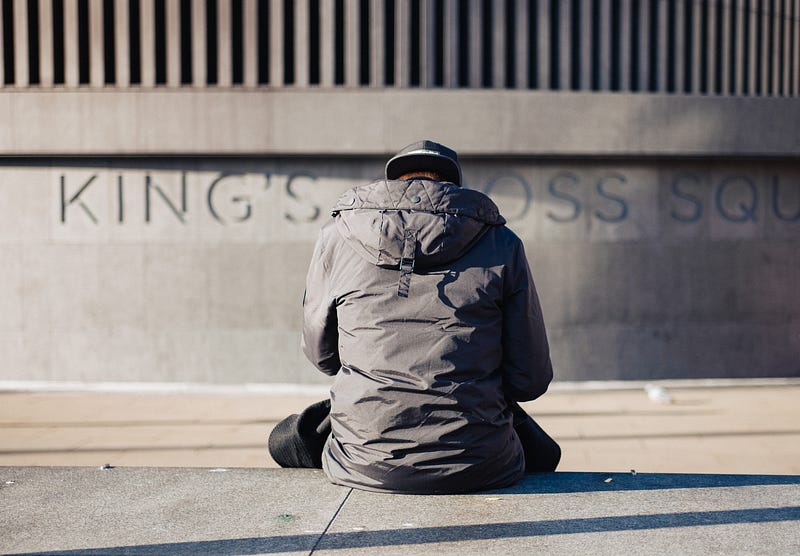
Well-made cities and city neighbourhoods have certain essential capabilities that lie beyond the scope of other communications media. The advertising slogan notwithstanding, a telephone is useless if you want to reach out and touch someone, or something. Face-to-face (or face-to-object) contact is qualitatively different — indeed, even quantitatively different, measured in terms of the bits of information exchanged — from any existing or foreseeable form of electronic communication, including virtual reality. In addition, it is face-to-face contact that the city as a communications technology is designed to achieve. neither a fulfilling personal life nor an advancing economic life can be detached from healthy community life. There is a value-creating energy in the well-formed city that cannot be duplicated by other technologies, however powerful and brilliant and liberating they may be. The task before us is to regain and revivify city-ness so that we may make full use of this creative power.