
King-Sized Pop: The Album That Catapulted Adam and the Ants to Stardom
In 1980 ‘Antmania’ rebuked the grayness of punk rock with a new glossy sound and vibrant fashion sense
By David Chiu
“Don’t tread on an ant, he’s done nothing to you / And there might come a day when he’s treading on you” — Adam and the Ants, “Antmusic”
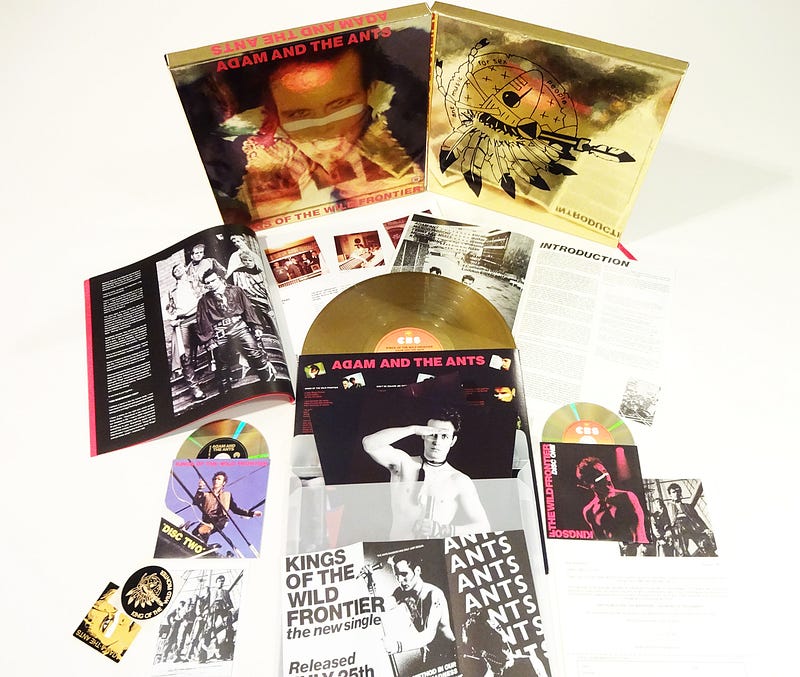
The new deluxe reissue of British new wave firestarter Adam and the Ants’ classic 1980 record Kings of the Wild Frontier is a very comprehensive package, to say the least. Not only does it feature the original album both on CD and gold vinyl (remastered by Adam Ant), but the set also contains: a 1981 live concert recording from Chicago; bonus tracks, including B-sides and demos; a DVD of promo videos—a mini-documentary of the Ants’ tour of America, and a 1981 concert from Tokyo; a thick-sized booklet written by Ant; and replica memorabilia (i.e. poster, stickers, glossy photos, fan club letter, etc.). Oh… and they’re all housed in a gold box.
Such lavish treatment for just one album may seem way over the top, but lavish just barely scratches the surface in summing up the unique career of Adam Ant. Even without all the bells and whistles that this new box set offers, Kings of the Wild Frontier is significant in any survey of British pop music history. Both the album and the band ushered in the era of “new pop” and “new romanticism”—when a fresh crop of photogenic, style-conscious British pop acts emerged after punk and post-punk. Kings of the Wild Frontier was a huge hit both commercially and critically in the U.K., launching the band to pop-star status and creating “Antmania” on both sides of the Atlantic.
More than just a record, Kings of the Wild Frontier was also a bold statement of intent for Ant, who had a justifiable chip on his shoulder. Prior to that album’s recording, Ant was at a crossroads following his band’s 1979 debut record, Dirk Wears White Sox, a conventional-sounding post-punk record made with an early version of the Ants. The often-told story is that Ant employed Sex Pistols manger Malcolm McLaren to help advance the band’s career; instead, the other members of the Ants — Leigh Gorman, Dave Barbarossa and Matthew Ashman — mutinied and went over to McLaren’s latest project, Bow Wow Wow, in the early part of 1980. But rather than throwing in the towel, Ant reinvented himself, first by hiring some new Ants: guitarist and key songwriting collaborator Marco Pirroni; bassist Kevin Mooney; and twin drummers Terry Lee Miall and Chris “Merrick” Hughes.
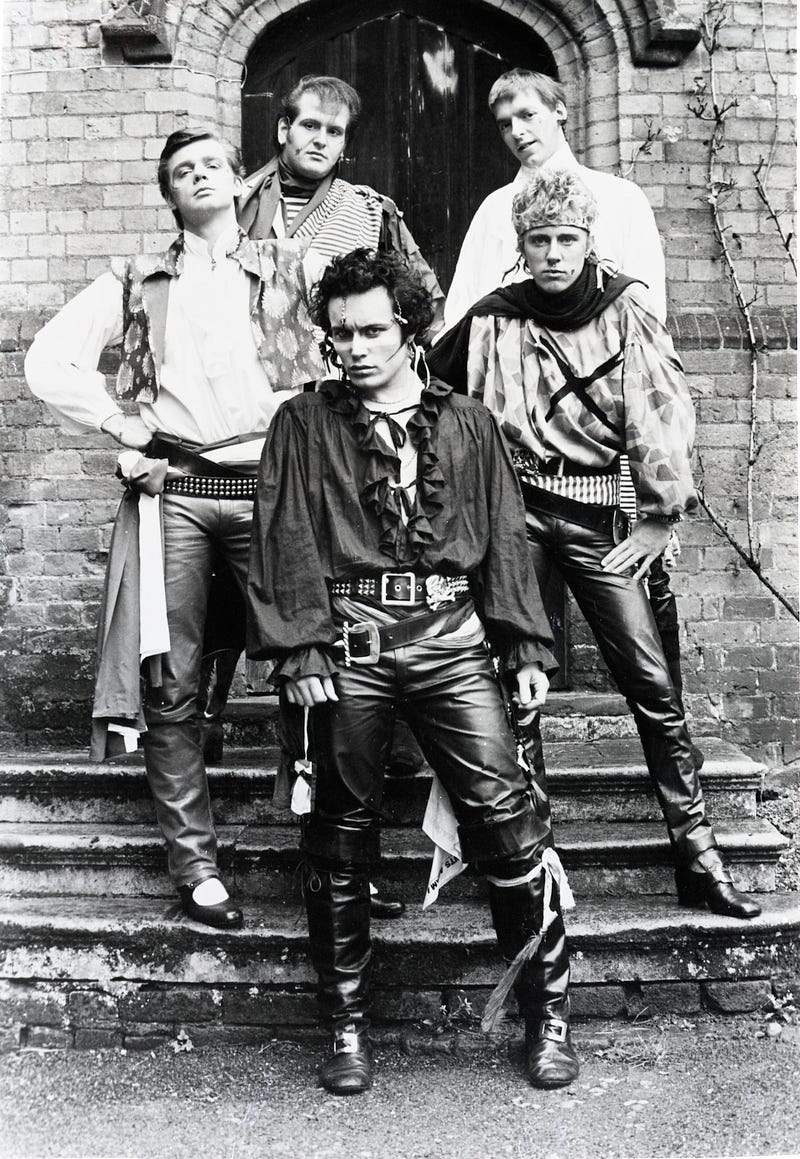
Stylistically, Ant’s music did a 180-turn from the somewhat arty post-punk of Dirk Wears White Sox to a shiny, energetic brand of pop that incorporated the Burundi beat (one of the legacies that McLaren left with Ant). Equally as important, Ant underwent a key makeover as a swashbuckling hero whose wardrobe appropriated the look of the 18th-century Hussar light cavalry man and an Apache warrior. (Ant recently told The Guardian’s Alexis Petridis: “Putting the Apache war stripe across my nose was a declaration of arms against the music industry, which I felt had ignored me and treated me very unfairly”).
Both the new music and the image makeover was a reaction to the grayness of British punk rock at the dawn of the 80s — a rather bleak period for the nation’s youth marked by unemployment and the rise of Margaret Thatcher. That climate contributed to the growth of the new romantic movement, although Ant in a later Guardian interview disassociated himself from the bands of that period. “From now on there would be colour, dash and fire…heroism,” Ant wrote in the reissue’s liner notes.
The new heroic Ants debuted on Kings of the Wild Frontier, which was released in November 1980. The bravado theme was quite evident on the album’s first track, the primal and defiant-sounding breakthrough “Dog Eat Dog” that fired an opening salvo to Ant’s critics: “You may not like the things we do/Only idiots ignore the truth.” Another rebellious track, “Antmusic,” easily the most recognizable off the record, was the group’s promise of something new amid a stale music scene. Accented by the Burundi-beat like on “Dog Eat Dog,” “Antmusic”’s memorable chorus delivers the killer hook: “So unplug the jukebox and do us all a favour/That music’s lost all its taste/So try another flavour.” Complementing the brash pop were a few stylistic turns: the Latin-tinged “Los Rancheros,” a homage to spaghetti Western-era Clint Eastwood; and the slinky tropical-disco funk “Don’t Be Square,” which essentially summed up the Ants’ philosophy: “Antmusic for sexpeople/Sexmusic for antpeople.”
Yet amid the flashes of excitement and bombast, Kings of the Wild Frontier conveyed a few dark and ominous moments — from the sinister-sounding “Feed Me to the Lions,” the sci-fi chill of “Ants Invasion,” and the haunting “Killer in the Home,” which easily could have been something that the Doors might have recorded. Both the nobility and exploitation of the Native American was another theme of the record, especially with the last two songs, the very Bo Diddley-influenced “Making History,” and the chant-like “The Human Beings.” Ant wrote of the latter song: “The idea that we in Europe consider ourselves to be ‘human beings’ and yet in Native American society, this is a title to be earned whereas we consider it a given.” In this age of social media, such cultural appropriation both in the music and fashion by an outsider would have certainly been heavily scrutinized. And according to Ant, a Native American group in New York called him out on it at the time — an incident that he later addressed both in the reissue box’s liner notes and in this interview from Louder Than War.
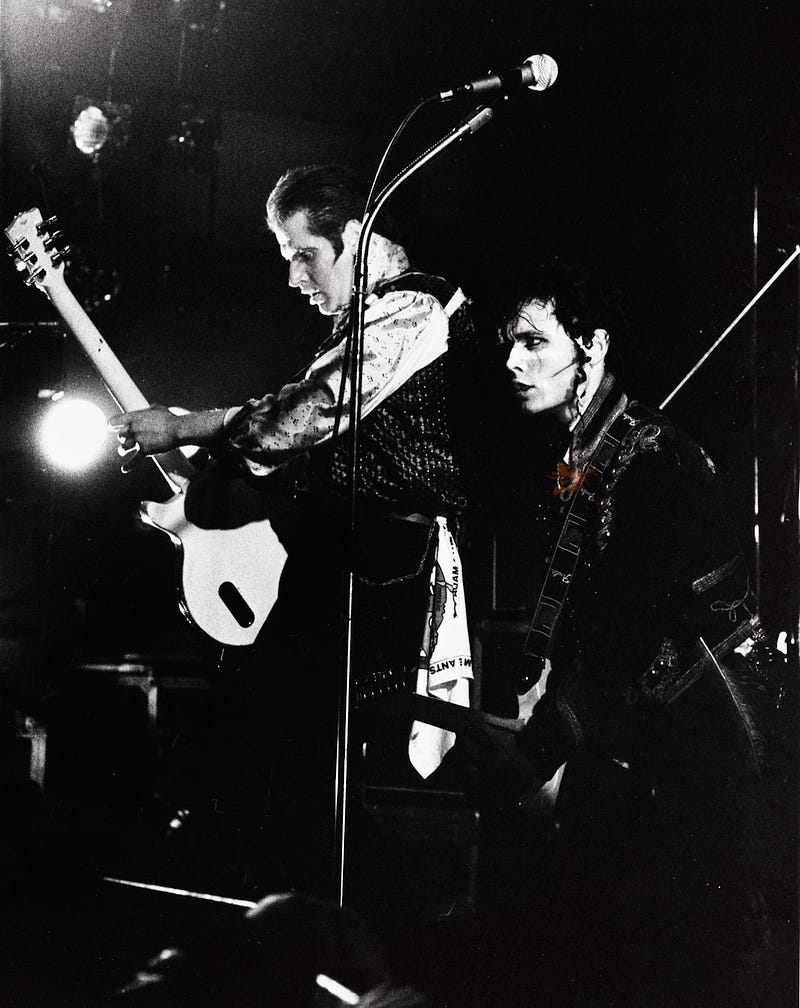
The raucous ‘me and my gang’ sense of camaraderie within the band played a major part in the infectious nature of record — one can hear it in the grandiose-sounding title song (“A new royal family/A wild nobility/We are the family”); the danceable rockabilly-stylings of the semi-autobiographical “The Magnificent Five”; and the somewhat-campy “Jolly Roger,” which could be best described as Gilbert and Sullivan-meets-new wave (the latter song’s lyric “It’s your money that we want and it’s money that we’ll have,” is just not pirate-speak but a prophetic statement of what the 80s would become). While certainly Adam Ant was undoubtedly the focal point of the group, his talented co-conspirators contributed to the all-for-one and one-for-all spirit that was so key to this record’s appeal — Pirroni’s meaty guitar playing, bassist Kevin’ taut bass lines, and Miall and Hughes’ Burundi beat-inspired drumming give the album its punch.
This new version of the Ants turned out to be a huge success — Kings of the Wild Frontier went to number one on the British album charts, yielding the hit singles “Dog Eat Dog,” “Antmusic,” and the title track. The band’s popularity was further augmented by appearances on Britain’s popular music TV program Top of the Pops (which are included on the DVD from the box). In contrast to the original album’s polish, the Ants’ live performances sounded rawer, as heard on the audio version of the band’s Chicago concert, presented here in this set without overdubs. The accompanying B-sides and outtakes include the galloping “Press Darlings”; the raunchy bump-and-grind of “Physical (You’re So),” which was later covered by Nine Inch Nails for the Broken EP; and a cover of the Village People’s “Y.M.C.A,” reworked as “A.N.T.S.” A 1981 Tokyo concert also on the DVD shows the Ants in action, with Adam Ant dressed in his charismatic swashbuckler-warrior guise. It’s not surprising based on the music and visuals that the Ants developed their “Antpeople” following.
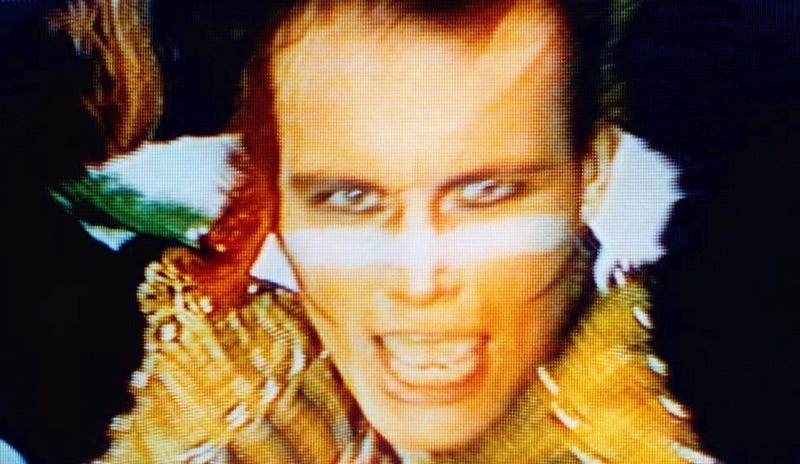
With the arrival of Adam and the Ants Mark II, many image-conscious pop acts such as Duran Duran, Spandau Ballet and Culture Club followed, bringing forth a new glossy sound and a fashion sensibility that appeared to be a rebuke of punk’s grayness. That could also be reflected in the striking and vibrant album cover art of Kings of the Wild Frontier, which was a still taken from the promo video of the title song. Several months after the album’s release, MTV would later launch, providing a crucial entry point for the Ants and the other photogenic British pop acts into the American TV market.
Like David Bowie and his ever-changing personas, Ant didn’t stay with that warrior look much longer when he later transformed himself into a British dandy/pirate for his next album, 1981’s Prince Charming. That album yielded U.K. hits in “Stand and Deliver” and the title song, but it didn’t quite have the spark of Kings. Shortly after Prince Charming, the Ants broke up and Adam Ant became a solo act, taking guitarist Pirroni with him. Though their reign of popularity was brief, Adam and the Ants brought a sense of excitement and color to a pop scene that needed reinvention. While this new deluxe box of Kings of the Wild Frontier would most likely appeal to Ant’s faithful fans, it’s an opportunity to appreciate in hindsight how provocative and bold a pop record it was. It’s a documentation of over-the-top ambition, from an artist who had been put down but in the end proved the doubters wrong.
If you enjoyed reading this, please click the ♥ below. This will help to share the story with others.


