
King Charles III recovers from prostate procedure in London hospital
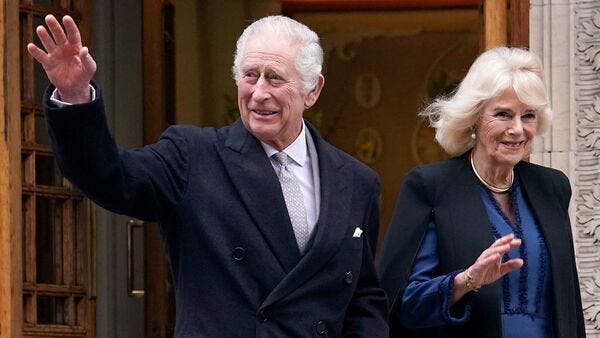
King Charles III, the 75-year-old monarch of the United Kingdom, has been discharged from a London hospital after undergoing a corrective procedure for an enlarged prostate, a benign condition that affects many men over 50. The King was admitted to The London Clinic, a private hospital near Regent’s Park, on Friday morning for a “scheduled treatment,” Buckingham Palace said in a statement. He was accompanied by his wife, Queen Camilla, who was seen leaving the hospital several hours later.
The King’s health issue was made public last week by the palace, which said he was keen to raise awareness and encourage other men who may be experiencing symptoms to get checked. An enlarged prostate can cause problems with urination, such as difficulty starting or stopping the flow, a weak or interrupted stream, or a frequent or urgent need to pee. The condition is not cancerous and does not increase the risk of prostate cancer, but it can affect the quality of life and may require treatment if it causes discomfort or complications.
According to the NHS website, there are several treatment options for an enlarged prostate, depending on the severity of the symptoms and the impact on daily activities. These include medication, lifestyle changes, minimally invasive procedures or surgery. The palace did not disclose what type of treatment the King received, but it is likely that he had a minimally invasive procedure that can be done under local or general anaesthesia and does not require a long hospital stay. Some examples of these procedures are:
- Transurethral resection of the prostate (TURP): This is the most common procedure for an enlarged prostate. It involves inserting a thin tube called a resectoscope through the urethra (the tube that carries urine out of the body) and using an electric loop to cut away excess tissue from the prostate gland. - UroLift: This is a newer procedure that involves inserting tiny implants through the urethra to lift and hold the enlarged prostate tissue away from the urethra, relieving the pressure and improving the urine flow. - Rezum: This is another newer procedure that involves injecting steam into the prostate through the urethra, causing some of the enlarged tissue to shrink and die.
The King is expected to make a full recovery and resume his royal duties soon. He will work from home for a short period while he recuperates, according to Buckingham Palace. He also thanked all those who have sent their good wishes over the past week and expressed his delight that his diagnosis is having a positive impact on public health awareness. The NHS website reported a surge in visits to its “enlarged prostate” webpage after the palace’s announcement, which was welcomed by doctors and charities.
The King was not the only royal family member who received treatment at The London Clinic last week. His daughter-in-law, Catherine, Princess of Wales, also had abdominal surgery at the same hospital and remains there for further recovery. The King visited her before he went for his own treatment, a royal source told CNN. The princess’s surgery was related to her endometriosis, a condition that causes tissue similar to the lining of the womb to grow in other places, such as the ovaries or fallopian tubes. This can cause pain, heavy bleeding and fertility problems. The palace said she will spend several months recuperating at home in Windsor and will not take part in any official engagements until after Easter.
We wish both King Charles III and Princess Catherine a speedy and smooth recovery and hope they will be back to their normal activities soon.