
Killer Opening Songs to Listen to During the Lockdown (Queen’s Mustapha)
The British Band’s Knack for Strong Album Openers
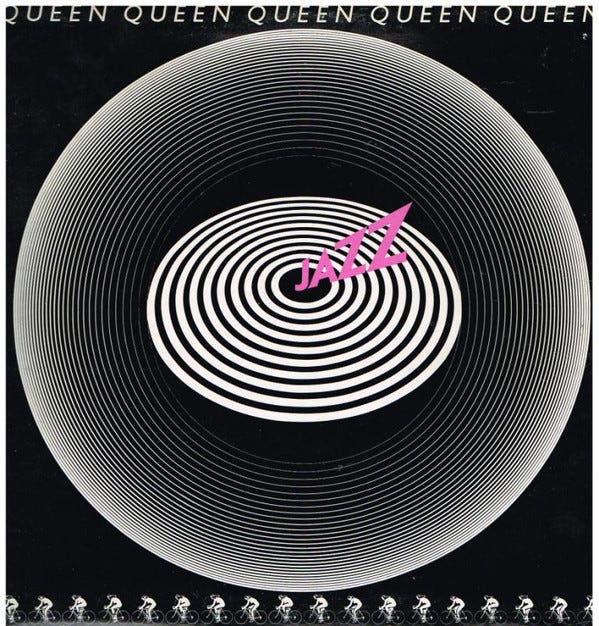
Some artists manage just one Killer Opening Song in their whole musical career. Some others get to release just a handful. But there are performers for whom KOSs are part of their DNA. Step forward, Queen. Queen fans come mainly under two guises, those who are enamoured of the band’s Greatest Hits Volumes (and can quote most of their hits by heart) and those who listen to their albums in their entirety and really understand the group’s ethos. I count myself in the latter group. What always attracted me to this British band was their unbridled creative energy. From their debut album, “Queen”, with its nod to Led Zeppelin and The Rolling Stones, May, Mercury, Taylor and Deacon embarked on a never-ending experimental tour that brought them a huge following but also derision. It’s not strange that Queen never courted favour with British rock critics. In a country where self-effacement is the lifestyle of choice, captions like “No Synthesizers” (plastered across the band’s first seven albums) did not attract praise but mockery. And Freddie’s artistic vision (like for instance in the Richard Dadd-inspired song “The Fairy Feller’s Master Stroke” from their second album, “Queen II”) did not find an enthusiastic audience amongst rock’s cognoscenti. The other aspect that always appealed to me about Queen was their chutzpah. Theirs was a form of musical audacity that led them to see off more narcissistic rock styles, like punk, for example. That’s why it is a pleasure to showcase a song that encapsulates everything I have described above. Never released as a single, yet it has the same quality as “We Will Rock You” or “Play the Game” (two other anthemic Killer Opening Songs by Queen). The words are not in English, bar a few ones, but any real fan familiar with Queen’s music will know by now that the band sometimes indulged in French, Japanese and Spanish in their compositions. In short, “Mustapha”, the lead-off track from the “Jazz” album (1978), was a very creative and challenging outing for its writer, Freddie Mercury. Sung in Persian with an Arab motif, the song was very popular in France.
The fact that I’ve selected this track from a plethora of Killer Opening Songs, attests to the brilliance and intelligence this band displayed for their entire twenty-year career (yes, to me they were finished after Freddie died in 1991, so that means 1971–1991 R.I.P.). Just to give you an idea of what else to find within the “Jazz” album, here’s a roll-call: “Fat Bottomed Girls”, “Bicycle Race”, (yes, the one with the naughty video), “Let Me Entertain You”, (a real camp-fest with words such as “I’ve come here to sell you my body/I can show you some good merchandise/I’ll pull you and I’ll pill you/I’ll CrueladeVille you/And to thrill you I’ll use any device”) and one of their stadium anthems, “Don’t Stop Me Now”. ‘Mustapha’ was nothing but the gateway to a huge musical extravaganza, the likelihood of which is hard to find these days amidst the anodyne and formulaic pop that gets churned out by production companies so often. What other songs from the album did not make it to singles or hits? Oh dear, you got me on a roll now: “If You Can’t Beat Them”, “Dead On Time” (heavy metal anyone?), “Dreamer’s Ball” (of which Freddie famously said on the “Live Killers” album: “The things you have to do for money”) and “Fun It” (precursor to Queen’s “dance” phase in the early 80s, but still a brilliant tune).
“Jazz” was the last album on which Queen refrained from using synths. The next time May, Taylor, Deacon and Mercury went back to the recording studio the result would divide not only critics but also fans: Queen had apparently “gone disco”. The clip below may well be the only existing footage of ‘Mustapha’. Apparently it was shot on a Super 8mm camera in 1980. In addition I have linked the album version above (click on the first ‘Mustapha’).
© 2020