
Kill One to Save Them All
It was on the 18th of May 2015, a Monday. He was peacefully walking in the savanna. He heard a threatening noise. He charged. Suddenly gun sounds exploded in the air. He layed down on the dry grass of Namibia and closed his eyes for the last time. He was one of the last, one out of the 5000 last wild black rhinos in the world.
This black rhino was part of a conservation program. His death raised funds to conserve the species.
Hunting is often seen as a not sustainable practice causing species to disappear. However a regulated hunting activity can improve the success of an animal conservation program. Thanks to trophy hunting, 12 countries in Central and South Africa raise about 200 millions dollars each year for conservation purposes. Corey Knowlton, a professional hunter paid 350 000$ to be allowed to hunt this rhino. This money was spent to improve the conservation of the Namibian wildlife.
« How do you really value this animal survival on Earth ? To me, I know and I care. And I place an extreme value financially, physically, and emotionally on the survival of black rhinos. » — Corey Knowlton
The funds raised by this method are used to improve facilities, pay rangers and pursue illegal poachers. Poaching is one of the most important driver of animal death. Poachers kill elephant or rhino to sell their bones, tusks and horns on the black market where superstitious people buy them as traditional medicines or good luck charm.
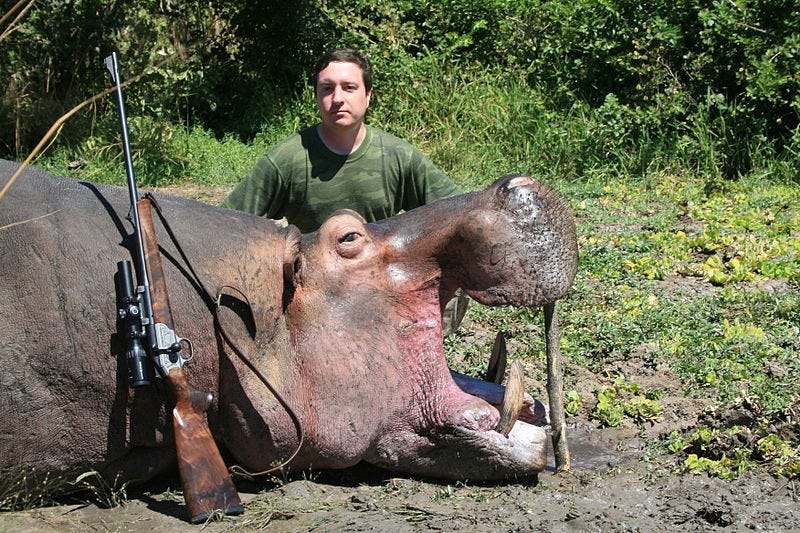
Trophy hunting is a way to motivate land owners to protect the wildlife against illegal poachers. For the villagers living next to these huge animals, life can be difficult. Elephant and rhinos may destroy crops while predators such as lions may kill livestock or directly threaten human lives. From their point of view, these big animals have a negative value, they are pests. Villagers would rather kill them instead of conserving them.
Trophy hunters put a high price on these animals and show the animal’s potential value to landowners. When locals know it is possible to have an income and make a living out of wildlife, they are motivated to welcome big wild animals on their land. They don’t cultivate it or use it for other purposes. Agriculture is the main land-use competing with conservation areas and each year it reduces the available land for wildlife. Fewer and fewer space is spared for Nature.
Hunting trophy program have to consider the biology of the hunted species. For example hunting male lions may be an issue as the new dominant male arriving in the harem usually kill all his predecessor’s offspring. It decreases the lion population growth rate and threatens its survival on the long term.
Trophy hunters usually look for challenges and souvenirs such as big animals with impressive horns. Unfortunately, this artificial selection have an impact on the population dynamic of the hunted species, small body-sized animals with small horns are ignored by trophy hunters and survive while others are killed. These features appreciated by hunters are often linked to survival, for example big horns are a good defense against predators. Indeed, the hunter choices may decrease the long term chance of species survival.
Hunter are willing to conserve wildlife. Most of them feel attached to Nature and the animals they hunt. They’d rather pay a premium fee to hunt sustainably instead of blindly kill endangered animals. Hunters have a high motivation to conserve wildlife, what would they hunt if it disappears ? In Namibia, the hunted animals are studied and selected among the old, dangerous and non reproductive individuals. Trophy hunters are actually preserving the species by killing individual who are a possible threat. It would be a great idea to create a certification and sort out the good trophy hunting companies from the bad ones.
A well regulated trophy hunting implemented in a corrupt free country with a fair resource distribution is a good solution to improve conservation effort. However, we need to be careful about the message we are sending with such practices. Does wildlife have a price ? Can it be entitled to someone rich enough to afford it ?
Finally, finding the good message to convince people to conserve wildlife is the hardest part…


