
Life
Kids & Screens During COVID
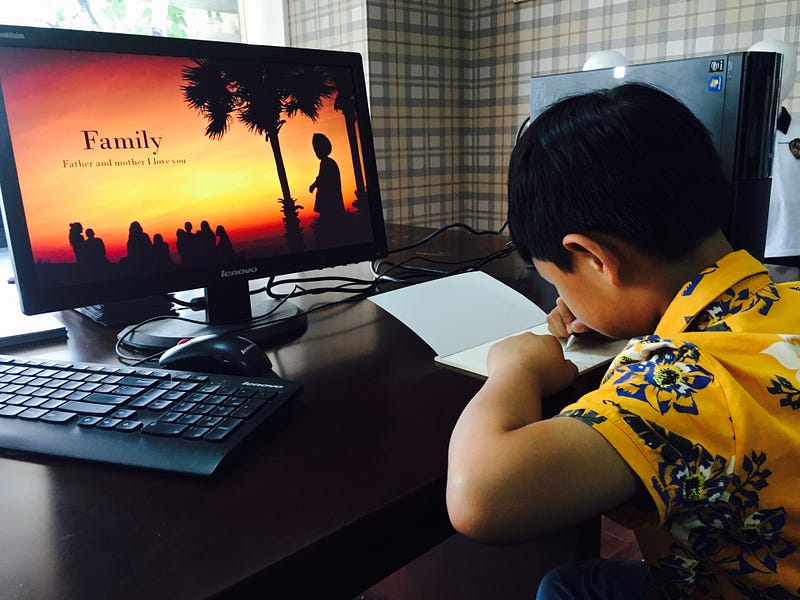
Since the announcement to shelter-in-place to limit the spread of the coronavirus (COVID-19) some three-plus months ago, paired with remote working for many parents and the introduction of virtual schooling; the amount of time that teens spend on their screens has significantly increased.
Many parents believe that excessive screen time will negatively affect their child’s development. Yet, the reality is that parents have limited options to keep teens occupied when venturing out of the house is discouraged, and the need to attend zoom meetings or simply get work done arises.
Are parents right to be worried about the number of time teens spend on their devices? What does the scientific literature have to say about the relationship between screen time and ‘normal’ teen development? Are we ‘throwing the baby out with the bathwater’ or are there benefits to digital interactions that are being overlooked?
The human brain is designed for social interaction and not for isolation. What the research is showing is that for teens, their friends, peer group, and social network is central to their identity and sense of well being. Teens are disproportionately affected compared to young children or adults during shelter-in-place.
Teens have very limited opportunity to interact with friends other than through their screens, for many, their phone or computer is a ‘lifeline’ to their world. It’s a way to stay connected and reduce the stress of not knowing when they’ll see their friends again if they’ll become sick or someone they care about does when school will reopen and normal life resume. Healthy social-emotional development is predicated on building close positive relationships with peers, if that needs to be via the internet at present; so be it.
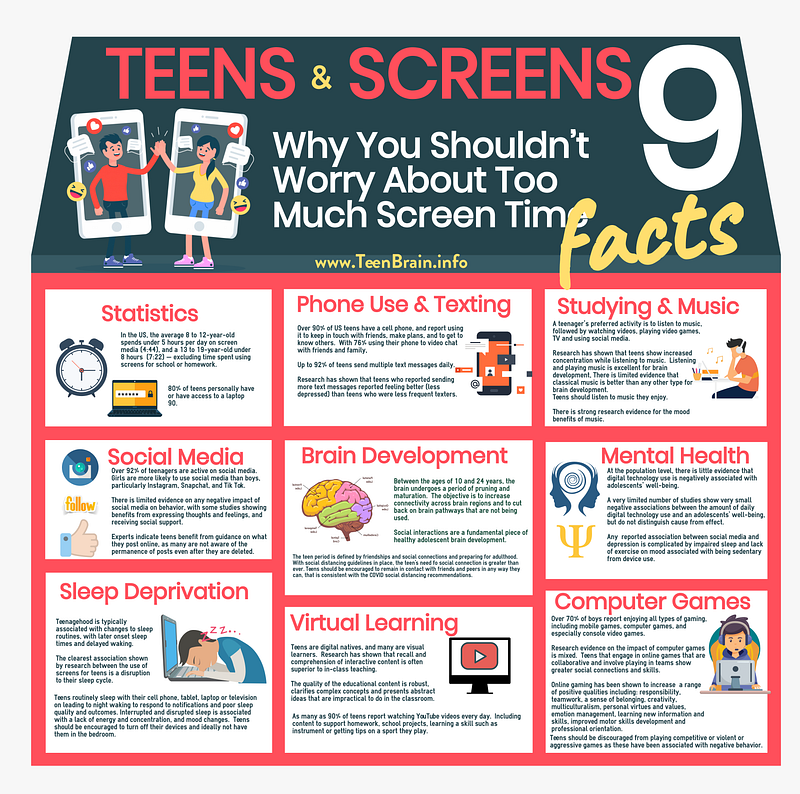
The infographic summarises over 35,000 research studies across the world and has tested over 350,000 children, overall there is very limited evidence of the negative impact of screen time per se. Research findings that factor in childhood neglect and abuse, or pre-existing mental disorders does not seem to support the intuitive idea that screen time negatively impacts a child’s development. Moreover, research studies that do report a negative association between screen time and well-being, those effects are insignificant when teens get sufficient sleep, exercise, and eat a balanced diet.
Parents are encouraged to not worry about the amount of screen time but discuss with their teens what videos they watch on YouTube, online games they play and with whom, and get them to FaceTime a friend.
About TeenBrain
Brain science for teenagers. Neuroscience to empower teenagers on self-reliance, resilience, accountability, and exuberance in children. www.teenbrain.info


