
KHADI and India…
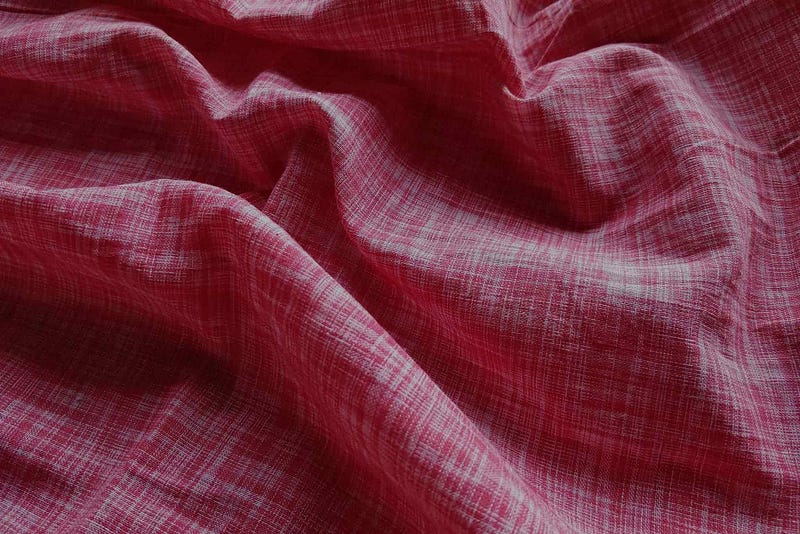
It was on the 13th of January when I visited an expo dedicated to khadi names as khadi gramodya pradarshani (Khadi Exhibition) 2019. There was a wide variety of khadi present which took my fancy. And to be honest; the quality of the fabric was some of the best materials I have ever felt so far. But, what was more surprising than those fantastic clothes was, that there was no audience to appreciate this fabulous fabric. A fabric that was made by hands which remains fresh in summers and warm in winters. At the expo, I asked one presenter that, why there was no audience for such good things. Looking at my excitement, he told me a story. The story of Khadi and India…
In the beginning, khadi was introduced by Mahatma Gandhi, to support non-cooperation movement and to abolish factory-made goods that were hampering the Indian products. But at that time the khadi was produced by hand. Which made it heavy and rough and it shrank every time you wash it. Some even mocked khadi by saying that “if you wash your khaki pants, you may get an undergarment, and if you wash your khadi undergarment, you might get a handkerchief after drying up.”
So it was begetting two problems; it was heavy and hard to clean, and it shrinks every time you wash it. This hampered the growth of khadi as a social fabric and as a symbol of a nation. Mahatma Gandhi was so fond of khadi that it was earlier planned to be in the centre of India’s national flag. To tackle the problems with khadi, the National Institute of Fashion Technology helped the khadi makers. They recommended that instead of natural alum, they should use chemicals. But the workers were not ready to accept this change as they were not skilled enough to work with chemicals and it hampers with the sentimental values with khadi. After some research, they suggested that instead of normal alum they should use a different alum which was particularly found in hilly areas, and they agreed to do so. Henceforth they were able to make khadi which was able to compete with the mainstream cloth and even surpass that.
But the question remained unanswered. If we have a revolutionary fabric, then why it is still not popular enough?
The answer is simple, it takes almost 18–20 men to make one roll of khadi, so it is costly. Secondly, the problems of the middle man. Khadi is still prevalent in northern and eastern parts of India as a form of a cottage industry, and the middle man is a point which manipulates both, the manufacturer as well as the consumer.
So what’s the solution to these problems?
It’s simple… take interest in khadi and I can guaranty you, you’ll not get disappointed. The person who is making laws and policies for khadi and khadi makers should be a man, who has been associated with khadi. There is not a single piece of clothing that cannot be made from Khadi. Taking from Saaries to Kurta Payjamas, to sadries, pants and what not. At last, I just want to say that give khadi a try and feel the hard work of millions and dreams of some. khadi…


