

THE FALL OF THE HOUSE OF KENNEDY
Kennedy & Markey Exposed the True Rift in the Democratic Party
It’s not exactly liberal vs left-wing — nor young vs old. It’s rhetoric vs policy.
Ed Markey, the 74-year-old Democratic Senator who spent months fending off an insurgent primary challenge from Joe Kennedy III, sounded like a kind of New England Santa Claus at his victory speech last week.
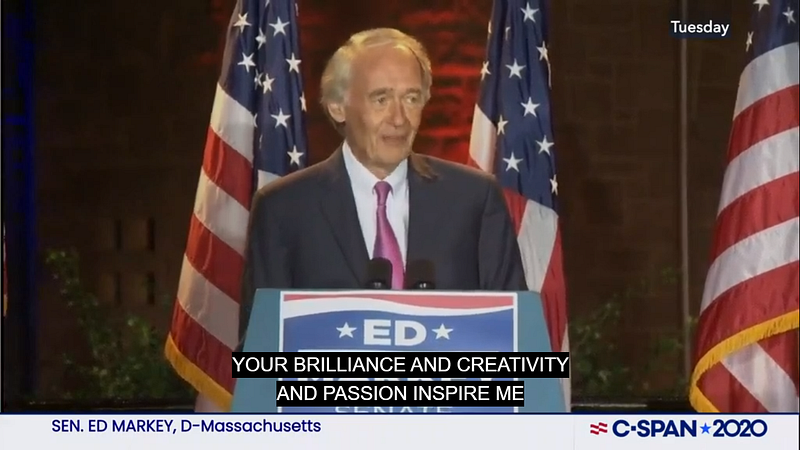
“Your brilliance and creativity and passion inspire me every day,” gushed Markey — all the while glowing with undeniable warmth and pure joy.
He addressed these words to “the Markeyverse”: the staffers and volunteers whom he credited for securing his victory.
But the bulk of Markey’s victory speech was about legislative priorities — past, present, and future.
He talked about the Green New Deal, workers’ rights, police reform, and other things that he argued would improve the standard of living not only in Massachusetts, but all throughout this country.
Contrast that with Joe Kennedy’s campaign, which traded exclusively in empty platitudes about Markey’s supposed prejudice toward BIPOC, and the need for new leaders, and the corrupting effect of spending too many consecutive years in the Senate.

Kennedy cited a number of Markey’s worst votes as evidence that Markey wasn’t much of a progressive champion, and he’s right. Anyone who voted for the Iraq War has no claim to the mantle of left-wing heroism. But Massachusetts Democrats weren’t persuaded that Kennedy would have voted differently on any of the divisive matters that may have tempered their affection for Markey.
Primary voters in Massachusetts saw Kennedy’s campaign for exactly what it was: a born-to-rule careerist’s non-ideological ploy to secure a promotion, by hook or by crook.
Kennedy was endorsed by Nancy Pelosi, Steny Hoyer, and many other Democratic leaders. But it’s hard to see how they could have viewed Kennedy as a more authentic spokesman for liberal Democratic policies.

Rather, the House Democratic leadership almost certainly determined that Kennedy was a hollower vessel for sheer political ambition: a partisan team-player who would criticize the Green New Deal for its failure to mention BIPOC by name, without espousing any plan for climate action that would be more inclusive of ethnic minorities.
The Democrats’ failed effort to oust Markey reveals the true rift at the core of the Democratic Party: the Establishment’s preference for telegenic whippersnappers who take pains to seem “woke” in public addresses and on social media, but don’t threaten any rebellion against party leadership in pursuit of greater social justice.
For more evidence of this preference and its consequences, look no further than the Special Elections for U.S. House seats in mid-2017.
Two good progressives — Rob Quist and Archie Parnell — were crying out for support in their House races, but the national party organization chose to spend tens of millions of dollars on Jon Ossoff’s bid for GA-06 (which Tom Price had vacated to serve as Secretary of Health and Human Services).
Hours before Election Day kicked off, Greg Gianforte — the Republican nominee to replace Ryan Zinke as the At-Large Representative for Montana — body-slammed Ben Jacobs in a fit of libidinal frustration with adversarial press.

Perhaps this outrageous assault could have swung the race in favor of Rob Quist, the charismatic bluegrass musician who had secured the Democratic nomination.
But Quist’s fate was sealed: thousands of Montana residents had already voted early.
In the end, Ossoff, Parnell, and Quist all lost by 3–6%.
It bears noting that Archie Parnell’s race was ultimately tighter than Ossoff’s loss to Karen Handel.
We know that well over $20 million was spent on Ossoff’s behalf. So, what did the Democrats get for the tens of millions of dollars they invested in Ossoff’s campaign?

If Ossoff lost by roughly the same margin as his underfunded peers, then why did Democrats spend so much money on his candidacy — and yet so little on Parnell and Quist?
The answer is that Democrats weren’t buying a House seat; they were using their money to tighten their grip on the Party.
Democrats know that non-ideological social climbers won’t threaten business as usual in Washington. They won’t, for example, occupy Nancy Pelosi’s office.
But bold, progressive insurgents — such as Parnell, Quist, and Ed Markey — will be accountable to a grassroots movement that disciplines its leaders independently.
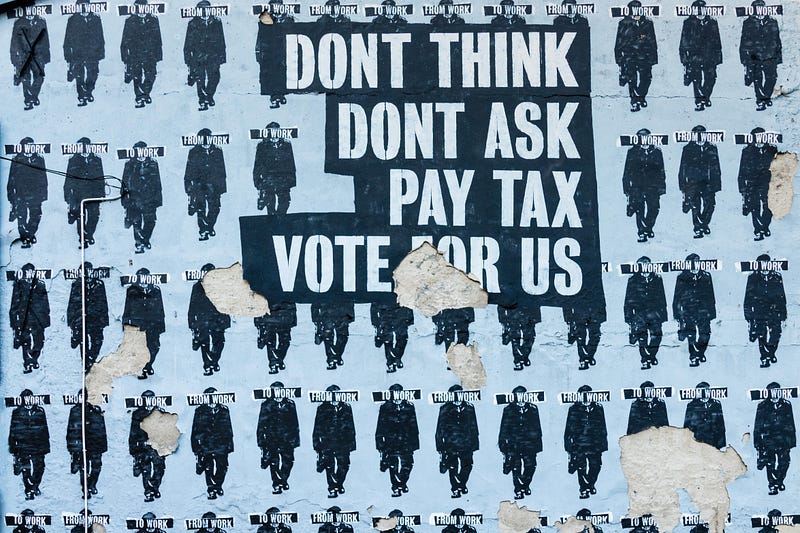
I don’t mean to allege any covert corruption of the infrastructure of the Democratic Party.
Top Democrats are just doing their job: the Party Establishment’s rational priority is to preserve its own stranglehold on the rank-and-file.
But those of us who support the Markeys, the AOCs, and the Bernies of the Democratic Party have to do our job, which is to apply pressure to Democratic incumbents whenever something important is at stake.
There aren’t many more Democratic primaries this year, but the Biden presidency and the 117th Congress will commence in just four months (unless an unthinkable twist of fate delivers a second term to Donald Trump).
As we enter the final stretch of the campaign, let’s all remember the real mission of grassroots activism in the United States: to force Democratic politicians to do the things we care about. They won’t do it for us. Keeping them honest is our task alone.


