
Keeping Your Creativity Alive
The place and power of good friends
Writing is a terrifying experience. In a moment, with the simple click of a button, you’re innermost thoughts become exposed to the world. Immediately, you become vulnerable to the grand murderer of creativity: needless critique.
This thought alone keeps many from ever putting fingers to keys or pen to paper. Regardless of the depth of knowledge they may have to share, many shut the computer despite the powerful story they need to express. The slightest potential of being so intimately known by strangers who may or may not like what you write is crippling.
Yet, writing is not the only creative act in the world. This same fear comes with creativity everywhere.
Creativity is an essential piece of being human. Even if you are not a trained “creative” or a professional one, creativity is part of your everyday life, a part of who you are. But that free, creative part of us was crushed long ago. And a piece of our human dignity went with it.
So how do we get it back? How do we protect it once we have it?
Foster Over Forge
The bold egotists will tell you the way forward is to muster up courage and hit the damn publish button, start the damn business, or build the damn building. They would lead us stomping through the woods of our creative world regardless of the damage left in our wake. “Forge ahead!” they bark at us. Fearfully, we follow.
That journey seems triumphant but often ends in the tragic death of our creativity and courage.
We can’t stomp around when it comes to our creativity. Our creativity, in all its diverse expressions, is part of who we are. Creativity contains our voice. Our dignity. Our story. It is precious. And with something so precious, we need to protect it with the best means possible. It needs to be fostered by the gentle hands of caregivers.
Overcoming this fear of expressing our creativity requires more than a simple acceptance of its existence. But it also requires something more than snarling back in its face like we were charging at a bear in some last-ditch effort to save our life.
What we need stands (or rather sits, preferably around good food, a fire, or coffee) outside of us.
We need good friends.
We need a creative club.
Creativity contains our voice. Our dignity. Our story.
I am not suggesting an online community of strangers all vying for each other’s attention in secret hopes of gaining followers or a platform so you can rake it in when you write your first novel. Instead, we need real people that love us and are huge fans of our work. That’s right. Fans. Fans who are friends.
Whether we are starting a business, writing a manuscript, or teaching our kids from home, we need people we can sit with (in person with a mask or over a zoom call), share our ideas in safety, and watch them light up with excitement. Not only does this give us the courage to keep going, but it gives us instant feedback on our work.

Malcolm Gladwell, in his MasterClass on writing, explains how he uses this technique to test out his unfinished writings. Rather than share drafts with people to read, he talks about his ideas with others.
In these conversations, he is looking for and listening to their responses. This allows him to see how his audience might respond to his theories and narratives. He can then make adjustments based on their responses without sacrificing his creative impulse.
We would be wise to do the same. Doing so keeps us from the tyranny of feedback.
Freedom Over Feedback
Brenda Ueland, a journalist, editor, and teacher of writing in the early twentieth century, was passionate about the creative spirit within people, particularly writers. She was burdened by how common it is for creativity to be scorched, squelched, and squandered by needless critique.
In a world fixated on feedback and harsh criticism, her insights in If You Want To Write, give us a fresh look into keeping our creativity alive:
All people who try to write (and all people long to, which is natural and right) become anxious, timid, contracted, become perfectionists, so terribly afraid that they may put something down that is not as good as Shakespeare. And so no wonder you don’t write and put it off month after month, decade after decade. For when you write, if it is to be any good at all, you must feel free, free and not anxious. The only good teachers for you are those friends who love you, who think you are interesting, or very important, or wonderfully funny; whose attitude is: “Tell me more. Tell me all you can. I want to understand more about everything you feel and know and all the changes inside and out of you. Let more come out.” — Brenda Ueland
Brenda describes the creativity within us and our imagination in an almost personified way. She talks about it as a living thing inside you, something “very tender and sensitive, …usually drummed out of people early in life by so-called ‘helpful criticism.’”
Brenda teaches us the secret to creativity, especially early on in the endeavor, is freedom, not feedback. Without freedom, our creativity cannot live and find its way out into the world. Instead, it will shudder in the dark shelter of our cold and clammy insecurity.
But it’s hard to let our creativity loose. We’ve all had those crushing moments when we embrace vulnerability and open the door of our creativity to the world, only to be scorned, rejected, or worse, ignored.
The real issue at play here is power.
When we encounter feedback, the power is in the hands of the one dishing out the critique. When we are fostering freedom, the power stays with creative impulse. Humans have a terrible history with power. We are not great at using it for flourishing. Instead, we tend to abuse it at the expense of others.
So how do we go about doing creative work while protecting our creative impulse? How do we foster the freedom necessary for our creativity to flourish?
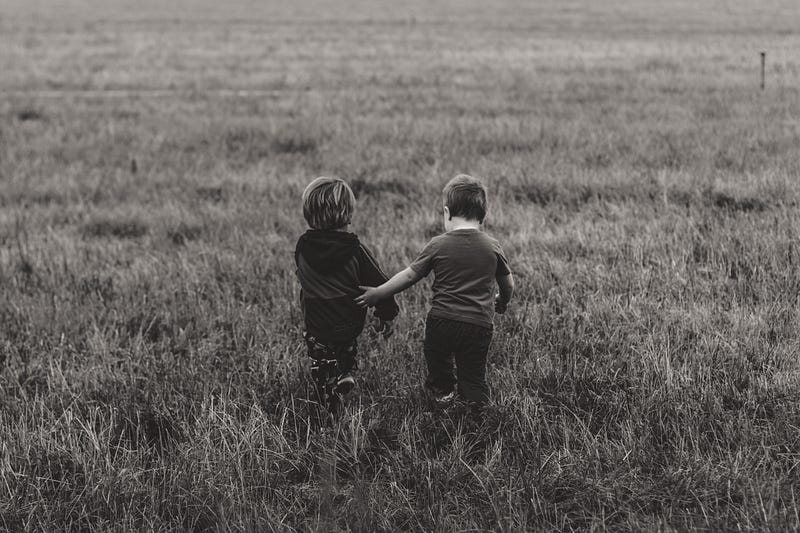
We need a community of friends who will breathe oxygen back into the fire of our imagination and determination. This is not a group of critics who will squash our creative impulse with the bottom of their know-it-all boot because of their need for superiority.
At this point, we can make a simple mistake of thinking that followers will give us the encouragement we need to keep the impulse alive. But they will not. We need more substance than claps and responses from a digital platform. We need authentic human relationships. We need friends more than followers.
Friendships Over Followers
Through the 1930s and ’40s, a small group of Oxford University professors got together in either the dim corner of The Bird and Baby (or more formally, The Eagle and The Child) or one of the professor’s rooms for meaningful conversation. Armed with pint and pipe, these conversations covered literature and culture. They filled the room with risible commentary on life and provoking rumination on literature.
And they also often included the reading aloud of unfinished works of those who attended.
The group was The Inklings, and J.R.R. Tolkien’s Lord Of The Rings was one of the works read aloud to the group. C.S. Lewis was also a member. His sci-fi fantasy novel Out Of The Silent Planet was one of the first pieces read aloud in the group along with the Tolkien’s LOTR.
Would these pieces have been published outside of these friendships fostering their creativity? Maybe. Would they have been as good and influential? No.
These literature and creative enthusiasts were dear friends. They had fun and meaningful conversations which for them, in their time, provided a safe place to unveil some of their creative impulses.
Did they gain an audience from their work? Yes. But the point of The Inklings was not to get publishing deals and generate followers (whatever that was in their time). Instead, it was about friendships. And the influence of their writing and creativity is still felt today.
Your group may not focus on writing and literature. Maybe it’s a group of local entrepreneurs. Maybe a group of fitness moms. Maybe it’s a group of urban planners. Maybe it is a group of writers.
Whatever the group is, the importance is fostering and protecting the creative impulse within, to keep it alive. More than all the workshops and online tutorials, the real power is in friendships. Call them comrades, a community, or a crew. Call them a club or a collective.
Whatever it is, find them or form them, and let the creativity freely flow.