
Introspection to raise self-awareness
Keeping Positive When the Answer is No
How to stay on track and build resilience.
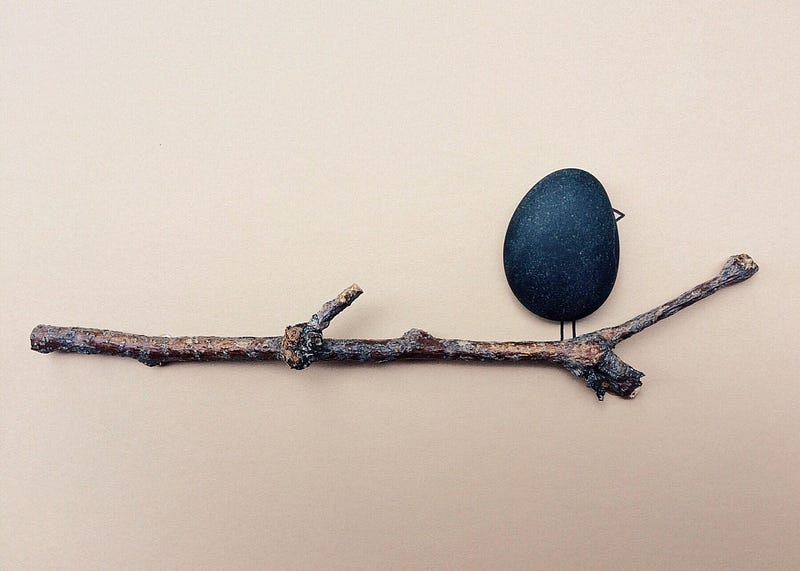
Disappointment can be a slippery slope state of mind. Whether the disappointment comes from a major “no” in your life, a loss, or a series of them, you can find yourself sliding into despair, hopelessness, and frustration.
But it doesn’t have to be this way. You can be resilient. You can bounce back quickly. You can put the power back into your own hands with these simple, actionable steps.
5 strategies for keeping positive when the answer is no
When something you are trying to obtain or achieve in your life is met by the universe with a resounding “no,” it’s not the end of the world. It is simply a denied step along the path. Consider it a red-light. A stop sign. A yield.
You don’t get out of the car and stomp off to have a hissy fit. Will the destination ever be reached while you are doing this? It makes a lot more sense to do these things instead:
Keep your focus
Clearly you have a goal or goals in mind, you are out there trying to get to where you want to be in your life, or else you wouldn’t even be stalled at this particular intersection. Consider all you have put into this already. If you were to glance back from whence you came you will see all of the previous obstacles you have already overcome.
You’ll see that you were disappointed in the past, and you were able to navigate your way through it then, so will you now.
When you are out there finding your way to where you want to be in life, you set a destination. You keep your focus on where it is you are going, what it is you’d like to achieve, and what end result you desire. If you remind yourself that there will be stops, there will be opposition (as a person of faith, I know sometimes the more you are on the right path, the more opposition and resistance you will face), and there will be times your path will be blocked or detoured.
Keep your focus on your goals. Even if you choose to redefine them. Successful people are goal-oriented. Leadership expert Robin Sharma suggests the 90–90–1 rule for achieving goals:
For the next 90 days, devote the first 90 minutes of your work day to the one best opportunity in your life. Nothing else. Zero distractions. Just get that project done. Period. — Robin Sharma
Whatever your method for keeping your focus on your goals, being flexible in exactly how they are obtained will help you to weather the distractions and disappointments along the way.
Practice a little emotional distance
Disappointments suck. They hurt and sometimes, they hurt a lot. My partner of 10 years and I are trying to buy a house. We have had one deal fall through, costing us 475.00 in inspection money we can’t get back. We got outbid on another house we loved. Then, just today, we found out we were outbid on a third house that we bid 22,000.00 over asking price. One loss after another.
It hurts. It is incredibly frustrating to visualize your new home — then have it slip right between your fingers. The up and down of emotions is just draining. Several nights this week my partner came home and went straight to bed, he was so stressed about it all.
The key is to distance yourself from the loss, emotionally speaking. You don’t have to be heartless or inhuman, but you can keep the rise and fall at bay by rising above the emotion and again, keeping your focus.
How much longer would it take us to find a house if we stopped and mourned every lost one? It just makes more sense to pause with the emotion, admit that it hurts, then shake it off and resume your focus. Resilience is the name of the game.
Recalculate
Goal-oriented people know a secret. They know when the goal needs a bit of adjustment. They know how to learn from experiences and use that experience to adjust their goals and when it is necessary to do so. Digging in is great. Determination is great. But dogged stubbornness can often work against you.
Sometimes you have to recalculate.
- Is the goal obtainable? Be honest with yourself about this.
- Has something changed to make your goal unattainable? What can you do to adjust your goal to make it attainable — or can you remove the obstacle?
- If the path to your goal is no longer under your control, or there are extenuating circumstances, you can readjust without shame. You did all you could. Time to change your plans with the new knowledge you have gained along the way.
Keep trying
It takes a lot of personal strength to just keep trying when things aren’t going your way or when it seems like there are more “no”s than wins. Be your own best cheerleader!
- Have an attitude of gratitude and positivity. Research shows that gratitude and positivity not only generate prosocial tendencies (behavior that benefits society and others) but also that it encourages others to get on board with your goals via a concept called “goal contagion.” It is described as a ‘“psychological gel” individuals’ goal pursuits.” Gratitude also helps you to generate self-improvement and stay motivated.
- Take some time with self-care, affirmation, and look for what motivates you. It takes work to stay on course and keeping yourself motivated is fundamental to your success. No matter how many times you find yourself discouraged, fight back with inner strength. Fall down 7 times — get back up 8!
Find the lesson
Another thing I do as a person of faith is to look for the lessons. Even if the only lesson I can find is “embrace the suck” and you’ll feel at least reminded of your own strength. Most of the disappointments in life come with a lesson. Here are some of the ones I most commonly lean on:
- There’s something out there better.
- This wasn’t meant to be.
- This disappointment could be a way of avoiding a negative outcome. (To use our house-hunting example, what if one of those houses had worked out, we moved in, and it ended up being a terrible home for us or a bad investment?
- Disappointments teach humility.
- There is a greater plan here and I am a part of it. (In my Christian faith, this means that God has a plan for my life and I can embrace that with hope.)
- Perhaps I wasn’t ready for this to work out just now and I need to do some more work on one area or another so that I may be ready to receive it.
- Maybe this is a “make the best of it” situation. Find the silver lining.
Whatever your disappointments, you learn to be resilient. You learn to be grateful, even when you are experiencing the loss of something you wanted. It teaches you to be “ok” no matter what and to never give up. It’s ok to hurt or experience pain when something does not work out. But to borrow the old cliché, “When one door closes, another one opens.” I say if they ALL close — find a window.
Thank you for reading. Here are a few other articles that you may find helpful on your journey: Stuck at Home? 10 Creative Ways to Spend Your Time 8 Easy Tips for Reviving Your Sleepy Blog De-Cluttering Yourself to Freedom We Can’t Buy the House We Love — But There’s a Lesson in it Hurting This Much
Christina M. Ward is a rural-living, well-living, hope-living writer from North Carolina. She also is quite fond of writing environmental and human condition poetry that you just might like such as Symbiosis, The Wisdom of Trees, and The Vantage Point of Stars. You can sign up for her free Author Newsletter or follow her on social media.


